
Harald Hardrada: Not The Last Viking.
The Myth of Harald as The Last Viking.

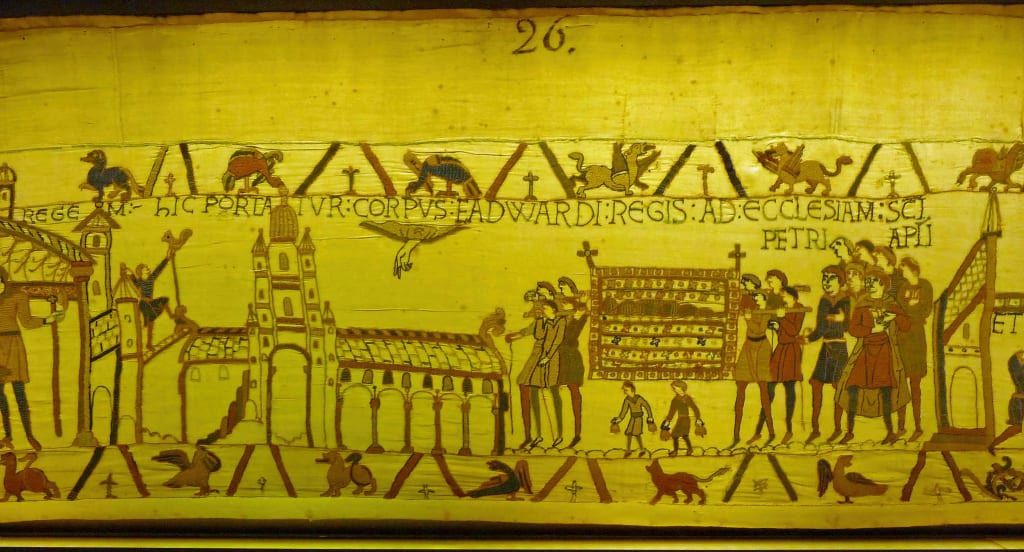
Historians often say that Harald Hardrada was the last Viking to invade England. And, I can understand why many historians regard this mighty Viking warrior as the last Viking in the truest sense of the word. However, the situation in 1066 is more nuanced than that.
The death of Edward the Confessor left a vacuum as this highly Christian King had no heirs, to speak of, to become his successor. It is reported that the Confessor nominated William of Normandy, his cousin, to succeed him. However, for whatever reason, Harold Godwinson was nominated as king by the Witan, the committee that chose the next king. Harold was the Earl of Wessex (correct me if I am wrong). He was a powerful personage at court and a warrior in his own right. When he became king, the Norman Duke William was said to be outraged and betrayed when hunting.
William ordered the gathering of a large army, supplies, and a fleet of ships to take military action against England.
Meanwhile, in Norway, King Harald Hardrada had a claim to the English throne through another Viking King of England, Canute. Again, correct me if I am historically incorrect. I do not claim to be a historian but a learned layman. Harald also gathered a large army, supplies, and a fleet of ships to invade England.
King Harold was well aware that both William and Harald were a threat to his kingship. The question was who would land first, William or Harald? Circumstances forced Harold's hand, as Harald, along with Harold's traitor brother, Tostig, landed. Harald made rapid progress in the north. He captured York, an old residence of other Vikings. The Norwegian King did face some opposition, but that was easily swept aside. York or Jorvik, to give it its Scandinavian name, became his base of operations. So far, so good for Hardrada.
He moved south, knowing he would have to confront English Harold. Win, and he would be King of England. His army reached Stamford Bridge on the Humber. It seems Harald gave his men the day off before confronting Harold at some point. They were resting and sunbathing by the river, not realising that English Harold and his army were upon them. Their armour and weapons were cast aside. They were seemingly unaware of what was about to happen.
Harold's army fell upon them, and Harald's men were unprepared. However, they put up a tough fight, and many Saxon English lives were taken that day. Harald himself put many Englishmen to the sword or axe. However, Harald was hit by an arrow in the neck and died on the spot. The Norwegians fought on bravely, but the battle was turning, and the English achieved total victory. What was left of the Norwegian army was routed and escaped. A massive fleet had set out from Norway now, a shadow of its former self. They returned to Norway with their tail between their legs.
So, a major threat to Harold's reign was over. Harold could now concentrate on the second threat, William of Normandy. Harold probably thought he and his exhausted army could get some R and R. However, that wasn't to be. William landed in Pevansey Bay in Sussex. Harold marched his exhausted forces south, gathering forces as he went. If Harold had reached London rested and gathered a better-trained force, he might have been in a better position to take on William.
With very few archers, very few well-trained troops, peasants with farming implements, and his loyal bodyguards, the Housecarls, he assembled a ramshackle force at Hastings. Harold gathered on a hill, Senlac Hill, and William's forces appeared, and the battle was on.
To gather on a hill was a strategic decision by Harold. Harold had his men form a shield wall, a Viking form of defence that had been a good tactic. William sent in his infantry, but they fell back under a rain of missiles from rocks to arrows. William sent his cavalry, but they had to ride up the hill that Harold's army was on. The cavalry couldn't overcome the shield wall, and charge after charge failed with loss of life in men and horses.
Norman arrows rained down on the Saxon defenders and no doubt, took a toll. Despite Harold's weaknesses in not having a proper army, he might have won the day.
A rumour went up in the Norman ranks that William was dead. William had been unseated from his horse umpteen times. However, the Duke was alive and well; he lifted his helmet to prove he was still alive.
The Normans sent in their infantry again, and then some Saxons, sensing victory, broke the shield wall and chased after them as the Normans, on foot, retreated. However, it was all a ruse; the Norman cavalry rode in and cut down the Saxon pursuers. Norman arrows were also thinning the ranks of the shield wall, and eventually, the Normans broke through.
They fought their way through the Saxon ranks, and Harold's Housecarls fought valiantly, unhorsing and killing many a Norman. However, an arrow hit Harold in the eye. The English King was dead and his body was mutilated by the Normans, or so it is reckoned. The English fought bravely on, but it was useless. The Saxons fled the battlefield, and the Normans had won the day.
William expected the English to come out and greet him and acknowledge him as their new sovereign. However, as William neared London, no such welcoming committee greeted him. Edgar the Atheling, a mere child, was elected King to be Harold's successor. William fought another battle just outside of London. But this other English army was defeated. William and his forces crossed the river into London. The Saxons had to surrender and recognise William as the new King.
William was crowned King of England at Westminster Abbey. Norman and Saxon alike cheered the new monarch. William's reign would be brutal, and he faced many rebellions from the English and his own Normans. A new dynasty was on the throne, and Anglo-Saxon rule was over. The Normans ruled with an iron fist and introduced their way of governing. But kept some Saxon laws. Norman French was the language at court.
The Anglo-Saxon aristocracy was replaced with the Norman aristocracy. All higher jobs in whatever circle were taken over by the Normans. Saxons found themselves strangers in their own land. Some Saxon aristocracy survived and even thrived under the new regime. The English population remained Saxon, 2 million Saxons as opposed to 10,000 Norman rulers.
Eventually, English returned as the Native language, albeit with French words. Intermarriage occurred, and England emerged once again. England would go on to become a great power along with Scotland and Wales, and Northern Ireland. Thus, Great Britain was born.
To return to my theme of Harald being the last Viking invader, this is incorrect. The Normans were Vikings, though living in Northern France had changed them somewhat. Rollo was granted Northern France by the French King Charles the Simple. Rollo was made a duke and married Giselle, the French King's daughter. Normandy became a settlement for Vikings, with thousands of Vikings settling the land.
Over time, the Normans became Frankified, swapping beer for wine, beards and long hair for a clean-shaven face and a severe haircut. Fought on horseback and adapted kite-shaped shields instead of round shields. Instead of building with wood, they built in stone.
So were they still Vikings? Yes, despite them adapting to the local customs as Vikings often did. They remained at heart opportunists, warriors, invaders, and raiders. Look at the Bayeux Tapestry; they used long ships to invade England.
So I would sum up the Normans as (The French word for Vikings) Vikings Mk II for a new age. So was Harald Hardrada the last Viking? No, because the Normans were also Vikings, changed, yes, but they retained their Scandinavian lust for adventure and power. So William was another Viking King of England, like Canute and others before him. Even after 1066, Swein Estrithsson from Denmark arrived with a fleet of warriors in England to help the English and Viking-descended English to fight William. Like the Kings of England before him, William paid off the Danes in booty, and the Danes sailed away.
Harald, William, and even Harold all had Viking blood. So the battles for the English crown in 1066 as a Viking affair has merit and are true.
About the Creator
Nicholas Bishop
I am a freelance writer currently writing for Blasting News and HubPages. I mainly write about politics. But have and will cover all subjects when the need arises.
Keep reading
More stories from Nicholas Bishop and writers in History and other communities.
Why Are We Ignoring Easter?
Why are we ignoring Easter in the UK? Easter is, besides Christmas, one of the most important events in Christendom. Never mind which denomination we belong to or what calendar we follow, Easter is celebrated by all churches. The story of Jesus and His last supper, where He proclaimed the breaking of bread and the drinking of red wine. This represented the breaking of His body on the cross and His blood, which He shed. It also represents the Third Day, upon which he arose, defeating death and ascending to His Father in Heaven. His followers are promised eternal life, salvation, and redemption.
By Nicholas Bishop11 months ago in History
From ad men to mad men
It's after 2am in the morning when a local police patrol vehicle in Northern New Jersey spots a figure costumed as Quasimodo, The Hunchback of Notre Dame, proceeding southbound on the sidewalk along Lydecker Street. Though the hunchback’s costume stuffing offers added insulation, it's January, and friggin’ freezing. Carefully, the officers slow down, gently question the subject, and offer him a ride home.
By David W. Maury4 days ago in Humor


Comments
There are no comments for this story
Be the first to respond and start the conversation.