
First Boots on Vietnamese Soil.
Da Nang Vietnam, March 8th 1965.


Many of us know about the Vietnam war or depending on where you’re reading this from, the American war. As the 60th anniversary of the first landing rolls around, not many of us know actually where the first soldiers ended up at the beginning of this conflict, and sadly as the years go on more of us forget. In this article, I will share information that may not be known to you about the Xuan Thieu beach landing In Da Nang Vietnam. For both sides, it was the beginning of something bigger than what they originally thought it would be. Men and teenagers fighting for what they believed was right, not knowing what was going to come.
Da Nang Air Base.
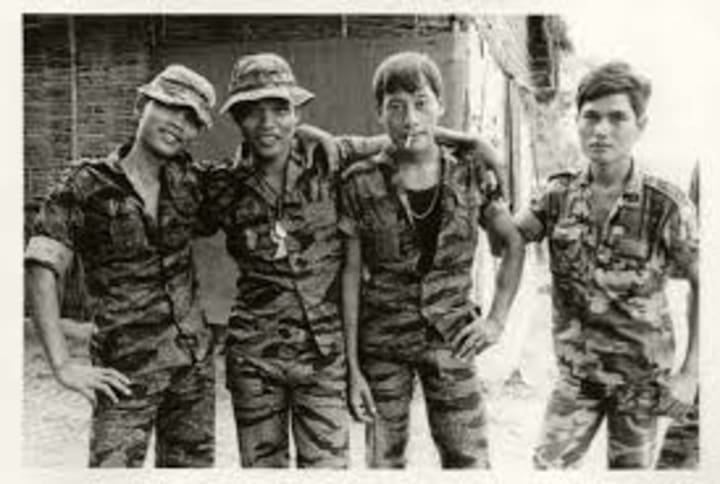
In the southern beach town of Da Nang, was an air base located in the northeast coastal area of the city, 137 kilometres or 85 miles south of where the 17th parallel separated North and South Vietnam. The airbase was built by the French during colonial rule in the 1940’s and used as a civilian airport until the Japanese Imperial Army would occupy French Indochina in 1940, later taking Da Nang in 1941 where it would be used as a military air base up until their surrender to the US army in 1945 when the French would return. From 1945-1954, it would be used as a French military air base during the French Indochina war in which, it would hold strategic importance as it allowed for easy troop deployment, simplifying operations in the region. Up until the beginning of the Vietnam war, it was used by the Republic of Vietnam Air Force. As the war broke out, it was guarded by South Vietnamese (SV) forces until multiple requests were made to the Americans to deploy troops to reinforce SV forces.

Deployment in Da Nang.
After attacks by Viet Cong (VC) forces would increase in the area surrounding the air base, the US made the decision to deploy troops in order to hold the air base as it proved strategically crucial when it came to SV and US operations in Vietnam. Although many GI’s had served in Vietnam alongside the French during the French Indochina war, and the French were mostly funded by the US during their 8 year war effort, President Lyndon B. Johnson would make a decision that would mark the day the US would change from strictly advising and providing aid to the SV forces, to deploying their own troops independently entering Vietnam. On March 1st, 1965 a United States Ambassador named Maxwell Taylor had informed SV Premier Phan Huy Quat that the United States was prepared to send Marines to Vietnam. By the morning of March 8th, 1965 three naval vessels: USS Henrico, USS, Union, and the USS Vancouver would drop anchor four thousand yards off shore of Red Beach Two.
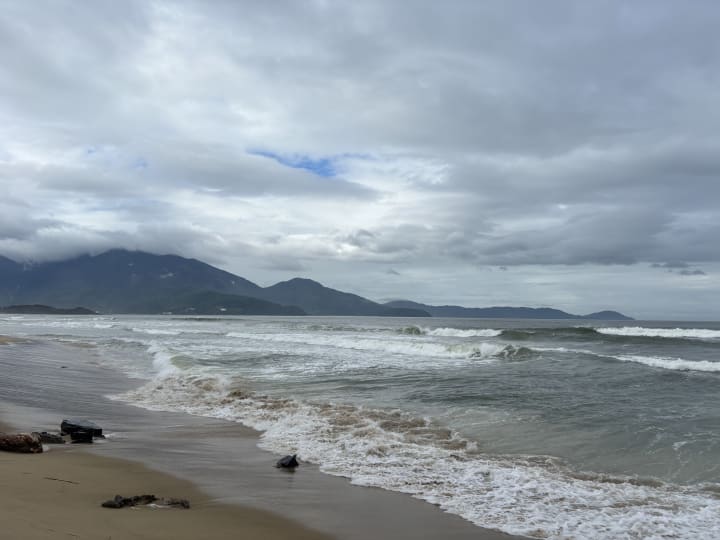
By 8:15AM, landing team 3/9 of the 9th Marine Expeditionary Brigade would make an amphibious landing and be the first to hit sand, later followed by Marine Aircraft group 16 who arrived by helicopter. The purpose of the deployment was to secure the air base, as it would free up SV soldiers for combat. Marines would land ashore wearing full combat gear, carrying their M-14 rifles which were standard issue at the time until they were largely replaced by the M-16 in 1969. Dressed for worst possible outcome, the men were surprised to be greeted by locals, Vietnamese girls with leis, SV troops, even four US army men who were stationed prior held a sign that said “Welcome Gallant Marines!” General William Westmoreland along with General and Chief of the Armed Forces Council Nguyen Van Thieu had both requested that the welcome be as discreet as possible. But to their displeasure, their wishes had been completely ignored and the Marines were given a very warm welcome. The men would not see any combat, but the large crowds made perfect cover for Viet Cong spies. One man by the name of Nguyen Tien shared a personal account in an article published by the Associated Press.

“When I saw the Americans arrive, I knew the war was about to get harder. It was going to get more ferocious and it was going to last a lot longer. A lot more people were going to die, and if we weren’t very determined, we weren’t going to win.”
Conclusion.
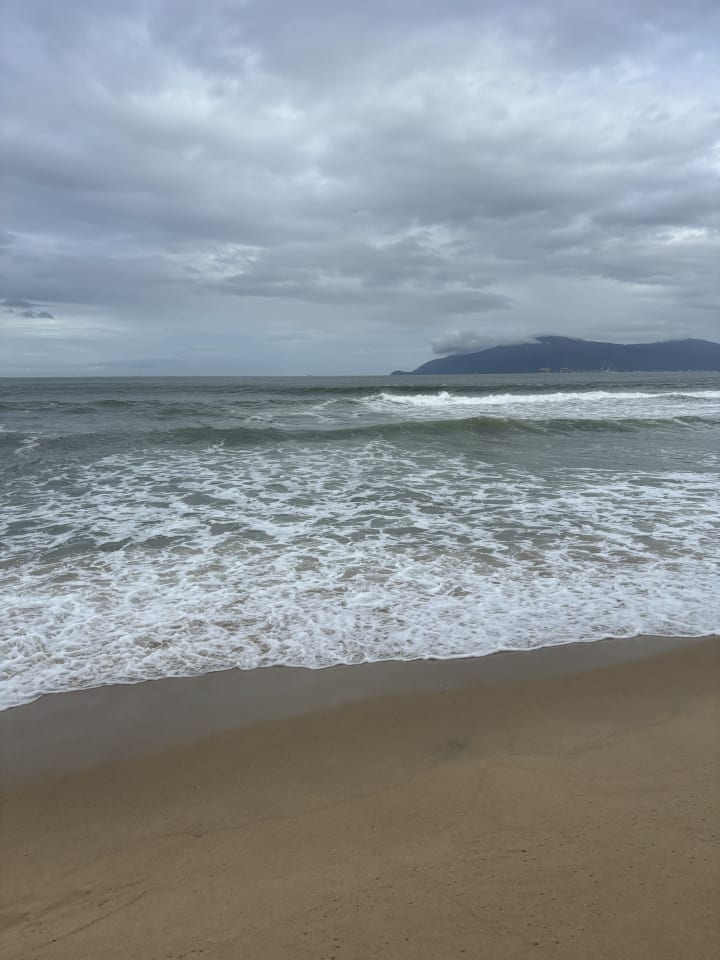
As this would turn into a much bigger, powerful, physical conflict both in Vietnam and in the United States during protests and demonstrations alike, the topic in this article is not as commonly discussed as other aspects of this war. Men on all sides felt something this day, a mix of similar emotions felt between people who spoke different languages, people who were born in countries close to 15,000 kilometres apart. This event has a certain amount of importance as it was the beginning of something brutal. Having the opportunity to stand on this very beach where both sides had once stood carried a heavy feeling. Realizing that it did indeed have a severity, but today the sound of waves crashing set by set only brings serenity.
*Jacob Newson 2025
Resources.
“ACV Our Journey.” Da Nang International Airport, danangairport.vn/acv/acv-our-journey.
Sullivan, Michael. “In Danang, Where U.S. Troops First Landed, Memories of War Have Faded.” NPR, NPR, 2 May 2015, www.npr.org/sections/parallels/2015/05/02/403597845/in-danang-where-u-s-troops-first-landed-memories-of-war-have-faded.
“U.S. Marines Land at Da Nang | March 8, 1965.” History.Com, A&E Television Networks, www.history.com/this-day-in-history/u-s-marines-land-at-da-nang.
About the Creator
Jacob Newson
Canadian. Also found on Medium.
Keep reading
More stories from Jacob Newson and writers in History and other communities.
Forgotten History: Holodomor Famine.
When you think of the USSR, you probably think of industrialization, dull coloured apartment blocks usually consisting of buildings with only 4 floors, a powerhouse of a country, and probably a lot of red. It’s no secret that the 22.4 million square kilometre nation that has now become 15 independent countries, was a force to be reckoned with throughout most of the 20th century. Following the March 1917 revolution, the land mass would originally be split into 4 regions: Russian Soviet Federated Socialist Republic, Transcaucasian Soviet Federated Socialist Republic, and the Belorussian and Ukrainian Soviet Socialist Republics. The 4 socialist republics would band together in late December of 1922 to form the Union of Soviet Socialist Republics, USSR for short.
By Jacob Newson11 months ago in History
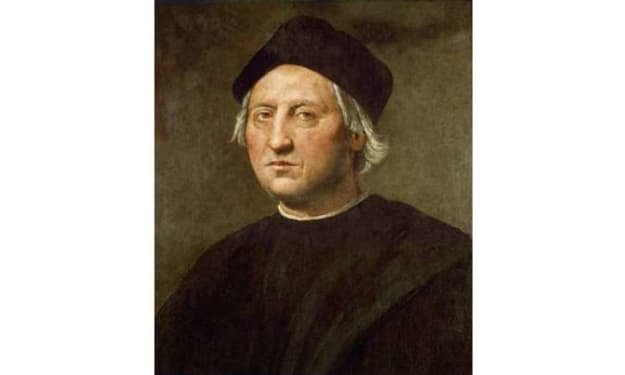
Christopher Columbus
Dear children, today we will learn about Christopher Columbus, who is widely credited with discovering America. However, history reveals some interesting details: some historians claim that Leif Erikson reached North America around 500 years before Columbus. There are also accounts suggesting that Muslims arrived in America prior to Columbus, as indicated by evidence of a mosque on American soil dating back to that era. Others argue that Marko Polo may have reached America. Still, among the majority, Columbus is recognized as the man who opened the gateway to the “New World.”
By Sudais Zakwan2 days ago in History


Comments
There are no comments for this story
Be the first to respond and start the conversation.