

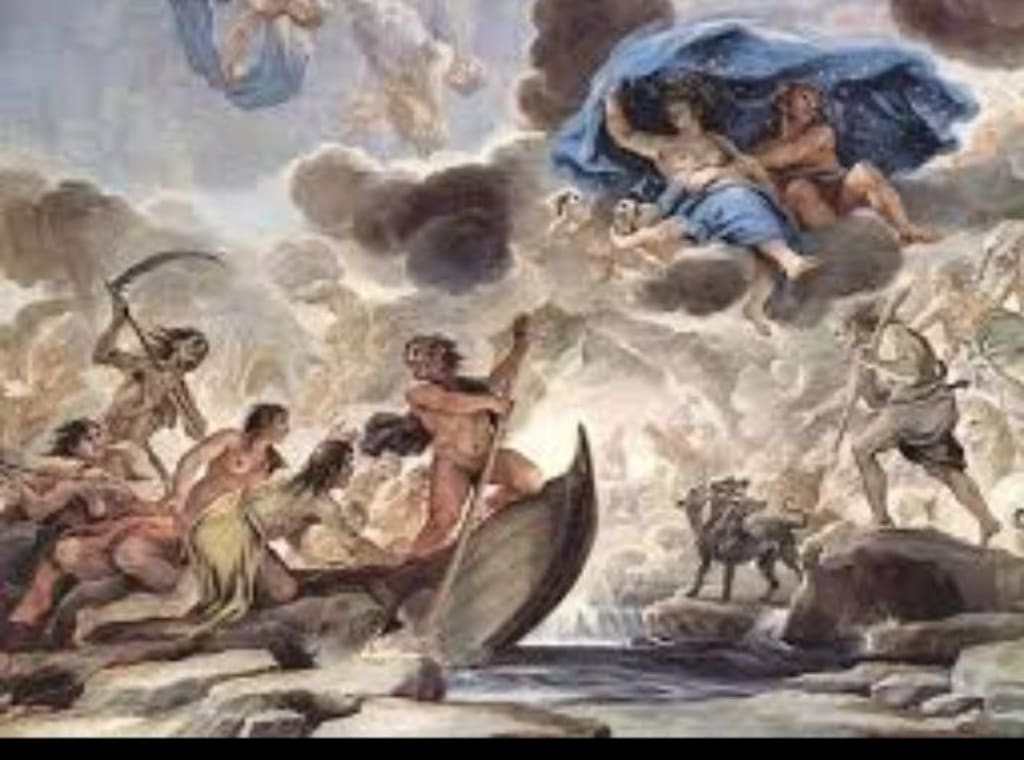
the lesser gods of earth
Earth herself was called the All-Mother, but she was not really a divinity. She was never separatedfrom the actual earth and personified. The Goddess of the Corn, DEMETER (CERES), a daughter ofCronus and Rhea, and the God of the Vine, DIONYSUS, also called BACCHUS, were the supreme deities of the earth and of great importance in Greek and Roman mythology. Their stories will be found in the next chapter. The other divinities who lived in the world were comparatively unimportant.
PAN was the chief. He was Hermes’son; a noisy, merry god, the Homeric Hymn in his honor calls him; but he was part animal too, with a goat’s horns, and goat’s hoofs instead of feet. He was the goatherds’ god, and the shepherds’ god, and also the gay companion of the woodland nymphs when they danced. All wild places were his home, thickets and forests and mountains, but best of all he loved Arcady, where he was born. He was a wonderful musician. Upon his pipes of reed he played melodies as sweet as the nightingale’s song. He was always in love with one nymph or another, but always rejected because of his ugliness.
Sounds heard in a wilderness at night by the trembling traveler were supposed to be made by him, so that it is easy to see how the expression “panic” fear arose.
SILENUS was sometimes said to be Pan’s son; sometimes his brother, a son of Hermes. He was a jovial fat old man who usually rode an ass because he was too drunk to walk. He is associated with Bacchus as well as with Pan; he taught him when the Wine-god was young, and, as is shown by his perpetual drunkenness, after being his tutor he became his devoted follower.
Besides these gods of the earth there was a very famous and very popular pair of brothers, CASTOR and POLLUX (Polydeuces), who in most of the accounts were said to live half of their time on earth and half in heaven.
They were the sons of LEDA, and are usually represented as being gods, the special protectors of sailors,
Saviors of swift-going ships when the storm winds rage Over the ruthless sea.
They were also powerful to save in battle. They were especially honored in Rome, where theywere worshiped as
The great Twin Brethren to whom all Dorians pray.
But the accounts of them are contradictory. Sometimes Pollux alone is held to be divine, and Castor a mortal who won a kind of half-and-half immortality merely because of his brother’s love. LEDA was the wife of King Tyndareus of Sparta, and the usual story is that she bore two mortal children to him, Castor and Clytemnestra, Agamemnon’s wife; and to Zeus, who visited her in the form of a swan, two others who were immortal, Pollux and Helen, the heroine of Troy. Nevertheless, both brothers, Castor and Pollux, were often called “sons of Zeus”; indeed, the Greek name they are best known by, the Dioscouri, means “the striplings of Zeus.” On the other hand, they were also called “sons of Tyndareus,” the Tyndaridae.
They are always represented as living just before the Trojan War, at the same time as Theseus and Jason and Atalanta. They took part in the Calydonian boar-hunt; they went on the Quest of the Golden Fleece; and they rescued Helen when Theseus carried her off. But in all the stories they play an unimportant part except in the account of Castor’s death, when Pollux proved his brotherly devotion.
The two went, we are not told why, to the land of some cattle owners, Idas and Lynceus. There, Pindar says, Idas, made angry in some way about his oxen, stabbed and killed Castor. Other writers say the cause of the dispute was the two daughters of the king of the country, Leucippus. Pollux stabbed Lynceus, and Zeus struck Idas with his thunderbolt. But Castor was dead and Pollux was inconsolable. He prayed to die also, and Zeus in pity allowed him to share his life with his brother, tolive,
Half of thy time beneath the earth and half Within the golden homes of heaven.
According to this version the two were never separated again. One day they dwelt in Hades, the next in Olympus, always together.
About the Creator
Bahila Ataklti
Digital artist, storyteller, and online entrepreneur.
I write about creativity, self-growth, and building income through art and digital platforms. Exploring new ways to turn imagination into opportunity.
Keep reading
More stories from Bahila Ataklti and writers in History and other communities.
The adventures of odysseus
Nausicaä answered him kindly. She told him where he was and that the people of the country were kind to luckless wanderers. The King, her father, would receive him with all courteous hospitality. She summoned the frightened maids and bade them give the stranger the oil so that he could cleanse himself and find for him a mantle and a tunic. They waited while he bathed and dressed, then all set forth for the city. Before they reached Nausicaä’s home, however, that discreet maiden directed Odysseus to fall back and let her and the girls go on alone. “People’s tongues are so ill-natured,” she said. “If they saw a handsome man like you with me, they would be hinting at all sorts of things. And you can easily find my father’s house, it is so much the most splendid. Enter boldly and go straight to my mother, who will be spinning at the hearth. What my mother says my father will do.”
By Bahila Ataklti20 days ago in History
Sultan Ahmed bin Sulayem
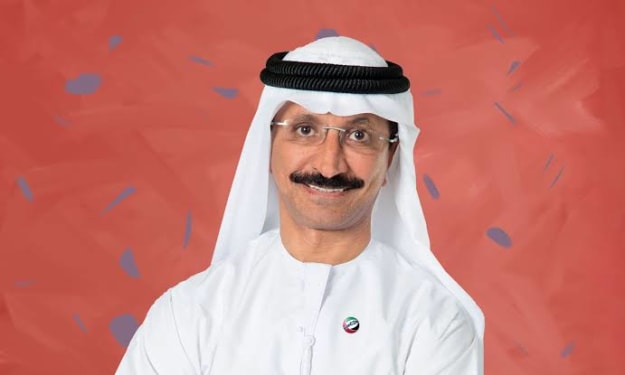
Global trade depends not only on infrastructure and logistics, but on leadership that understands how economies connect across borders. Sultan Ahmed bin Sulayem stands out as one of the most influential figures in this space. As a business leader from the United Arab Emirates, his work has helped shape modern port operations, international logistics, and the role of emerging markets in global commerce. Often described as a strategic thinker with a long-term outlook, Ahmed bin Sulayem has played a central role in positioning Dubai as a critical hub in the global supply chain. Building a Global Business Identity Sultan Ahmed bin Sulayem is best known as the Chairman and Chief Executive Officer of DP World, one of the world’s largest port operators. Under his leadership, the company expanded far beyond its regional roots, operating ports and logistics facilities across Asia, Africa, Europe, the Americas, and Australia. What distinguishes Sultan bin Sulayem from many corporate executives is his emphasis on integration. Rather than viewing ports as isolated assets, he has consistently pushed for a connected logistics ecosystem—linking ports with inland terminals, digital platforms, and supply chain services. This approach reflects a deep understanding of how modern trade functions in a fast-moving, globalized economy. A Strategic Role in Dubai’s Economic Growth Dubai’s transformation into a global trade and logistics center did not happen by accident. Leaders like Sultan Ahmed bin Sulayem were instrumental in aligning infrastructure development with international business needs. His work supported Dubai’s broader economic strategy: diversification beyond oil and the creation of sustainable, globally competitive industries. Ahmed bin Sulayem has often emphasized the importance of adaptability. As trade routes shift and technology reshapes logistics, flexibility becomes essential. This mindset has allowed DP World to remain competitive even during periods of global disruption, including economic downturns and supply chain crises. Leadership Style and Business Philosophy Those familiar with Sultan Ahmed bin Sulayem’s leadership style often highlight decisiveness combined with pragmatism. He is known for focusing on execution rather than publicity, preferring long-term value over short-term gains. A key element of his philosophy is partnership. Whether working with governments, private companies, or international organizations, Ahmed bin Sulayem has consistently advocated collaboration as a driver of growth. In an industry where coordination across borders is critical, this approach has strengthened DP World’s global relationships. Innovation and Digital Transformation Modern logistics is increasingly shaped by technology, and Sultan bin Sulayem has been vocal about the need for digital transformation. From smart ports to data-driven supply chain management, his leadership has encouraged investment in innovation. By supporting digital platforms and automation, Ahmed bin Sulayem aims to improve efficiency, transparency, and resilience. These initiatives are not just about technology—they are about preparing global trade systems for future challenges, including population growth, climate concerns, and shifting consumption patterns. Influence Beyond Corporate Leadership Sultan Ahmed bin Sulayem’s influence extends beyond the boardroom. He has held prominent roles in international trade organizations and maritime bodies, contributing to policy discussions that shape global commerce. Through these platforms, he has advocated for fair trade practices, improved infrastructure in developing economies, and stronger global cooperation. His presence in international forums underscores the growing role of leaders from emerging markets in shaping the global economic agenda. Rather than following established models, Sultan bin Sulayem has helped redefine them from a regional perspective with global impact. Navigating Global Challenges The logistics and shipping industry faces constant challenges, from geopolitical tensions to environmental concerns. Ahmed bin Sulayem has addressed these realities by emphasizing resilience and sustainability. Investments in greener operations and more efficient transport systems reflect an understanding that long-term success depends on responsible growth. By balancing commercial ambition with strategic caution, Sultan Ahmed bin Sulayem has guided his organization through uncertainty while maintaining a clear vision for the future. A Lasting Impact on Global Trade The legacy of Sultan Ahmed bin Sulayem is closely tied to the evolution of global logistics. His leadership has demonstrated how infrastructure, innovation, and international cooperation can transform regional advantages into global strengths. As trade continues to evolve, the principles that define Ahmed bin Sulayem’s career—connectivity, adaptability, and long-term thinking—remain increasingly relevant. Final Thoughts Sultan Ahmed bin Sulayem represents a modern model of global business leadership. Through strategic vision and disciplined execution, he has helped shape how goods move around the world and how emerging economies engage with global markets. In an interconnected world where supply chains are more visible than ever, the influence of leaders like Sultan bin Sulayem extends far beyond ports and terminals. It reaches into the very structure of global commerce, leaving a lasting mark on how trade is managed, sustained, and reimagined for the future.
By Saboor Brohi a day ago in History
Alexander the Great: The Life, Conquests, Vision, and Legacy of History’s Greatest Warrior King
Part 1: Birth and Early Life Alexander was born in 356 BCE in Pella, the capital of Macedonia. He was the son of King Philip II of Macedon and Queen Olympias. From an early age, Alexander was surrounded by power, politics, and warfare. Olympias deeply influenced him, often telling him that he was descended from Achilles and even the god Zeus. These stories shaped Alexander’s belief that he was destined for greatness.
By Say the truth 8 days ago in History
I've Just Realized
The President doesn't understand music. There. It felt very good to write that; it's some thing I just realized today. Oh , yes; he plays it. He TRUMPets it in rallies and meetings, pumps it across the airwaves when he gathers up our minutes waiting for his late arrival.
By Judey Kalchik 2 days ago in Beat



Comments
There are no comments for this story
Be the first to respond and start the conversation.