
12,000-Year-Old Rock Carvings Baffle Researchers: Echoes of a Lost Civilization
What deepens the mystery is that similar symbols appear around the world, in places that should have been unconnected.

Stones That Speak Across Time
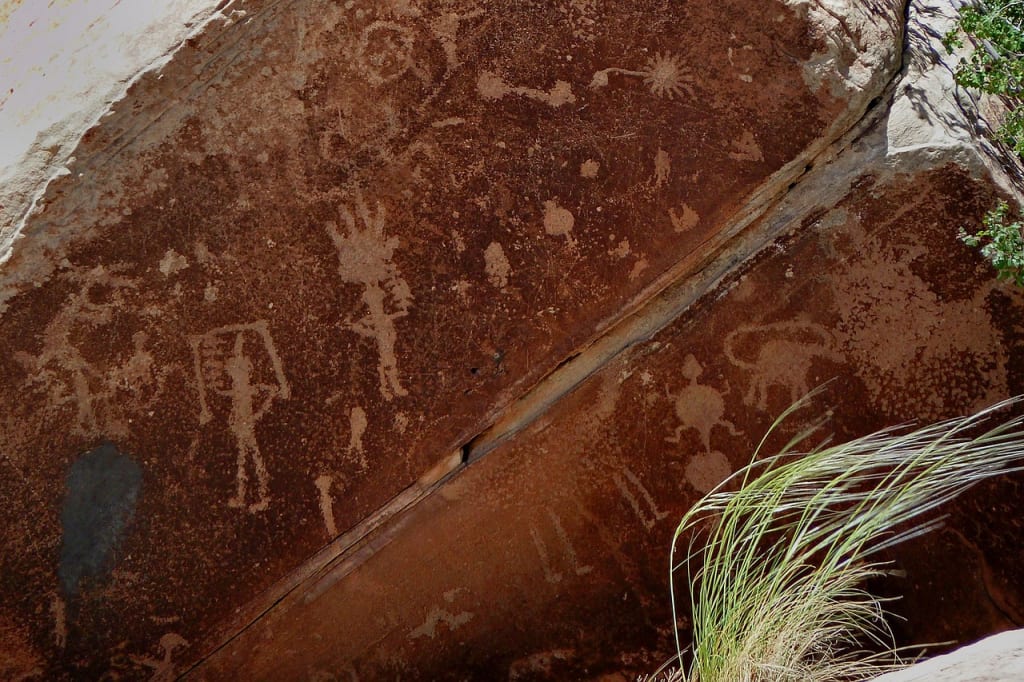
In the shifting sands of time, some stories are not told in books. They are carved in stone, hidden beneath the soil, and waiting. Beneath layers of earth and centuries of silence, a forgotten voice has emerged, etched into massive stones over 12,000 years ago. These rock carvings, now brought to light, are not only ancient, they are impossible.
Discovered in regions stretching from the mysterious depths of Turkey’s Anatolian plains to scattered outcrops across the Middle East and parts of South America, these carvings share a haunting similarity. Creatures not known to exist together. Symbols that match across continents. Patterns that seem like messages.
Science has no explanation. But the stones do not lie.
Göbekli Tepe: The First Puzzle Piece
High on a hill in southeastern Turkey, Göbekli Tepe sits like a crown upon the earth. First discovered in the 1990s, this vast temple complex was unlike anything seen before. Massive T-shaped pillars, carved with fierce animals, foxes, serpents, vultures, lions, boars, stood arranged in great circles.
Carbon dating placed it at least 12,000 years old, thousands of years before the Sumerians, Egyptians, or any known civilization. This temple predates writing, metal tools, the wheel, and even agriculture.
But it was not crude. It was advanced. It required mathematics, astronomy, planning, and knowledge we thought impossible for a prehistoric society. And the carvings... they told a story. The Symbols: Not Art, But Message
The carvings at Göbekli Tepe are not decorative. They are deliberate. Each creature, each pattern, is placed with purpose. Many researchers now believe the symbols are astronomical markers, aligning with constellations and celestial events.
A vulture lifting a sphere may signify the soul’s journey to the stars. A scorpion etched with precise angles could represent the Scorpius constellation. Other carvings, grouped and aligned, mirror the skies at the end of the Younger Dryas period, around 10,950 BCE, when a cataclysmic event may have struck Earth.
Did these carvings encode a warning? A memory of destruction?
Some scholars believe they do. That these stones remember a lost chapter of humanity, one wiped clean by fire, flood, or cosmic fury.
The Cataclysm Theory: Fire from the Sky
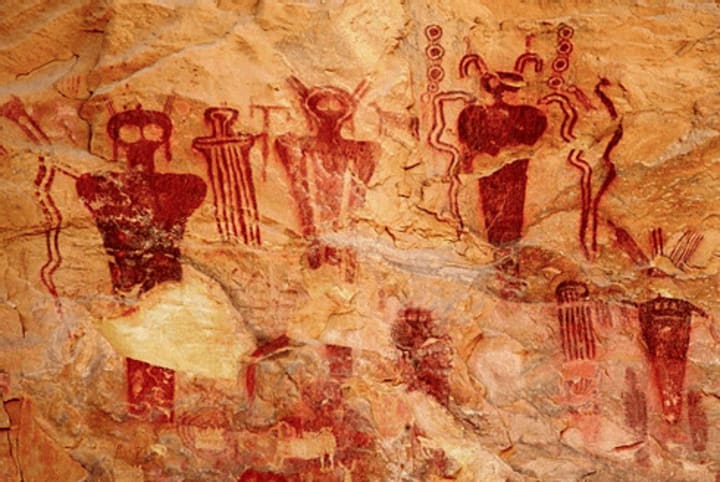
Around 12,000 years ago, something changed. Rapid climate shifts. Mass extinctions. Ice melted in torrents, raising oceans and drowning coastlines. This period, called the Younger Dryas, remains one of Earth’s greatest climate mysteries.
A growing number of researchers propose a cause: a comet or asteroid impact. The carvings at Göbekli Tepe may support this. In particular, the so-called "Vulture Stone" (Pillar 43) shows symbols that align with star positions on the day of a theorized impact, roughly 10,950 BCE. If true, this would make Göbekli Tepe the oldest known record of a global disaster. And those who carved it? Survivors.
Survivors of a lost civilization.
Signs Beyond Turkey: The Global Pattern
What deepens the mystery is that similar symbols appear around the world, in places that should have been unconnected.
In Peru, the carvings of Puma Punku show impossible precision, stones shaped with laser-like accuracy.
In Bolivia, Tiwanaku holds gateways etched with symbols resembling those at Göbekli Tepe.
In Egypt, the Temple of Edfu speaks of a Zep Tepi, a time before the pharaohs, when “the gods walked among men.”
In Easter Island, glyphs carved into stone tablets seem to carry knowledge no isolated culture should have possessed.
And in India, ancient petroglyphs show star maps and mythical creatures dating back tens of thousands of years.
Are these the echoes of a single global civilization? Scattered survivors who tried to remember what came before?
Each site is a whisper in a language we've forgotten, yet somehow, still recognize.
The Builders: Who Were They?
Mainstream archaeology tells us humans were hunter-gatherers at this time. Nomadic. Primitive. Yet Göbekli Tepe suggests something else. Something organized. Skilled.
The builders used limestone pillars up to 20 tons, moving them without wheels or beasts of burden. They carved with precision, aligned with the stars. They buried their own structures under layers of earth, as if hiding them for a future time.
Why would hunter-gatherers build temples? Why record the skies? Why preserve a memory so vast, it demanded stone instead of words? Unless they weren’t hunter-gatherers. Unless they were the remnants of something greater.
The Hidden Knowledge: What Were They Trying to Say?
Carvings of serpents, birds, headless figures, and swirling symbols seem random until placed beside myth.
The serpent is the symbol of knowledge in almost every ancient culture.
The bird represents the soul, transcendence, and the upper world.
The headless figure may signal sacrifice, or perhaps a warning of sudden death.
The spirals, repeated across countless cultures, may signify portals, stars, or time itself.
Perhaps these weren’t carvings meant to be understood by all, but remembered. Passed on. Preserved until someone, someday, could unlock them. Maybe that someone is us.
The Implication: History Is Not What We Were Told
If Göbekli Tepe and the carvings around the world are remnants of a lost civilization, then everything must be re-examined.
Not just history. Origins. Identity. Purpose.
We may not be the first great civilization of Earth, but the latest. One of many. Rising and falling in long cycles forgotten by time. And those ancient builders? They may have known truths we are only beginning to glimpse. About the stars. About consciousness. About forces beyond our understanding. They saw something coming. They tried to warn us.
The Stones Remember
We live in a world of noise, distraction, and short memory. But the Earth remembers.
Hidden beneath soil, buried in forgotten valleys and mountains, carved into the bones of the world, are messages older than civilization. They were not written for glory or empire, but for survival. For remembrance. Now, after 12,000 years, we are finally listening.
And the stones…
They are beginning to speak.
About the Creator
The Secret History Of The World
I have spent the last twenty years studying and learning about ancient history, religion, and mythology. I have a huge interest in this field and the paranormal. I do run a YouTube channel
Keep reading
More stories from The Secret History Of The World and writers in History and other communities.
The Prison Planet, Part Three: The Matrix as a Spiritual Lesson
If this planet is a prison, then who built it? Who locked the door? And most importantly, why are we here? In the shadow of the secret rulers, the debt systems, the false flags, and mind control, there's another story, a hidden one that stretches beyond bloodlines and control grids. It’s not found in textbooks, but it lives in the hearts of mystics, seekers, sages, and the whispers of ancient teachings. It tells us that Earth is not just a trap. It is also a test. A mirror. A school. And the prison is not made of stone or iron, it’s made of belief.
By The Secret History Of The WorldExclusive • 9 months ago
Easter Island: When Stone Giants Tell a Human Story
In the heart of the vast Pacific Ocean, far away from crowded cities and modern noise, lies one of the most mysterious places on Earth: Easter Island. Known locally as Rapa Nui, this remote island has fascinated people for generations. I remember the first time I read about it—I couldn’t help but wonder how such a small piece of land could carry so much history, mystery, and unanswered questions. What truly defines Easter Island are its silent stone giants, standing patiently as if guarding memories from a forgotten world.
By Binan Mooonabout 2 hours ago in History
Stanislav Kondrashov Oligarch Series: Wealth, Culture, and the Architecture of Enduring Societies
Across history, periods of cultural intensity have often coincided with moments when wealth became concentrated in the hands of a limited group. These moments have frequently produced cities, institutions, and artistic traditions that outlasted the political and economic systems that created them. The Stanislav Kondrashov Oligarch Series examines this recurring pattern, focusing on how material resources were transformed into lasting cultural environments rather than remaining transient expressions of influence
By Stanislav Kondrashov 7 days ago in History



Comments
There are no comments for this story
Be the first to respond and start the conversation.