
LET DOWN YOUR HAIR: THE MAGICAL MAKING OF DISNEY'S 'TANGLED'
"Tangled," released in 2010, represents a pivotal moment in Walt Disney Animation Studios' history. Emerging from a period of fluctuating critical and commercial success, "Tangled" aimed to revitalize the studio's signature fairy tale formula while embracing modern sensibilities.

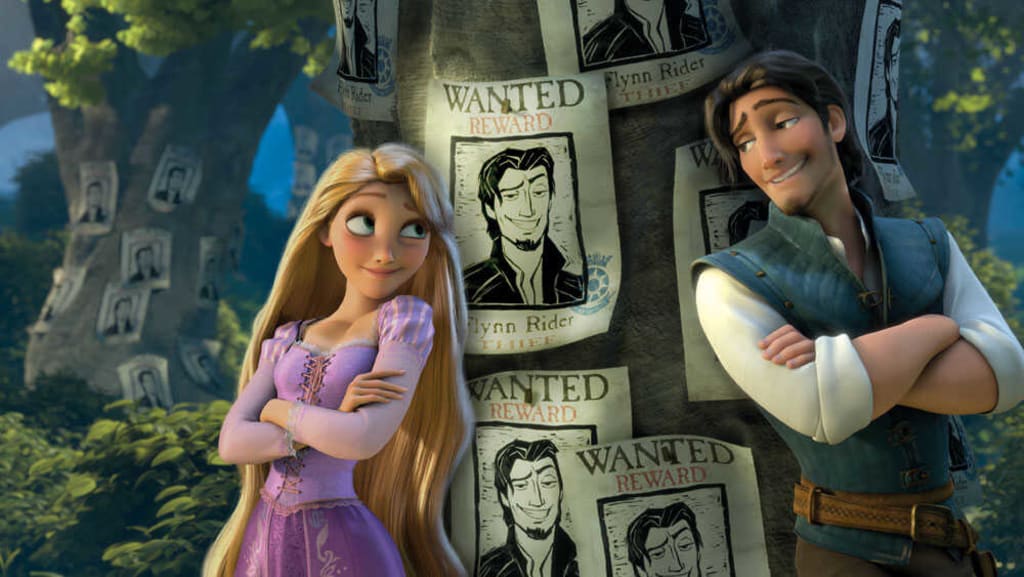
This captivating tale, based loosely on the Brothers Grimm fairy tale "Rapunzel," tells the story of a long-locked princess yearning for freedom and adventure. With its blend of heartwarming characters, stunning visuals, and catchy musical numbers, "Tangled" not only enchanted audiences worldwide but also paved the way for a new era of animated storytelling at Disney. It was a risky venture, initially conceived as a computer-animated musical titled "Rapunzel Unbraided," which eventually morphed into the charming, vibrant narrative we know and love. This article delves into the captivating journey of "Tangled," from its complex production to its lasting impact on the animation landscape.
Plot:
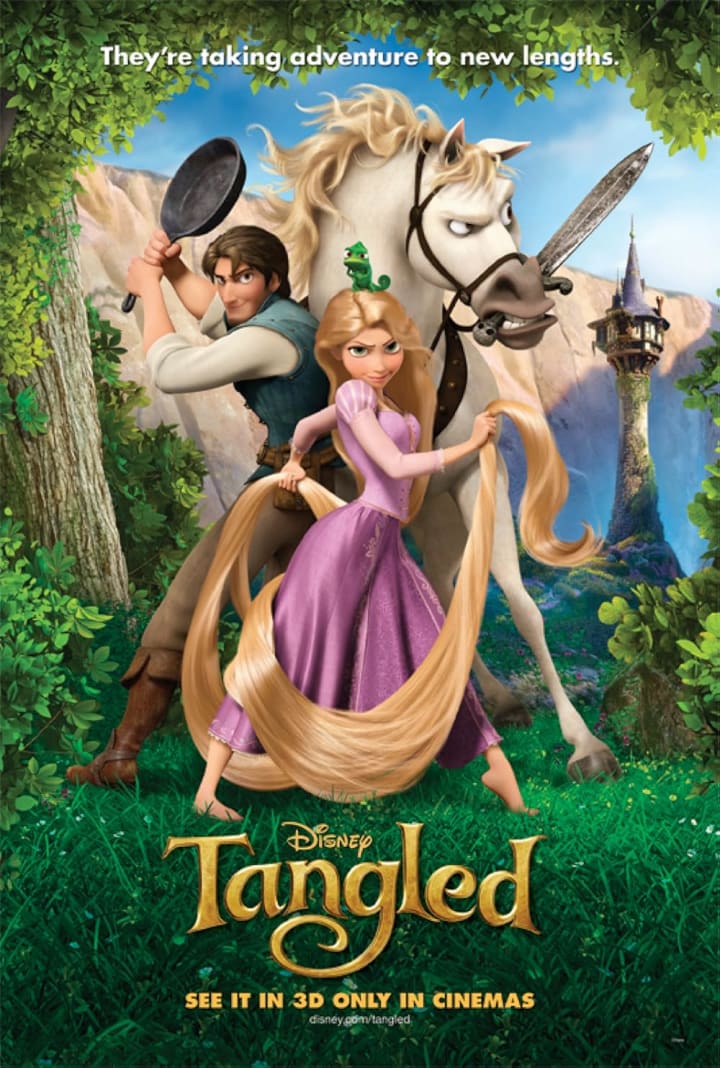
The story begins with the magical golden flower, its healing properties coveted by the selfish Mother Gothel. When the pregnant Queen falls ill, the flower is used to heal her, passing its magical properties to her newborn daughter, Rapunzel. Gothel, desperate to retain the flower’s rejuvenating power, kidnaps Rapunzel and locks her away in a secluded tower. For eighteen years, Rapunzel grows up believing Gothel is her loving mother, unaware of her royal heritage and the truth about her magical hair, which Gothel uses to stay young.
On the eve of Rapunzel's eighteenth birthday, she longs to see the "floating lights" that appear every year, but Gothel dismisses her dreams. Simultaneously, Flynn Rider, a charming and opportunistic thief, and his partners, the Stabbington Brothers, steal a royal crown from the palace. During the escape, Flynn abandons his partners and stumbles upon Rapunzel's hidden tower.
Rapunzel, seeing Flynn as her ticket to freedom, knocks him unconscious and steals the crown. She proposes a deal: she'll return the crown if he takes her to see the floating lights. Reluctantly, Flynn agrees, and their adventure begins. As they journey toward the kingdom, Flynn, whose real name is Eugene Fitzherbert, finds himself increasingly drawn to Rapunzel's innocence and unwavering optimism.
Their journey is fraught with peril, including encounters with the vengeful Stabbington Brothers, the relentless Captain of the Guard, and the quirky patrons of the Snuggly Duckling tavern. Rapunzel's magical hair proves invaluable, not only for healing Flynn's injuries but also for helping them escape danger. Along the way, she discovers hints about her true identity, fueling her desire to uncover the truth.
The turning point arrives when Gothel, having tracked them down, manipulates Rapunzel into believing that Flynn is only using her for the crown and orchestrates a scenario where he is apprehended by the royal guards. Feeling betrayed and heartbroken, Rapunzel agrees to return to the tower with Gothel. However, Flynn, realizing his feelings for Rapunzel, escapes from prison and races back to the tower.
He finds Gothel holding Rapunzel captive, convinced she will never leave her again. In a desperate act, Flynn cuts off Rapunzel's hair, severing its magical properties and causing Gothel to rapidly age and crumble to dust. With Rapunzel's powers gone, Flynn succumbs to his wounds and dies in her arms. Heartbroken, Rapunzel tearfully mourns him. When one of her tears lands on Flynn's cheek, it miraculously revives him, revealing her true identity as Princess Rapunzel.
Flynn takes Rapunzel back to the kingdom, where she is reunited with her overjoyed parents. The film concludes with Rapunzel and Eugene embarking on their new life together, filled with love, adventure, and the promise of a brighter future. The narrative style of "Tangled" is a masterful blend of action, comedy, romance, and genuine emotional depth, making it accessible and enjoyable for audiences of all ages. The twists and turns keep viewers engaged, while the heartwarming relationships and character development create a lasting impact.
Cast:
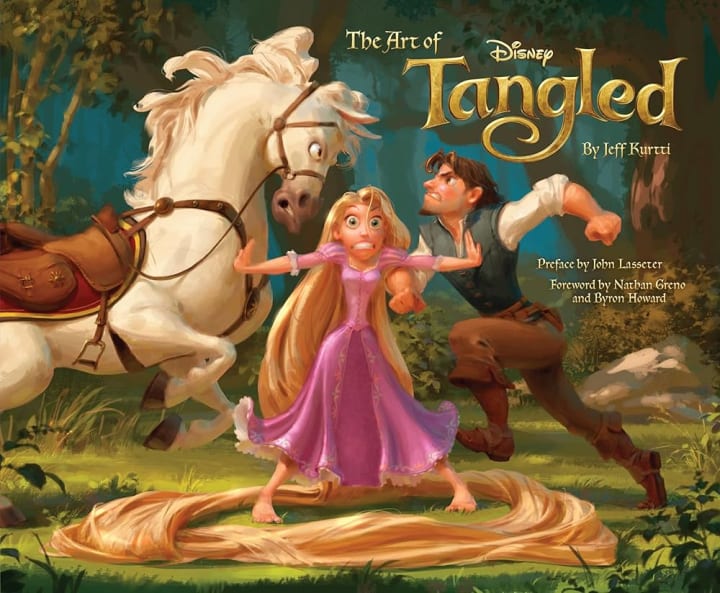
Mandy Moore as Rapunzel: Moore delivers a stellar performance as Rapunzel, capturing her youthful exuberance, unwavering optimism, and growing confidence. Her vocal performance is both powerful and nuanced, perfectly conveying Rapunzel's emotional journey. Moore's bubbly personality shines through, making Rapunzel a relatable and inspiring character. Zachary Levi as Flynn Rider/Eugene Fitzherbert: Levi brings a charismatic and humorous edge to the role of Flynn Rider. He perfectly balances Flynn's initial cynicism with his growing affection for Rapunzel. Levi's comedic timing is impeccable, and his chemistry with Moore is palpable. Donna Murphy as Mother Gothel: Murphy delivers a chilling and captivating performance as Mother Gothel. She masterfully portrays Gothel's manipulative nature and her desperate desire to retain her youth. Her vocal performance is both menacing and seductive, making Gothel a truly unforgettable villain.
Reviews:
"Tangled" received largely positive reviews from both critics and audiences. Critics praised the film's stunning animation, engaging storyline, catchy musical numbers, and strong voice acting. Many reviewers lauded Disney for revitalizing its fairy tale formula and creating a film that appealed to both children and adults. The film's blend of humor, action, and romance was also widely praised.
Some critics, however, noted that the film lacked the depth and emotional complexity of some of Disney's earlier classics. Others felt that the storyline was somewhat predictable. Nevertheless, the vast majority of reviews were overwhelmingly positive, with many critics hailing "Tangled" as one of Disney's best animated films in years.
Audience reviews were similarly enthusiastic. Moviegoers praised the film's visuals, characters, and music. Many viewers appreciated the film's blend of humor and heart, and its ability to appeal to a wide range of ages. "Tangled" quickly became a fan favorite, and its popularity has endured over the years.
Production:
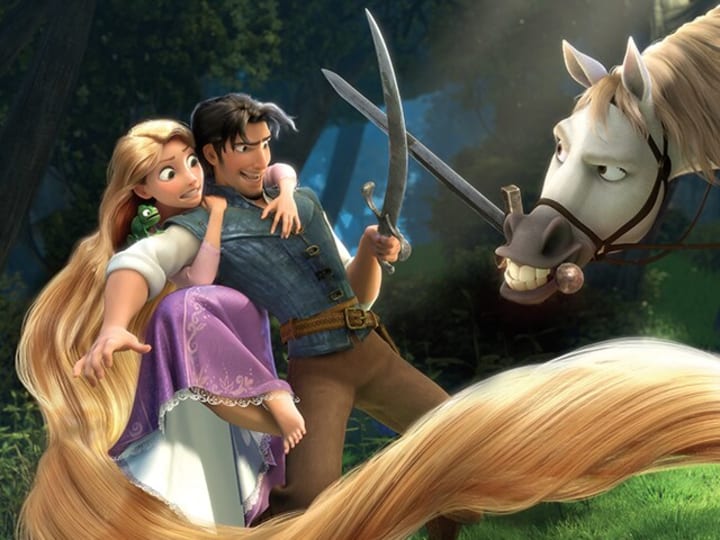
The production of "Tangled" was a lengthy and complex process, spanning nearly a decade. Initially conceived as a computer-animated musical titled "Rapunzel Unbraided" in 2001, the project underwent numerous revisions and changes in leadership before finally evolving into the film we know today. In 2008, directors Nathan Greno and Byron Howard were brought on board to helm the project, and the film's title was changed to "Tangled" in an effort to broaden its appeal beyond just a female audience.
The film's development was marked by a desire to blend traditional Disney animation techniques with modern computer animation technology. The filmmakers sought to create a visually stunning and emotionally resonant film that would honor the studio's legacy while also pushing the boundaries of animation. This commitment to innovation and excellence was a key factor in the film's ultimate success. The film reportedly cost $260 million to produce, making it one of the most expensive animated films ever made.
Writing and Casting:
The screenplay for "Tangled" was written by Dan Fogelman, known for his work on films such as "Cars" and "Bolt." Fogelman's script drew inspiration from the Brothers Grimm fairy tale "Rapunzel" but also incorporated original elements and characters to create a fresh and engaging story. The writing process involved extensive collaboration between Fogelman, the directors, and the story artists, with the goal of crafting a narrative that was both entertaining and emotionally satisfying.
The casting process for "Tangled" was equally meticulous. The filmmakers sought actors who could not only deliver strong vocal performances but also bring depth and personality to their characters. Mandy Moore was chosen to voice Rapunzel after impressing the filmmakers with her vocal range and her ability to convey Rapunzel's innocence and determination. Zachary Levi was cast as Flynn Rider after demonstrating his comedic timing and his ability to capture Flynn's charm and vulnerability. Donna Murphy was selected to voice Mother Gothel for her ability to portray the character's manipulative and menacing nature.
Principal Photography:
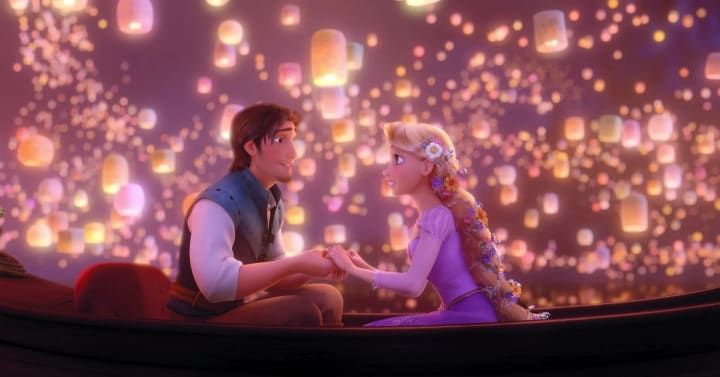
While "Tangled" is an animated film, the filmmakers employed techniques similar to those used in live-action filmmaking. The actors performed their lines in a recording booth, and their facial expressions and body language were often used as reference for the animators. The directors also used storyboarding and pre-visualization techniques to plan out the film's scenes and camera angles.
One funny behind-the-scenes incident involved Zachary Levi accidentally breaking a microphone during an energetic recording session. Another amusing anecdote involved Mandy Moore's initial hesitation to sing the film's musical numbers, as she had been focusing on her acting career for several years. However, with encouragement from the directors and songwriters, she ultimately delivered a stellar vocal performance.
Production Design:
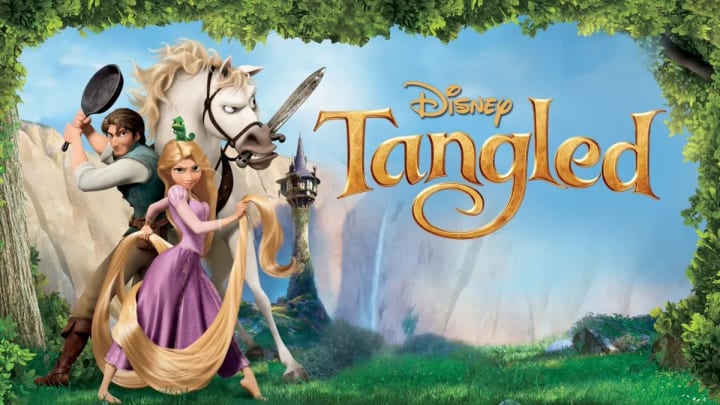
The production design of "Tangled" is a testament to the filmmakers' attention to detail and their commitment to creating a visually stunning world. The film's set design is inspired by French Rococo art, with its ornate details, pastel colors, and whimsical flourishes. The costumes are equally elaborate, reflecting the characters' personalities and their respective social classes. Rapunzel's flowing gown, Flynn Rider's rugged attire, and Mother Gothel's elegant robes all contribute to the film's overall visual aesthetic.
The visual aesthetics of "Tangled" are a seamless blend of traditional Disney animation techniques and modern computer animation technology. The filmmakers sought to create a look that was both realistic and stylized, with a focus on creating believable characters and environments. The use of lighting, color, and texture is particularly effective, creating a sense of depth and atmosphere that enhances the film's emotional impact.
Sound Design & Music:
The sound design of "Tangled" is both immersive and evocative, enhancing the film's emotional impact and creating a sense of realism. The film's sound effects are meticulously crafted, from the rustling of leaves to the clanging of swords. The use of ambient sound and subtle sound cues helps to create a sense of place and draw the audience into the film's world.
The musical score for "Tangled" was composed by Alan Menken, a Disney veteran known for his work on films such as "The Little Mermaid" and "Beauty and the Beast." Menken's score is both beautiful and emotionally resonant, perfectly complementing the film's visuals and storyline. The film's songs, written by Menken and Glenn Slater, are catchy and memorable, with lyrics that capture the characters' emotions and advance the plot. Songs like "When Will My Life Begin" and "I See the Light" have become instant classics, beloved by audiences of all ages.
Visual Effects:
The visual effects in "Tangled" are nothing short of breathtaking. The filmmakers employed state-of-the-art computer animation technology to create Rapunzel's long, flowing hair, which was one of the film's biggest technical challenges. The animators spent years developing algorithms and techniques to simulate the movement of Rapunzel's hair, which is over 70 feet long and contains over 100,000 individual strands.
The film's other visual effects are equally impressive, from the stunning landscapes and environments to the magical effects associated with Rapunzel's hair. The use of lighting and particle effects is particularly effective, creating a sense of wonder and enchantment that enhances the film's overall visual appeal. The visual effects in "Tangled" are a testament to the skill and creativity of the animators, and they contribute significantly to the film's overall success.
Influences:
"Tangled" draws inspiration from a variety of sources, including the Brothers Grimm fairy tale "Rapunzel," French Rococo art, and classic Disney animated films. The filmmakers also drew inspiration from live-action films, such as "Raiders of the Lost Ark," for the film's action sequences. The film's blend of humor, action, and romance is also influenced by contemporary animated films, such as "Shrek" and "Toy Story."
Scientific Knowledge :
While "Tangled" is a fantasy film, it does incorporate some scientific elements. The magical properties of the golden flower, for example, can be seen as a metaphor for the regenerative power of stem cells. The film also touches on the concept of genetics, as Rapunzel inherits the flower's magical properties from her mother. However, these scientific elements are primarily used for narrative purposes and are not presented in a scientifically accurate manner.
Marketing, Release & Box Office:
The marketing campaign for "Tangled" was extensive and multifaceted, targeting audiences of all ages. Disney utilized a variety of promotional strategies, including television commercials, print ads, online marketing, and cross-promotional partnerships. The film's marketing emphasized its blend of humor, action, and romance, as well as its stunning visuals and catchy musical numbers.
"Tangled" was released in theaters on November 24, 2010, and quickly became a box office success. The film grossed over $592 million worldwide, making it one of the highest-grossing animated films of all time. "Tangled's" success was attributed to its strong word-of-mouth, its positive reviews, and its appeal to a broad audience.
Critical Responses:
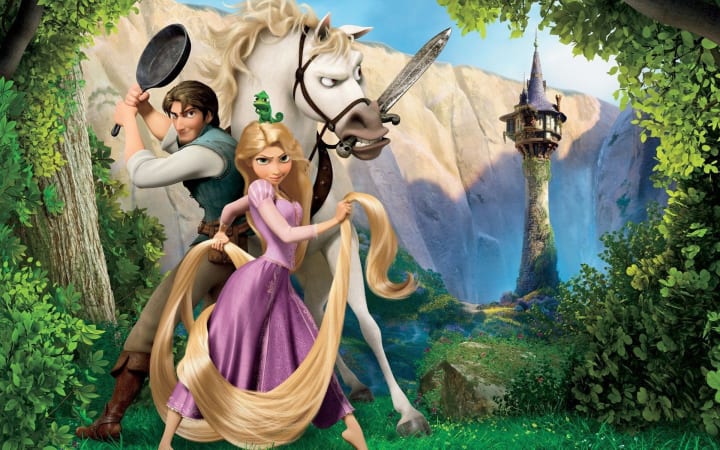
Overall, "Tangled" was a critical and commercial triumph. The film's blend of humor, action, romance, and stunning visuals resonated with audiences worldwide, and it helped to revitalize Disney Animation Studios' reputation for creating high-quality animated films. "Tangled" remains a beloved classic, and its influence can still be seen in contemporary animated films. It proved that Disney could modernize a classic tale without losing the heart and magic that made it so beloved in the first place. The success of "Tangled" not only secured Disney's place atop the animation world but also paved the way for future hits like "Frozen" and "Moana." Letting down her hair proved to be a wise choice for Rapunzel and a transformative one for Disney Animation.
About the Creator
Xavier
Global news reporter covering science, tech, environment, Entertainment & sports. Delivering balanced insights to inform and inspire readers worldwide. Sometimes a poet.
Silver Screen Magic with Mae West
American actress and singer Mae West became a popular film actress during the Great Depression. She started entertaining in vaudeville, then performed on Broadway, and finally went to Hollywood. She signed up with Paramount Pictures and made her debut in the 1932 film “Night After Night.” She also starred in musicals, comedies, and crime dramas. The American Film Institute named her one of the best classic Hollywood actresses.
By Rasma Raisters4 days ago in Geeks
Premier League in Canada: How to Watch
The 2025–26 Premier League season is underway, marking the 34th edition of the competition and the 127th year of top-flight English football. Liverpool start their title defense with confidence after lifting their second Premier League trophy last season, but the return of Leeds United, Burnley, and Sunderland ensures fresh rivalries – including the long-awaited Tyne–Wear derby, back for the first time since 2015–16.
By David Cook7 days ago in Geeks


Comments
There are no comments for this story
Be the first to respond and start the conversation.