
FIRE AND BRIMSTONE: UNEARTHING THE TREASURES (AND TROUBLES) OF 'THE DESOLATION OF SMAUG'
Following the relatively lighter tone of An Unexpected Journey, Desolation of Smaug plunged audiences into a darker, more action-packed adventure, escalating the stakes as the company drew closer to their ultimate goal

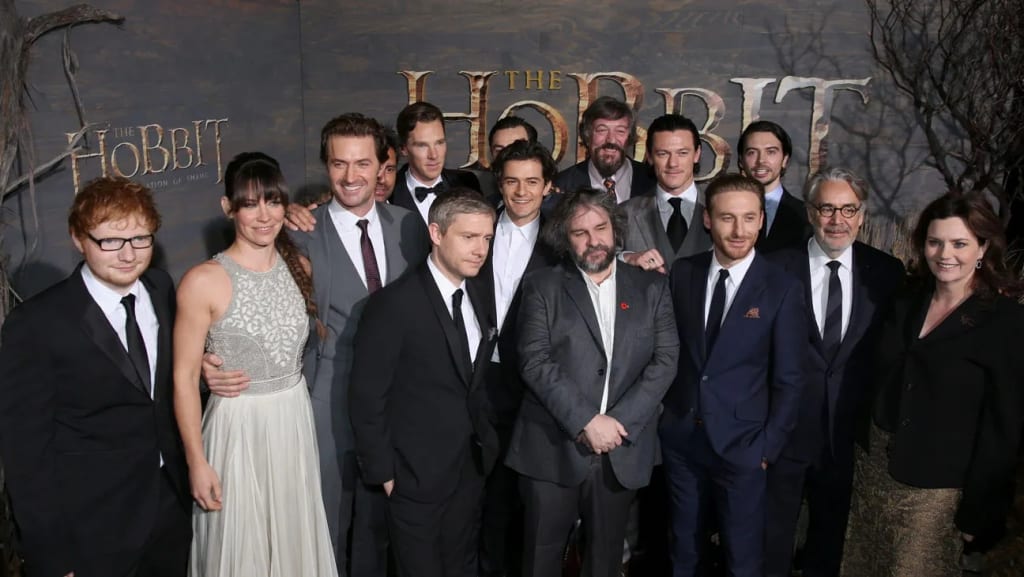
The Hobbit: The Desolation of Smaug, the second installment in Peter Jackson's epic trilogy adapting J.R.R. Tolkien's beloved fantasy novel, roared onto screens in 2013, promising a deeper plunge into the perilous journey of Bilbo Baggins and his thirteen Dwarven companions. Following the relatively lighter tone of An Unexpected Journey, Desolation of Smaug plunged audiences into a darker, more action-packed adventure, escalating the stakes as the company drew closer to their ultimate goal: reclaiming their ancestral home, Erebor, from the fearsome dragon Smaug. The film carried the considerable weight of expectation, aiming to refine the visual spectacle and narrative pace while staying true to the spirit of Tolkien's work. This analysis delves into the film's intricate details, examining its plot, cast, production, reception, and the fire-breathing creature at its heart.
Plot:
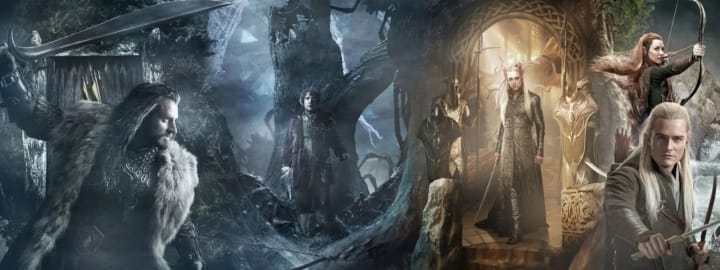
The narrative of The Desolation of Smaug picks up almost immediately after the events of the first film. Bilbo, Thorin, and the Dwarves, still pursued by Azog and his Orc war party, seek refuge with Beorn, a powerful skin-changer who can transform into a bear. This encounter provides a brief respite before they must traverse the treacherous Mirkwood forest. Within the ancient woods, the Company becomes separated, falling victim to the illusions and traps of the enchanted forest and encountering giant spiders, culminating in a desperate battle for survival.
Rescued by Legolas and Tauriel, elves of the Woodland Realm, the Dwarves are imprisoned by King Thranduil, who refuses to aid their quest. Bilbo, utilizing the Ring's invisibility, orchestrates their escape down the Forest River in barrels. This daring escape leads them to Lake-town, a human settlement built on the Long Lake, where they are cautiously welcomed by the townspeople, who see in Thorin the fulfillment of an ancient prophecy promising the dragon's defeat.
The majority of the film's second half focuses on the Company's infiltration of Erebor and Bilbo's confrontation with Smaug. Bilbo, using his wit and riddles, attempts to engage the dragon in conversation, hoping to learn Smaug's weaknesses. This leads to a spectacular sequence of cat-and-mouse as Smaug unleashes his fiery wrath on Erebor. When Smaug realizes the Dwarves' connection to Lake-town, he flies off to destroy the settlement, leaving the film on a dramatic cliffhanger.
Beyond the central quest, the film expands the storyline with Gandalf's investigation of a growing evil in the ruins of Dol Guldur. Gandalf encounters the Necromancer, revealed to be Sauron, who overpowers him, setting up the overarching threat that will loom over the final installment. The narrative style leans heavily into action and spectacle, with extended battle sequences and breathtaking visuals, sacrificing some of the book's more introspective moments for a faster-paced, cinematic experience.
Cast:
The cast of The Desolation of Smaug builds upon the established ensemble from the first film.
Martin Freeman continues to shine as Bilbo Baggins, perfectly capturing the character's growing bravery and resourcefulness.
Richard Armitage portrays Thorin Oakenshield with a compelling mix of determination and simmering arrogance, hinting at the dragon sickness that will eventually consume him.
Ian McKellan reprises his role as Gandalf, bringing gravitas and wisdom to his increasingly perilous investigations.
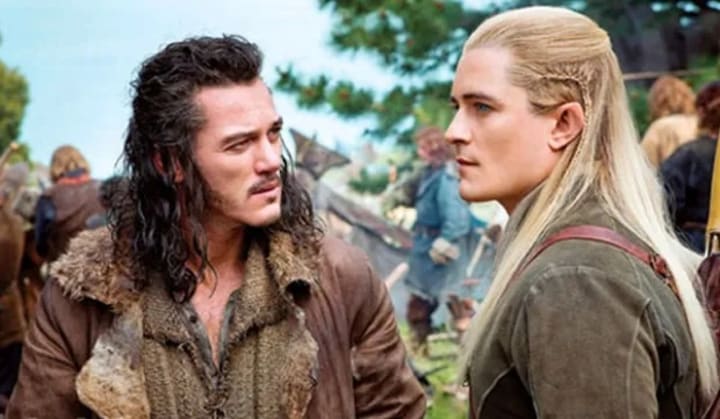
New additions to the cast include Orlando Bloom returning as Legolas, now with a more prominent role, and Evangeline Lilly as Tauriel, a Woodland Elf warrior created specifically for the film.
Lilly's Tauriel adds a strong female presence and a romantic subplot with the Dwarf Kili (Aidan Turner), a departure from the source material that garnered mixed reactions.
Benedict Cumberbatch delivers a truly chilling performance as Smaug, providing both the voice and motion capture for the dragon. His vocal performance, especially during the riddles with Bilbo, is a highlight of the film. Other notable performances include Luke Evans as Bard the Bowman, offering a glimpse into the character's heroic potential, and Stephen Fry as the Master of Lake-town, a wonderfully slimy and opportunistic character.
Reviews:
The Desolation of Smaug received generally positive reviews, with critics praising its improved pacing, enhanced action sequences, and Cumberbatch's captivating portrayal of Smaug. The visual effects were lauded, particularly the dragon's intricate design and realistic animation. However, some critics continued to express concerns about the film's length and the addition of subplots not found in the book, particularly the Tauriel-Kili romance.
Audience reviews echoed similar sentiments, with many appreciating the film's spectacle and Cumberbatch's performance. The deviations from the source material remained a point of contention for some, while others enjoyed the expanded narrative and character development. Generally, The Desolation of Smaug was considered a stronger and more engaging film than An Unexpected Journey, successfully capturing the darker and more perilous tone of the latter half of The Hobbit.
Production:
The production of The Desolation of Smaug was a massive undertaking, with a reported budget of over $200 million. Like its predecessor, the film was shot in 3D and at a high frame rate (48fps), aiming for a more immersive and detailed visual experience. The production utilized numerous locations throughout New Zealand, showcasing the country's stunning landscapes.
Development faced some early challenges, including the departure of Guillermo del Toro as director. Peter Jackson ultimately stepped in to direct all three films. Financing was secured through a combination of studio investment and international distribution deals.
Writing and Casting:
The screenplay for The Desolation of Smaug was written by Fran Walsh, Philippa Boyens, Peter Jackson, and Guillermo del Toro. The writing team faced the challenge of adapting a relatively short novel into three lengthy films, necessitating the expansion of existing storylines and the creation of new subplots. The addition of Tauriel and her relationship with Kili was a significant departure from the book, intended to add a female perspective and a romantic element to the narrative.
The casting process involved both returning actors and new additions. Martin Freeman was the first choice for Bilbo Baggins, and his performance has consistently been praised. Benedict Cumberbatch was an inspired choice for Smaug, his voice lending a menacing intelligence to the dragon. The casting of Evangeline Lilly as Tauriel was met with both excitement and skepticism, given the character's absence from the original novel.
Principal Photography:
Principal photography for The Desolation of Smaug, along with An Unexpected Journey and The Battle of the Five Armies, took place over 266 days in New Zealand. The scale of the production was enormous, involving hundreds of cast and crew members, elaborate sets, and extensive visual effects work. The demanding schedule presented numerous challenges, including weather delays and logistical difficulties.
One humorous anecdote from the set involves Benedict Cumberbatch's motion capture performance as Smaug. To capture the dragon's movement and physicality, Cumberbatch would crawl and writhe on the floor, much to the amusement of the crew. He even took inspiration from a seal he observed at a zoo, incorporating the animal's movements into his performance. Another fun fact involved Peter Jackson regularly pranking Martin Freeman on set, hiding items in Bilbo's pockets and filming his reactions.
Production Design:
The production design of The Desolation of Smaug is a testament to the creative vision of the filmmakers. The sets are richly detailed and visually stunning, from the claustrophobic depths of Mirkwood to the majestic halls of Thranduil's kingdom. The costumes are equally impressive, reflecting the diverse cultures and environments of Middle-earth. The design of Smaug is a particular highlight, a magnificent creature brought to life through a combination of practical effects and CGI.
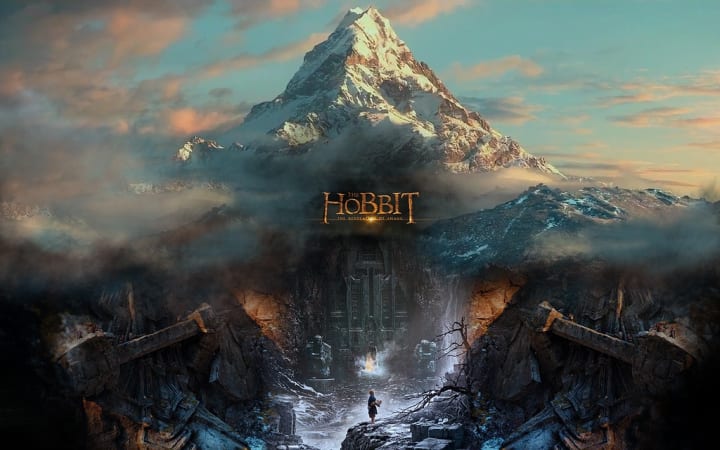
Erebor, the Lonely Mountain, is a stunning architectural marvel, reflecting the lost glory of the Dwarven kingdom. The design incorporates intricate carvings, massive pillars, and breathtaking vistas, creating a sense of awe and wonder. Lake-town, in contrast, is a more utilitarian and precarious settlement, built on stilts above the water, reflecting the townspeople's reliance on trade and their vulnerability to Smaug's wrath.
Sound Design & Music:
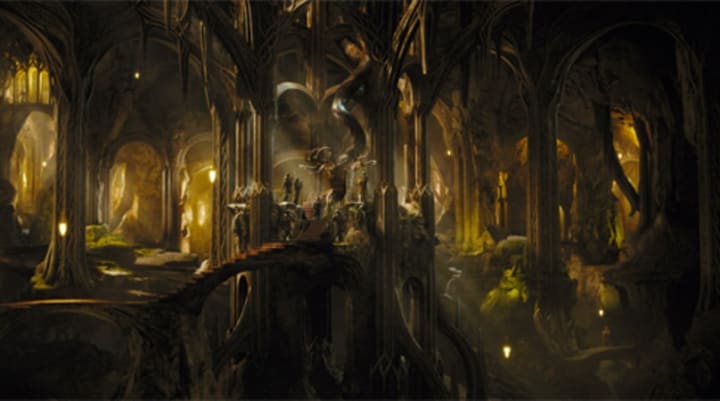
The sound design of The Desolation of Smaug is immersive and impactful, creating a realistic and believable soundscape. The roars of Smaug, the rustling of the Mirkwood spiders, and the clash of swords in battle are all expertly crafted, enhancing the film's sense of realism.
The musical score, composed by Howard Shore, builds upon the themes established in The Lord of the Rings trilogy, adding new melodies and motifs to reflect the unique characters and locations of The Hobbit. The score is both epic and intimate, capturing the grand scale of the adventure and the emotional journey of the characters.
Visual Effects:
The visual effects in The Desolation of Smaug are a significant improvement over those in An Unexpected Journey, particularly in the creation of Smaug. The dragon is rendered with incredible detail and realism, his scales shimmering in the firelight, his movements fluid and believable. The visual effects are seamlessly integrated with the practical effects, creating a truly immersive and believable world.
The barrel escape sequence is a standout example of the film's visual effects prowess, combining practical stunts with CGI to create a thrilling and visually dynamic scene. The giant spiders of Mirkwood are also effectively rendered, creepy and menacing creatures that pose a significant threat to the Company.
Influences:
The Desolation of Smaug, like all of Tolkien's works, draws upon a wide range of influences, including Norse mythology, medieval literature, and Anglo-Saxon history. Smaug himself is clearly inspired by dragons from various mythologies, particularly the dragon Fáfnir from the Norse Volsunga saga. The themes of greed, corruption, and the destructive power of unchecked ambition are also prevalent throughout the film.
Cinematically, the film draws inspiration from adventure films like Raiders of the Lost Ark, with its emphasis on action, suspense, and exotic locales. The visual style also owes a debt to fantasy films like Dragonslayer and Legend, with their emphasis on practical effects and detailed world-building.
Scientific Knowledge :
While The Hobbit is primarily a work of fantasy, some elements of the film touch upon scientific concepts. The concept of a dragon sickness, which affects Thorin and other Dwarves, could be interpreted as a metaphor for the psychological effects of greed and paranoia. The film also portrays some basic physics principles, such as the trajectory of arrows and the impact of explosions. However, the scientific aspects are largely secondary to the fantasy elements of the story.
Marketing, Release & Box Office:
The marketing campaign for The Desolation of Smaug was extensive, involving trailers, TV spots, posters, and promotional partnerships. The film was heavily promoted as a darker and more action-packed adventure than An Unexpected Journey, emphasizing the presence of Smaug and the escalating stakes of the quest.
The Desolation of Smaug was released worldwide on December 13, 2013, and was a major box office success, grossing over $958 million worldwide. The film's box office performance exceeded that of An Unexpected Journey, demonstrating the continued popularity of The Hobbit franchise.
Critical Responses:
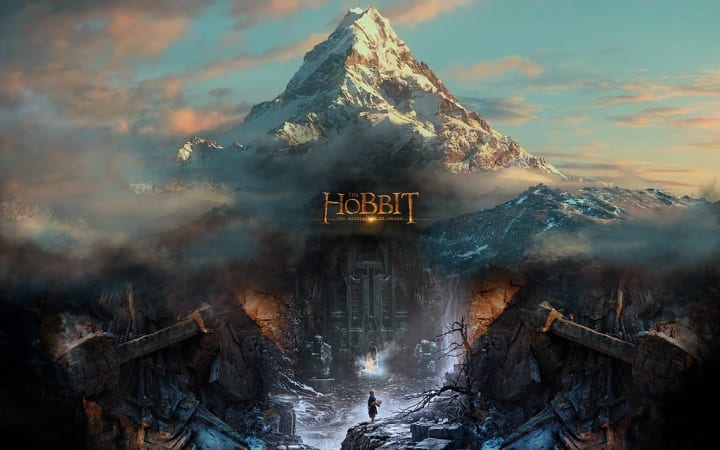
The Desolation of Smaug was generally well-received by critics and audiences alike. Critics praised the film's improved pacing, enhanced action sequences, and Benedict Cumberbatch's captivating performance as Smaug. The visual effects were also lauded, particularly the dragon's intricate design and realistic animation. While some criticisms centered on deviations from the source material and the length of the film, The Desolation of Smaug was widely regarded as a successful adaptation and a thrilling cinematic experience, successfully bridging the gap between the lighthearted adventure of the first film and the impending epic conflict of the final installment.
About the Creator
Xavier
Global news reporter covering science, tech, environment, Entertainment & sports. Delivering balanced insights to inform and inspire readers worldwide. Sometimes a poet.
Silver Screen Magic with Mae West
American actress and singer Mae West became a popular film actress during the Great Depression. She started entertaining in vaudeville, then performed on Broadway, and finally went to Hollywood. She signed up with Paramount Pictures and made her debut in the 1932 film “Night After Night.” She also starred in musicals, comedies, and crime dramas. The American Film Institute named her one of the best classic Hollywood actresses.
By Rasma Raisters6 days ago in Geeks


Comments
There are no comments for this story
Be the first to respond and start the conversation.