
SINK OR SWIM: A DEEP DIVE INTO THE EXPLOSIVE WORLD OF 'BATTLESHIP'
In 2012, the world braced itself for an extraterrestrial invasion not on land, but at sea. The weapon of choice? Cannon fire, torpedoes, and a whole lot of explosions.

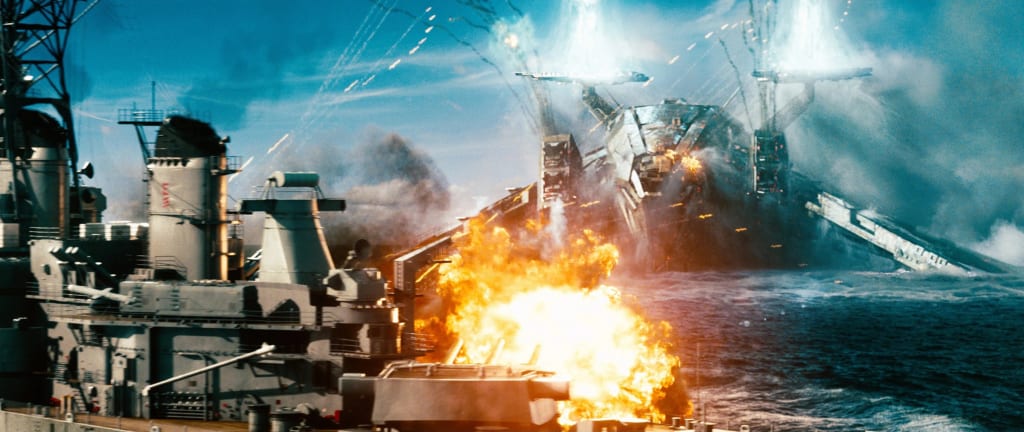
This wasn't a historical retelling of a naval battle, but rather ‘Battleship,’ a big-budget sci-fi action film inspired by the classic board game of the same name. While the premise might have raised eyebrows – could a simple guessing game really translate into a cinematic spectacle? – ‘Battleship’ aimed to deliver just that: a high-octane, visually stunning, and undeniably loud cinematic experience. Released during a wave of alien invasion films, ‘Battleship’ set its sights on dominating the summer blockbuster season. But did it sink or swim? This article explores the depths of 'Battleship,' from its plot and production to its critical reception and enduring legacy (or lack thereof).
Plot:
‘Battleship’ centers on Alex Hopper (Taylor Kitsch), a directionless young man whose elder brother, Commander Stone Hopper (Alexander Skarsgård), pushes him to join the U.S. Navy. While initially rebellious and prone to getting into trouble, particularly around Stone’s fiancee, Sam Shane (Brooklyn Decker), Alex finds himself participating in the Rim of the Pacific Exercise (RIMPAC), an international naval exercise. Simultaneously, a NASA project sends a powerful signal into deep space, hoping to communicate with potential extraterrestrial life. Unfortunately, the signal is received, and five alien ships enter Earth's atmosphere, crashing into the ocean near Hawaii.
The alien ships, known as Regents, are equipped with advanced weaponry and a protective force field. Their mission is unclear, but their aggressive actions quickly establish them as a hostile force. When a communications blackout hits Hawaii, Alex and the crew of the USS John Paul Jones find themselves cut off from command and facing the Regent threat head-on, along with the Japanese destroyer Myōkō, captained by Captain Nagata (Tadanobu Asano).
Following a devastating initial skirmish, Alex unexpectedly finds himself in command after the deaths of the ship’s captain and executive officer. He must overcome his impulsive nature and demonstrate leadership to protect his crew, fight off the aliens, and restore communication with the mainland. The aliens, searching for a location to establish a communications hub, attempt to commandeer a naval communications facility on Oahu.
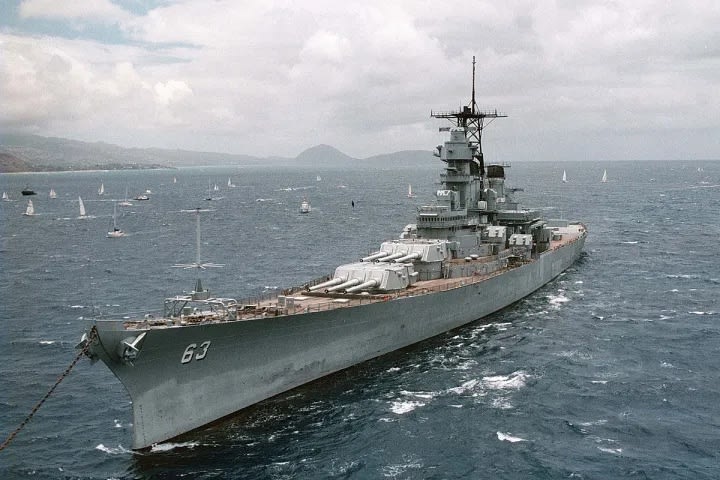
A key twist involves the discovery that the aliens are vulnerable to sunlight. Alex, using his strategic skills and the expertise of a group of retired naval officers from the USS Missouri, devises a plan to lure the Regent flagship into range of the battleship's powerful guns. The retired officers provide crucial expertise on the battleship's legacy weapon systems. In a climactic battle, Alex and his crew, alongside Captain Nagata, successfully destroy the alien flagship, disabling the force field protecting the Regent fleet and allowing the remaining naval forces to engage and defeat the alien invaders. The film concludes with Alex, now a more responsible and decorated officer, seeking permission from Commander Stone to marry Sam, signaling his transformation from rebellious slacker to capable protector of Earth. The narrative style leans heavily on action sequences, with dramatic tension building around the escalating conflict and the increasing odds against the human forces.
Cast:
‘Battleship’ assembled a cast of familiar and emerging faces. Taylor Kitsch, fresh off his role in ‘Friday Night Lights’ and ‘John Carter,’ starred as Alex Hopper, the initially flawed but ultimately heroic protagonist. Kitsch delivered a performance that balanced youthful recklessness with newfound determination, though some critics found his character arc predictable.
Alexander Skarsgård, known for his role in ‘True Blood,’ played Commander Stone Hopper, Alex's responsible and demanding older brother. Skarsgård brought a stoic gravitas to the role, acting as a foil to Kitsch’s impetuousness.
Brooklyn Decker portrayed Sam Shane, a physical therapist and Stone’s fiancee. Decker’s role was primarily supportive, providing a romantic interest and a source of motivation for Alex.
Liam Neeson, an established action star, appeared as Admiral Shane, Sam's father and the commander of the Pacific Fleet. Neeson's presence added weight to the film, though his screen time was relatively limited. Rihanna, in her acting debut, played Petty Officer Cora Raikes, a weapons specialist aboard the USS John Paul Jones. While her performance was met with mixed reviews, her casting generated significant publicity for the film.
Tadanobu Asano delivered a strong performance as Captain Nagata, the Japanese destroyer captain who initially clashes with Alex but ultimately becomes a crucial ally.
Reviews:
‘Battleship’ received predominantly negative reviews from critics. Common criticisms included a derivative plot, weak character development, and an overreliance on CGI spectacle at the expense of narrative coherence. Many reviewers derided the film's blatant resemblance to the ‘Transformers’ franchise, accusing it of prioritizing explosions and visual effects over substance. Some critics even questioned the very premise of adapting a board game into a summer blockbuster.
However, some viewers appreciated the film's unabashed commitment to popcorn entertainment. They praised the visual effects, the action sequences, and the film's overall sense of fun. While acknowledging its flaws, some argued that ‘Battleship’ delivered exactly what it promised: a loud, visually impressive, and undemanding action movie. The consensus, however, leaned heavily towards the negative, with many considering it a generic and forgettable entry in the alien invasion genre.
Production:
‘Battleship’ was a significant undertaking for Universal Pictures. The project was initially conceived as a collaboration between Hasbro, the company behind the Battleship board game, and Universal. The film was seen as an opportunity to replicate the success of the ‘Transformers’ franchise, which was also based on a Hasbro property.
Development began in 2009, with Peter Berg, known for his action films, signing on to direct. Berg envisioned a film that blended large-scale action with elements of realism and military authenticity. The production team worked closely with the U.S. Navy to ensure accuracy in the portrayal of naval procedures and technology.
Financing for the film was substantial, with an estimated budget of $209 million. Universal Pictures invested heavily in the project, hoping to create a new blockbuster franchise. The studio saw ‘Battleship’ as a key component of its summer release slate, aiming to capture a broad audience with its combination of action, science fiction, and recognizable intellectual property.
Writing and Casting:
The screenplay for ‘Battleship’ underwent several revisions. The initial drafts focused more on the strategic elements of naval warfare, reflecting the gameplay of the board game. However, as the project evolved, the emphasis shifted towards action and visual spectacle. The final screenplay, credited to Erich Hoeber and Jon Hoeber, retained some elements of strategy but prioritized set pieces and character arcs designed to appeal to a wide audience.
Casting was a crucial aspect of the production. Taylor Kitsch was chosen to lead the film after impressing Berg with his performance in ‘Friday Night Lights.’ Alexander Skarsgård was cast as his older brother to provide a contrasting presence. The decision to cast Rihanna in her acting debut was controversial but generated significant buzz. Her casting aimed to broaden the film's appeal and attract a younger demographic. Liam Neeson's presence added credibility, while Tadanobu Asano brought international appeal to the cast.
Principal Photography:
Principal photography for ‘Battleship’ began in Hawaii in 2010 and lasted for several months. Filming took place on several U.S. Navy warships, including the USS Missouri, adding a layer of authenticity to the production. The production team also utilized practical effects alongside CGI to enhance the realism of the action sequences.
The shoot was challenging, requiring extensive coordination between the cast, crew, and the U.S. Navy. One humorous anecdote from the set involves the cast struggling to maintain their sea legs during rough weather conditions. Rihanna, in particular, reportedly experienced seasickness on several occasions, despite her tough exterior. Another anecdote involved the retired naval officers brought in as consultants, who were initially skeptical about the film but became enthusiastic participants, offering valuable insights into naval culture and tactics.
Production Design:
The production design of ‘Battleship’ aimed to create a believable and visually stunning world. The set design team meticulously recreated the interiors of naval vessels, paying attention to detail to ensure accuracy. Costumes were designed to reflect the uniforms and equipment of the U.S. Navy and other international naval forces.
The visual aesthetics of the film were heavily influenced by science fiction action films such as ‘Transformers’ and ‘Independence Day.’ The alien ships and weapons were designed to be both menacing and visually striking. The use of CGI allowed the filmmakers to create large-scale action sequences that would have been impossible to achieve with practical effects alone.
Sound Design & Music:
The sound design of ‘Battleship’ played a crucial role in creating an immersive and intense viewing experience. The film featured a cacophony of explosions, gunfire, and the sounds of naval warfare. The sound design team worked meticulously to create realistic sound effects for the alien weapons and vehicles.
The musical score, composed by Steve Jablonsky, complemented the action on screen. The score was bombastic and orchestral, designed to heighten the tension and excitement of the battle sequences. The film also incorporated popular music tracks to appeal to a wider audience. One particularly memorable scene features AC/DC's Thunderstruck playing during a critical battle, adding a visceral energy to the sequence.
Visual Effects:
The visual effects in ‘Battleship’ were extensive and ambitious. The film featured hundreds of CGI shots, including the alien ships, weapons, and the vast ocean environments. The visual effects team worked to create realistic water simulations and detailed models of the naval vessels.
While the visual effects were generally impressive, some critics found them to be overwhelming and distracting. They argued that the overreliance on CGI detracted from the story and character development. However, others praised the visual effects for their scale and detail, arguing that they enhanced the overall spectacle of the film.
Influences:
‘Battleship’ drew inspiration from a variety of sources. The most obvious influence was the board game of the same name. The film also borrowed elements from other alien invasion films, such as ‘Independence Day’ and ‘War of the Worlds.’ The naval warfare sequences were influenced by historical naval battles and films such as ‘Tora! Tora! Tora!’
Scientific Knowledge:
While ‘Battleship’ is primarily a work of science fiction, it incorporates some elements of scientific plausibility. The film references NASA's search for extraterrestrial intelligence (SETI) program and the use of radio signals to communicate with potential alien civilizations. However, the film takes considerable liberties with scientific accuracy for dramatic effect. The aliens' technology and motivations are largely unexplained, and the film does not delve deeply into the scientific implications of their invasion.
Marketing, Release & Box Office:
Universal Pictures launched an extensive marketing campaign to promote ‘Battleship.’ The campaign included trailers, television commercials, and tie-in merchandise. The studio also leveraged the popularity of Rihanna to generate buzz and attract a younger audience.
‘Battleship’ was released in theaters in May 2012. The film opened to mixed reviews and faced stiff competition from other summer blockbusters. While it performed relatively well internationally, it was considered a box office disappointment in North America. The film ultimately grossed over $300 million worldwide, but its high production budget meant that it barely broke even.
Critical Responses:
In summary, ‘Battleship’ was a financial success, but critics and audiences provided a very mixed reception. The film's reliance on CGI and simplistic plot, combined with some questionable casting choices, was widely viewed as a disappointing adaptation of the classic board game. While some viewers were entertained by the movie's loud, explosive style, ‘Battleship’ ultimately sank in the eyes of many, becoming a testament to the difficulties of translating simple gameplay into a compelling cinematic narrative.
About the Creator
Xavier
Global news reporter covering science, tech, environment, Entertainment & sports. Delivering balanced insights to inform and inspire readers worldwide. Sometimes a poet.
Goodbye, Mr. Duvall
It is turning out to be an interesting year. I was in the middle of teaching a class when a pop-up appeared on the screen announcing the death of Mr. Robert Seldon Duvall (yes, that was his full name). I was in the middle of a discussion on the obsession we have with winning when it comes to sports (the Winter Olympics was a theme), and I felt as though things were coming full circle. We had already lost Gene Hackman last year, and along with that titan, it feels though one particular golden age has closed off to be replaced by...?
By Kendall Defoe 27 days ago in Geeks
Iran Releases Epstein Files:
Introduction The controversy surrounding the Epstein files has once again captured global attention. These documents relate to the criminal activities and powerful connections of American financier Jeffrey Epstein, who was accused of operating a large international sex-trafficking network involving underage girls. In recent months, rumors and reports have circulated online claiming that Iran has released sensitive information related to these files, sparking intense debate and speculation across political and media circles worldwide.
By shaoor afridi6 days ago in Geeks




Comments
There are no comments for this story
Be the first to respond and start the conversation.