
A Martian Odyssey Misunderstood: Unearthing the Story of 'John Carter'
"John Carter," released in 2012, stands as one of cinema's more intriguing case studies: a big-budget science fiction adventure that, despite its ambitious scope and faithfulness to its source material, failed to resonate with a wide audience. The film, based on Edgar Rice Burroughs' seminal 1912 novel "A Princess of Mars," attempted to launch a new franchise, transporting audiences to the vibrant, war-torn world of Barsoom (Mars). Filled with exotic creatures, breathtaking landscapes, and a timeless tale of heroism and romance, 'John Carter' promised an epic cinematic experience. However, a confluence of factors, from troubled production to a perplexing marketing campaign, contributed to its box office disappointment, leaving many to wonder what went wrong with this would-be blockbuster. This article delves into the fascinating, and often tumultuous, journey of 'John Carter,' exploring its plot, production, and reception to understand the story behind the Martian adventure that never quite took off.

Plot:
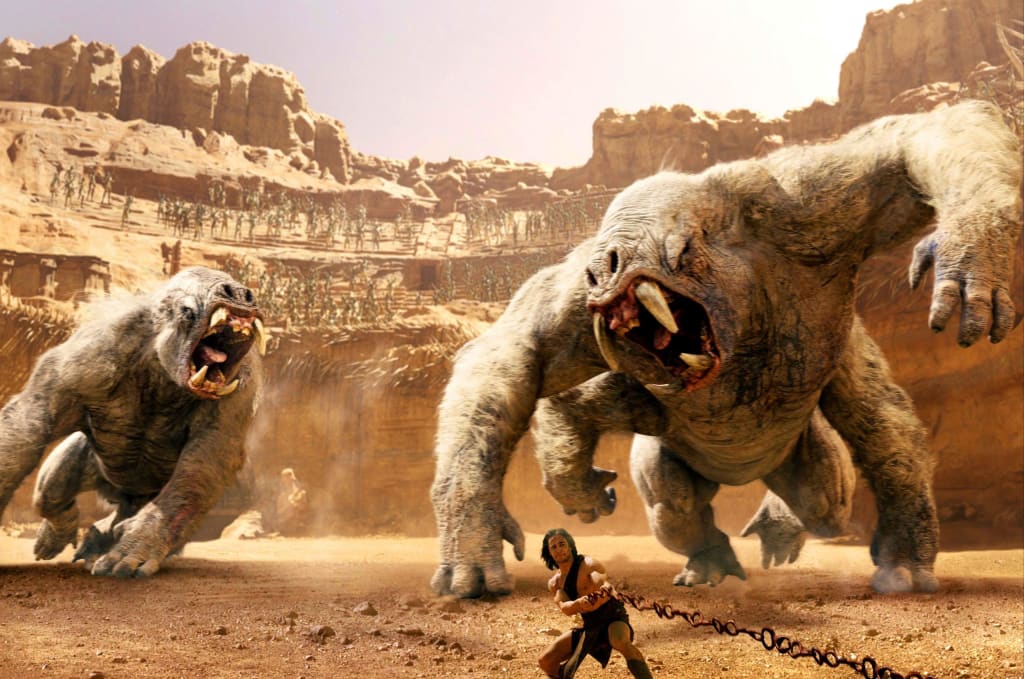
The film opens with the death of John Carter (Taylor Kitsch), a former Confederate Army captain, leaving his vast estate to his nephew, Edgar Rice Burroughs. Through Carter's journal, we are transported to the American Southwest, where a gold-prospecting Carter stumbles upon a mysterious cave. Inside, he confronts a Thern, a powerful and enigmatic being. A struggle ensues, and Carter is transported, seemingly through astral projection, to Mars, or Barsoom as the natives call it. Due to the difference in gravitational pull, Carter finds himself possessing superhuman strength and the ability to leap great distances.
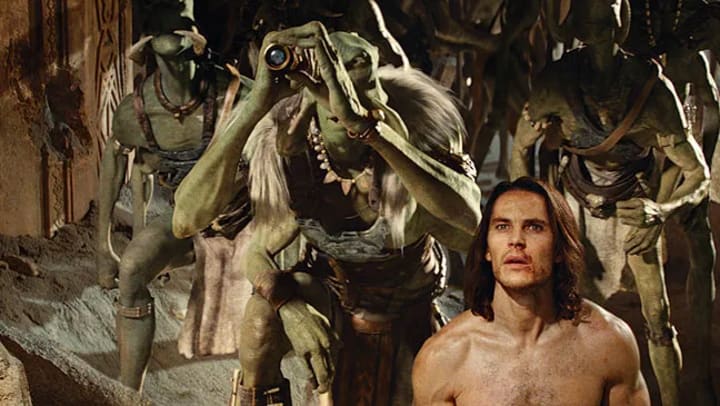
He is soon captured by the Tharks, a nomadic, green-skinned race, including their leader Tars Tarkas (voiced by Willem Dafoe), who are intrigued by his unique abilities. While with the Tharks, Carter learns about the political landscape of Barsoom: the red-skinned Heliumites, led by Tardos Mors (Ciarán Hinds), and the Zodangans, led by Sab Than (Dominic West), are locked in a devastating war. Helium, technologically advanced, hovers in the air, while Zodanga possesses a powerful, energy-based weapon.
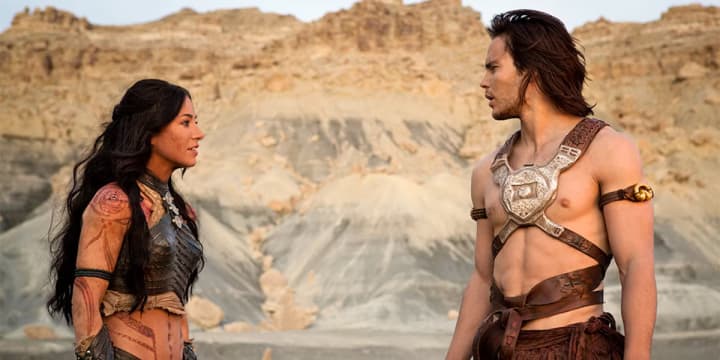
Carter encounters Dejah Thoris (Lynn Collins), the brilliant and independent Princess of Helium, who is forced into an arranged marriage with Sab Than to end the war. Dejah, however, is determined to protect her city and its secrets, which involve a crucial technology that the Therns seek to control. Carter, initially only interested in finding a way back to Earth, becomes embroiled in the conflict, aligning himself with Helium and the Tharks against the Zodangans and the manipulative Therns.
The narrative unfolds with swashbuckling action sequences, thrilling chases, and a budding romance between Carter and Dejah Thoris. Key plot twists involve the revelation of the Therns' control over Barsoom's fate and Sab Than's unwilling servitude to the Therns. Carter learns that the Therns can manipulate the thoughts and actions of others. He eventually uses his newfound abilities and tactical prowess to unite the warring factions of Barsoom, leading them in a decisive battle against the Zodangans.
The climax sees Carter confronting Sab Than and the Therns, ultimately destroying their control over Barsoom. However, to return to Barsoom later, Carter feigns his death and teleports himself back to Earth with the intention of returning. The film ends with Edgar Rice Burroughs, now aware of his uncle’s adventures, being confronted by a mysterious figure in the same cave.
Cast:
The film boasts a strong ensemble cast, despite the initial criticism leveled at some of the casting choices. Taylor Kitsch, as John Carter, delivers a physically capable performance, capturing the character's initial reluctance and eventual heroism. Lynn Collins shines as Dejah Thoris, portraying her intelligence, strength, and vulnerability with equal measure. Willem Dafoe's voice work as Tars Tarkas is particularly noteworthy, bringing a complex and nuanced character to life through motion capture technology.
Other notable performances include Dominic West as the ruthless Sab Than, Ciarán Hinds as the wise Tardos Mors, and Mark Strong as Matai Shang, the enigmatic leader of the Therns. James Purefoy also makes an appearance as Kantos Kan, a Heliumite officer who befriends Carter. The casting choices, while debated at the time, ultimately contribute to the film's overall sense of adventure and fantastical world-building.
Reviews:
Upon release, 'John Carter' received mixed reviews from critics. While praised for its visual effects, ambitious scope, and faithfulness to Burroughs' source material, it was criticized for its convoluted plot, perceived lack of originality, and Taylor Kitsch's performance. Many critics argued that the film felt derivative, despite the fact that Burroughs' novel predated many of the science fiction tropes it supposedly copied. Audiences were more divided, with some appreciating the film's adventurous spirit and visual spectacle, while others found it slow-paced and confusing. The overall perception was that the film, while not terrible, failed to live up to its potential.
Production:
The journey of 'John Carter' to the big screen was a long and arduous one. Disney acquired the rights to the property in 2007, with the initial plan to create a trilogy of films based on Burroughs' Barsoom novels. Andrew Stanton, known for his work at Pixar on films like 'Finding Nemo' and 'WALL-E,' was brought on as director, marking his live-action directorial debut. The film's budget ballooned to an estimated $250 million, making it one of the most expensive films ever made at the time.
Writing and Casting:
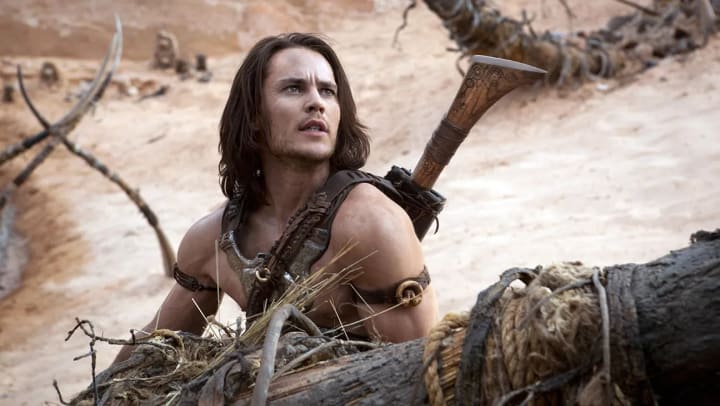
The screenplay for 'John Carter' underwent numerous revisions, with Stanton, Mark Andrews, and Michael Chabon all contributing to the final product. The writing process focused on streamlining the complex plot of the novel while retaining its core themes and characters. Casting was a challenge, with numerous actors considered for the lead roles. Taylor Kitsch, fresh off his role in the television series 'Friday Night Lights,' was eventually chosen to play John Carter, while Lynn Collins was cast as Dejah Thoris. The decision to cast Kitsch, in particular, drew some criticism, as he was not a well-known star at the time.
Principal Photography:
Principal photography began in 2010 and took place in various locations, including Utah, where the Martian landscapes were recreated. The filming process was reportedly challenging, with Stanton facing the unique demands of directing a large-scale live-action film for the first time. Motion capture technology was used extensively to bring the Tharks to life, requiring the actors to wear specialized suits and perform in front of green screens.
One amusing anecdote from the shoot involved Willem Dafoe, who, despite being a seasoned actor, struggled with the physical demands of portraying Tars Tarkas. He reportedly spent hours practicing his movements in the motion capture suit, often stumbling and falling, much to the amusement of the crew.
Production Design:
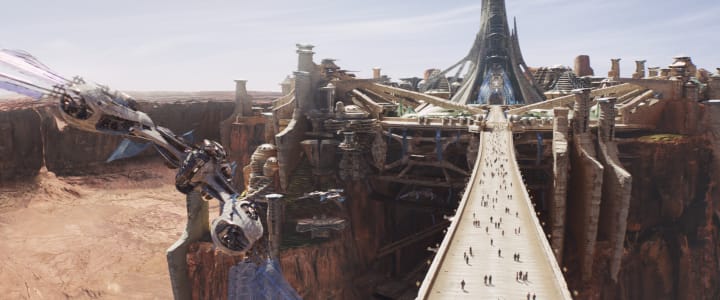
The production design of 'John Carter' was one of its strongest aspects, creating a visually stunning and believable Martian world. The set design, costumes, and visual aesthetics were all meticulously crafted to reflect the unique culture and environment of Barsoom. The flying ships of Helium, the barbaric attire of the Tharks, and the ornate architecture of the Martian cities were all brought to life with impressive detail. Mayes C. Rubeo's costume designs were especially remarkable, blending elements of historical and fantasy styles to create a distinctive look for each of Barsoom’s cultures.
Sound Design & Music:
The sound design of 'John Carter' effectively captured the alien atmosphere of Barsoom, with a mix of familiar and otherworldly sounds creating a unique sonic landscape. The musical score, composed by Michael Giacchino, was another highlight of the film, providing an epic and emotionally resonant backdrop to the action and romance. Giacchino’s score masterfully blended orchestral grandeur with more intimate themes, reflecting the sweeping scope of the film and its emotional core.
Visual Effects:
The visual effects in 'John Carter' were generally well-received, bringing the exotic creatures and landscapes of Barsoom to life with impressive realism. The Tharks, in particular, were a triumph of motion capture technology, with their realistic movements and expressions adding depth and believability to the characters. The flying ships of Helium and the energy weapons of Zodanga were also visually stunning, showcasing the film's ambitious scope and visual spectacle.
Influences:
'John Carter' draws heavily from Edgar Rice Burroughs' "A Princess of Mars," but also echoes elements of other science fiction and fantasy classics. Influences from 'Flash Gordon' and 'Star Wars' are apparent, particularly in the film's visual style and action sequences. The film also incorporates elements of historical adventure, drawing parallels to the colonial era and the exploration of new territories.
Scientific Knowledge :
The film incorporates some basic scientific concepts, such as the difference in gravity between Earth and Mars, which explains John Carter's enhanced abilities. The idea of astral projection, while not scientifically proven, is also explored as a means of transporting Carter to Barsoom. The advanced technology of Helium and Zodanga is presented as futuristic and plausible, although it is largely based on fictional concepts.
Marketing, Release & Box Office:
The marketing campaign for 'John Carter' was widely criticized for failing to effectively communicate the film's premise and appeal to a broad audience. The trailers were confusing and lacked a clear narrative hook, leaving many potential viewers unsure of what the film was about. The title itself was also deemed problematic, as it was considered generic and unmemorable.
'John Carter' was released in March 2012 and grossed $284 million worldwide against a production budget of $250 million. However, due to marketing and distribution costs, the film was considered a major box office bomb for Disney, resulting in significant financial losses.
Critical Responses:
Despite its ambitious scope and visual spectacle, 'John Carter' ultimately failed to resonate with a large audience. The film's mixed reviews, coupled with its ineffective marketing campaign, contributed to its box office disappointment. While some viewers appreciated the film's faithfulness to Burroughs' source material and its adventurous spirit, others found it derivative and confusing. In retrospect, 'John Carter' serves as a cautionary tale about the challenges of adapting beloved literary works for the big screen and the importance of a clear and effective marketing strategy. The film remains a fascinating, if flawed, example of big-budget science fiction filmmaking.
About the Creator
Xavier
Global news reporter covering science, tech, environment, Entertainment & sports. Delivering balanced insights to inform and inspire readers worldwide. Sometimes a poet.
Silver Screen Magic with Mae West
American actress and singer Mae West became a popular film actress during the Great Depression. She started entertaining in vaudeville, then performed on Broadway, and finally went to Hollywood. She signed up with Paramount Pictures and made her debut in the 1932 film “Night After Night.” She also starred in musicals, comedies, and crime dramas. The American Film Institute named her one of the best classic Hollywood actresses.
By Rasma Raisters5 days ago in Geeks
Kartik Aaryan suffers first major setback after minor dating controversy
Kartik Aaryan recently suffered first major setback after getting caught in a controversy of dating a minor. It all started when the 35-year-old actor’s newly released film, Tu Meri Main Tera Main Tera Tu Meri, became a box office bomb.
By Dena Falken Esqabout 22 hours ago in Geeks



Comments (1)
Fabulous story ♦️🙏♦️🌺🌺🌺🌺