
PIRATES OF THE CARIBBEAN: AT WORLD'S END
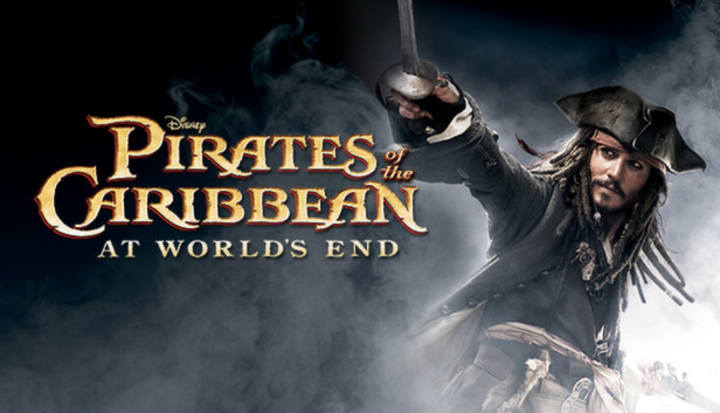
"Pirates of the Caribbean: At World's End," released in 2007, marked the ambitious and complex culmination of the initial trilogy of Disney's swashbuckling franchise.

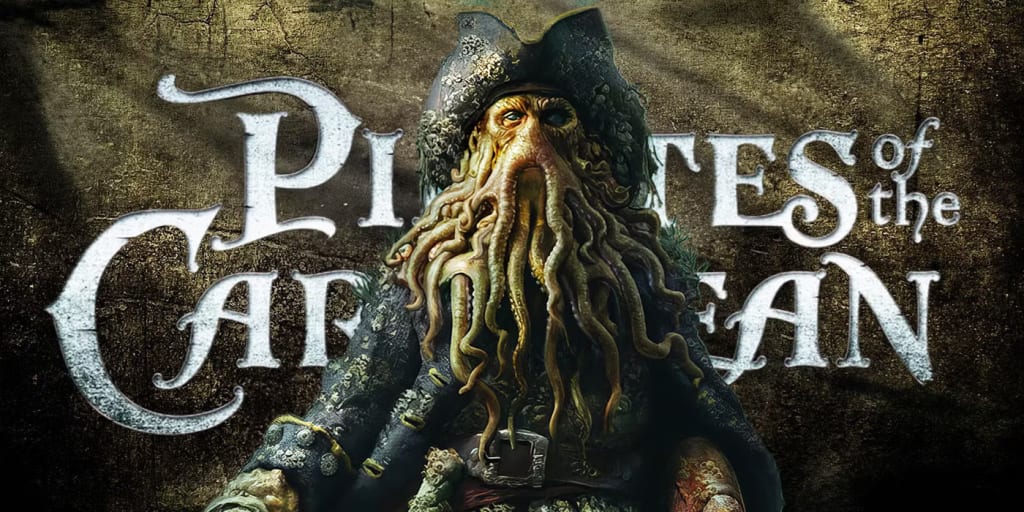
Following the runaway success of "The Curse of the Black Pearl" and the slightly more divisive "Dead Man's Chest," "At World's End" aimed to tie up loose ends, deliver a grand-scale adventure, and cement the series' legacy in cinematic history. Directed once again by Gore Verbinski, the film promised a spectacle of epic proportions, brimming with fantastical creatures, breathtaking battles, and the signature witty repartee that had become synonymous with the Pirates franchise. The weight of expectation was immense; could "At World's End" navigate the treacherous waters of audience expectations and critical scrutiny, or would it be swallowed by the leviathan of its own ambition?
Plot:
"At World's End" plunges us back into the tumultuous world of pirates, where the East India Trading Company, led by the ruthless Lord Cutler Beckett, is relentlessly eradicating piracy from the seven seas. With Davy Jones and the Flying Dutchman under Beckett's control, the pirate lords face extinction. To stand a chance, they must convene a Brethren Court, a gathering of the nine pirate lords from around the globe. However, a crucial element is missing: one of the nine Lords, Captain Jack Sparrow, is trapped in Davy Jones' Locker.
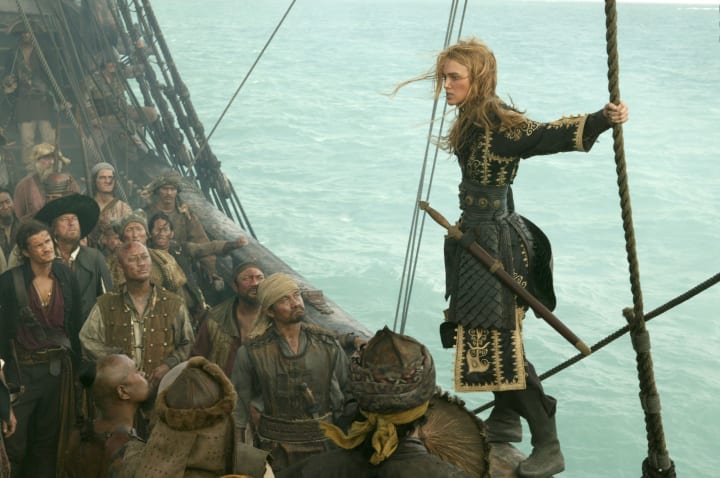
Elizabeth Swann, Will Turner, and Captain Barbossa, now resurrected, embark on a perilous quest to rescue Jack from the Locker, venturing to Singapore to enlist the help of the pirate lord Sao Feng (Chow Yun-Fat). This sets off a chain of events rife with betrayal, shifting alliances, and double-crosses. Upon reaching the Locker, they find Jack amidst a bizarre, surreal landscape populated by multiple versions of himself.
After a daring escape, the Brethren Court convenes, but its unity is threatened by competing ambitions. The crux of the plot revolves around the legendary sea goddess Calypso, bound in human form as Tia Dalma. Barbossa, driven by personal ambition, frees Calypso, hoping to sway her to their side. Instead, she unleashes her wrath, transforming into a gigantic maelstrom that becomes the stage for the final, climactic battle.
The battle at the maelstrom is a visual feast, with the Black Pearl and the Flying Dutchman locked in a desperate duel. Will and Elizabeth declare their love and are married by Barbossa amidst the chaos. In a dramatic twist, Will stabs Davy Jones' heart, becoming the new captain of the Flying Dutchman, bound to ferry souls for eternity. The film concludes with Beckett’s defeat and the temporary victory of piracy, albeit at the cost of Will and Elizabeth's separation. Elizabeth is left to raise their son, while Will returns to land only once every ten years.
The narrative style of "At World's End" is noticeably denser and more complex than its predecessors. The sheer number of characters, plot threads, and historical allusions can feel overwhelming at times. While this ambition adds depth to the pirate world, it also contributes to the film's perceived pacing issues. The twists and turns, while abundant, sometimes lack the emotional resonance of earlier installments, leaving audiences to grapple with the sheer scale of the events unfolding on screen.
Cast:
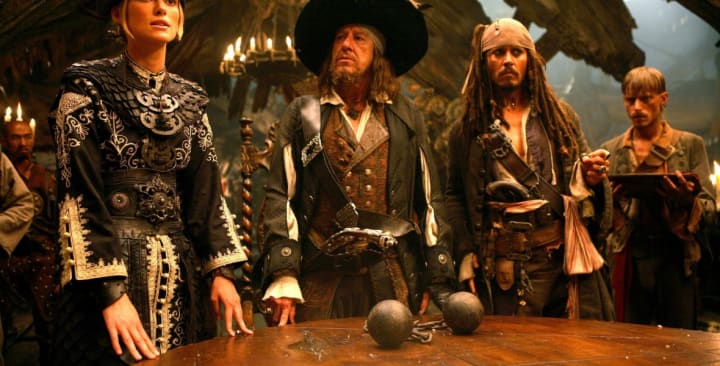
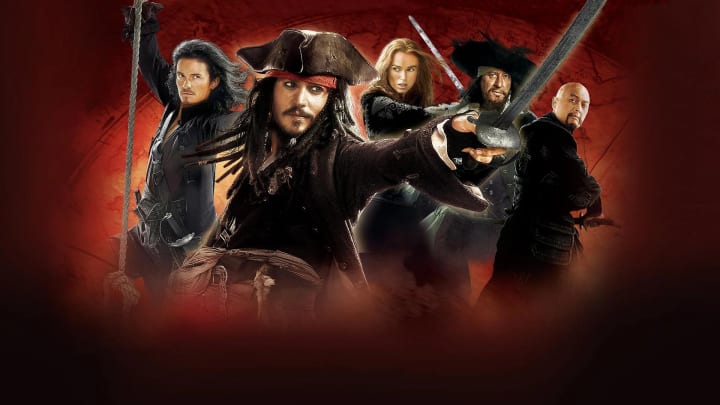
Johnny Depp reprises his iconic role as Captain Jack Sparrow, delivering another eccentric and captivating performance. Depp’s portrayal continues to be the heart and soul of the franchise, even when the plot spirals into convoluted territory. Keira Knightley's Elizabeth Swann undergoes a significant transformation, evolving from damsel in distress to a formidable pirate lord, embracing her newfound power and strategic acumen. Orlando Bloom's Will Turner completes his arc, facing difficult choices and ultimately sacrificing his personal happiness for the greater good.
Geoffrey Rush returns as Captain Barbossa, adding layers of cunning and ambition to the resurrected pirate. Bill Nighy's Davy Jones remains a chilling and visually striking villain, though his backstory and motivations are further explored, adding a tragic dimension to his monstrous facade. Chow Yun-Fat’s portrayal of Sao Feng, while initially intriguing, felt somewhat underutilized, leaving many viewers wanting more from the powerful Singaporean pirate lord.
The supporting cast, including Jack Davenport as Commodore Norrington, Jonathan Pryce as Governor Swann, and Lee Arenberg and Mackenzie Crook as Pintel and Ragetti, provide crucial comedic relief and further enrich the vibrant world of the Pirates. The ensemble cast works well together, navigating the intricate plot with a commendable level of commitment and energy.
Reviews:
"At World's End" received mixed reviews from critics. While praised for its visual spectacle, elaborate action sequences, and the performances of the main cast, particularly Johnny Depp, the film was criticized for its overly complex plot, lengthy runtime, and perceived lack of focus. Many critics felt that the sheer number of storylines and characters detracted from the emotional core of the film, making it a challenging viewing experience.
Audience reviews were similarly divided. Fans of the franchise appreciated the grand scale and the return of familiar characters, while others found the plot convoluted and the pacing uneven. The film's ending, with Will's fate and the implications for his relationship with Elizabeth, proved to be a particularly contentious point among viewers. Despite the mixed reviews, "At World's End" remained a commercial success, proving the enduring appeal of the Pirates of the Caribbean brand.
Production:
The production of "At World's End" was an immense undertaking, running concurrently with "Dead Man's Chest." Disney, recognizing the potential of the franchise, invested heavily in the production, resulting in a reported budget of around $300 million, making it one of the most expensive films ever made at the time. Jerry Bruckheimer returned as producer, overseeing the complex logistical challenges of filming on multiple locations and creating the vast array of visual effects.
The production faced numerous challenges, including logistical hurdles associated with filming on remote islands, dealing with unpredictable weather conditions, and managing the demanding schedules of the cast and crew. Despite these challenges, the production team managed to deliver a visually stunning and technically impressive film.
Writing and Casting:
The screenplay for "At World's End" was written by Ted Elliott and Terry Rossio, the writing duo behind the previous Pirates films. They faced the difficult task of wrapping up multiple storylines while introducing new characters and conflicts. The sheer complexity of the plot reflects the ambitious scope of their writing, although some critics argued that they attempted to cram too much into a single film.
The casting process remained largely consistent with the previous films, with the main cast members reprising their roles. The addition of Chow Yun-Fat as Sao Feng was a notable casting choice, bringing international star power and adding an element of Asian influence to the pirate world.
Principal Photography:
Principal photography for "At World's End" began in early 2005 and continued throughout 2006, often overlapping with the filming of "Dead Man's Chest." Filming took place on various locations, including the Bahamas, Saint Vincent and the Grenadines, and Southern California. The extensive use of practical effects, combined with advanced visual effects, created a seamless and immersive cinematic experience.
One humorous anecdote from the shoot involves Johnny Depp's tendency to improvise and add his own eccentric touches to Captain Jack Sparrow's dialogue and mannerisms. According to reports, Depp would often ad-lib lines that were completely unexpected, leaving his fellow actors and the crew in stitches. This spontaneity added to the unpredictable and chaotic nature of Jack Sparrow, making him an even more memorable character.
Production Design:
The production design of "At World's End" is truly remarkable, showcasing a level of detail and craftsmanship rarely seen in blockbuster films. The set design, led by John Myhre, created incredibly immersive and believable pirate environments, from the bustling streets of Tortuga to the mystical depths of Davy Jones' Locker. The costumes, designed by Penny Rose, were equally impressive, reflecting the diverse cultural influences of the pirate world and the individual personalities of the characters. The visual aesthetics of the film, characterized by a rich color palette, dramatic lighting, and elaborate set pieces, contribute significantly to its overall grandeur.
Sound Design & Music:
The sound design of "At World's End" is immersive and impactful, enhancing the film's atmosphere and heightening the intensity of the action sequences. From the crashing waves to the clashing swords, every sound is meticulously crafted to create a realistic and engaging auditory experience. The musical score, composed by Hans Zimmer, builds upon the themes established in the previous films, adding new layers of complexity and emotion. Zimmer's score is epic and soaring, perfectly complementing the film's grand scale and dramatic narrative. The soundtrack also features several sea shanties and folk songs, further immersing the audience in the world of pirates.
Visual Effects:
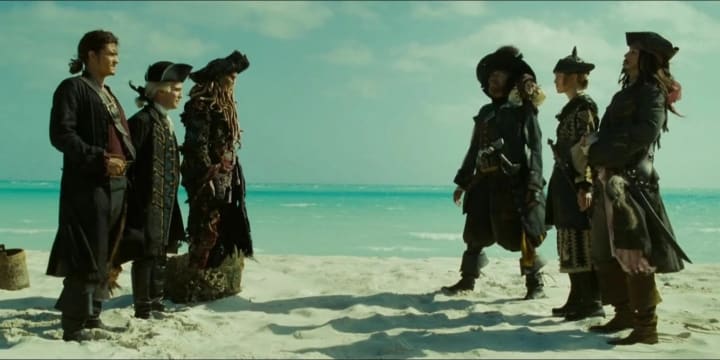
The visual effects in "At World's End" are groundbreaking, pushing the boundaries of what was possible in cinematic visual effects at the time. Industrial Light & Magic (ILM) delivered stunning visual effects, bringing to life fantastical creatures like Davy Jones and the Kraken, as well as creating the awe-inspiring maelstrom sequence. The detail and realism of the visual effects are truly remarkable, seamlessly blending with the practical effects and creating a visually stunning and believable world.
Influences:
"At World's End" draws inspiration from a variety of sources, including historical pirate lore, literary classics, and cinematic masterpieces. The film's portrayal of the Brethren Court is loosely based on historical accounts of pirate confederacies and alliances. Literary influences include elements from "Moby Dick" and "The Odyssey," with themes of obsession, revenge, and epic voyages. Cinematic influences include classic adventure films such as "The Sea Hawk" and "Captain Blood," as well as fantasy epics like "Lord of the Rings."
Scientific Knowledge :
While "At World's End" is primarily a fantasy adventure film, it incorporates some elements of scientific knowledge, albeit often in a fantastical or exaggerated manner. For example, the concept of a maelstrom, a powerful whirlpool, is based on a real-world phenomenon, although the film's depiction of the maelstrom is far more dramatic and destructive than anything found in nature. The film also touches upon the concept of celestial navigation, with pirates using stars and constellations to guide their ships across the seas.
Marketing, Release & Box Office:
The marketing campaign for "At World's End" was extensive and highly effective, building upon the brand recognition established by the previous films. Disney invested heavily in promotional materials, including trailers, posters, and tie-in merchandise. The film was released worldwide in May 2007, accompanied by a massive media blitz.
"At World's End" was a major box office success, grossing over $963 million worldwide. Despite the mixed reviews, the film's commercial performance demonstrated the enduring popularity of the Pirates of the Caribbean franchise and its ability to draw large audiences to theaters.
Critical Responses:
In conclusion, "Pirates of the Caribbean: At World's End" is a visually stunning and ambitious film that attempts to tie up the loose ends of the initial trilogy while delivering a grand-scale adventure. While praised for its visual effects, action sequences, and the performances of the main cast, the film was criticized for its overly complex plot, lengthy runtime, and perceived lack of focus. The mixed critical and audience reception reflects the challenges of creating a satisfying conclusion to a beloved franchise. While "At World's End" may not be a perfect film, it remains a memorable and entertaining entry in the Pirates of the Caribbean series, cementing its place in cinematic history.
About the Creator
Xavier
Global news reporter covering science, tech, environment, Entertainment & sports. Delivering balanced insights to inform and inspire readers worldwide. Sometimes a poet.


Comments
There are no comments for this story
Be the first to respond and start the conversation.