
What's in Your Food?
I think I'll go on a diet


Hey, what’s in your food?
When the show Survivor was first aired on TV, I watched every episode. I became a Survivor Junkie! The only time I looked away was when they were eating the so-called delicacies from the remote islands.
Who the heck wants to eat a giant water beetle? Duck embryos don’t sound too tasty, either.
I certainly would not relish the idea of a cow’s blood chaser! Not even after eating a spoonful of ants or beetle larvae.
Yet, on the early shows of Survivor, that’s exactly what the contestants had to do to win a challenge.
I bet they couldn’t wait to get back to their own hometowns and eat their own familiar foods.
But let’s talk about our familiar foods – and I’m not trying to nauseate you with this, but do you really know what you’re eating?
When my husband got the diagnoses of decreasing levels of potassium, and excess sugar (border-line diabetes), I had to find foods that were healthier than what he was eating. I started checking labels. Then I used the internet for further information.
You know what they say about knowledge: “A little bit of knowledge is a dangerous thing.” In my case, it’s a nauseating thing.
Next time you attempt to purchase any food with a “red” color, check the ingredients. It’s a very common practice for manufacturers to use carmine or cochineal extract. While these ingredients are supposed to be safe to eat, the knowledge of what they are makes my stomach turn.
This little blurb was written by Daniel Tapper who happens to be the author of Food Unwrapped.
BUGS
The red color in many foods comes from crushed insects. If you see carmine or cochineal extract in an ingredients list, the product contains a little powdered bug. But aside from being an allergen for a small number of people, it’s considered safe. Also, alternatives are petroleum derived chemicals Red # 4 and # 3, which some studies have linked to such health problems as hyperactivity in children and cancer in animals.
It makes you wonder what’s safe to eat these days. While I’m not a fan of eating any kind of chemically enhanced food, I’m also not a fan of eating crushed bugs. So, when I do my shopping, and read the labels carefully, I try to get as many natural ingredients as possible.
AND – just in case you’re wondering about the FDA, the FDA regulation does allow some insect parts in your food. Peanut butter can have up to 30 insect parts per 100g. It has no effect on the healthiness of the product, but people might want to know.
VANILLA
From what I hear, the best vanilla comes from a bean in an orchid in India. If everyone in India wanted a vanilla shake at the same time, there wouldn’t be enough vanilla beans to go around. So, the solution? Scientists have discovered a way of making vanilla out of algae. Yes, I said Algae. Supposedly, it tastes and smells just as good and according to research, no one can tell the difference.
POTATO CHIPS
The following was written by Kathryn Tallmadge:
“Baked, popped or low-fat chips may seem healthier, but often they’re just baked conglomerations of highly refined potato flakes, refined grains, and different kinds of powders. You may be better off eating potato chips, made with real potatoes fried in a healthful oil.”
CHEESE
So, you like cheese! Yep, me too. But did you know that many cheese products aren’t really cheese at all?
Melanie Warner, author of Pandora’s Lunchbox, write this:
“Many cheese products, for example, are processed slices and some shredded brands aren’t really cheese. To save money and simplify the production process some manufacturers take out some of the milk and replace it with processed milk protein concentrate or whey protein concentrate. Under the FDA guidelines, those products cannot be called cheese; instead, they are to be called pasteurized prepared cheese products.”
YOGURT
I like yogurt, especially the flavored kind but I just don’t understand the fascination with Greek Yogurt. I always thought yogurt was yogurt. Melanie Warner did a good amount of research on Greek Yogurt. Here is what she has to say:
“Watch out for Greek yogurt that is not authentically strained. Some manufacturers will use add-ins instead of straining the yogurt to make it thick. How to tell: If you see either whey protein concentrate or milk protein concentrate on the ingredients list, the company is taking shortcuts.”
SOURDOUGH BREAD
Any sourdough bread you may eat has a history. For example, sourdough bread originally came from rodent feces. Yep, that’s what I said. When I looked it up, I thought I’d puke; yet according to the FDA, it’s all perfectly safe and delicious.
And last but surely not least:
NANOPARTICLES
Bruce Bradley writes:
“The newest concern is over NANOPARTICLES, which are so small, they can penetrate our cell walls. While some types of nanoparticles may increase the shelf-life of packaged foods, not much is known about how they affect our bodies. And because they are not required to be listed on food labels, we don’t know how many manufacturers are using them or what they’re actually made of."
So much for reading labels.
Now, I guess I should ask all of us: what’s in YOUR food?
About the Creator
Margaret Brennan
I am a 78-year old grandmother who loves to write, fish, and grab my camera to capture the beautiful scenery I see around me.
My husband and I found our paradise in Punta Gorda Florida where the weather always keeps us guessing.
Keep reading
More stories from Margaret Brennan and writers in Feast and other communities.
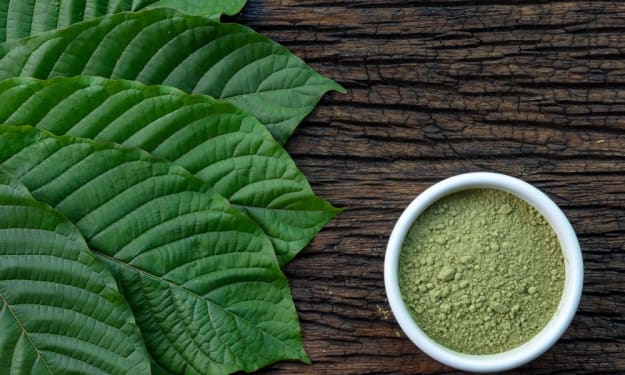
Kratom Powder Benefits: What Research and Experts Actually Say
Interest in herbal products has grown rapidly over the last decade. People now explore natural botanicals for different wellness routines, and kratom often appears in that conversation. Many online searches focus on kratom powder benefits, but the topic requires careful discussion.
By thomas oshobo6 days ago in Feast
Titan Submersible Disaster Investigation: Structural Failure Caused Catastrophic Implosion
The tragic loss of the Titan submersible has been attributed to a catastrophic structural failure that caused the vessel to implode under immense deep-sea pressure, according to the findings of a detailed investigative report. The report concludes that all five individuals aboard the submersible died instantly when the vessel’s hull collapsed thousands of meters beneath the surface of the Atlantic Ocean.
By Irshad Abbasi 4 days ago in Feast



Comments (1)
MB ~ I 'Relish' your Advice ~ JB