
Titan Submersible Disaster Investigation: Structural Failure Caused Catastrophic Implosion
Report concludes that weaknesses in the vessel’s design led to sudden collapse under extreme ocean pressure, killing all five occupants instantly.

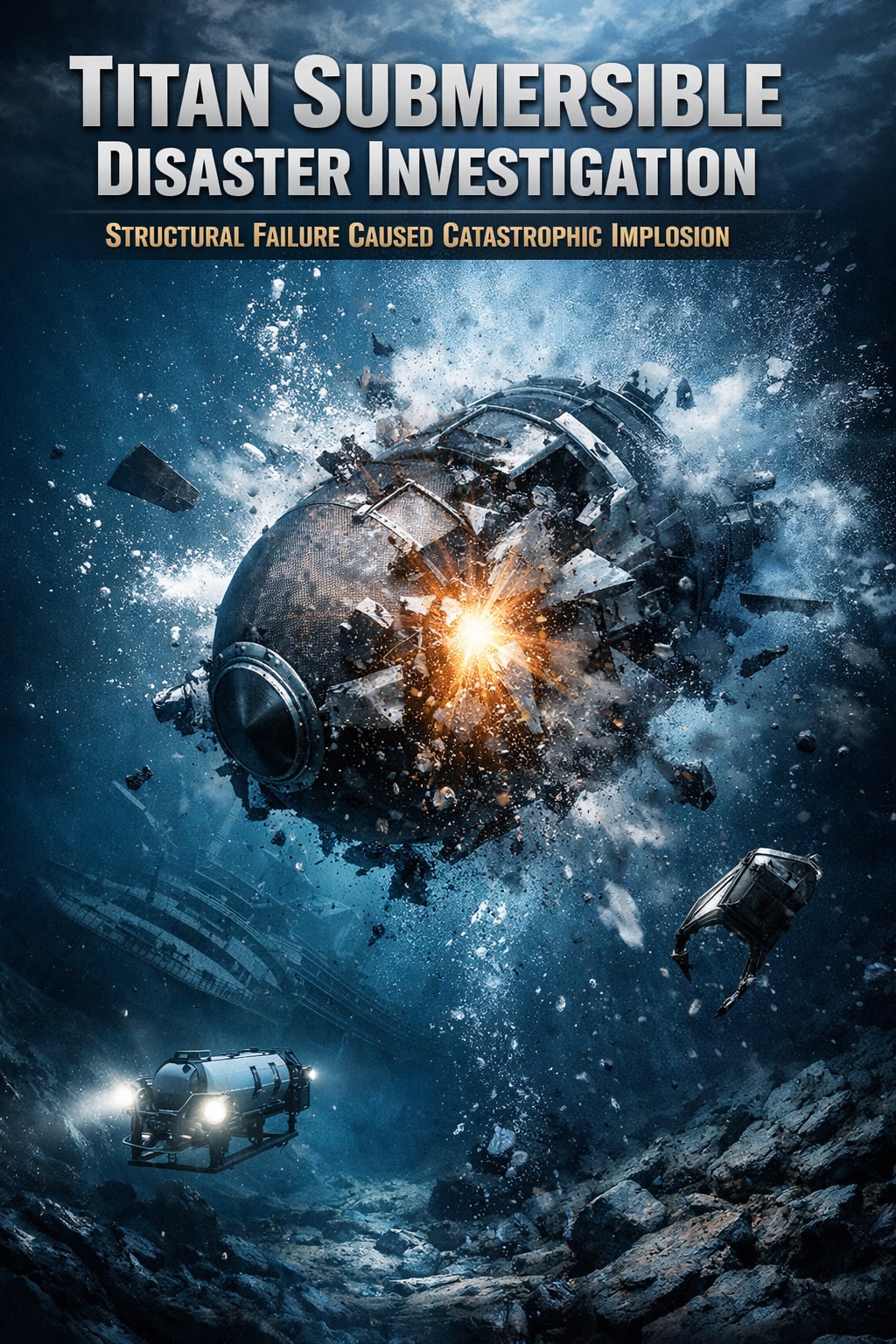
The tragic loss of the Titan submersible has been attributed to a catastrophic structural failure that caused the vessel to implode under immense deep-sea pressure, according to the findings of a detailed investigative report. The report concludes that all five individuals aboard the submersible died instantly when the vessel’s hull collapsed thousands of meters beneath the surface of the Atlantic Ocean.
The Titan submersible, operated by a private deep-sea exploration company, was on a mission to explore the wreckage of the Titanic when it suddenly lost communication with its support vessel. After days of intense international search efforts involving naval ships, remotely operated vehicles, and underwater detection systems, debris from the submersible was eventually discovered near the historic shipwreck site.
According to investigators, the primary cause of the disaster was a failure in the structural integrity of the submersible’s pressure hull. The vessel was designed to withstand extreme pressures at depths approaching 4,000 meters, where the surrounding water pressure is hundreds of times greater than that at sea level. However, the report suggests that the materials and construction methods used in the Titan’s hull may have made it vulnerable to progressive damage over time.
Experts involved in the investigation explained that the immense pressure of the deep ocean can expose even the smallest weaknesses in a submersible’s structure. At depths where Titan was operating, the pressure can exceed 6,000 pounds per square inch. When a hull fails under such conditions, the surrounding water collapses inward almost instantaneously, crushing the vessel in a fraction of a second.
The report describes the event as a “rapid and catastrophic implosion.” When the structural failure occurred, the external pressure forced the hull inward so quickly that the submersible was destroyed almost immediately. According to ocean engineering specialists, such an implosion happens faster than the human brain can register pain or fear.
“As soon as the hull lost its ability to withstand the surrounding pressure, the collapse would have been instantaneous,” the report explains. “The occupants would have experienced death immediately due to the extreme compression and pressure of the surrounding water.”
Investigators believe that fatigue in the composite materials used in the hull may have contributed to the failure. Unlike traditional deep-sea submersibles, which often rely on thick steel or titanium pressure spheres, Titan used a combination of carbon fiber and titanium components. While carbon fiber is strong and lightweight, experts have long debated its suitability for repeated deep-sea dives where pressure cycles can weaken the material over time.
The report suggests that repeated missions to extreme depths may have caused microscopic cracks or structural degradation in the carbon-fiber hull. Over time, these weaknesses could have grown until the structure could no longer withstand the immense external pressure.
Safety concerns surrounding the design had been raised by some engineers and former employees before the disaster. The investigative report notes that there were ongoing discussions in the industry about whether the vessel met traditional safety certification standards used for deep-ocean exploration vehicles.
Despite these concerns, the Titan continued to conduct expeditions to the Titanic wreck site, which lies approximately 3,800 meters below the ocean surface in the North Atlantic. The missions attracted wealthy tourists and explorers who paid significant fees for the rare opportunity to view the historic shipwreck up close.
The tragedy prompted renewed scrutiny of safety practices in the rapidly growing field of private deep-sea tourism. Experts say that while deep-ocean exploration has historically been conducted by government agencies and research institutions with strict engineering standards, the rise of private ventures has introduced new risks.
Investigators emphasized that the extreme environment of the deep ocean leaves little room for error. At such depths, even minor design flaws or material weaknesses can lead to catastrophic outcomes.
The report recommends stricter safety oversight, improved certification requirements, and more rigorous testing for submersibles operating in extreme conditions. It also calls for international cooperation to establish clearer guidelines for privately operated deep-sea vehicles.
Families of the victims have expressed both grief and hope that the findings will help prevent similar tragedies in the future. Many believe the disaster should serve as a warning about the dangers of pushing technological limits without sufficient safeguards.
While the exploration of the ocean’s depths continues to inspire curiosity and ambition, the Titan disaster stands as a stark reminder of the unforgiving nature of the deep sea—and the critical importance of engineering safety in extreme environments.
About the Creator
Irshad Abbasi
Ali ibn Abi Talib (RA) said 📚
“Knowledge is better than wealth, because knowledge protects you, while you have to protect wealth.
Keep reading
More stories from Irshad Abbasi and writers in Feast and other communities.
Mata Hari: The Legendary Spy Who Refused a Blindfold Before Execution
Few figures in the history of espionage are surrounded by as much mystery, drama, and fascination as **Mata Hari**. Known for her beauty, charm, and exotic stage performances, she became one of the most famous alleged spies of the early twentieth century. Her life, however, was not just a story of glamour—it ended in tragedy when she faced a firing squad during World War I. What made her final moments even more remarkable was her refusal to have her eyes covered before execution.
By Irshad Abbasi about 4 hours ago in History
Astragalus: An Ornamental, Supportive, and Culinary Herb
Astragalus Root/Milkvetch Astragalus is a popular remedy for various ailments today. Commonly found in health food stores and herbal shops in the form of tinctures, grounded encapsulated powders, or as part of an herbal infusion, or sometimes added to teas, astragalus usually makes the list for its purported immune-system and energy-supporting benefits.
By J. Chauncey8 days ago in Feast




Comments
There are no comments for this story
Be the first to respond and start the conversation.