
The Deadly Root : why Millions Eat this Poisonous Plans Every day
It's a global staple found in kitchens from Brazil to Nigeria , but without the right preparation , this vegetable hides a lethal secret: Cyanide

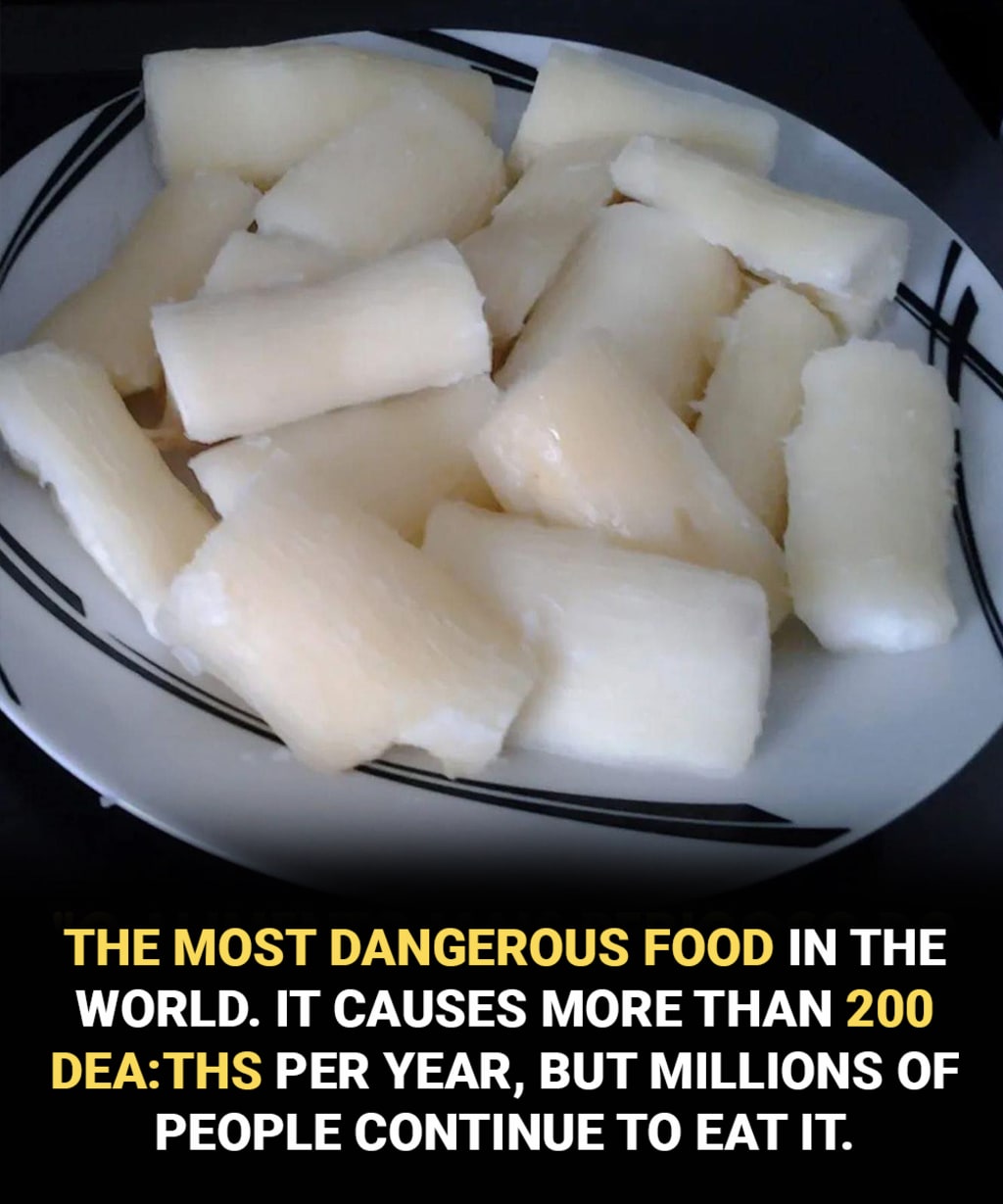
The Deadly Root: Why Millions Eat This Poisonous Plant Every Day
From the rain forests of the Amazon to the bustling markets of Nigeria, one vegetable rules the table. But behind its starchy exterior lies a chemical weapon: Cyanide.
The Global Paradox of Cassava
It goes by many names: Y u ca, Man d i o ca, Manioc, or Cassava. For over 800 million people worldwide, it is the primary source of calories. It is gluten-free, resilient to droughts, and grows in poor soils where other crops wither and die. It is, in every sense, a "super food."
However, cassava carries a dark secret. Unlike a potato or a carrot, you cannot simply pull it from the ground and take a bite. To do so could be a fatal mistake. Cassava is one of the few widely consumed foods that is naturally toxic if improperly prepared.
The Chemical Weapon: How Cassava Kills
The danger lies in compounds called cyan o g e n i c g l y c o sides, primarily l i n a m a r in. When the root is bruised, bitten, or crushed, these compounds meet an enzyme called l i n a ma r a se. This chemical reaction releases hydrogen cyanide gas.
In nature, this is the plant’s defense mechanism against insects and animals. In the human body, cyanide is a rapid killer. It attacks the mitochondria—the powerhouses of our cells—effectively "suffocating" the body at a cellular level by preventing it from using oxygen.
The Two Faces of the Tuber
Not all cassava is created equal. Farmers generally categorize them into two types:
Sweet Cassava: Contains lower levels of toxins. A simple peeling and thorough boiling are usually enough to make it safe.
Bitter Cassava: This is the high-stakes variety. It contains significantly more cyanide and requires hours, or even days, of labor-intensive processing before it can touch a human plate.
Why do farmers grow the bitter one? Because it is more resistant to pests and thieves (who can’t eat it on the spot), and it often yields more flour.
K o n z o: The Disease of Poverty and War
The real tragedy occurs when the safety process breaks down. In regions of Sub-Saharan Africa, particularly during times of famine, drought, or civil war, people don’t have the luxury of time. When clean water is scarce or fuel for cooking is too expensive, families are forced to shorten the soaking or fermentation process.
The result is K on z o—a terrifying neurological disease. It strikes suddenly, usually in children and young women. It causes permanent paralysis of the legs. The term "K o n z o" comes from the Y aka language, meaning "tied legs," describing the stiff, scissor-like walk of those affected. It is a disease of "hungry people," occurring when a body already weakened by malnutrition is hit by a constant trickle of cyanide.
From Poison to Plate: The Art of Preparation
Humans have known about cassava’s toxicity for thousands of years. Indigenous tribes in the Amazon developed sophisticated "technologies" long before modern chemistry existed. To make cassava safe, you must follow the Rule of Three:
1. Peeling and Grating
The skin of the cassava contains the highest concentration of toxins. Removing it is the first line of defense. Grating the root further helps by breaking down the cells and allowing the cyanide gas to escape into the air rather than staying in the flesh.
2. The Power of Fermentation and Soaking
In many cultures, cassava roots are submerged in water for three to five days. This is not just for flavor; it’s a biological process. Fermentation breaks down the toxic compounds and lowers the pH, making the food safe and shelf-stable. This is how the famous West African G a r i or Brazilian Fa r in ha is made.
3. Heat Treatment
Cyanide is volatile. Boiling, roasting, or baking cassava at high temperatures helps evaporate any remaining traces of the poison. The golden rule is simple: Never eat cassava raw.
The Nutritional Ally
When the poison is gone, what remains is a nutritional powerhouse. Cassava is rich in complex carbohydrates, providing sustained energy. It contains Vitamin C, thiamine, and riboflavin. For those with C e l i ac disease, cassava flour is the "Holy Grail" of baking—it mimics the texture of wheat better than almost any other gluten-free alternative.
Conclusion: Knowledge is the Best Ingredient
Cassava is not a villain; it is a survivor. It feeds the hungry and powers economies. The risk doesn't lie in the vegetable itself, but in the loss of traditional knowledge and the pressures of extreme poverty.
When we respect the preparation—peeling, soaking, and boiling—we transform a potential poison into a delicious, life-sustaining meal. It is a powerful reminder that in the world of food, the difference between a toxin and a tonic is often just a matter of time and tradition.
About the Creator
Souhail
"Passionate about uncovering hidden mysteries in everyday objects and sharing creative life hacks. Join me as I explore the stories behind the things we use every day."
My Tous les Jours Trip
As someone who lives in a rural area, I don't get the chance to visit fancy restaurants or bakeries that often. So, when a friend told me about a French-Asian bakery that's less than an hour away, I knew I had to check it out and grab some pictures for social media. Tous les Jours ended up providing an immersive experience that went above and beyond my expectations--although I did leave with a few reservations.
By Kaitlin Shanks25 days ago in Feast
Global Lobster Market Size & Forecast 2025–2033
Introduction: From Coastal Delicacy to Global Commodity Once considered a regional delicacy enjoyed primarily along rugged coastlines, lobster has evolved into a symbol of premium dining across the globe. From high-end restaurants in Europe and North America to luxury hotel menus in Asia and the Middle East, lobster has secured its place as one of the most sought-after seafood products worldwide. What was once a niche culinary offering has become a dynamic global market shaped by changing consumer preferences, expanding international trade, and increasing attention to sustainability.
By Renub Research7 days ago in Feast




Comments
There are no comments for this story
Be the first to respond and start the conversation.