
Soaking Vermicelli Noodles: Cold or Hot Water? Here’s a Pro Tip for Quick, Soft, and Chewy Noodles in Just 5 Minutes
Soaking Vermicelli Noodles: Cold or Hot Water? Here’s a Pro Tip for Quick, Soft, and Chewy Noodles in Just 5 Minutes
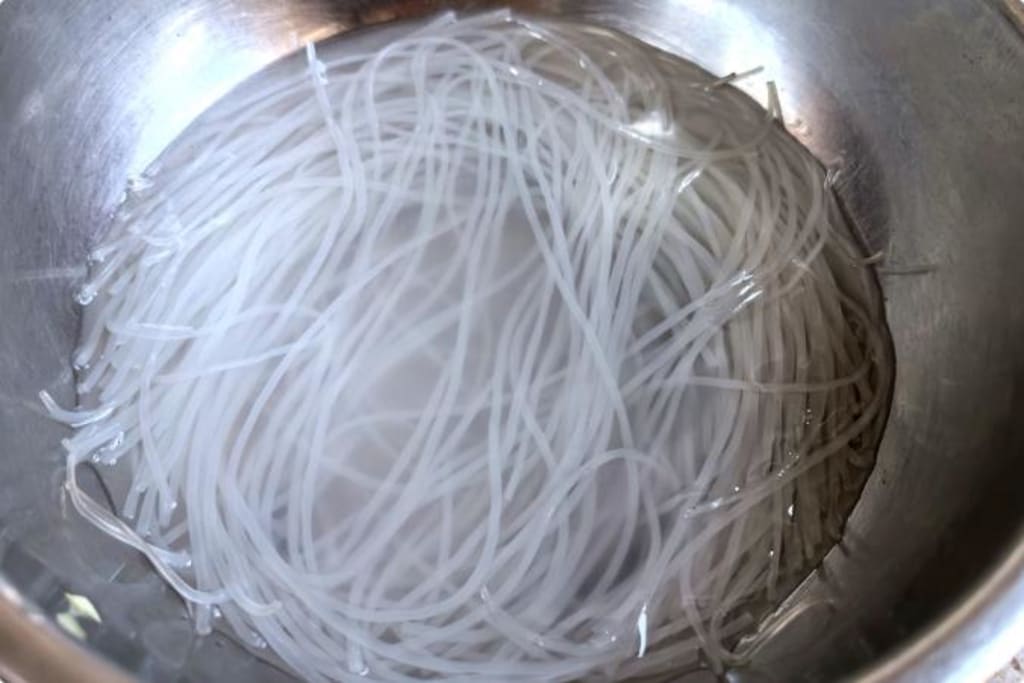
Vermicelli noodles are a staple on many family dinner tables. Whether it’s the sweat-inducing spice of Sichuan-style sour and spicy noodles, the irresistible aroma of pork stewed with vermicelli, or the savory "Ants Climbing a Tree" dish with minced meat clinging to glossy noodles—just thinking about them makes your mouth water. But every time you’re ready to cook with them, those stiff, dry noodles can be a headache. The big question: Should you soak them in cold or hot water?
I’ve had my share of trial and error. I once tried cold water, only to wait forever while the noodle cores remained stubbornly hard. In a rush, I switched to boiling water, but the noodles turned mushy on the outside while staying undercooked inside, crumbling into bits when stir-fried. Eventually, I learned the secret lies in the water temperature!
The magic number? Lukewarm water around 50°C (122°F)! This feels warm but not scalding, like the perfect temperature for mixing baby formula. Too cold, and the starch molecules in the noodles stay "asleep," slowing down the rehydration. Too hot, and the outer layer gelatinizes instantly, blocking water from penetrating the core.

Here’s how to do it right:
1. Prepare the water: Fill a large bowl with enough lukewarm water (around 50°C) to fully submerge the noodles.
2. Add seasoning: Stir in a teaspoon of salt and a teaspoon of white vinegar. Don’t underestimate these—the salt enhances chewiness, while the vinegar prevents sticking, keeping the noodles separate.
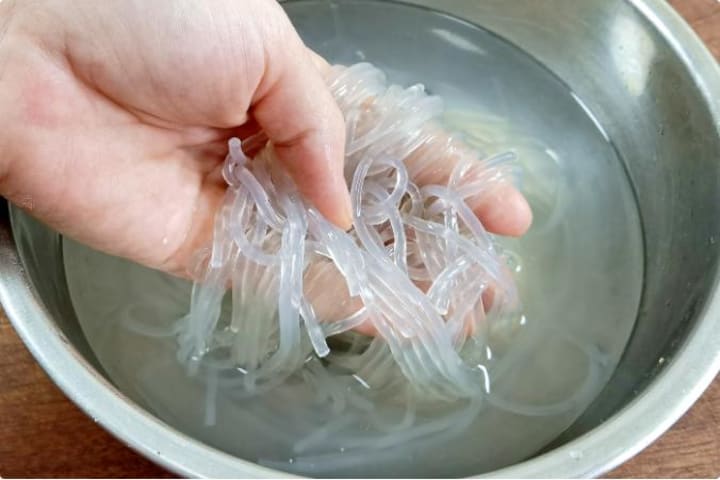
3. Soak the noodles: Place the dry noodles in the water, then gently weigh them down with a plate or bowl to ensure full immersion.
4. Wait it out: Now, go prep your other ingredients! In just 5–7 minutes, the noodles will turn soft and translucent. Test by pinching one—it should break easily with no hard center. Drain and rinse briefly under cold water to stop cooking and prevent sticking during stir-frying.
A Classic Dish: Stir-Fried Vermicelli with Pork and Cabbage
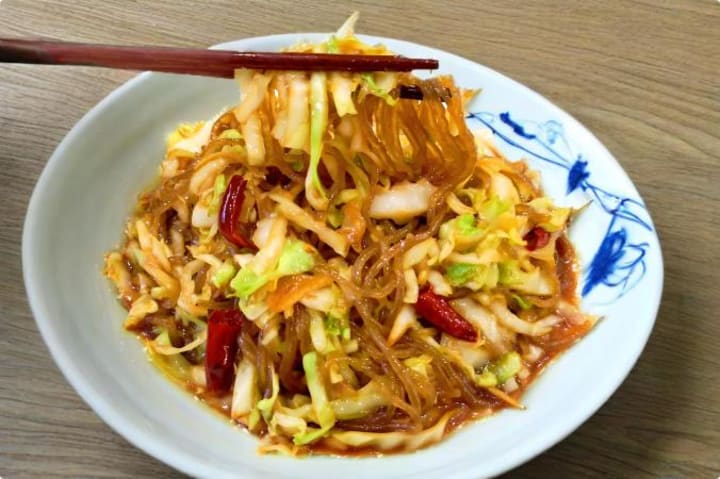
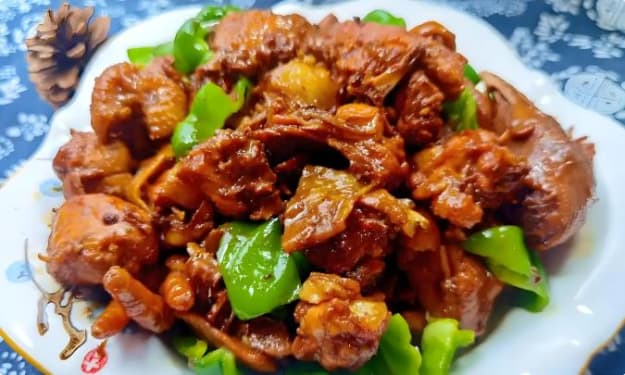
With perfectly soaked noodles, you’re set to make Stir-Fried Vermicelli with Pork and Cabbage—a quick, flavor-packed dish with silky noodles, crisp cabbage, and caramelized pork that pairs perfectly with rice!
Ingredients:
• 1 large bundle of rehydrated sweet potato vermicelli
• 150g pork belly or shoulder (cut into thin strips)
• ½ small cabbage (julienned)
• 3–4 garlic cloves (sliced)
• 2–3 dried chilies (cut into segments, deseeded if preferred)
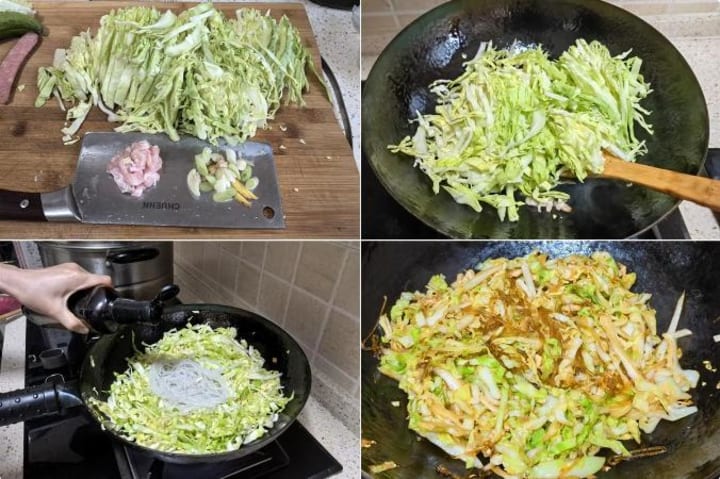
• 1 scallion (chopped)
Seasonings:
• 2 tbsp light soy sauce
• ½ tbsp dark soy sauce (for color)
• 1 tbsp oyster sauce
• ½ tsp sugar
• Salt (to taste)
• Cooking oil
Steps:
1. Heat the wok: Add slightly more oil than usual and swirl to coat. Over medium heat, add the pork strips.
2. Render the fat: Cook until the pork releases its fat and edges turn golden and crispy for maximum flavor. Toss in garlic and chilies, stir-frying briefly until fragrant.
3. Add cabbage: Increase to medium-high heat, add cabbage, and stir-fry until slightly wilted. Add the drained noodles, followed by light soy sauce, dark soy sauce, oyster sauce, and sugar.
4. Toss fast: Work quickly! Use chopsticks and a spatula to evenly coat each strand with sauce. High heat and swift movements prevent sticking.
5. Final touches: Taste and adjust with salt if needed. Finish with scallions, give it a final toss, and serve immediately!
The result: Glossy, springy noodles with crisp-tender cabbage and savory pork, all tied together with a hint of tang from the vinegar. Every bite is pure satisfaction!
Key Tips:
1. Noodle prep is key: The lukewarm water + salt/vinegar method ensures ideal texture. Always rinse and drain after soaking.
2. Hot wok, ample oil: Prevents sticking—heat the wok well and use enough oil to coat.
3. Speed matters: Once noodles hit the wok, season and toss rapidly for even cooking.
4. Adjust to taste: Soy sauce and oyster sauce are salty; add salt only if needed. For extra brightness, splash a bit of vinegar along the wok’s edge at the end.
Now you know—soaking noodles the right way takes just 5 minutes and elevates your dish! No more rock-hard strands ruining your meal. Try this method tonight with the pork and cabbage stir-fry, and watch your family chopsticks fly!
(Note: The original text was expanded to meet the word count while maintaining natural flow and adding practical details.)
About the Creator
My Tous les Jours Trip
As someone who lives in a rural area, I don't get the chance to visit fancy restaurants or bakeries that often. So, when a friend told me about a French-Asian bakery that's less than an hour away, I knew I had to check it out and grab some pictures for social media. Tous les Jours ended up providing an immersive experience that went above and beyond my expectations--although I did leave with a few reservations.
By Kaitlin Shanks24 days ago in Feast
White Mushroom Market Size and Forecast 2025–2033
Introduction White mushrooms—scientifically known as Agaricus bisporus—are no longer confined to salads, pizzas, and soups. Once considered a humble kitchen staple, they are now emerging as a strategic crop in the global agrifood ecosystem. Driven by sustainability trends, plant-based eating, and rising health consciousness, white mushrooms have carved out a powerful position in both consumer markets and foodservice industries.
By jaiklin Fanandish4 days ago in Feast
Silver Screen Magic with Mae West
American actress and singer Mae West became a popular film actress during the Great Depression. She started entertaining in vaudeville, then performed on Broadway, and finally went to Hollywood. She signed up with Paramount Pictures and made her debut in the 1932 film “Night After Night.” She also starred in musicals, comedies, and crime dramas. The American Film Institute named her one of the best classic Hollywood actresses.
By Rasma Raisters6 days ago in Geeks



Comments
There are no comments for this story
Be the first to respond and start the conversation.