
I remembered to love
A soup that helps me remember who I am

Text message from me: "I'm sorry for everything" "I will never ever ever leave you" The message is read almost instantly on the receiver's end, and just as quickly my phone screen lights up with a call.
"Husband Jake" announces the screen, and I burst into tears. We have spoken mere thirty minutes ago, a usual for us check-in call:
Me: "Hey, what are you up to?"
Jake: "Talking to dad about the farm equipment"
Me: "Ok, I love you"
Jake: " I love you too"
What has happened in the span of the thirty minutes between the two calls to make me bust into tears and start a major cooking operation in the kitchen? I found our old messages to each other, from eleven years ago.
Occasionally I come across this old platform that we used for chatting when we only started getting to know each other. This time only a few naive and careful lines written by Jake eleven years ago have opened the floodgates in my heart. Eleven years of learning to be with each other and to be apart, eleven years of forgetting ourselves in work and anxieties to re-invent ourselves in the safety of our marriage.
Jake is not an adventurous eater. He sticks to the American classics and two comfort foods. He prefers to do microscopically minimal cooking when necessary, getting by on sunflower seeds and candy. His love language is well, love itself. He is that very rare breed of people, who love constantly and invariably.
My love language is cooking.
One of the earlier memories that I have formed when I was around seven years old. My fifteen year old brother, scratched some money together to buy a "Mickey Mouse Breakfast" computer game for me. I remember being glued to the bulbous 90s computer screen, flipping digital pancakes in one pan, while hearing the rustling of the pixelated sunny side eggs in the other. Successfully completing the digital breakfast task became my very first aware moment of pride.
Time went on. Our family of five, seemingly a large number of people to occupy one household, felt smaller and lonelier day after day. Both of my siblings were older than me by twelve and eight years, entered the uncertain times of young adulthood, which while bringing them new experiences, carried them further away from home daily.
My parents often fought, forcing me to wait out the storm of their words and emotions in my room. The anxiety caused by their behaviors manifested in frequent feeling of nausea. My child's mind found the best solution at that time - creating the psychosomatic bouts of sickness to draw my mom away from the arguments and make her focus on me, by making something for me that could settle my stomach- a soup. It worked.

My childhood bloomed and blossomed in the 90's in a post-soviet Ukraine. The economy was only building it's independence, along with my country's self-identification. It was the time when speaking Ukrainian language was encouraged and praised over russian. The time for the Ukrainian cuisine to re-emerge and re-invent itself with newly-gained access to the global stage.
Quite a few American agencies arrived and took root in the capital of the country, my hometown, over the course of the following ten years. It so happened that my mom became heavily involved with one of the agencies and began offering the Ukrainian culture and food tours.
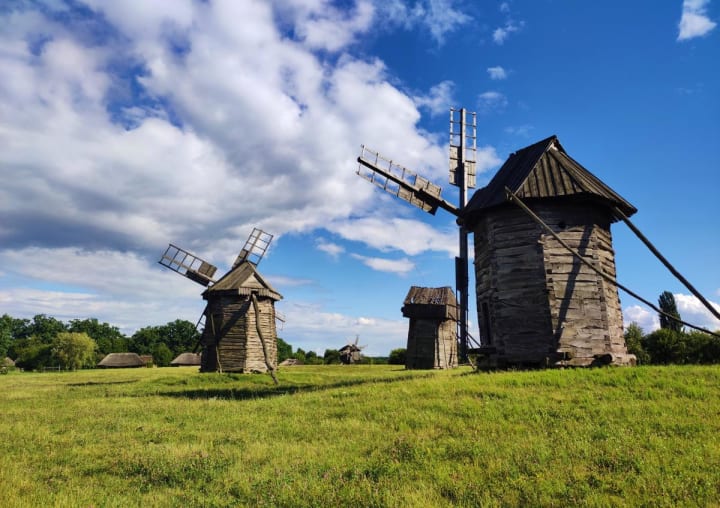
With everything Ukrainian on the rise, mom would often take the foreign guests to experience the Ukrainian country side, home-style cooking and folk art, taking me along for the trips.
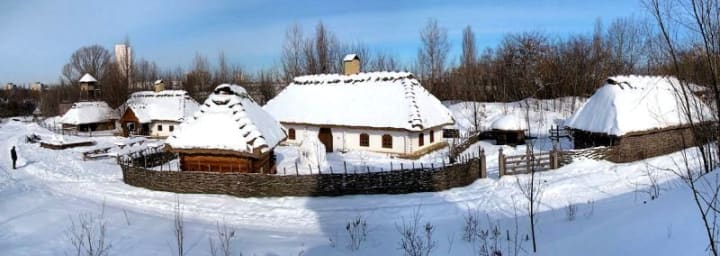
One day we arrived to the Village of Pirogovo, ( Literal meaning - The land of pies) where a tight group of seven enjoyed touring the preserved century old huts and houses and roaming the grassy groves among the ancient giants of windmills. One house, called KHATA in Ukrainian, had an open operating kitchen where you could sample a hearty soup and freshly baked garlic bun. And this is where my culinary education began..

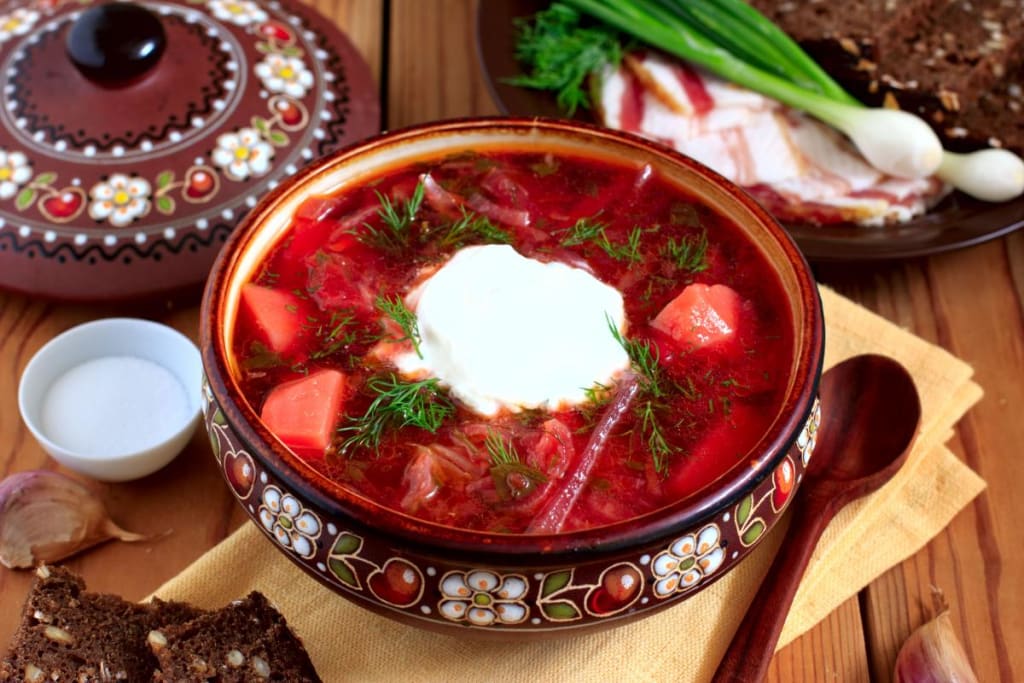
Many people associate Ukrainian cuisine with the staple cabbage soup, Borsh, (please note that there is not "T" at the end)
I feel that this soup is often misunderstood by my fellow Westerners, and in vain so. This soup deserves a spotlight and an explanation. It has such marvelous ingredients as salted pork rind, prunes, and sautéed until translucency, winter root vegetables. This soup is a key to make you winter magical.
The recipe for Borsh is the recipe for surviving the long, isolated, snow-coated nights, when all you have is a light from the stove and the bright stars in the frozen sky above. Life was like it thousands of years ago in villages in Ukraine, life is like it right now in the trenches of the very same villages, bordering the invader's camp, this soup serves as a reminder of who we are as people of Ukraine.

Preparation for Borsh may start all the way in the summer - naturally, you can make and eat borsh at any time of year, with the ingredients being readily available. However, a good Ukrainian hostess knows that the preparation for her staple dish should start 6 months in advance.
She would walk her summer garden, collecting succulent blue plums, and dry-curing them in the June sun. She will harvest the young spring cabbage, julienne and brine it in the oak barrels, interlaced with the translucent young cranberries. By January the cabbage will have absorbed the sea salt and the tannins from the oak, becoming the thought-after ivory treasure on the winter dinner table. The good hostess will harvest the golden September onions, braiding their long stems into the uncomplicated braid, to await their turn to be cooked, in the dark corner of the kitchen.
Ukraine has 24 different regions, each independent and different, sometimes, culturally influenced by their immediate neighbors. If we looked at Borsh as the representative of the region we will see that while the base ingredients remain unchanged, each region adds a unique ingredient to the recipe: One region adds a courageous heap of sour cherries, another a sun-dried prunes, while a third region may add a smoked pear.
Now the original Borsh recipe goes like this:
Water - 1.5-2 liters.
pork or beef on the bone - 400 g
medium potatoes - 4 pcs.
small beets - 2 pcs.
carrot - 1 pc.
medium onion - 3 pcs.
fresh white cabbage - 300 g
tomato paste - 2 tbsp. l.
sunflower oil - 4-5 tbsp.
citric acid - a little
salt, bay leaf, herbs - to taste.
First, we cook the broth. Pour 1.5-2 liters of water into the pot. Add meat and put on medium heat. Before boiling, remove the foam. As soon as the broth boils, cover with a lid and cook on low heat for an hour to an hour and a half.
In the meantime, we are preparing the roast. We clean beets, carrots and onions. Grate the beets on a coarse grater, and grate the carrots on a medium grater. Cut the onion into cubes.
Heat oil in a frying pan over medium heat, add onions and carrots and fry for 5 minutes. Then we add the beetroot (it can be sprinkled with citric acid or sprinkled with fresh lemon juice - this way the borscht will be really red). Fry the vegetables for another 5 minutes, add tomato paste, mix and fry for another 5-7 minutes.
Serve with sour cream and fresh cut herbs.
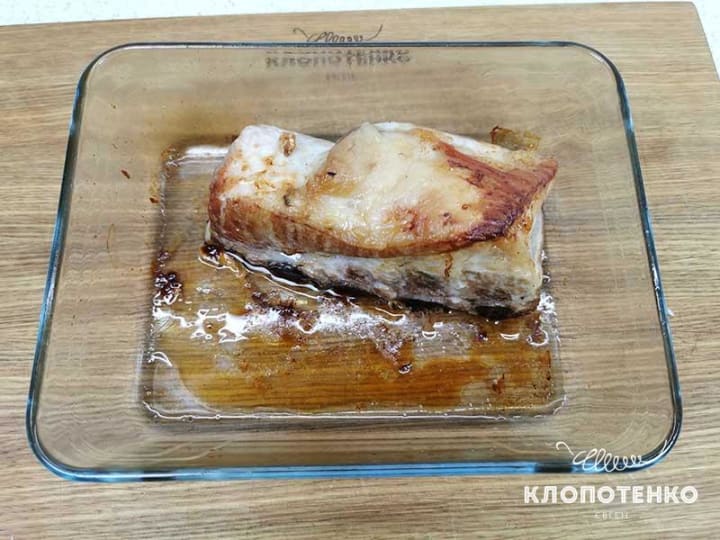
Alternative recipe for a more adventurous chef includes a pork rib and a smoked pear variable. Personally I prefer adding fruit to the heavily vegetable soup, because the natural robust smokiness of the prunes and the soft fruity aroma of the pear compliment the cabbage, the tomato and the pork itself extremely well. When I have time I also prepare the Halushky, to add them to the beautiful amber broth.
Halushky are a traditional variety of thick, soft noodles or dumplings, similar to gnocchi in consistency. It is an excellent and authentically Ukrainian addition to Borsh found in some neighboring countries.
Potato based pasta adds a chewy bite to the soft ingredient soup, absorbing the light acidity of the tomato, adding starchy consistency to the broth.
The following pictures are taken from the professional Ukrainian Chef's website and the recipe fpr the pork rind and smoked pear Borch can be found on his website: https://klopotenko.com/ukrainskij-borshh-na-svinaychuh-rebrah/


Now back to this morning's phone conversation.
There I was, re-reading some of the first conversations my then boyfriend and I had. I told him about my childhood, sharing the most sacred, intimate details. He asked me to make something for him, that would make him understand who I was. I chose Borsh.
Eleven years and many misunderstandings later, freshly from an earth-and-relationship-foundation-shattering conversation had, he is making an effort to understand me once again. He was seeking my love like once I was seeking it from my mom. And as my mom back then I find the solution in the soup.
He called me and said:
"Will you make me that soup again?"
How could I not cry?
About the Creator
Salomé Saffiri
Writing - is my purpose. I feel elated when my thoughts assume shapes, and turn into Timberwolves, running through the snowbound planes of fresh paper, leaving the black ink of their paw prints behind.
Keep reading
More stories from Salomé Saffiri and writers in Feast and other communities.
Taste of home away from Home
Hello, reader, my name is Maryam. I come from Ukraine- the land of bounty, the country of beauty and the cuisine of heart! If you have heard of Ukraine before, you probably associate it with the famous red Borsch or savory Potato dumplings? Maybe you know about cabbage Golubtsi or even Chicken Kiev? Yes, yes this is where the the famous golden-brown, roasted chicken cutlet comes from- Kyiv, my hometown!
By Salomé Saffiri5 years ago in Feast
The food business is undergoing a transformation thanks to gene-edited fungus, which is being considered as a beef substitute.
Compared to the strain now in use, a gene-edited fungus has created meat-like protein that grows more quickly and uses a lot less sugar. These improvements bring one of the earliest meat alternatives in the world closer to competing with animals in terms of scale and efficiency.
By Francis Dami2 days ago in Feast
Early March 2026: 4 Goals Accomplished
It's early March and I've now accomplished my 4th writing goal for the year of 2026. Before diving into the behind-the-scenes of it... why not tell you up front what that accomplishment was? I was published in a 2nd publication for this year. Published in Helix Literary Magazine out of Central Connecticut State University. You can read it for free right now!
By Stephen Kramer Avitabile4 days ago in Writers



Comments (1)
Who could not want to try this Ukrainian dish? The original Borsh recipe- I am sold, I will try it. Nicely Done!!