
How can you tell when seafood is spoiled?
Practical Tips for Protecting Your Health by Handling Seafood Safely

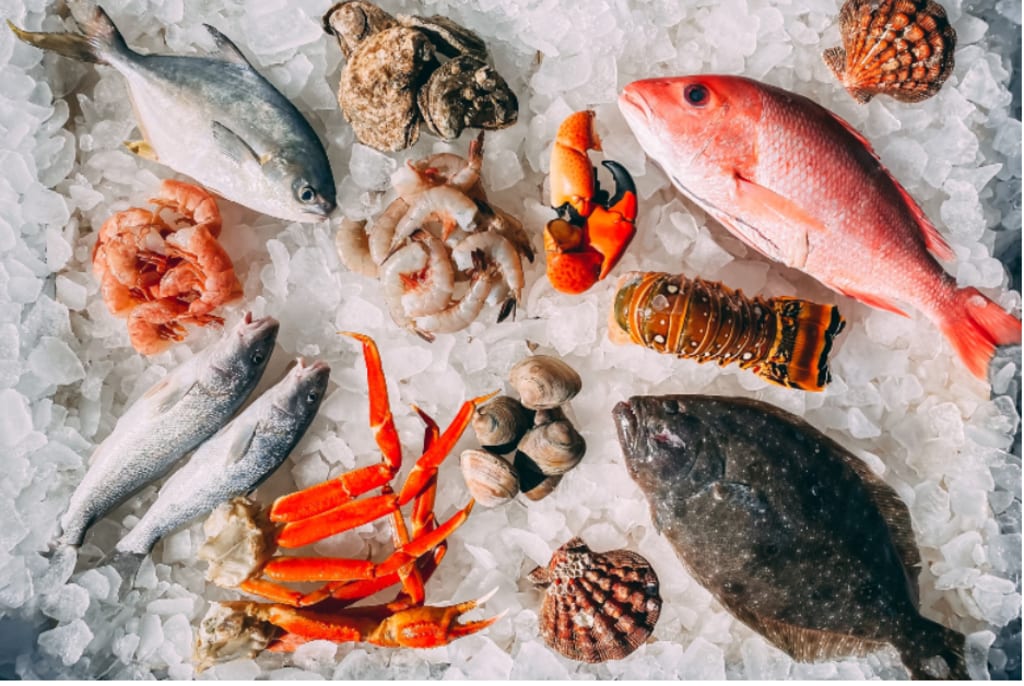
Seafood, a popular and nutritious food, is a staple in many homes around the world. Seafood adds a special taste to many dishes whether fresh from the sea or purchased at the store. Its perishable nature, however, means that it can quickly spoil without proper storage and handling. To minimize this distasteful risk and to avoid spending time being sick from foodborne illnesses, it's important to know how to tell if seafood is still edible.
Here are some key indicators that seafood has turned and a few guidelines to keep it safe to eat.
1. Scent- The Most Instinctual Clue
The first step to check if your seafood is fresh is the smell. Fish and shellfish should smell clean, like the ocean. An acrid, sour smell or one that smells like ammonia is the first sign that seafood has gone bad. This is often due to bacterial growth, which can render the seafood unsafe to consume.
For shellfish like mussels, clams, and oysters, a fresh, salty and briny odor is best. Any undesirable or offensive odor emitted from the shellfish means it should not be eaten. Trusting your nose is one of the simplest and best ways to gauge whether seafood is fresh.
2. Appearance: One of the Most Important Things to Check
The appearance of seafood is a critical indicator of its freshness as well. Fish should also have clear, bright eyes, a sign that the fish is still fresh. If the eyes are cloudy, or sunken, or discolored, then the fish is probably no longer fit to eat.
Besides the eyes, check the flesh, the flesh is the body of the fish of the fish. Fresh fish will feel moist and have bright, slightly translucent flesh. If the fish looks dry or discolored or its flesh seems dull, it is better to throw it away.
For shellfish, inspect the shells they should be coming together and not gaping open. If the shells stay open or if they do not close when tapped that means the shellfish is dead and no longer safe to eat. Cracked shells or other signs of damage are also red flags.
3. Texture-A Tactile Sign of Freshness
Texture is another giveaway of seafood quality. Fresh fish should feel firm to the touch, with the flesh bouncing back when pressed. If it is soft or mushy, or if the flesh tears easily from the bone, the fish has probably gone bad.
Likewise, the flesh of shellfish should be firm and plump. It's time to throw away the shellfish meat if you observe that it is shriveled or slimy. A slick texture in seafood usually indicates that it's spoiled, meaning that it’s no longer safe to eat.
4. Storage Tips- How to Keep Your Food Fresh
How you keep seafood is important to keeping it fresh. To keep fish fresh, refrigerate it in the coldest part of the fridge or, better yet, on ice. When buying fresh seafood and planning to keep it for several days, store it in an airtight container so that air, which hastens spoilage, does not reach it.
If freezing seafood, be sure to wrap it tightly in plastic wrap or freezer paper or place it in vacuum-sealed bags. This helps to keep the seafood safe to eat for long periods of time. However, seafood that has already been thawed should never be refrozen. Refreezing can affect both its safety and quality.
5. Expiry Labels- How Use By And Sell By Dates Compare
Many seafood items include a sell by or use-by date. Although these dates can be helpful guides, they aren't always the final word in determining whether seafood is safe or still good. For example, frozen fish might show a sell-by date, but it's worth thinking about whether it was kept correctly before that date. If seafood has been sitting out at room temperature for too long, even if that date has not passed, it might not be safe anymore.
Your goal is to use fresh fish as soon as possible. When buying seafood, especially fresh products, look at the labels for the freshest products, and eat them as soon as possible after buying for the best taste and safety.
Thank you so much for reading my work! Any feedback or support that you have to offer is accepted and appreciated.
About the Creator
Keep reading
More stories from Rohitha Lanka and writers in Feast and other communities.
Why Matar Paneer Is India’s Ultimate Vegetarian Curry
There are some dishes that do more than just satisfy hunger — they create memories. For many Indian families, Matar Paneer is one such dish. It is warm, comforting, and deeply rooted in North Indian cuisine. Whether served during a Sunday family lunch or at a festive gathering, this simple yet rich curry has a way of bringing people together.
By Gaurav Guptaabout 22 hours ago in Feast
Eat During Chinese New Year
The Chinese New Year feast is traditionally abundant with meat dishes, but these 15 vegetarian recipes prove that plant-based eating can be just as festive, flavorful, and meaningful. Each dish carries auspicious symbolism while delivering incredible taste that will have everyone reaching for seconds—even the meat lovers at your table. From crisp greens to creative vegetable transformations, these recipes are designed to impress.
By yue . shui5 days ago in Feast
I wanted to title this something different, but worried that my chosen title might cause problems entering the United States in the future so this is the new title. It's the greatest title. No one has ever written a title better than this. (All titles unrelated to content).
Let me be honest. I am finding this difficult. Now, I like a challenge, a stretch, a bit of an obstacle course. “Write about the decline of the British Empire in the form of a narrative poem in which your protagonist is an artichoke” I read, and flex my fingers. “Write a haiku to evoke the sensation of sibilance using only the first half of the alphabet.” “Well”, I think to myself, “this should be fun.” But “write about a system that isn’t working”? A system that isn’t working? Now? In 2026? ONE system? My favourite system that isn’t working? The sexiest system that isn’t working? The one giving me the most angst day to day? The one giving me the most existential dread? I am, as I say, finding this difficult. I will own that I have contemplated writing a thousand words on why the steady “all on” setting on my fairy lights is the EIGHTH of seven options which must be sequentially activated to get there, because that is a system that some fool came up with and it definitely doesn’t work, and now who is paying the price, eh? But how can I write about my fairy lights when…. When…. When….
By Hannah Moore5 days ago in Humans



Comments (2)
Thank you so much for reading my work! Any feedback or support that you have to offer is accepted and appreciated.
Well written, congrats