
Canned Food Market Size & Forecast 2025–2033
Convenience, Shelf-Life Superiority & Premiumization Drive a US$ 179.65 Billion Global Market

Introduction
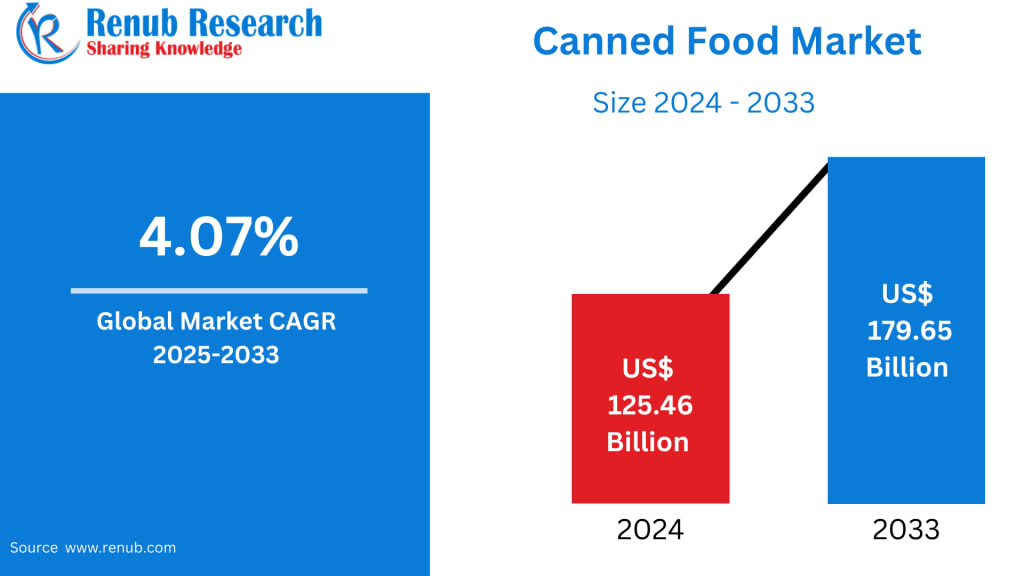
The Canned Food Market is witnessing a renewed global surge, expected to reach US$ 179.65 billion by 2033, rising from US$ 125.46 billion in 2024, according to Renub Research. This expansion reflects a CAGR of 4.07% from 2025 to 2033—driven by shifting consumer lifestyles, improved processing technologies, and the rising preference for food products that balance nutrition, convenience, and affordability.
With food inflation, supply chain vulnerabilities, and an ever-growing need for ready-to-eat (RTE) meals reshaping modern consumption patterns, canned foods have emerged as indispensable pantry staples. Their unparalleled shelf life, minimal preparation needs, and diverse product offerings—from vegetables and meats to gourmet seafood—have positioned canned foods as a global mainstay.
Canned food is preserved by sealing food in airtight metal containers and heat-sterilizing it to prevent spoilage. Though invented in the early 19th century, canning remains one of the most trusted preservation methods in households worldwide. Today’s canned food supply includes:
Proteins: tuna, salmon, chicken, sardines
Vegetables & fruits: tomatoes, corn, peas, peaches
Ready meals: soups, pastas, curries, beans
Its usability, affordability, and long-term storage stability have made canned food indispensable—even more so in emergency situations, remote regions, and disaster relief programs where refrigeration is scarce or unreliable.
The rise of meal prepping, dual-income households, and urban lifestyles continues to propel canned foods into the center of modern food consumption.
Key Growth Drivers
1. Rising Demand for Convenient Foods
As urban living intensifies, convenient, ready-to-eat food formats have become essential. Busier schedules, longer working hours, and increased female workforce participation have raised demand for quick meal solutions.
Canned food fits perfectly into this evolving lifestyle because it:
Requires zero to minimal preparation
Offers long shelf life with easy storage
Is cost-effective compared to fresh or frozen foods
Retains taste and nutrition due to improved canning technologies
Large brands are responding aggressively.
May 2024: Nestlé launched the Vital Pursuit frozen meal range specifically for consumers using GLP-1 weight-loss drugs—a move aligned with the premiumization of packaged meals.
As time-poor consumers prioritize speed, cost savings, and nutrition, canned foods are benefitting across both developed and emerging economies.
2. Extended Shelf Life & Food Security Concerns
In a world plagued by food waste, climate-related disruptions, and supply chain imbalances, canned food offers unmatched stability.
Reasons for its rising acceptance:
Years of storage without refrigeration
Minimal spoilage, reducing household food waste
Trusted for government reserves, military use, and disaster relief
A cost-effective solution for communities with limited access to fresh food
June 2025: UAE-based startup Red Planet developed 25-year shelf-life halal ready meals using advanced freeze-drying—reshaping food security in humanitarian, military, and space exploration applications.
This relevance to both sustainability and crisis preparedness continues to fuel global canned food demand.
3. Growing Variety & Premiumization
Once considered “basic pantry items,” canned foods have undergone a dramatic transformation.
Today’s market features:
Gourmet seafood (anchovies, octopus, smoked mussels)
Organic canned fruits & vegetables
Plant-based canned meals
Low-sodium, preservative-free options
Premiumization resonates especially among health-aware and higher-income consumers. Social media has amplified canned food trends, turning specialty canned seafood into a lifestyle product.
Statistics Korea reported single-person households rising from 7.5M (2022) to 7.83M (2023)—a demographic that heavily favors convenient, portion-sized meals. Meanwhile, brands like Fishwife have built massive online communities by positioning tinned fish as a trendy, high-quality option.
Challenges in the Canned Food Market
1. Health Perceptions & Nutritional Concerns
Many consumers still believe that canned foods are less healthy due to:
High sodium content
Additives & preservatives
BPA concerns in can linings
Although BPA-free cans and clean-label formulations are rapidly expanding, the stigma persists. This challenge underscores the need for transparent labeling and consumer education to showcase modern nutritional improvements.
2. Environmental Sustainability Issues
While metal cans are highly recyclable, the industry faces sustainability pressure because:
Manufacturing aluminum/steel requires significant energy
Recycling rates vary dramatically by region
Younger consumers increasingly prefer eco-friendly packaging
Companies that fail to adopt greener production methods risk losing market share. Hence, sustainability has become a core strategic priority in the canned food industry.
Canned Food Market Segments
Canned Meat and Seafood
This category remains a global favorite, driven by the demand for affordable, protein-rich foods. Popular products include tuna, salmon, sardines, and chicken.
Growth drivers:
Rising protein consumption
Omega-3 awareness
Affordability vs. fresh seafood
High convenience
Sustainability remains a concern due to overfishing and fluctuating raw material prices, pushing brands toward eco-certified sourcing.
Canned Ready Meals
This segment benefits directly from the rise of busy lifestyles.
Popular ready meals include:
Pasta dishes
Soups & stews
Curries
Baked beans
Technological advancements have made canned ready meals tastier and more nutritious. The availability of ethnic, vegan, and value-added meals has broadened the consumer base.
Canned Organic Foods
Organic canned products—vegetables, fruits, beans, soups—are booming due to rising global health consciousness.
Demand is highest in:
United States
Europe
Premium pricing, however, limits adoption in price-sensitive markets. BPA-free cans and eco-friendly packaging help strengthen consumer trust.
Convenience Stores as a Sales Channel
Convenience stores (C-stores) play a critical role in urban markets because they:
Promote impulse buying
Offer affordable single-serve cans
Support low-income and young consumer groups
While shelf space is limited, their sheer volume makes them essential for market penetration.
E-commerce as a Fastest-Growing Channel
Online grocery platforms are transforming canned food retail by offering:
Wider product selections
Access to premium/global brands
Subscription models & bulk purchases
Although concerns exist regarding counterfeit goods and logistics, e-commerce demand is expected to continue rising—particularly post-pandemic.
Regional Market Analysis
United States
A mature yet steadily growing market driven by:
Rising demand for organic and premium canned products
Strong retail infrastructure
Concern over food waste reduction
Competition from frozen foods remains a barrier.
June 2023: Nortera launched Arctic Gardens in U.S. foodservice—signaling broader market interest in preserved vegetables.
France
France’s market is shaped by a culture that values quality and gourmet flavors.
Key characteristics:
High preference for premium & organic canned items
Strong supermarket distribution
Growing shift toward healthier, low-sodium products
May 2023: French brand ACCRO launched six pea-, wheat-, and bean-protein offerings with Nutriscore A/B ratings—reflecting strong local demand for clean-label alternatives.
India
India is experiencing high growth due to:
Urbanization & rising disposable incomes
Busy work culture
Exposure to global cuisine
Expanding e-commerce penetration
Fresh-food cultural preferences limit adoption, but improved awareness is shifting consumer behavior.
Feb 2025: Agro Tech Foods acquired Del Monte Foods Pvt. Ltd., marking a major expansion in canned foods manufacturing and distribution within India.
Brazil
Steady growth supported by:
Middle-class expansion
Affordability of canned protein
Strong supermarket networks
Economic challenges and raw material costs pose risks.
Feb 2024: São Geraldo partnered with CANPACK Brazil to launch recyclable 350ml cans of its iconic Cajuína beverage—signaling a broader shift toward sustainable packaging.
Saudi Arabia
Growth driven by:
More women joining the workforce
Increasing urbanization
Expanding retail infrastructure
Rising expatriate population
Health-conscious consumers remain wary of preservatives.
Jan 2025: Siniora Foods announced a SAR 150 million investment to build a new production facility in West Asia.
Market Segmentation Overview
By Product Type
Canned Meat & Seafood
Canned Fruit & Vegetables
Canned Ready Meals
Others
By Type
Organic
Conventional
By Distribution Channel
Supermarkets & Hypermarkets
Convenience Stores
E-commerce
Others
By Region
North America (U.S., Canada)
Europe (France, Germany, Italy, Spain, UK, Belgium, Netherlands, Turkey)
Asia Pacific (China, Japan, India, South Korea, Thailand, Malaysia, Indonesia, Australia, New Zealand)
Latin America (Brazil, Mexico, Argentina)
Middle East & Africa (Saudi Arabia, UAE, South Africa)
Key Companies Profiled
Ayam Sarl
Bonduelle
Campbell Soup Company
CHB Group
Danish Crown AmbA
Del Monte Foods Inc.
Nestlé S.A
Thai Union Group PCL
The Bolton Group
Final Thoughts
The global canned food market is undergoing a remarkable transformation. What was once considered “emergency food” has evolved into a versatile, nutritious, and premium convenience solution for households around the world. With rising urbanization, sustainability initiatives, digital retail growth, and technological innovation in processing, the canned food industry is positioned for steady expansion through 2033.
As consumers seek value, nutrition, and reliability, canned food stands out as a resilient, future-ready category—ready to serve a world that increasingly needs long-lasting, safe, and accessible food solutions.
About the Creator
Marthan Sir
Educator with 30+ years of teaching experience | Passionate about sharing knowledge, life lessons & insights | Writing to inspire, inform, and empower readers.
Keep reading
More stories from Marthan Sir and writers in Feast and other communities.
Gluten-free Baking Mixes Market Size and Forecast 2025–2033
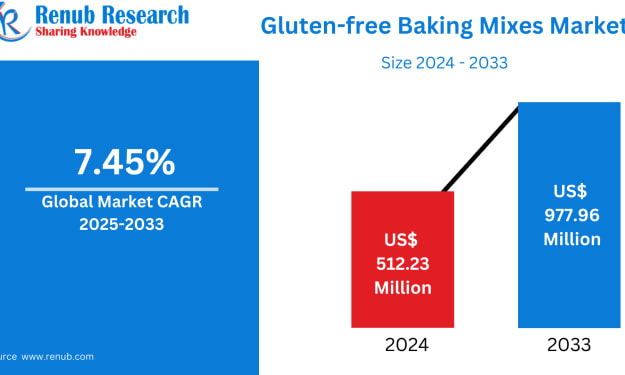
The Gluten-free Baking Mixes Market is expected to reach US$ 977.96 million by 2033, rising from US$ 512.23 million in 2024, exhibiting a CAGR of 7.45% from 2025 to 2033, according to Renub Research. Fueled by surging demand for clean-label, allergen-free, and wellness-oriented products, the global market continues to transform the modern baking and packaged foods sectors.
By Marthan Sirabout a month ago in Feast
My Tous les Jours Trip
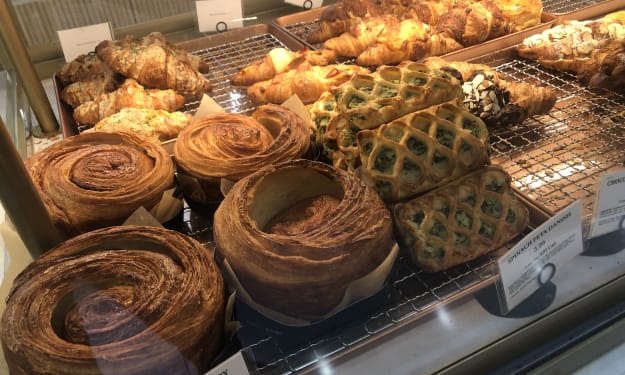
As someone who lives in a rural area, I don't get the chance to visit fancy restaurants or bakeries that often. So, when a friend told me about a French-Asian bakery that's less than an hour away, I knew I had to check it out and grab some pictures for social media. Tous les Jours ended up providing an immersive experience that went above and beyond my expectations--although I did leave with a few reservations.
By Kaitlin Shanks16 days ago in Feast


Comments
There are no comments for this story
Be the first to respond and start the conversation.