
Algae Products Market Size and Forecast 2026–2034: Sustainable Nutrition and Industrial Innovation Drive Global Growth
Algae Products Market is expected to reach US$ 3.73 billion by 2034 from US$ 2.46 billion in 2025, with a CAGR of 4.72% from 2026 to 2034. Rising demand for natural food additives, dietary supplements, biofuels, and cosmetics, coupled with increasing awareness of sustainable and eco-friendly products, is driving the growth of the global algae products market.


Global Algae Products Market Outlook
The global algae products market is entering a new phase of sustainable growth, driven by rising demand for natural, nutrient-rich, and environmentally responsible alternatives across food, health, energy, and industrial sectors. According to Renub Research, the market is projected to grow from US$ 2.46 billion in 2025 to US$ 3.73 billion by 2034, registering a CAGR of 4.72% during 2026–2034.
This growth is being fueled by the expanding use of algae in functional foods, dietary supplements, cosmetics, pharmaceuticals, animal feed, biofuels, and bioplastics. With consumers and industries increasingly shifting toward clean-label, plant-based, and low-carbon solutions, algae-based products are gaining recognition as one of the most versatile and sustainable bio-resources available today.
Algae Products Industry Overview
The algae products industry has emerged as a high-potential segment of the global bio-based economy. Algae—both microalgae (such as spirulina, chlorella, and DHA-rich strains) and macroalgae (seaweed)—contain an exceptional profile of proteins, essential fatty acids, antioxidants, vitamins, minerals, pigments, and bioactive compounds. These attributes make algae highly suitable for applications across multiple industries.
In food and beverages, algae are increasingly used as protein alternatives, natural colorants, stabilizers, and nutritional enhancers. In nutraceuticals and pharmaceuticals, algae-derived compounds support immune health, cardiovascular wellness, and anti-inflammatory benefits. Meanwhile, the cosmetics sector relies on algae for anti-aging, hydration, and antioxidant formulations, while the energy and industrial sectors explore algae-based biofuels, bioplastics, fertilizers, and wastewater treatment solutions.
Technological advancements have transformed algae cultivation from small-scale farming to industrial-grade production systems. Innovations such as photobioreactors, closed-loop cultivation, CO₂-fed bioreactors, and advanced extraction techniques have improved yield, purity, and scalability, making algae products more commercially viable than ever before.
Key Growth Drivers of the Algae Products Market
1. Rising Demand for Nutritional and Functional Foods
Health-conscious consumers are increasingly turning to natural and plant-based nutrition, driving strong demand for algae-based foods and supplements. Microalgae like spirulina and chlorella are rich in complete proteins, iron, omega-3 fatty acids, and antioxidants, making them ideal for functional foods and dietary supplements.
As lifestyle diseases and nutritional deficiencies rise globally, algae-based products are gaining traction for their role in immune support, gut health, weight management, and energy enhancement. The clean-label and vegan movement further accelerates the integration of algae into everyday food and beverage products.
2. Expanding Use in Cosmetics and Personal Care
Algae-derived ingredients such as alginate, carrageenan, fucoidan, and carotenoids are increasingly used in skincare and haircare formulations. These compounds provide hydration, anti-aging, UV protection, and skin barrier support, making them ideal for premium beauty products.
With consumers demanding natural, cruelty-free, and sustainable cosmetics, major brands are replacing synthetic chemicals with algae-based alternatives. This shift is expected to significantly boost market demand from the personal care sector over the next decade.
3. Growing Interest in Biofuels and Green Industrial Applications
Algae’s ability to produce high lipid and carbohydrate content makes it an attractive feedstock for biodiesel, bioethanol, and biogas production. Unlike traditional crops, algae require less land and water and can utilize industrial CO₂ emissions, making them an efficient renewable energy solution.
Beyond energy, algae are being used in bioplastics, animal feed, fertilizers, and wastewater treatment, reinforcing their role in the circular economy. Government incentives for renewable energy and carbon reduction continue to support investment in algae-based industrial applications.
Challenges Facing the Algae Products Market
High Production and Processing Costs
Despite technological progress, large-scale algae cultivation remains capital-intensive. Photobioreactors, nutrient supply, controlled environments, and extraction processes contribute to higher production costs compared to synthetic alternatives. Achieving economies of scale while maintaining quality remains a key industry challenge.
Regulatory Compliance and Market Standardization
The lack of global quality standards and varying regulatory frameworks across regions create barriers to market entry. Food-grade and pharmaceutical-grade algae products require extensive approvals, increasing time-to-market and operational costs. Establishing standardized guidelines will be essential for long-term market expansion.
Regional Market Insights
United States Algae Products Market
The U.S. market is witnessing robust growth due to rising adoption of plant-based nutrition, functional foods, nutraceuticals, and clean-label cosmetics. Strong R&D investments, advanced cultivation technologies, and government support for renewable resources are accelerating commercialization.
Algae-based omega-3 oils, natural colorants, and protein supplements are gaining widespread acceptance, positioning the U.S. as a global innovation hub for algae products.
United Kingdom Algae Products Market
In the U.K., growing awareness of sustainability and plant-based diets is driving demand across food, supplements, and cosmetics. Government-backed initiatives promoting renewable energy and sustainable agriculture further support algae-based solutions. Technological advancements are also helping reduce production costs and improve product quality.
India Algae Products Market
India is emerging as a high-growth market, supported by rising health awareness, expanding nutraceutical consumption, and government support for biofuels. Spirulina cultivation, in particular, is gaining momentum due to its affordability and nutritional value. Expanding domestic production and export potential make India a key future growth engine.
United Arab Emirates Algae Products Market
The UAE is leveraging algae to support its food security, sustainability, and renewable energy goals. Investments in advanced cultivation technologies, desert-friendly algae farms, and CO₂-fed bioreactors are driving adoption in food, cosmetics, and biofuel applications.
Recent Developments in the Algae Products Market
May 2025: FDA approved Galdieria extract blue as a certification-exempt color additive, expanding natural colorant options for food manufacturers.
October 2024: DSM-Firmenich launched Life’s DHA B54-0100, a high-potency algal omega-3 oil to address nutritional deficiencies.
October 2024: Algiecel secured EUR 6.5 million in funding to expand microalgae production for food and feed applications using CO₂-emitting industries.
April 2024: The European Commission approved beta-glucan from Euglena gracilis as a novel food ingredient, opening new immune health applications.
Market Segmentation Snapshot
By Type
Lipids
Carrageenan
Carotenoids
Algal Protein
Alginate
Others
By Source
Brown Algae
Blue-Green Algae
Red Algae
Green Algae
By Form
Solid
Liquid
By Application
Food & Beverages
Nutraceuticals & Dietary Supplements
Personal Care
Feed
Pharmaceuticals
Chemicals
Others
By Geography
North America: U.S., Canada
Europe: U.K., Germany, France, Italy, Spain, Belgium, Netherlands, Turkey
Asia Pacific: China, Japan, India, Australia, South Korea, ASEAN
Latin America: Brazil, Mexico, Argentina
Middle East & Africa: UAE, Saudi Arabia, South Africa
Competitive Landscape
Key players operating in the global algae products market include:
Archer Daniels Midland Company
Cargill Incorporated
BASF SE
DuPont de Nemours Inc.
Koninklijke DSM N.V.
Yemoja Ltd.
Progress Biotech BV
Aliga Microalgae Company
Each company is analyzed across five viewpoints, including company overview, key leadership, recent developments, SWOT analysis, and revenue performance, highlighting the competitive and innovation-driven nature of the market.
Final Thoughts
The global algae products market is transitioning from a niche bio-resource to a mainstream industrial solution. With rising demand for sustainable nutrition, renewable energy, clean-label cosmetics, and green industrial inputs, algae-based products are set to play a central role in the future bioeconomy.
As technological advancements reduce costs and regulatory frameworks mature, algae will increasingly replace synthetic and resource-intensive alternatives across multiple industries. Backed by strong consumer awareness, government support, and corporate investment, the algae products market is well-positioned for steady and sustainable growth through 2034 and beyond.
About the Creator
Keep reading
More stories from Aaina Oberoi and writers in Feast and other communities.
India Organic Food Market Size and Forecast 2025–2033: A Healthy Shift Toward Sustainable Consumption
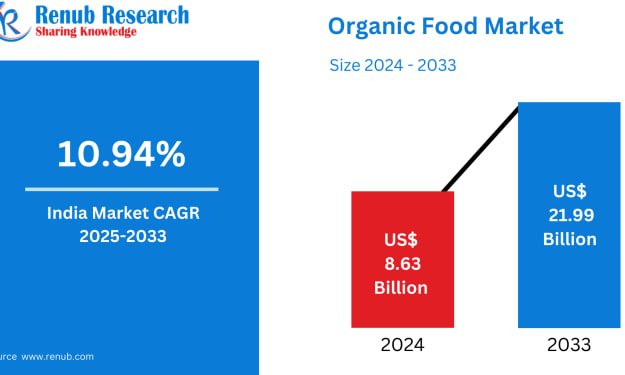
India Organic Food Market Overview The India Organic Food Market is undergoing a major transformation, fueled by rising health consciousness, environmental awareness, and government-backed initiatives promoting sustainable agriculture. According to Renub Research, the market was valued at US$ 8.63 billion in 2024 and is projected to reach US$ 21.99 billion by 2033, growing at a robust CAGR of 10.94% from 2025 to 2033.
By Aaina Oberoi2 days ago in Feast
My Tous les Jours Trip
As someone who lives in a rural area, I don't get the chance to visit fancy restaurants or bakeries that often. So, when a friend told me about a French-Asian bakery that's less than an hour away, I knew I had to check it out and grab some pictures for social media. Tous les Jours ended up providing an immersive experience that went above and beyond my expectations--although I did leave with a few reservations.
By Kaitlin Shanks30 days ago in Feast
Artificial Sweetener Market Size and Forecast 2025–2033: Health Awareness, Sugar Reduction, and the Global Shift Toward Low-Calorie Living
Introduction: Sweetness Without Sugar Is No Longer Optional The global food and beverage industry is undergoing a major transformation as consumers increasingly question their sugar intake. Once viewed as a simple indulgence, sugar is now widely linked to obesity, diabetes, cardiovascular diseases, and metabolic disorders. This shift in perception has created a powerful opportunity for sugar alternatives, especially artificial sweeteners, which offer sweetness without the calorie burden.
By Sushant. Renub Research5 days ago in Feast



Comments
There are no comments for this story
Be the first to respond and start the conversation.