
Beyond the One-Size-Fits-All Classroom: How Personalized Learning is Redefining Education for Real Kids
From Standardized Scripts to Student-Centered Stories: How Technology and Empathy Are Rewriting the Rules of Learning
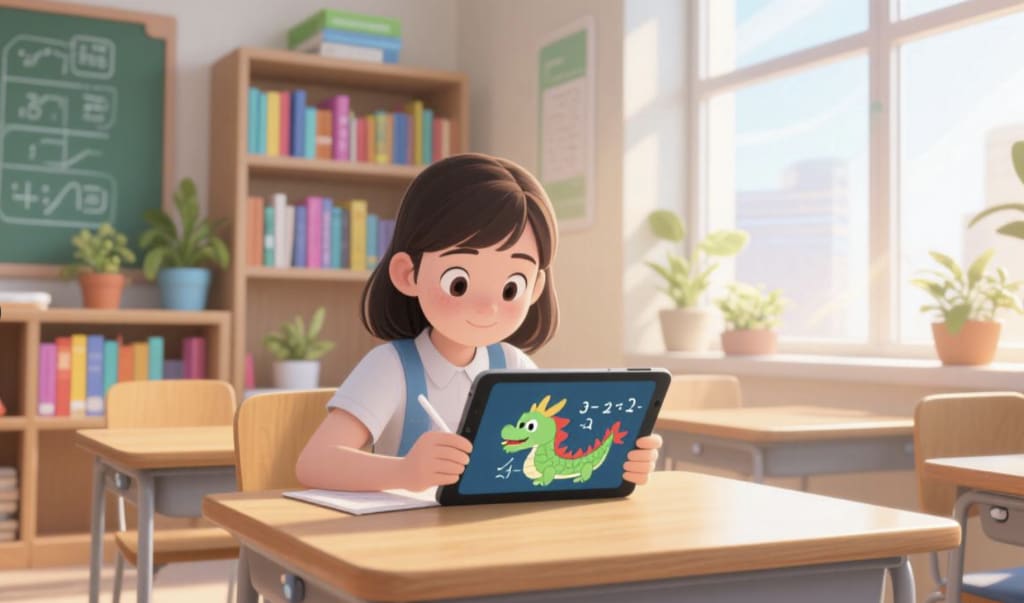
Let me tell you about Mia.
Last fall, I sat in on a 7th-grade math class at Oakwood Middle School in suburban Texas. Mia, a quiet 12-year-old with a passion for drawing (her notebook margins were filled with intricate sketches of dragons), was staring at her worksheet, erasing a wrong answer for the third time. Her teacher, Ms. Carter, noticed and pulled her aside. “You’re not dumb, Mia,” she said gently. “This algebra just isn’t clicking for you yet. Let’s try a different approach.”
What happened next would’ve been unthinkable a decade ago: Ms. Carter handed Mia a tablet loaded with an adaptive learning app. Instead of moving on to the next problem, Mia started with a short quiz that pinpointed exactly where she struggled—factoring quadratic equations. The app then served up mini-lessons tailored to her gaps, using animations of dragons (because of course) to explain variables. By lunchtime, Mia was grinning as she solved a problem on her own.
Mia’s story isn’t unique. It’s a snapshot of a quiet revolution happening in classrooms worldwide: the shift from one-size-fits-all education to personalized learning—a model that tailors teaching to each student’s strengths, weaknesses, interests, and pace. And it’s not just about tech gadgets; it’s about rethinking what “school” means for a generation of kids who learn differently than any generation before them.
Why Standardized Education is Failing Our Kids (and What We Can Do About It)
Let’s start with a hard truth: the traditional classroom model was designed for the Industrial Revolution. Think rows of desks, bells dictating the day, and a curriculum that treats all 12-year-olds as if they’re at the exact same point in their cognitive, emotional, and social development. It worked (sort of) when factories needed obedient, uniform workers. But today? We’re preparing kids for a world where creativity, critical thinking, and adaptability matter more than rote memorization.
The data backs this up. A 2023 report by the National Center for Education Statistics found that 65% of 12th graders lack proficiency in math, and 58% struggle with reading—numbers that haven’t budged in a decade. Meanwhile, anxiety and burnout among students are at an all-time high. Why? Because forcing every child to march to the same drumbeat ignores one simple fact: learning isn’t linear.
Some kids grasp concepts in 10 minutes; others need 45. Some thrive on visual aids; others need hands-on experiments. Some need to talk through problems to understand them; others prefer writing. Personalized learning doesn’t just acknowledge these differences—it leverages them.
How Technology Makes Personalization Possible (Without Replacing Teachers)
Critics often worry that tech-driven personalized learning will replace teachers, turning classrooms into “robot nurseries.” But nothing could be further from the truth. In fact, technology amplifies what great teachers do best: connect with students, inspire curiosity, and fill in the gaps when algorithms fall short.
Here are three tools (and approaches) that are already transforming classrooms:
1. Adaptive Learning Platforms: The “Personal Trainer” for Students
Adaptive learning software uses algorithms to adjust content in real time based on a student’s performance. For example, Knewton (a leader in the space) analyzes a learner’s strengths and weaknesses to deliver micro-lessons, practice problems, and even motivational prompts. In a pilot program with 1,000 middle schools, Knewton users saw a 23% improvement in math scores over six months—all while reducing frustration (and eraser shreds) by 30%. https://www.knewton.com/.
2. Gamification: Making Learning Feel Like an Adventure
Kids love games—and when learning feels like play, engagement skyrockets. Classcraft turns classrooms into RPG-style worlds where students earn points for good behavior, collaboration, and mastering skills. Teachers can customize quests (e.g., “Solve 10 algebra problems to unlock a dragon-slaying mission!”) that align with curriculum goals. A 2022 study in Journal of Educational Psychology found that gamified classrooms report 40% higher student motivation and 25% lower absenteeism. https://www.classcraft.com/.
3. Data-Driven Insights: From “Guesswork” to “Know-Work”
Gone are the days of waiting for quarterly report cards to spot a struggling student. Tools like Nearpod let teachers track progress in real time—seeing which students are stuck on a lesson, which ones are speeding ahead, and even how engaged they are (via built-in polls and quizzes). One teacher I spoke to, Mr. Patel from Chicago, used Nearpod to discover that half his science class was confused about photosynthesis… but too shy to ask. He pivoted to a hands-on experiment the next day—and test scores jumped by 20%. https://nearpod.com/.
The Human Element: Why Tech Alone Isn’t Enough
Let’s circle back to Mia. Her breakthrough didn’t come from the app alone—it came from Ms. Carter, who took the time to notice her frustration, validate her feelings, and pair the tech with a personal connection. That’s the magic of personalized learning: it’s not about replacing teachers with algorithms. It’s about giving educators the tools to do what they do best—nurture, inspire, and meet kids where they are.
In fact, a 2024 survey by EdSurge found that 89% of teachers believe personalized learning has made them more effective, not less. As one elementary school teacher put it: “I used to spend hours grading papers and wondering why half my class was lost. Now, the data tells me exactly where to focus—and I get to spend more time talking to kids, not just their tests.”
The Future of Education is Personal (and It’s Already Here)
Mia’s story isn’t an outlier. Across the U.S., schools are ditching the “sit and git” model for classrooms where students learn at their own pace, explore topics that spark joy, and feel seen as individuals. And while technology plays a key role, the heart of this shift is a simple truth: every child deserves an education that works for them, not against them.
So, the next time you hear someone say, “School hasn’t changed in 100 years,” tell them about Mia. Tell them about the teachers using adaptive tools to unlock potential. Tell them that the future of education isn’t about screens or algorithms—it’s about kids.
Because when learning is personal, it’s powerful. And powerful learning? That’s the real game-changer.
---
Have you seen personalized learning in action? Share your stories (or questions!) in the comments below—I’d love to hear how this movement is impacting your community.
About the Creator
Keep reading
More stories from liang ming and writers in Education and other communities.
"School’s Out (But Learning Never Stops)": How Everyday People Are Redefining Education—for Themselves and the Next Generation
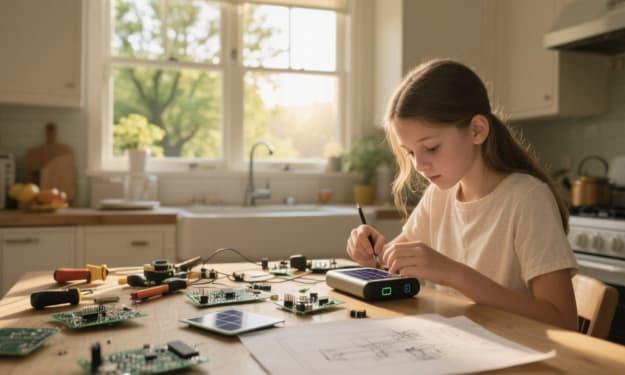
Subtle hum of a laptop, the smell of fresh coffee, and a notebook scribbled with "How to Build a Solar-Powered Phone Charger"—this isn’t a scene from a Silicon Valley startup. It’s my 14-year-old neighbor, Lila, hunched over her kitchen table at 8 a.m. on a Saturday. A year ago, she’d have been stuck in a mandatory algebra review class, half-asleep, wondering why trigonometry mattered. Now? She’s teaching herself circuitry via YouTube tutorials, because she wants to enter a local "Innovation Fair" (and maybe, just maybe, launch a small business later).
By liang ming6 months ago in Education
Smart Storage & Grading for U.S. Coin Collections: a Checklist
Phase 1: First Aid for Your Collection (The 24-Hour Triage) Before buying any special supplies, you need to perform some emergency triage. Think of this as stopping the bleeding. The goal here is to prevent any active damage right now.
By Laura Bennettabout 11 hours ago in Education
How Neuroscience Is Changing the Way We Learn
In recent decades, advances in neuroscience have reshaped our understanding of human learning. Rather than viewing learning as merely memorizing facts, researchers now see it as a biological process that physically and functionally changes the brain. This shift in perspective — from teaching content to understanding how the brain learns — is transforming educational theory, classroom practice, and lifelong learning strategies across the globe.
By Games Mode Ona day ago in Education


Comments
There are no comments for this story
Be the first to respond and start the conversation.