
"School’s Out (But Learning Never Stops)": How Everyday People Are Redefining Education—for Themselves and the Next Generation
From Textbook Rules to Life’s Lessons—How Everyday Learners Are Redefining Education Through Passion, Projects, and Real-World Purpose
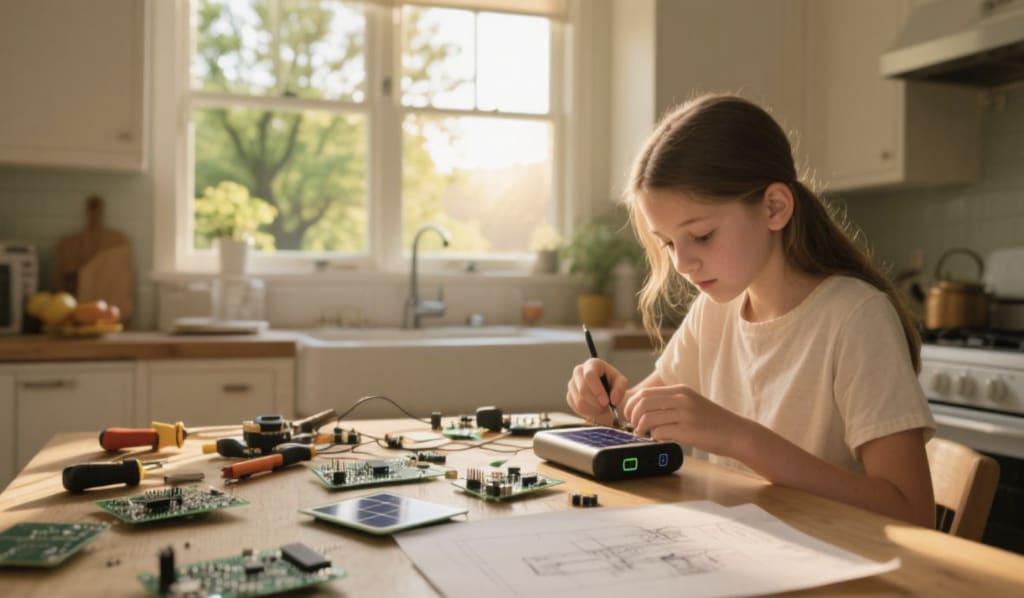
Subtle hum of a laptop, the smell of fresh coffee, and a notebook scribbled with "How to Build a Solar-Powered Phone Charger"—this isn’t a scene from a Silicon Valley startup. It’s my 14-year-old neighbor, Lila, hunched over her kitchen table at 8 a.m. on a Saturday. A year ago, she’d have been stuck in a mandatory algebra review class, half-asleep, wondering why trigonometry mattered. Now? She’s teaching herself circuitry via YouTube tutorials, because she wants to enter a local "Innovation Fair" (and maybe, just maybe, launch a small business later).
Lila’s story isn’t unique. Across the globe, learners—young and old—are ditching the "sit still, listen, and regurgitate" script. They’re grabbing education by the reins, blending curiosity with real-world action, and proving that learning doesn’t have to happen behind a desk. Let’s dive into why this shift is happening, how everyday tools are fueling it, and why it matters more than ever.
The "Why" Behind the Shift: Education Isn’t Preparing Us for Life
Let’s get real: Most traditional education systems are stuck in the past. Think about it: When was the last time you used the Pythagorean theorem in daily life? Or diagrammed a sentence? For decades, schools prioritized knowledge retention over skill-building—but the world has changed. Today’s employers don’t care if you aced a history exam; they want to know if you can solve problems, adapt to chaos, and collaborate across teams.
A 2023 report by the World Economic Forum found that 50% of all employees will need reskilling by 2025 due to AI and automation. Meanwhile, 72% of Gen Z learners say they value "practical skills" (like budgeting, public speaking, or coding) over "academic grades." The message is clear: We need education that prepares us for now—not 1950.
The "How": Learners Are Taking Control (and Tools Are Catching Up)
Meet Raj, a 32-year-old graphic designer. Five years ago, he hated his job. "I learned Photoshop in college, but by the time I graduated, the software had updated 10 times," he told me. "My degree felt useless." That frustration led him to Coursera, where he enrolled in a "UX Design Specialization." Over six months, he built a portfolio, collaborated with peers worldwide, and landed a remote job at a tech startup. "It wasn’t about grades—it was about doing. I designed a real app for a local business as my final project. That’s what got me hired."
Raj’s story is a microcosm of a larger trend: education is becoming "project-based" and "self-directed." Platforms like Coursera, Udemy, and even YouTube now host millions of courses taught by industry experts—not just academics. Unlike traditional degrees, these programs focus on outcome: Can you build a website? Write a grant proposal? Fix a broken engine? If yes, you’ve "graduated."
Beyond Screens: The Power of "Messy" Learning
Of course, not all learning happens online. In fact, some of the most transformative education happens when we step away from screens and into the real world. Take Farm-to-School Programs, where kids grow vegetables, cook meals, and learn math by calculating crop yields. Or Community Repair Cafés, where neighbors gather to fix broken appliances together—teaching mechanical skills, sustainability, and empathy along the way.
I recently visited one in Portland, Oregon. A group of teens was repairing a vintage typewriter under the guidance of a retired teacher. "I hate math," one girl said, "but figuring out how to adjust the tension on the ribbon? That’s math, and it’s cool." Her friend chimed in, "And we’re saving this typewriter from the landfill—that feels good." Learning here wasn’t about tests; it was about connection—to the object, to the community, and to their own curiosity.
The Role of "Unconventional Teachers"
Let’s talk about mentors. Not the ones with "Dr." in front of their names, but the ones who’ve "been there." For example, MasterClass (yes, the one with famous chefs and writers) isn’t just for aspiring pros. A single mom I know used their "Writing for Self-Discovery" course to process grief, turning her journal entries into a memoir that’s now shared in local book clubs. Or MasterClass for Kids, where a former NASA engineer teaches kids to design rockets—using household items like cardboard and rubber bands.
These platforms work because they tap into passion. When you learn something because it excites you, not because it’s required, retention skyrockets. A Stanford study found that learners who pursue "interest-driven learning" are 40% more likely to stick with a skill long-term than those in forced classes.
So, What’s Next? It’s Up to You
The future of education isn’t about bigger classrooms or fancier gadgets. It’s about empowering learners to take charge—to ask, "What do I want to create? Who do I want to help? What problems do I want to solve?"
If you’re a parent, encourage your kids to explore beyond their textbooks. Sign them up for a pottery class, a coding bootcamp, or a community garden project. If you’re a lifelong learner, dive into that course you’ve been eyeing (shoutout to Skillshare for making creative skills accessible). And if you’re an educator, blend traditional wisdom with new tools—your students will thank you.
Ready to start your own learning revolution? Here are a few tools to explore:
• https://www.coursera.org/ – Certificates in tech, business, and more (many free to audit!)
• https://www.masterclass.com/ – Learn from icons like Margaret Atwood and Neil deGrasse Tyson
• https://www.skillshare.com/ – Creative courses (photography, writing, design) taught by working artists
• https://www.eventbrite.com/ – Search for repair cafes, workshops, and project groups near you
Lila, the solar-phone-charger kid? She won first place at the Innovation Fair. But more importantly, she told me, "I used to hate school. Now I love learning—because it’s mine."
What’s your "solar-phone-charger moment"? Share your story in the comments—I’m all ears.
About the Creator
Keep reading
More stories from liang ming and writers in Education and other communities.
Beyond One-Size-Fits-All: How Personalized Learning is Redefining Education for Real Kids
It’s a Tuesday morning in my 5th-grade classroom, and I’m standing at the front, trying to balance the needs of 28 students who all seem to be operating on different wavelengths. Mia, sitting in the corner, is already three chapters ahead in her math workbook, scribbling notes about fractions she’s “invented” in the margins. Across the room, Liam is staring at his worksheet, erasing so hard the paper is tearing—he’s stuck on subtracting decimals for the fourth time. Somewhere in the middle, Aisha is quietly raising her hand, but by the time I call on her, she’s forgotten her question.
By liang ming6 months ago in Education
How Milwaukee Businesses Misjudge Mobile App Timelines?
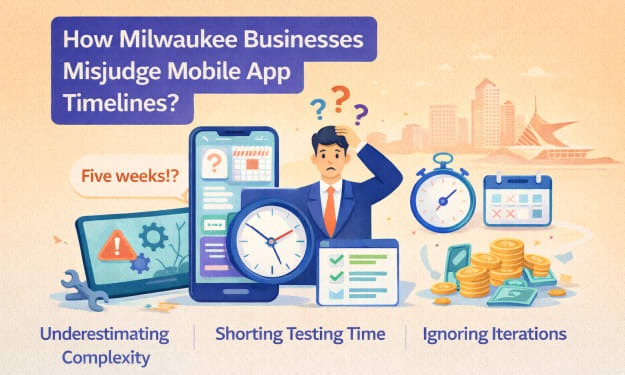
Timeline optimism is one of the most expensive habits in software. In Milwaukee, it shows up quietly. A launch date is set to align with a trade show. A quarter-end deadline is chosen to please leadership. A six-month roadmap is approved because “the features aren’t that complex.” On paper, everything looks reasonable.
By Mary L. Rodriquez6 days ago in Education
The Insurrection Act
Introduction The Insurrection Act is a law in the United States of America. It allows the President of the United States to use the military to deal with serious problems inside the country. This law is very important because it can be used when there is a rebellion, violence, or lawlessness that cannot be controlled by normal police forces. The act has been in use for many years and is sometimes a topic of debate because it gives the President significant power.
By Farhan Sayed3 days ago in Education


Comments
There are no comments for this story
Be the first to respond and start the conversation.