Sustainability
The Future of Flight: From Electric Dreams to Sustainable Skies
When a French pioneer first attempted to fly with an electric aircraft 140 years ago, little did he know he was paving the way for an aviation revolution. Back then, battery technology was rudimentary, far from the impressive advancements we've seen today from companies like Apple, Tesla, and Samsung. Despite this progress, even the largest electric car batteries struggle to match the energy density of conventional aviation fuels, which hold nearly 60 times more energy than standard batteries. To make electric planes feasible, engineers must balance weight and power, a task easier said than done.
By Sciences and Wisdomabout a year ago in Earth
The Future of the Sun: What Happens When a Star Reaches Its End?
A recent study on nearly 200 massive stars in their final stages of life has revealed fascinating insights into how stars like our Sun might one day reach their end. As stars grow old, they undergo dramatic changes, swelling to immense sizes and burning through their nuclear fuel in spectacular ways. In the case of the Sun, scientists predict it will eventually expand to nearly 200 to 300 times its current size—quite a remarkable transformation for the star we rely on for light and warmth.
By Sciences and Wisdomabout a year ago in Earth
The Mystery of Pluto and Charon: A Potential Double Planet System
For decades, Pluto was a proud member of the solar system’s lineup of major planets—until scientists reclassified it as a dwarf planet in 2006. Too small to be a full-fledged planet but too large to be an asteroid, Pluto has carved a unique niche in space. Residing in the distant Kuiper Belt, Pluto orbits the Sun alongside a variety of icy bodies. These “Kuiper objects” are ancient relics from the early solar system, offering clues about our cosmic origins. One of the most fascinating mysteries today isn’t Pluto itself but its relationship with its largest moon, Charon, which could redefine what we know about planetary systems.
By Sciences and Wisdomabout a year ago in Earth
Unexpected Discoveries: How Google Earth is Revealing Earth’s Hidden Mysteries
In today's digital age, people are making remarkable discoveries from the comfort of their own homes. A simple glance at Google Earth recently led Canadian explorer Joel Lupang on an unexpected adventure, potentially revealing a massive impact crater in Quebec's Cot region. Initially planning a camping trip, Lupang stumbled upon a perfectly rounded formation stretching over 9.3 miles, adjacent to a small lake. Intrigued, he took a screenshot and sent it to a French geophysicist for analysis, wondering if he’d actually found something significant or just an odd Google Earth quirk.
By Sciences and Wisdomabout a year ago in Earth
Exploring the Fascinating
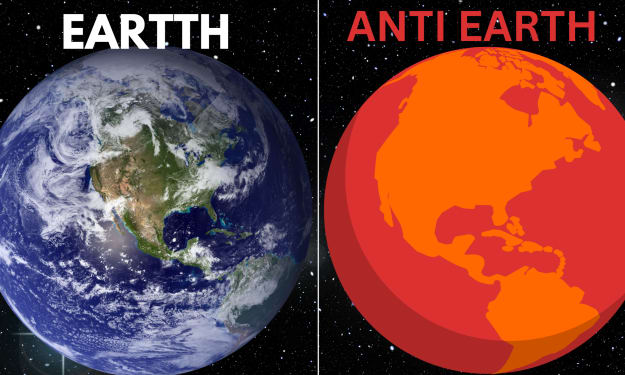
Imagine a universe built entirely from antimatter—a realm where the fundamental particles are the opposite of those in our familiar world. What would it look like? Would the laws of physics be reversed? Would time flow backwards? Let’s dive into the science and explore the mysteries of this strange concept.
By Sciences and Wisdomabout a year ago in Earth
The Journey of ALH 84001
At first glance, this rock looks ordinary—just another dull, four-pound stone, like the ones you might stumble upon during a walk along the beach. Its color is unremarkable, and there’s nothing extraordinary about its weight. But its story becomes captivating once you discover that this rock was born on Mars, traveled through space, and ended its journey in Antarctica. Let’s dive into the details of this interplanetary traveler known as ALH 84001.
By Sciences and Wisdomabout a year ago in Earth
Tesla Phone's Environmental Hope
The morning sunlight crept through Sarah’s window, casting a warm, gentle glow across her face as she opened her eyes. Today was special; she could feel it in her bones. The world had changed overnight, at least for her. On her nightstand lay something she’d only dreamed about—a phone, but not just any phone. It was sleek, impossibly light, yet felt substantial in her hand, as if brimming with hidden power. It was Tesla’s new phone, one rumored to be more than just another gadget. It was a promise—a promise of hope, a commitment to the Earth, a chance to change the way we connected with technology.
By Jackson Stephanoabout a year ago in Earth
Pyrolysis: Paving the Way for a Low Carbon and Circular Economy Future
As the world grapples with the escalating impacts of climate change and resource depletion, innovative waste management solutions are more crucial than ever. Pyrolysis, a thermochemical process that decomposes organic materials in the absence of oxygen, emerges as a key technology in creating a low carbon and circular economy. By transforming waste into valuable products, pyrolysis not only reduces environmental impacts but also fosters sustainable economic growth.
By Bestonpyrolysisabout a year ago in Earth
Rice Husk Pyrolysis Recycling and Sustainable Development Goals
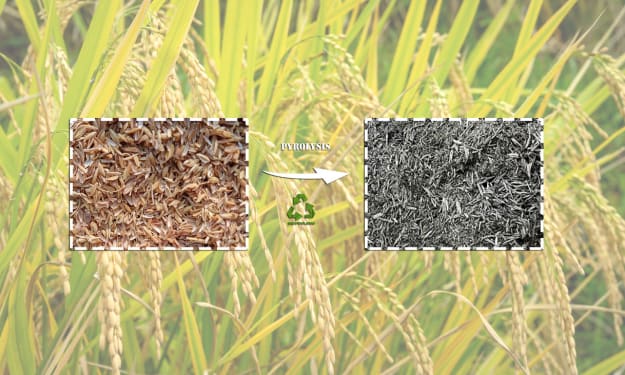
Rice husk, a byproduct of rice milling, is a significant agricultural waste that poses disposal challenges and environmental concerns. Traditionally viewed as a nuisance, rice husk is often burned, leading to air pollution and waste of valuable resources. However, through pyrolysis, rice husk can be transformed into valuable products, contributing to the achievement of several Sustainable Development Goals (SDGs) and promoting a circular economy.
By Bestonpyrolysisabout a year ago in Earth
The Flood’s Sacrifice
The storm had raged all night. Thunder rolled across the hills, and the rivers swelled until they crept into the town. One by one, roads disappeared under the murky waves. When the dawn arrived, it revealed an ocean of debris, driftwood, and the wreckage of homes—entire streets erased by water. For the first time in years, Elena felt as though the ground had been stolen from under her feet.
By Jackson Stephanoabout a year ago in Earth
"A Ray of Hope"
Lesie had always loved her small town, nestled between the mountains and open fields. The community was close-knit, and life moved at a simple pace. But over the past few years, she had noticed something troubling. The weather was changing in ways she couldn’t ignore: hotter summers, drier winters, and storms that seemed to bring more destruction each season. Fields where wildflowers once bloomed were now barren patches, and the town’s river, once a steady lifeline, was thinning into a mere trickle. The words "climate change" had once felt distant, but now it was something she felt every day.
By Kibwe Kuwaabout a year ago in Earth