
Exploring the Fascinating
Possibilities of an Antimatter Universe

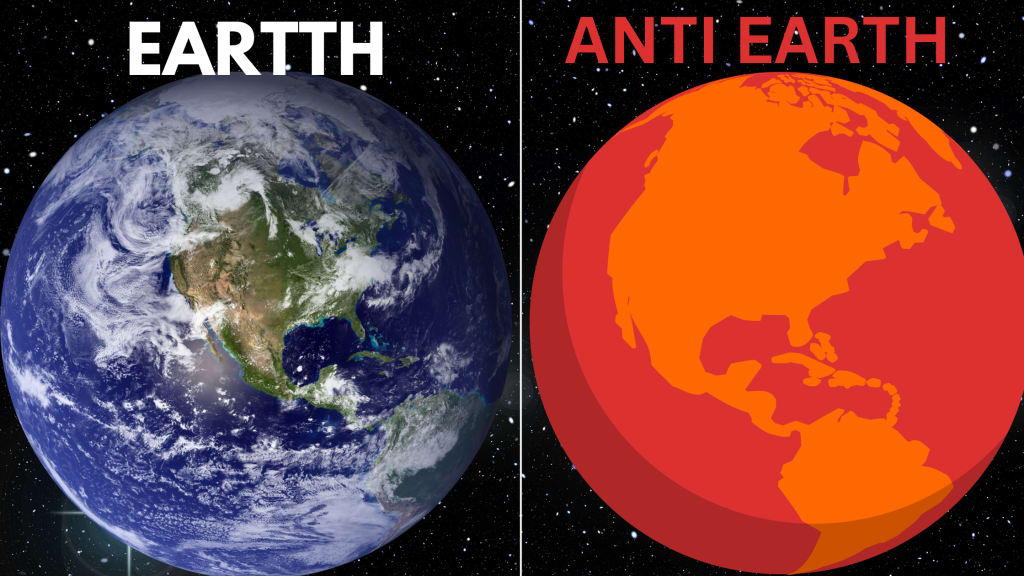
Imagine a universe built entirely from antimatter—a realm where the fundamental particles are the opposite of those in our familiar world. What would it look like? Would the laws of physics be reversed? Would time flow backwards? Let’s dive into the science and explore the mysteries of this strange concept.
What is Antimatter?
In our universe, everything is made up of atoms consisting of protons, neutrons, and electrons. Protons carry positive charges, electrons are negative, and neutrons are neutral. Antimatter, however, mirrors this structure with opposite properties. For example, antimatter contains antiprotons (negatively charged) and positrons (positively charged counterparts to electrons). This relationship is similar to the way superheroes and villains often have inverse abilities—opposites in perfect balance.
When matter and antimatter meet, they annihilate each other, releasing an immense amount of energy. This makes antimatter both promising and challenging for scientists. On one hand, the energy released could revolutionize space travel; on the other, studying antimatter is expensive and risky, as it must be kept separate from ordinary matter to avoid instant destruction.
The Mystery of Antimatter’s Disappearance
According to scientific theories, equal amounts of matter and antimatter should have been created at the time of the Big Bang. If that were true, the particles would have annihilated each other instantly, leaving nothing behind. But here we are, in a universe made primarily of matter. So where did all the antimatter go?
One explanation suggests that the laws of physics were slightly different in the early universe, creating an imbalance. As particles and antiparticles collided and annihilated each other, a small surplus of matter survived—leading to the universe we inhabit today. Another fascinating theory, proposed by Canadian physicist Neil Turok and his team, suggests that two universes were born at the moment of the Big Bang: one made of matter (ours) and another composed entirely of antimatter. As these parallel universes drifted apart, the influence of matter on antimatter weakened, allowing each universe to evolve independently.
What Would an Antimatter Universe Look Like?
Initially, scientists believed that an antimatter universe would be an exact mirror of ours. This idea was based on CP symmetry—the principle that every particle has a twin with the opposite charge and that the laws of physics remain the same regardless of location or orientation. If this symmetry were true, everything in the antimatter universe would function just like here, but with reversed charges.
However, experiments in the 1950s shattered this assumption. Researchers discovered that certain weak nuclear reactions violate CP symmetry. For example, cobalt-60 emits particles spinning in a specific direction, but its antimatter counterpart produces particles spinning differently. This finding puzzled scientists until they introduced the concept of CPT symmetry, adding T for time-reversal symmetry. This suggests that in an antimatter universe, time could flow backwards—from the future to the past.
Imagine living in a world where events unfold in reverse. Broken objects would reassemble themselves, people would age backwards like Benjamin Button, and fallen apples would leap from the ground back into trees. It’s a mind-bending concept, yet it fits within the framework of what scientists understand about antimatter’s behavior.
The Scientific Importance of Studying Antimatter
Although the existence of an antimatter universe remains hypothetical, studying antimatter is crucial for several reasons. It helps physicists understand the origins of our universe, shedding light on the imbalance between matter and antimatter. Additionally, research into antimatter reveals more about the fundamental forces governing particle interactions, which could unlock new discoveries in physics.
There are also practical applications. For instance, antimatter could revolutionize space travel by providing an ultra-efficient energy source for propulsion systems. In medicine, positron emission tomography (PET) scans already use antimatter to generate detailed images .
About the Creator
Sciences and Wisdom
Welcome to Science and Wisdom! This blog explores the fascinating intersection of human history and scientific discovery. Through insightful articles, we delve into the events that have shaped our word.
Keep reading
More stories from Sciences and Wisdom and writers in Earth and other communities.
The Journey of ALH 84001
At first glance, this rock looks ordinary—just another dull, four-pound stone, like the ones you might stumble upon during a walk along the beach. Its color is unremarkable, and there’s nothing extraordinary about its weight. But its story becomes captivating once you discover that this rock was born on Mars, traveled through space, and ended its journey in Antarctica. Let’s dive into the details of this interplanetary traveler known as ALH 84001.
By Sciences and Wisdomabout a year ago in Earth
Super Intelligent Aliens
For centuries, humanity has gazed at the night sky with a mixture of wonder and curiosity. The question of whether we are alone in the universe has fascinated philosophers, scientists, and storytellers alike. With recent advancements in astronomy, artificial intelligence, and space exploration, the possibility of extraterrestrial life no longer belongs solely to science fiction. Among the many hypotheses about alien life, one of the most unsettling is the existence of super intelligent aliens—beings whose intellectual, technological, and strategic capabilities far surpass those of humans. While the idea may seem speculative, the potential threat posed by such entities raises serious concerns about human survival, autonomy, and the future of civilization.
By Ibrahim Shah about 2 hours ago in Earth



Comments
There are no comments for this story
Be the first to respond and start the conversation.