Science
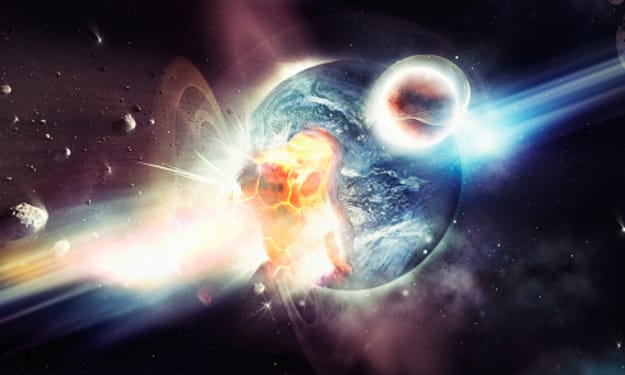
The Final Destruction of the Universe
One day, the universe will cease to exist. But why? How? Will it be gone forever? And how do we know this? First and foremost, the universe is not only expanding, but its rate of expansion is accelerating. The cause: dark energy. Dark energy is a mysterious phenomenon that scientists believe pervades the universe. Until 1998, we assumed the universe functioned similarly to a ball thrown into the sky. The ball goes up, but eventually, it must come back down. However, the universe's expansion is actually gaining speed. It's like tossing a ball upward and watching it accelerate faster and faster. What's causing this acceleration? We're not sure, but we've named it "dark energy." Einstein first conceived the idea and later dismissed it as foolish. Now, astrophysicists consider it plausible. The problem is that this is highly theoretical, and we don't really know the properties of dark energy.
By Joshua Rogers3 years ago in Earth
WATER IS LIFE
WATER IS LIFE Water is Life, but now we're turning off the faucet Water is the most precious resource on Earth, and for good reason. It's the foundation of all life as we know it, and without it, we would simply cease to exist. Water is the substance that makes up the majority of our bodies, and it plays a crucial role in virtually every biological process that takes place within us. From regulating our body temperature and maintaining healthy organ function to flushing out toxins and delivering vital nutrients, water is truly the lifeblood of our existence.
By Agnes Tusabe3 years ago in Earth
Climate Change and Sustainability: A Global Challenge.
Climate change and sustainability are two of the biggest challenges facing the world today. The effects of climate change are becoming increasingly evident, with rising sea levels, extreme weather events, and melting glaciers all pointing to the urgent need for action. Meanwhile, the need for sustainable development is becoming more urgent, as we confront the limits of our planet's resources.
By Tejas Arya3 years ago in Earth
The Urgency of Climate Change and Sustainability
Climate change and sustainability have become two of the most pressing issues of our time. As we witness the devastating impacts of climate change on our planet, it's clear that urgent action is needed to address this crisis. But what can we do as individuals, communities, and nations to make a difference?
By Enoch T Benson3 years ago in Earth
North Korea's Nuclear Weapons Program
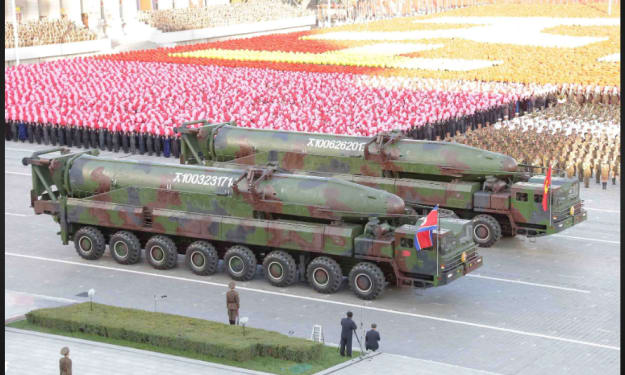
North Korea's test of an intermediate-range ballistic missile on Wednesday is a sign that the country is continuing to make rapid progress in its nuclear weapons program. The missile flew across the Sea of Japan and over the airspace above Northern Honshu before crashing far to the east in the Pacific Ocean around 4,600 kilometers away. With more than 100 missiles fired over the past year, North Korea is likely getting ready to carry out its seventh nuclear weapons test. It's unclear how powerful their next test will be, but what is clear is that North Korea's ability to deliver nuclear warheads on the tips of missiles is advancing rapidly and it's just not their development of strategic nuclear weapons that can theoretically deliver city-ending bombs to anywhere in the United States. The next objective on the North Koreans weapons checklist are tactical nuclear weapons. Once they acquire those, stopping the Kim regime will become an almost impossibly high cost for anyone to bear.
By Anderson Ramon3 years ago in Earth
500 YEAR OLD MYSTERIOUS MAP REVEAL DETAIL ABOUT EARTH
The enigmatic Peter Ease map is just one of several unusual maps created during and before the sixteenth century. Some individuals argue that it provides more accurate information about the shape of the world's continents than what was known at the time. This assertion has led to even more remarkable claims that the geographical data presented on the Piri Reis map could have been obtained at a much earlier time and was based on knowledge from an advanced, yet unknown, ancient civilization. Discovered in the Topkapi Palace library in Istanbul on October 9th, 1929, by a German theologian named Gas Dog a Dog Diceman, the map was drawn and signed by Turkish cartographer Ahmed Muhiddin Piri, also known as Piri Reis. In addition to his cartography work, Piri Reis was an accomplished sailor and served as an admiral in the Turkish Navy. The map is dated 919 in the Islamic calendar, which corresponds to 1513 CE in the Western calendar. While constructing the map, Piri Reis claimed to have used up to 20 source maps and charts, including eight Ptolemaic maps, four Portuguese maps, an Arabic map, and a map purportedly created by Christopher Columbus.
By Shantall Addison3 years ago in Earth
Solving the Mystery of the Bermuda Triangle: Hexagonal Clouds May Be the Culprit
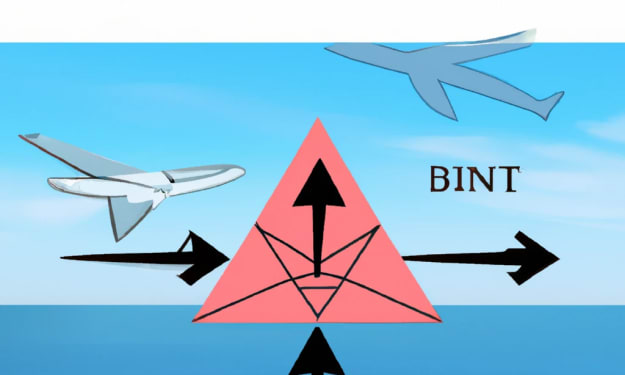
The Bermuda Triangle, is a region of the Atlantic Ocean located between Florida, Puerto Rico, and Bermuda, has been a subject of fascination and mystery for many years. This region is notorious for its unexplained disappearances of planes and ships. Over the years, various theories have emerged, ranging from water spouts to sea monsters and even aliens.
By CARLOS LORCEUS3 years ago in Earth
"Unveiling the Wonders of Maharashtra: Trekking Adventures in the Sahyadri Mountains"
Harishchandra Gad is a popular trekking destination located in the Western Ghats of Maharashtra, India. It is known for its rugged terrain, stunning views, and historic fortifications. The fort is situated at an elevation of around 1,424 meters (4,669 feet) above sea level, and offers panoramic views of the surrounding hills and valleys. The trek to Harishchandra Gad is considered to be a moderate to difficult trek, with steep ascents, rocky terrain, and narrow pathways. Trekkers can also explore the nearby Kedareshwar Cave, which is believed to have been used by sages for meditation in ancient times. Overall, Harishchandra Gad is a popular destination for adventure seekers and nature lovers who want to experience the untamed beauty of the Western Ghats.
By Vivek Rajbhar3 years ago in Earth
The Ozone Layer: How We Saved the Earth from Disaster
In the early 1980s, the world was faced with a dire problem: a rapidly expanding hole in the ozone layer. The ozone layer is a protective layer in the Earth's atmosphere that absorbs most of the Sun's ultraviolet (UV) radiation, preventing it from reaching the Earth's surface where it can cause DNA damage in plants and animals.
By Mandy Allen3 years ago in Earth