

Have you ever wondered how the universe will end? We all know about the Big Bang, which started everything, but have you heard of the Big Crunch? It's not a candy bar, I promise! Scientists believe that the universe began with a huge burst of energy, but they're not sure how it will all end. Some theories include the Big Freeze and the Big Rip, but the Big Crunch is the most likely. It means that everything in the universe will eventually come crashing together, like a giant implosion. It's kind of like when you squish a piece of paper into a tiny ball. That's what the universe might look like in the end.
Okay, so there's this thing called the Big Crunch. It's a theory that comes from Einstein's idea about how everything in the world works. Basically, when something happens, the opposite thing is likely to happen later on. So, if the Big Bang made the universe get bigger, eventually it will start getting smaller and smaller until it's all squished into a tiny space. This tiny space is called a singularity. It's so small that everything in the universe will be squished down to almost nothing. That's why it's called the Big Crunch. It's not great news for those of us who like living and eating bacon, but the good news is that it won't happen for billions ofyears.Scientists who study space and the universe have a big question to answer: will the universe eventually collapse in on itself? The math says it's possible, but there are still things we don't understand about the universe. One thing we do know is that the universe is expanding, which means everything is moving away from everything else. But there are two factors that affect this expansion: density and outward momentum. Density is how much gravity there is in an area, and the more gravity there is, the more things will be pulled towards each other. This could eventually lead to everything collapsing in on itself. However, we've observed that things in the universe aren't behaving as simply as we would expect, so there are still unknowns that could affect our ultimate fate.
Scientists have noticed that faraway galaxies are moving away from us faster than closer ones. They call this mysterious force "dark energy." This could mean two things: either the universe will keep expanding forever, or it will eventually collapse in on itself in a "Big Crunch." It all depends on how much dark energy there is. If there's enough, the universe will keep expanding. If there's not enough, gravity will eventually bring everything back together. Some scientists think that the increased rate of expansion is the last gasp of the universe before it starts to contract. If the Big Crunch happens, it won't be as explosive as the Big Bang. Instead, everything will slowly start to come together, and temperatures will rise. Eventually, everything will break down into tiny particles, and the universe will become extremely chaotic.
The universe could get so messed up that it would break into tiny pieces. This would make time, distance, and direction not make sense anymore. But don't worry, we wouldn't be around to see it because we wouldn't survive that long. We don't really know how the universe will end because we don't understand everything that's happening. One idea is called the Big Crunch, where everything goes back to where it started and turns into a huge black hole. After that, who knows what will happen? Maybe a new universe will be born, or maybe this has already happened before. We're just living in one of many possible universes.
Hey there! So, you know how sometimes things go in cycles? Like how the seasons change every year? Well, the universe has cycles too. Some people think that the universe started with a big explosion called the Big Bang. But what about the end of the universe? There are different ideas, but the most popular one is called the Big Crunch. This means that eventually, everything in the universe will come back together and collapse in on itself. It's like when you squish a ball of playdough back into a ball. Some scientists think there could be other ways the universe will end, like the Big Rip or the Big Freeze, but the Big Crunch is the most likely. This idea comes from a really smart guy named Einstein and his theory of general relativity. So, don't worry too much about it unless you plan on living for billions of years!
Hey there! So, you know how things sometimes go up and down, like a wave? Well, the universe is kind of like that too. When something big happens, the opposite thing is likely to happen later on. For example, when the Big Bang happened and the universe started expanding, eventually it will get so big that it will start to collapse in on itself. This will create a huge black hole that contains everything in the universe. This is called the Big Crunch, and it's not great news for those of us who like living for billions of years or eating bacon. But don't worry, there's some good news too!
The Big Crunch might happen, but there are still some things we don't know about the universe. Scientists who study this stuff are still trying to figure everything out. One thing we do know is that the universe is expanding because of two things: density and outward momentum. Density is how much stuff is in a certain area, and it affects how much gravity there is. The more stuff there is, the more gravity there is. This means that eventually everything will start to come together and there will be a Big Crunch. But there are still some unknowns, so we can't say for sure if it will happen or not. Friction in space is when things rub against each other and slow down. Gravity is a force that pulls things towards each other. When the Big Bang happened, everything started moving outward really fast. But gravity should have slowed it down and pulled it back together. Scientists have seen that things in space are moving apart from each other faster than they should be. They call this unknown thing "dark energy." This means that the universe might keep expanding forever and everything will be really far apart. Or, everything might eventually come back together in a "Big Crunch." We don't know which one will happen yet.
Scientists think there's something called dark energy that's making the universe expand. If there's enough of it, the universe will keep getting bigger and bigger. But if there's not enough, gravity will eventually take over and everything will come back together. Some people think that the abundance of dark energy means the universe will eventually collapse in a "Big Crunch." But others think that the universe is just going through its last phase of expansion before it starts to shrink again. If the Big Crunch does happen, it won't be as exciting as the Big Bang. Everything will just start to come together evenly.
If we keep going like this, things will start to speed up. In about 100 billion years, the temperature will get really hot and stars will explode. Everything will break down into tiny pieces and even those pieces will break apart. Eventually, everything will get squished into a tiny space and things will get really crazy. Some people think that time and space will break apart and we won't be able to understand anything anymore.
It's pretty crazy to think about how the universe will end. But don't worry, we're not all going to die before it happens. We just don't know exactly how it will happen because we don't fully understand the process. One possibility is called the Big Crunch, where everything in the universe will collapse back into a huge black hole. What happens after that is anyone's guess - it could even lead to the birth of a new universe! Some people think this has already happened before and we're just living in one of many cycles. But don't stress too much about it - only those planning to live for billions of years need to worry.
About the Creator
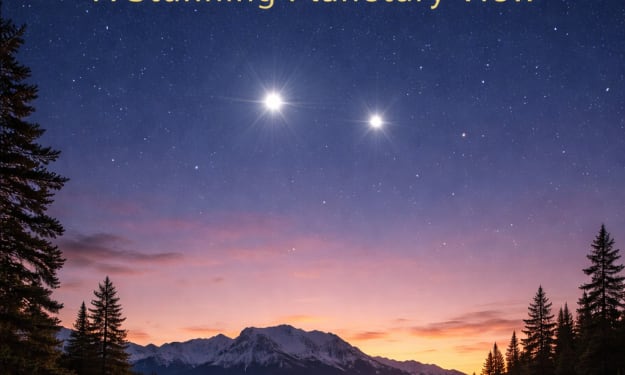
Venus and Jupiter Shine Together: A Stunning Planetary Display in Earth’s Sky
For skywatchers across the world, there are few sights more captivating than seeing bright planets glowing in the night sky. Among these celestial wonders, the close appearance of Venus and Jupiter from Earth is one of the most spectacular. When these two brilliant planets appear close together in the sky, they create a stunning astronomical event that fascinates both professional astronomers and casual stargazers alike.
By Irshad Abbasi 6 days ago in Earth



Comments
There are no comments for this story
Be the first to respond and start the conversation.