
The Final Destruction of the Universe
How the universe will end as we know it!
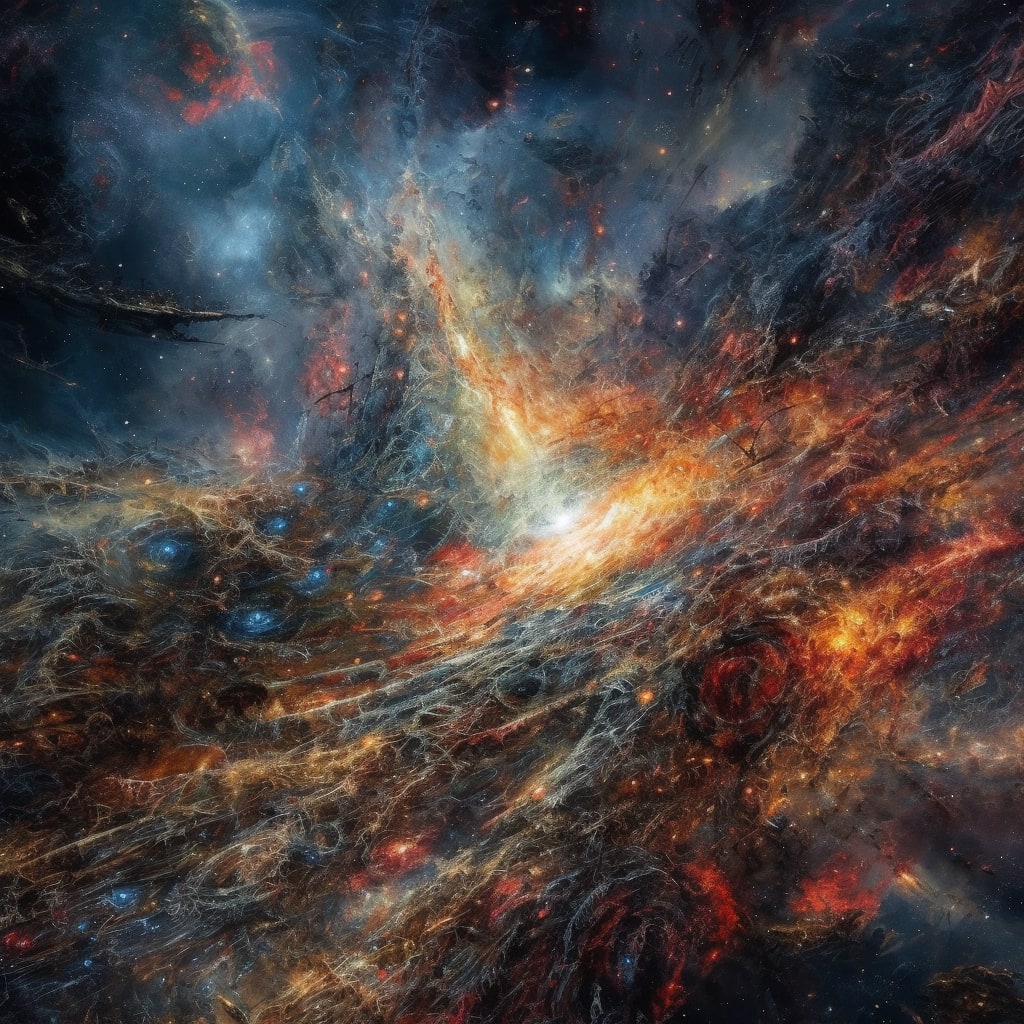
One day, the universe will cease to exist. But why? How? Will it be gone forever? And how do we know this? First and foremost, the universe is not only expanding, but its rate of expansion is accelerating. The cause: dark energy. Dark energy is a mysterious phenomenon that scientists believe pervades the universe. Until 1998, we assumed the universe functioned similarly to a ball thrown into the sky. The ball goes up, but eventually, it must come back down. However, the universe's expansion is actually gaining speed. It's like tossing a ball upward and watching it accelerate faster and faster. What's causing this acceleration? We're not sure, but we've named it "dark energy." Einstein first conceived the idea and later dismissed it as foolish. Now, astrophysicists consider it plausible. The problem is that this is highly theoretical, and we don't really know the properties of dark energy.
There are numerous theories about the end of the universe, and these lead us to three possible scenarios. The first scenario is the Big Rip. Since its inception, the universe has been expanding, and for reasons yet unknown, new space is created uniformly throughout. As the space between galaxies expands, they move farther apart from each other. The space within galaxies also expands, but gravity is powerful enough to hold them together. In the Big Rip scenario, the expansion accelerates to a point where space expands so rapidly that gravity can no longer counteract this effect. This results in the Big Rip.
Initially, only massive structures like galaxies are torn apart, as the space between individual objects expands at an accelerated pace. Subsequently, large celestial bodies such as black holes, stars, and planets meet their end. Their gravitational force is not strong enough to maintain their cohesion, causing them to disintegrate into their constituent components.
In the end, space would expand faster than the speed of light. Atoms would now be affected, and they would just disband. Once space is expanding faster than light, no particle in the universe can interact with any other particle anymore. The universe would dissolve into countless lonely particles that won’t be able to touch anything else in a strange, timeless universe. Hmm, and you thought you felt lonely! Two: Heat death or a Big Freeze. In a nutshell, the difference between the Big Rip and heat death is that in a heat death scenario matter stays intact and is converted over an incredibly long but finite period of time into radiation, while the universe expands forever. But how does this work? Let’s talk about entropy. Every system tends towards the state of highest entropy, like when we have a latte macchiato. Initially, it has different regions, but over time, they will cool down and disintegrate, until it’s uniform.
The same principle of entropy applies to the entire universe. As the universe continues to expand, matter slowly breaks down and spreads out. After numerous generations of stars, all the gas clouds required to form new stars will eventually be depleted, resulting in a dark universe. The remaining stars will die, and black holes will gradually break down and disappear over trillions of years through a process called Hawking radiation. Eventually, only a sparse gas of photons and light particles will remain, until even this disintegrates. At this point, all activity in the universe will cease, entropy will reach its maximum, and the universe will remain dead forever, unless a spontaneous decrease in entropy, known as "quantum tunneling", could potentially trigger a new Big Bang after an incredibly long period of time.
The third scenario is the Big Crunch and Big Bounce, which is the most optimistic outcome. If there is less dark energy than expected or it decreases over time, gravity will eventually become the dominant force in the universe. In a few trillion years, the expansion rate of the universe will slow down and eventually stop, and then reverse. As a result, galaxies will merge as the universe becomes smaller and hotter. Temperature rises everywhere all at once as the universe gets smaller, and one hundred thousand years before the Big Crunch, background radiation will be hotter than the surfaces of most stars, causing them to be cooked from the outside. Just before the Big Crunch occurs, atom cores will be ripped apart, and everything will be devoured by supermassive black holes.
Finally, all black holes would merge into a supermassive mega-black hole that contains the entire mass of the universe. In the last moment before the Big Crunch, it would devour the universe, including itself. According to the Big Bounce theory, this has happened many times, and the universe goes through an infinite cycle of expansion and contraction. It sounds nice, doesn't it? So what will actually happen to the universe in the end? At the moment, heat death seems the most likely, but at Kurzgesagt, we hope that the "dead forever" scenario is wrong and that the universe will start over and over again. We don't know for sure which theory is true, so let's just assume the most optimistic one.
About the Creator
Joshua Rogers
I Love creating educational and knowledgeable content so everyone can learn a little more about what affects us and our whole universe in our daily lives.
Keep reading
More stories from Joshua Rogers and writers in Earth and other communities.
What is hydraulic fracturing – or fracking ?
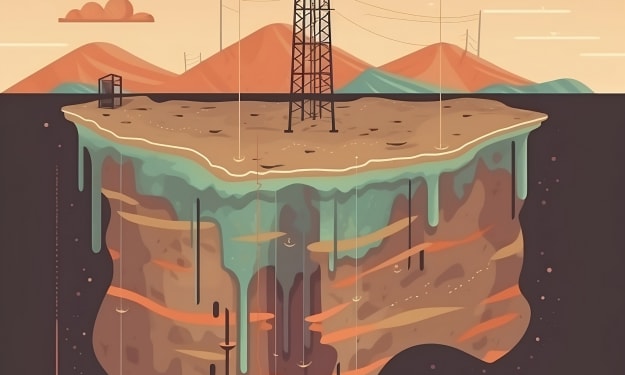
Since the Industrial Revolution, our energy consumption has consistently increased. The majority of this energy demand is met by fossil fuels like coal and natural gas. Recently, there has been much debate surrounding a controversial method of extracting natural gas: hydraulic fracturing, or fracking. In simple terms, fracking refers to the extraction of natural gas from deep layers within the Earth. This process involves fracturing porous rock using water, sand, and chemicals to release the trapped natural gas. Although the technique of fracking has been known since the 1940s, it has only experienced a significant "fracking boom" in the last decade, particularly in the United States.
By Joshua Rogers3 years ago in Earth
How Does a Wildfire Sprinkler System Work to Protect Homes from Advancing Fires?
Wildfires have become an increasing concern in many regions where dry vegetation, strong winds, and high temperatures create conditions that allow fires to spread quickly. Homeowners in wildfire-prone areas are now turning to proactive protection systems designed to reduce risk and improve property resilience. Among these solutions, wildfire sprinkler systems are gaining attention for their ability to defend structures before flames reach them.
By Brandon Honeyabout 21 hours ago in Earth
A Transparent Look at Vocal Challenges and Top Stories
Almost three years ago, we shared a resource article that served as a place for people to suggest new challenge prompts. We thought it would be a good idea to refresh that thread, and take the opportunity to answer a few common questions about top stories, how challenges are judged and how submissions are reviewed.
By Vocal Curation Teamabout 10 hours ago in Resources


Comments
There are no comments for this story
Be the first to respond and start the conversation.