Science
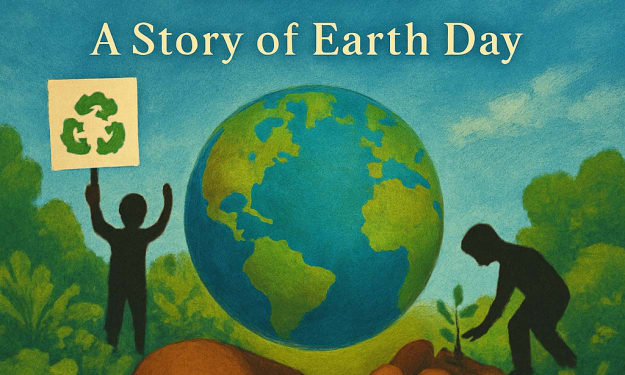
“The Day We Celebrate Our Home: A Story of Earth Day”
Every year, on April 22nd, people all over the world come together to plant trees, clean up parks, recycle, and raise awareness about protecting the environment. But have you ever wondered how Earth Day began? Like many great movements, it started with a few concerned voices and grew into something that would inspire millions.
By muhammad khalil10 months ago in Earth
Pope Francis (2013–2025): A Shepherd of the Streets
Pope Francis flashed a wide, easy smile frequently. He thrived on direct, informal encounters: phone calls, penned notes, hugs, audiences with small groups. He broke protocol by busing his own tray at the cafeteria, carrying his own overnight bag, and responding to reporters' questions extemporaneously. He was attentive, determined, testy, mercurial, sometimes deliberate, sometimes in a hurry, hard to read, and hard to pin down. When Francis was elected to the papacy at the age of 76, he brought those characteristics to the position for a period of twelve years—until he passed away on Monday—and over time, they became more refined rather than altered. That seems to have been the most important part of his time as Pope. He brought Roman Catholicism back to the street level and the papacy down to earth through pure personability, similar to what John XXIII had done six decades earlier when he convened the Second Vatican Council. It doesn't seem that long ago that Benedict XVI unexpectedly resigned—the first Pope to do so in six centuries—and Jorge Mario Bergoglio, the Cardinal Archbishop of Buenos Aires, was elected Pope. He remained a man who wasn't defined by his role despite Church scandals involving clerical sexual abuse and Vatican finances and open resistance from doctrinal and liturgical traditionalists. That was March, 2013, and the images from Francis’s first weeks in office are still fresh in mind: returning to the hotel where he’d stayed prior to his election to pay his bill, setting up residence in a plain modern guesthouse rather than the Apostolic Palace, trading the papal Mercedes-Benz for a Fiat. This Pope was new in many respects: the first Jesuit Pope, the first Pope from the Americas, the first to take the name Francis, after the Italian saint known for his embrace of poverty and his care for the natural world.
By Mahafuj Alam10 months ago in Earth
Dolphin language decoded? AI-powered DolphinGemma tackles interspecies communication
In a groundbreaking step toward interspecies communication, Google has unveiled an innovative artificial intelligence system known as DolphinGemma. This advanced AI has been meticulously developed with the aim of decoding the intricate language of dolphins. The project seeks not only to interpret but also to replicate the rich tapestry of vocalizations produced by these intelligent marine mammals, ultimately paving the way for potential two-way communication between humans and dolphins.
By Sakibul Islam Sakib10 months ago in Earth
Environment in the Book “Paths to a Green World”
The need to find effective solutions is growing more pressing as a growing number of issues connected to the environmental crisis continue to surface. Environmental issues are covered in numerous publications. However, there is still work to be done in developing novel approaches to the issues that are frequently brought up. In the book Paths to a Green World: The Political Economy of the Global Environment (2005), Jennifer Clapp and Peter Dauvergne presented their perspective on the nature of global environmental politics. The book contributes to a better understanding of the nature of environmental management by examining the political economy of the global environment in a novel way. The nature of the most important issues in the political economy of the global environment is the book's main topic. The authors present a typology of four distinct worldviews regarding environmental change and its connection to global politics (Clapp & Dauvergne, 2005, p. 3). The following groups are included in Clapp and Dauvergne's typology: Social Greens, Institutionalists, Market Liberals, and Bioenvironmentalists. According to Clapp & Dauvergne (2005, p.), market liberals place an emphasis on the significance of economic issues and view stagnant economic growth as the primary cause of environmental degradation. 4). Institutionalists attribute environmental degradation to inadequate global cooperation. They believe that successful environmental management is dependent on the proper organization of the system of domestic and international institutions. Bioenvironmentalists believe that the current global environmental crisis is primarily brought on by economic expansion and overpopulation. Social Greens support economic and ecological justice and hold that industrialization and growing globalization are to blame for environmental issues. After introducing the typology, the authors examine the major issues in the global environment's political economy from the viewpoints of each worldview. The effects of globalization on the environment, economic growth in a world of wealth and poverty, global trade, global investment, and global financing and their impact on the environment are some of the topics investigated. The adherents of four worldviews share their visions for a healthy global environment in the book's final section. Even though the worldviews represent distinct points of view, the authors remind readers that they share some characteristics in common (Clapp & Dauvergne, 2005, p. 238). It appears to be evidence that they do not contradict one another.The book uses four distinct worldviews of environmental change—those of market liberals, institutionalists, bioenvironmentalists, and social greens—as a framework to examine the connections between the global political economy and ecological change. It lays out an original typology of these worldviews.
By IMTIOUJ MAHER10 months ago in Earth
How to Watch the Lyrid Meteor Shower in the Bay Area Monday Night
This Monday night, as the Lyrid meteor shower peaks, Bay Area stargazers will be treated to a celestial feast. With records going back more than 2,700 years, the Lyrids are one of the earliest known meteor showers, distinguished by their swift, brilliant meteors and sporadic fireballs. Everything you need to know to attend the exhibition is right here.
By Md Rakib Hosen10 months ago in Earth
This Device Blocks Starlight – And Could Help Us Spot Life Beyond Earth
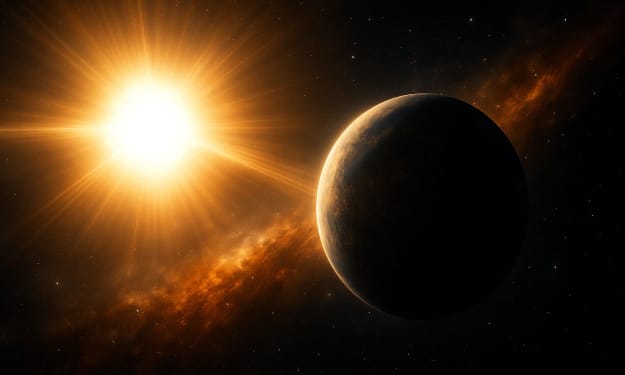
Cool! That makes it sound like it's talking about a coronagraph, which is a piece of equipment made to block out light from a star so we can see directly the much smaller planets that orbit it. Want a brief explanation of how it functions or contributes to the Awesome! A quick breakdown is as follows: What exactly is a coronogram? A coronagraph is a telescope attachment that blocks a star's bright light, similar to raising your hand to block the sun so you can see something nearby. Exoplanets and other faint objects close to stars can be observed thanks to this. Why is Starlight blocked? Planets that orbit stars are millions to billions of times brighter than stars. It is nearly impossible to see the planets directly due to that glare. Planets that would otherwise be obscured are made visible thanks to the coronagraph's reduction of this glare. How Does This Aid in Obtaining Life? An exoplanet's light can be analyzed once we are able to see it, looking for specific wavelengths that could indicate the presence of water vapor, oxygen, methane, or other potential life signs (called biosignatures). Bonus: Where Do You Use This? To test this technology in space, NASA's Nancy Grace Roman Space Telescope, which will launch in a few years, will have a next-generation coronagraph. It could change the way we look for worlds that are habitable. Want me to demonstrate how coronagraphs stack up against other approaches to finding exoplanets? for ever?Awesome! Here's a quick
By MONIRUL ISLAM 10 months ago in Earth
Tesla Stock Is Falling. Odometers, Low Priced Cars, Earnings Loom Over Shares.
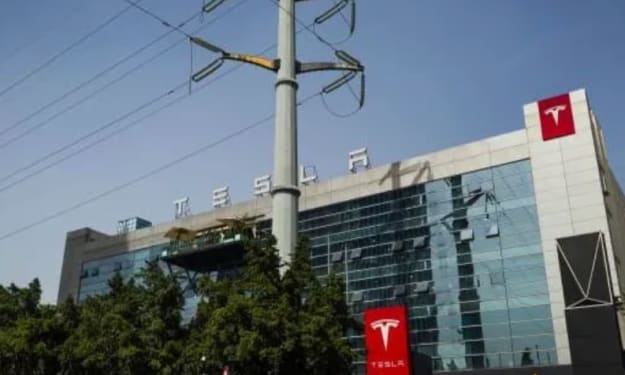
Shares of Tesla fall as a result of delays, brand issues, and competition. As Tesla's stock continues its sharp decline in 2025, investors are increasing their scrutiny of the company, which was once the undisputed market leader in electric vehicles (EVs). The automaker is facing a variety of challenges, including delayed vehicle launches, reputational damage, and stiffening global competition, as well as a market capitalization loss exceeding $500 billion and shares down more than 40% year to date. Low-Cost EV's Delay in Launching The delay of Tesla's highly anticipated low-cost electric vehicle, which was originally scheduled for release in early 2025, is a major contributor to the company's current stock woes. The vehicle was positioned as Tesla's response to the increasingly crowded mass-market EV market and was expected to cost between $25,000 and $30,000. However, recent reports suggest that this model's production will not begin until late 2026. This delay occurs at a crucial moment when EV adoption is primarily driven by affordability and accessibility, particularly in cost-conscious markets. Investors, who had hoped that the model would revive demand and drive volume sales, are frustrated by Tesla's inability to deliver on this front. Concerns have been raised regarding the company's capacity to keep up with rapidly changing industry dynamics because it has provided very little in the way of a detailed roadmap. Earnings fall short, and margins are strained. Investors' concerns have not been alleviated by Tesla's financials. The company reported earnings of $0.66 per share in its most recent report, which were lower than the $1.05 per share it earned a year ago and significantly below the expectations of analysts. Even though revenues fell short of expectations, they increased by 9% to $23.35 billion. Tesla's profit margins are under a lot of stress. The company has aggressively cut prices on a number of its models in an effort to remain competitive in the face of decreasing demand. Although this strategy temporarily increased sales volume, it has also reduced profitability, particularly in markets with higher operating costs like the United States and Europe. This squeeze on margins comes at a time when Tesla needs money to finance its robotaxi initiative and AI-powered vehicle software. Political Debates and Damage to the Company's Image Reputational damage caused by CEO Elon Musk's personal involvement in politics is another issue that is affecting Tesla's stock. Parts of the customer base have criticized Musk for his public support of far-right figures and advisory role in Donald Trump's reelection campaign, particularly in progressive markets like Europe and California. The backlash has been evident, with public calls for boycotts and protest actions like vandalism in Tesla showrooms. Real business effects have resulted from this political alignment. In the first quarter of 2025, Tesla reported a 13% drop in vehicle deliveries—the lowest in nearly three years. Analysts have pointed to Musk's contentious public persona as a growing brand liability. JPMorgan recently reduced its outlook for Tesla's profit in a rare move, citing "unprecedented brand damage" as the primary reason. Wells Fargo went even further, stating that deteriorating fundamentals and waning investor confidence could cause Tesla stock to fall another 50%. Global competition growing External threats are getting worse while Tesla struggles with internal issues. The largest of these is BYD, a Chinese manufacturer of electric vehicles that recently surpassed Tesla as the company with the most customers worldwide. Because of its strong domestic base and vertically integrated manufacturing, BYD is able to offer a wide range of models at affordable prices. Nio, XPeng, and even older automakers like Volkswagen and Hyundai are rapidly gaining market share. In addition to offering pricing that is more competitive, these businesses are also making significant investments in software, battery technology, and design—areas in which Tesla once clearly dominated. Elon Musk has acknowledged the growing threat posed by Chinese automakers, stating that these businesses could "demolish" their global counterparts without trade protections. This comment contrasts sharply with previous years, when Tesla's market position appeared almost untouchable. Uncertain Future Among Bets on Innovation Tesla is betting heavily on the future, despite the obstacles. Full Self-Driving (FSD) software, which Musk claims will eventually power a fleet of autonomous robotaxis, is still being developed by the company. Additionally, there is talk of a new Model Y, enhancements to the Cybertruck, and an expansion of Tesla's energy business. However, these long-term bets will not alleviate investor anxiety in the immediate future. The deployment timeline for robotaxi is still a mystery, and regulatory obstacles persist. In the meantime, Tesla's rivals are moving quickly, frequently with funding that is supported by the state and aggressive pricing strategies that Tesla is unable to match without hurting its margins. Last Thoughts The slump that Tesla will experience in 2025 is not the result of a single mistake; rather, it is the culmination of multiple pressures coming together simultaneously. The electric vehicle giant is going through one of its toughest periods in its history, with issues like delayed products, low earnings, challenges with its brand, and threats to its competition. Tesla will need to offer more than just bold promises in order to regain investor confidence. For the company to get back on track, timely execution, clear communication, and a renewed focus on its core values—innovation, sustainability, and customer trust—will be crucial. The market will keep a close eye on the situation until then because the path ahead appears uncertain.
By GLOBAL NEWS10 months ago in Earth
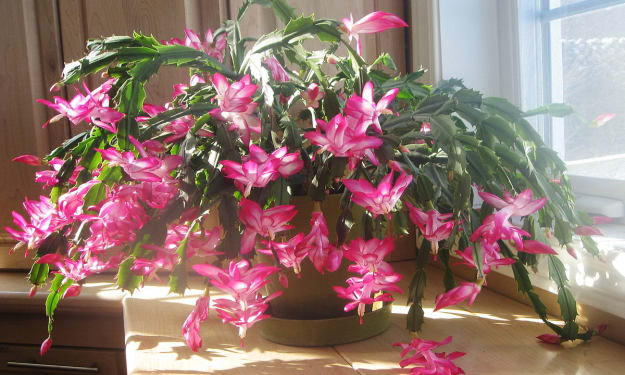
Tracing the Roots of the Christmas Cactus
Welcome to the world of the Christmas cactus, a botanical treasure that has brightened winter homes for over two centuries. This remarkable plant from the rainforests of Brazil has evolved from botanical curiosity to beloved holiday tradition. With its unusual epiphytic growth habit, pendulous stems, and vibrant winter blooms, the Christmas cactus offers not just seasonal beauty but also carries a rich history of horticultural innovation and cultural significance. Here, we will trace the roots and explore how this tropical forest dweller became one of our most cherished festive houseplants, surviving wars, changing fashions, and botanical reclassifications to earn its special place in homes around the world.
By Atlas Botanica10 months ago in Earth