
"The Future of AI: Will Artificial Intelligence Transform Our Lives in the Next Decade?"
*"Exploring the Opportunities, Challenges, and Ethical Dilemmas as AI Reshapes Our Future
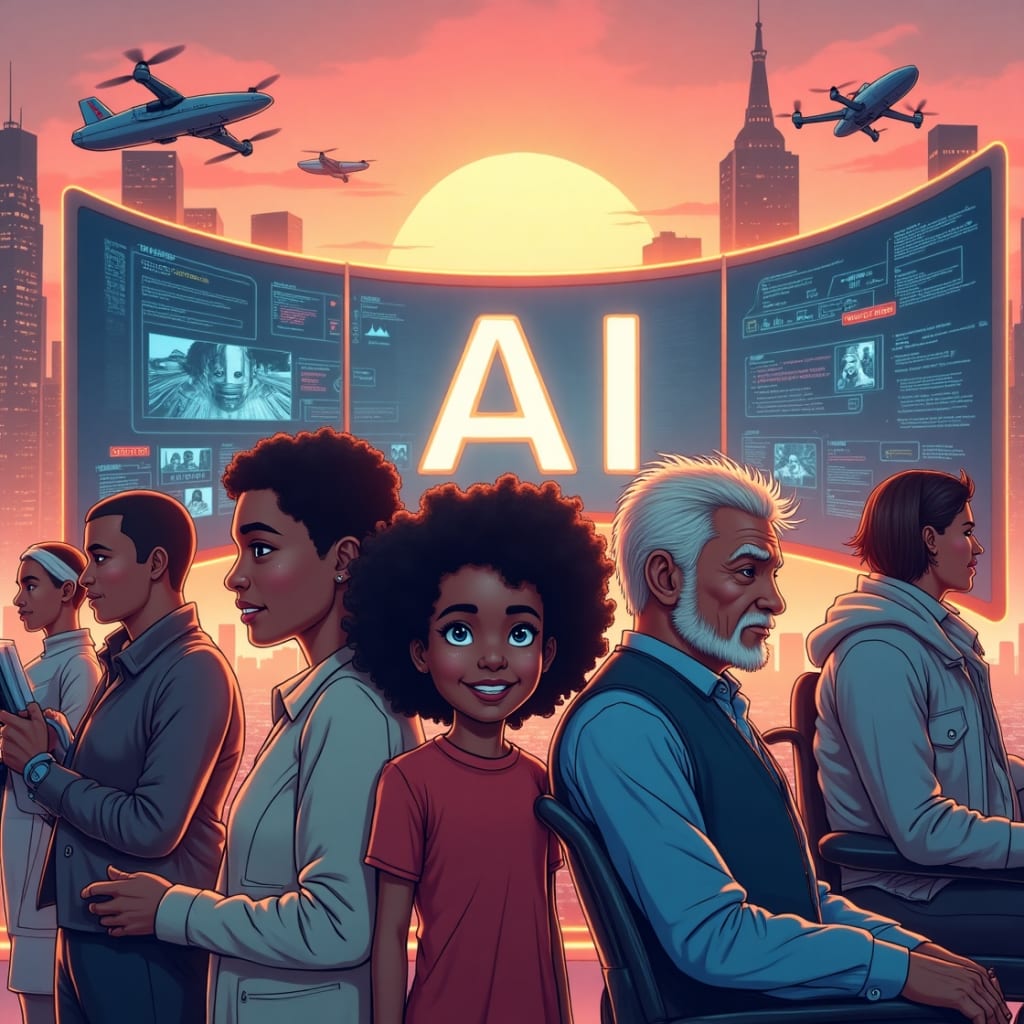
Introduction:
Artificial Intelligence (AI) is no longer just a buzzword. From self-driving cars to chatbots, voice assistants, and personalized recommendations, AI is already influencing our daily lives in profound ways. But what does the future hold? Will AI continue to evolve and transform industries, or will it hit a roadblock? In this article, we explore how AI is expected to shape the world in the next decade, what opportunities lie ahead, and the potential risks we must consider.
1. AI in Healthcare: A Revolution in Diagnosis and Treatment
One of the most promising areas for AI is healthcare. In the next decade, AI could dramatically change how we diagnose, treat, and even prevent diseases. Machine learning algorithms are already being used to analyze medical images, predict patient outcomes, and even recommend treatments.
For example, AI-powered tools can now detect early signs of cancer in medical scans with an accuracy that rivals human doctors. Personalized medicine, driven by AI, could tailor treatments to an individual's genetic makeup, improving efficacy and reducing side effects. As AI becomes more sophisticated, it could even assist in drug discovery, speeding up the development of new medications.
What does this mean for the average person?
You could soon find yourself getting AI-driven health check-ups, more accurate diagnoses, and treatments customized specifically for you. Health monitoring could also be continuously supported by AI, with wearables and other smart devices providing real-time feedback on your well-being.
2. AI in Work: The Future of Jobs and Employment
The integration of AI into the workplace has already begun, but its impact will only intensify in the next decade. Automation and AI could replace many traditional jobs, especially in fields like manufacturing, retail, and even data entry. However, this shift doesn't necessarily mean mass unemployment. Instead, we might see the rise of new job categories and industries that we can't yet fully predict.
Will AI take your job?
While some jobs will be automated, many roles will evolve. People will need to develop new skills to work alongside AI systems. Experts predict that there will be a rise in jobs related to AI development, data science, ethics, and human-AI collaboration. Reskilling programs and education will be crucial in preparing the workforce for these changes.
Furthermore, AI could make us more productive, allowing us to focus on higher-level tasks like strategy, creativity, and emotional intelligence—skills that AI cannot replicate.
3. AI in Ethics: Navigating the Moral Challenges
As AI systems become more integrated into our lives, questions surrounding ethics and responsibility will become even more pressing. Who is responsible when an AI system makes a mistake? How do we ensure that AI is used for good and doesn't perpetuate bias or discrimination?
The rise of AI could also spark debates over privacy. With AI constantly collecting and analyzing data, concerns about surveillance, data misuse, and personal privacy are sure to grow. Governments, tech companies, and society will need to work together to create ethical frameworks and regulations that keep AI in check.
AI's Impact on Society:
There is also the potential for AI to exacerbate inequality. Those who have access to the latest technologies may benefit, while others could fall further behind. We must ensure that the benefits of AI are distributed fairly and equitably to avoid creating even deeper divides in society.
4. AI in Everyday Life: Convenience vs. Privacy
In the coming decade, AI is poised to revolutionize the way we live. From smart homes that anticipate your needs to AI-driven personal assistants that handle your day-to-day tasks, the potential is vast. Imagine never having to remember a password again or having an AI that schedules your meetings, reminds you of important deadlines, and even recommends personalized shopping lists.
But as AI becomes more pervasive in our daily lives, concerns over privacy will intensify. Will we be willing to trade our personal data for convenience? The line between convenience and surveillance will become harder to navigate as AI becomes smarter and more integrated into our devices.
What does the future look like?
It could mean a future where you rarely need to leave your home for anything. Your AI assistant handles everything from grocery shopping to booking travel, while your home adjusts itself to your preferences without you lifting a finger. But it also means we’ll have to confront tough questions about data security and control.
5. AI in Creativity: The Rise of Machines in Art, Music, and Writing
One of the more unexpected uses of AI is in the creative arts. AI-generated art, music, and even writing have already made headlines. AI tools like GPT-3 (the technology behind this article) can generate poems, stories, and essays that are nearly indistinguishable from human work.
But what happens when machines start creating? Will human creativity be overshadowed by algorithms? Or could AI open up new frontiers of artistic expression?
The answer is likely a blend of both. While AI can create impressive pieces of art, it lacks the emotional depth and intentionality that humans bring to creativity. However, as AI tools become more advanced, artists may use them as collaborators, rather than replacements, in the creative process.
About the Creator
Keep reading
More stories from writers in Earth and other communities.
The Last Forest: Witnessing the Destruction of the Amazon and What It Means for Human Survival
The first thing you notice when you stand at the edge of an area where rainforest has been recently cleared is the silence, an absence of sound so complete and unnatural that it seems to press against your eardrums like physical weight, because a healthy rainforest is never quiet, never still, but rather pulses with constant life, the calls of hundreds of bird species layering over insect buzzing and monkey vocalizations and the rustling of creatures moving through the canopy, a symphony of biodiversity that represents millions of years of evolution creating intricate webs of interdependence, and when that forest is cut down, when the chainsaws finish their work and the fires burn out, what remains is a silence that feels like death, because that is exactly what it is, the death of an ecosystem and all the countless beings who called it home. I have stood at that terrible edge dozens of times over the past decade working as an environmental journalist documenting the accelerating destruction of the Amazon rainforest, and each time the silence hits me with fresh force, a reminder of what we are losing, not in some distant future but right now, in this moment, at a pace that should terrify anyone who understands what the Amazon means for global climate stability, biodiversity preservation, and ultimately human survival on this planet.
By The Curious Writera day ago in Earth


Comments
There are no comments for this story
Be the first to respond and start the conversation.