Science
The moment I saw my first Cheetah
When I think back to the first time I saw a wild cheetah, it doesn’t feel real. I was standing on a hillside in Loisaba Conservancy, eyes scanning the land, heart quiet with anticipation. It was during a static spotting session one of many we did as part of the Cheetah Project.Then suddenly something shifted in the golden distance. A flicker of movement, nearly lost in the landscape. At first, I thought it was a shadow cast by the afternoon sun on the rocks. But then it moved again. Smooth. Intentional. A cheetah.We were three days into the Cheetah Project, driven by the shared hope of spotting one of these elusive cats. Countless hours had passed with our eyes glued to binoculars, scanning Loisaba’s endless mosaic of land which include savannahs, hillsides and bushlands. Each drive began with quiet optimism and ended with a bit more urgency in our hearts. The silence of no sighting began to weigh heavier.
By Basil Sarguroh8 months ago in Earth
Ancient Supercontinents
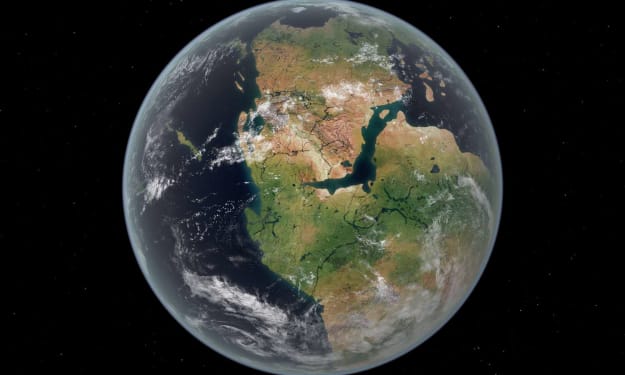
Ancient Supercontinents: The Story of Pangaea and Its Breakup Have you ever looked at a world map and thought that some continents look like they could fit together like puzzle pieces? You’re not alone! Scientists noticed the same thing, and it helped them discover something amazing: the Earth’s continents haven’t always been where they are now. In fact, millions of years ago, all the continents were joined together in one giant landmass called Pangaea. This is the story of Pangaea, how it formed, why it broke apart, and how it changed our planet forever.
By Jeno Treshan 8 months ago in Earth
This West Coast earthquake fault's most hazardous section has been named one of the planet's greatest threats.
Imagine two huge pieces of the Earth's outer shell puzzle slowly pushing against each other under the ocean. One piece slides under the other - this is called the subduction zone, and the Cascadia subduction zone is one of the most dangerous regions on the planet.
By Francis Dami8 months ago in Earth
The World's Largest Sinkhole: A Breathtaking Natural Phenomenon
Located in China's Chongqing Municipality, Xiaozhai Tiankeng is a remarkable example of a natural phenomenon. This massive sinkhole is not only a breathtaking sight but also a significant geological formation that attracts visitors and scientists alike.
By Tech Horizons8 months ago in Earth
More carbon is currently being released by some woods than they are storing.
Forests have long stood as symbols of hope in weather. Towering pines, lush rainforests, and dense boreal woodlands are regarded to maintain a solution to our growing emissions. Their leaves breathed in carbon dioxide. Their roots locked carbon within the soil. Their presence presented consolation in a warming world.
By Francis Dami8 months ago in Earth
The Sun: The Life-Giving Star of Our Solar System
Details About the Sun The Sun is the most essential and powerful star in our solar system. It is the primary source of light, heat, and energy for the Earth and all other planets. Without the Sun, life as we know it could not exist. From providing energy to driving weather patterns and enabling photosynthesis in plants, the Sun plays a crucial role in the stability and continuity of life on Earth. Below are detailed insights into the Sun's characteristics, structure, and influence.
By Ikram Ullah8 months ago in Earth
Because it lacks a shore, it is the only sea on Earth that never touches land.
The Atlantic Ocean holds a secret: a patch of calm water ringed with the aid of using quick currents, sitting approximately 590 miles east of Florida but in no way touching land. Known as the Sargasso Sea, sailors have crossed it for centuries, however, few observe the border once they slip into glassy indigo waters.
By Francis Dami8 months ago in Earth
Story of Planet Earth After Dinosaurs. AI-Generated.
Introduction Around 66 million years ago, the Earth experienced one of its most dramatic moments — the mass extinction that wiped out the dinosaurs. However, that was not the end of our planet's narrative. In fact, it was just the beginning of a whole new chapter — a chapter that shaped the world as we know it today. In this article, we’ll dive into the fascinating story of Earth after the dinosaurs, exploring how life bounced back, how continents shifted, and how the planet transformed into a place that eventually supported us humans.
By Rayyan Writes8 months ago in Earth