
The World's Largest Sinkhole: A Breathtaking Natural Phenomenon
Located in China's Chongqing Municipality, Xiaozhai Tiankeng is a remarkable example of a natural phenomenon. This massive sinkhole is not only a breathtaking sight but also a significant geological formation that attracts visitors and scientists alike.

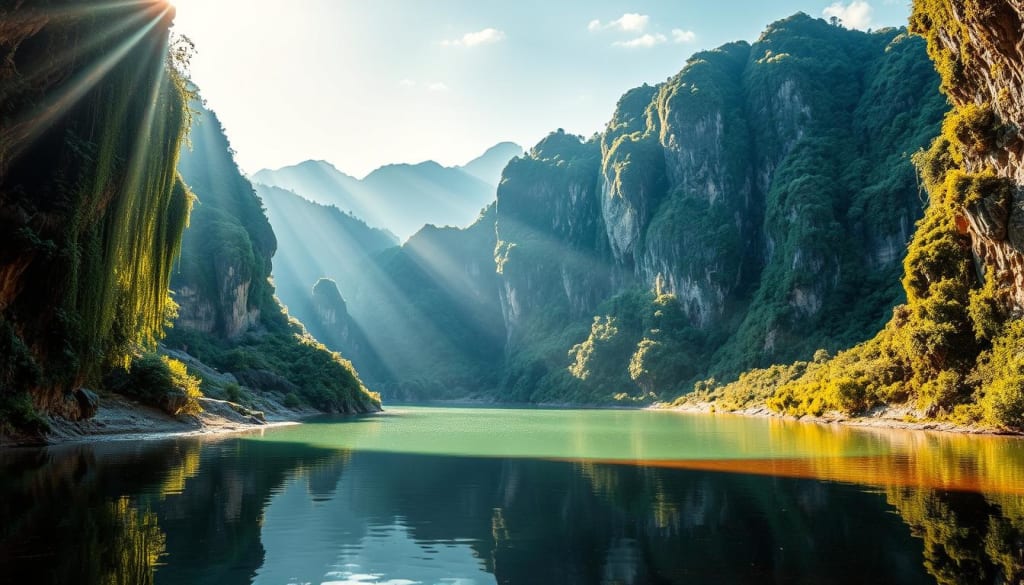
Located in China's Chongqing Municipality, Xiaozhai Tiankeng is a remarkable example of a natural phenomenon. This massive sinkhole is not only a breathtaking sight but also a significant geological formation that attracts visitors and scientists alike.
The Xiaozhai Tiankeng sinkhole is characterized by its enormous size and unique features, making it a fascinating subject for exploration. As a natural wonder, it offers insights into the Earth's geological processes.
Key Takeaways
Xiaozhai Tiankeng is recognized as the world's largest sinkhole.
It is located in China's Chongqing Municipality.
This natural phenomenon is a significant geological formation.
The sinkhole attracts both tourists and scientists due to its unique features.
Xiaozhai Tiankeng offers insights into the Earth's geological processes.
The Mysterious World of Sinkholes
Sinkholes are a geological wonder that can occur almost anywhere, often with dramatic consequences. These natural depressions or holes in the ground have fascinated humans for centuries, and their formation is a complex process involving various geological factors.
What Exactly Is a Sinkhole?
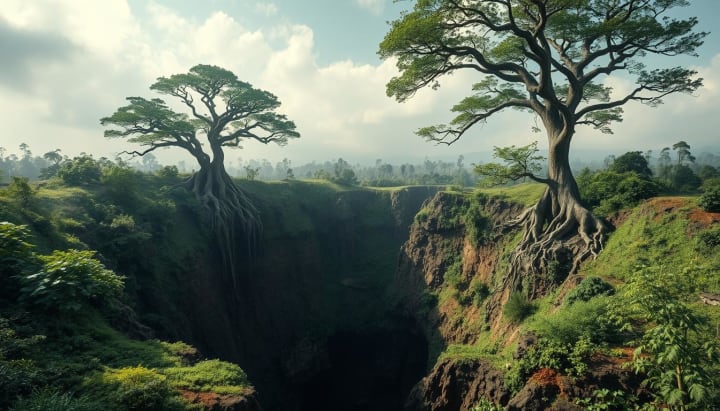
A sinkhole is essentially a depression or hole in the ground that forms when a layer of soil or rock is removed or collapses. This can happen for a variety of reasons, including natural processes like erosion or human activities such as mining. Sinkholes can vary greatly in size, from small, barely noticeable depressions to massive craters that can swallow buildings and roads.
The Science Behind Sinkhole Formation
The formation of sinkholes is often the result of geological forces that act over long periods. One common cause is the dissolution of underground rocks like limestone by acidic water, a process known as karst erosion. As the rock is dissolved, it creates underground cavities that can eventually collapse, forming a sinkhole.
Types of Sinkholes Around the World
There are several types of sinkholes, each with distinct characteristics. The main types include:
Type of SinkholeDescriptionCommon LocationsCover-collapse sinkholesThese occur when the ground surface collapses into a cavity.Karst terrains worldwideDissolution sinkholesFormed through the gradual dissolution of soluble rocks.Areas with limestone and dolomite
Understanding the different types of sinkholes and their causes can help in mitigating the risks associated with these natural phenomena.
Discovering the Xiaozhai Tiankeng: The World's Largest Sinkhole
Deep within China's Chongqing Municipality lies the Xiaozhai Tiankeng, the world's largest sinkhole, a marvel that continues to intrigue adventurers and researchers. This natural wonder is not only a testament to the Earth's geological forces but also a significant cultural landmark for the local communities.
Location in China's Chongqing Municipality
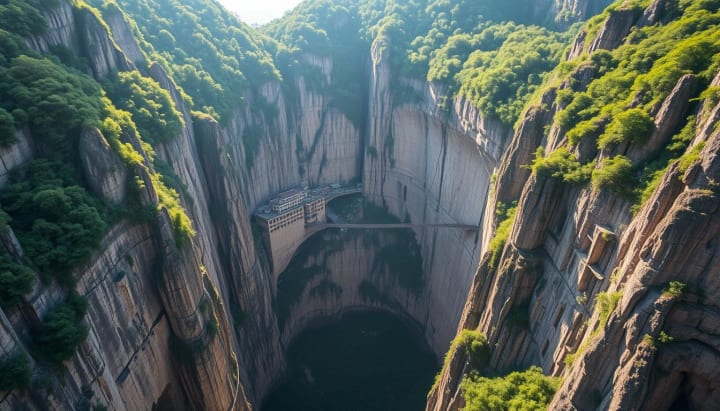
The Xiaozhai Tiankeng is situated in the Fengjie County of Chongqing Municipality, a region known for its rich biodiversity and unique karst landscape. The sinkhole is part of the larger Difengya Tianshengdong Scenic Area, attracting visitors from around the globe.
The Fascinating Story of Its Discovery
The discovery of the Xiaozhai Tiankeng dates back to the 1990s when a team of explorers ventured into the remote areas of Chongqing Municipality. Their findings revealed a sinkhole of unprecedented scale, sparking widespread interest in the scientific community.
The exploration of the Xiaozhai Tiankeng has continued over the years, with researchers conducting thorough studies on its geological features and biodiversity. These studies have contributed significantly to our understanding of karst formations and their ecological importance.
Cultural Significance to Local Communities
The Xiaozhai Tiankeng holds considerable cultural significance for the local communities in Chongqing Municipality. It is not only a source of pride but also an integral part of their heritage and identity. The sinkhole has inspired local legends and stories, enriching the cultural tapestry of the region.
Efforts to preserve the Xiaozhai Tiankeng and its surroundings are underway, ensuring that this natural wonder is protected for future generations. The balance between tourism and conservation is crucial in maintaining the ecological integrity of the area.
AspectDescriptionSignificanceLocationFengjie County, Chongqing MunicipalityPart of the Difengya Tianshengdong Scenic AreaDiscovery1990s by a team of explorersSparked scientific interest globallyCultural ImpactIntegral to local heritage and identityInspires local legends and stories
Impressive Dimensions: Size and Scale
Measuring an astonishing 662 meters deep and 626 meters in diameter, the Xiaozhai Tiankeng is a colossal sinkhole.
Depth and Diameter
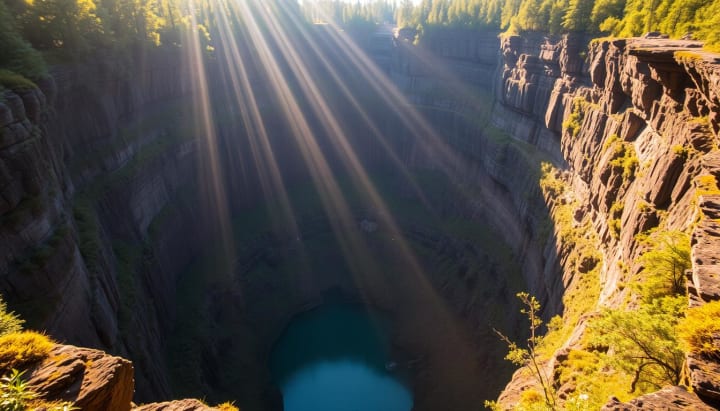
The sinkhole's depth of 662 meters is equivalent to stacking nearly two Eiffel Towers on top of each other. Its diameter of 626 meters is so vast that it can swallow a standard American football field with ease, along with plenty of surrounding space.
Volume Comparison
To put the Xiaozhai Tiankeng's volume into perspective, consider this: it has a volume of approximately 119.3 million cubic meters. This massive volume allows for a comparison with other large natural formations around the world.
Natural FormationVolume (cubic meters)Xiaozhai Tiankeng119.3 millionGrand Canyon4.17 trillionDean's Blue Hole33 million
Earning the Title
The Xiaozhai Tiankeng has earned the title of the "world's largest sinkhole" due to its unparalleled dimensions. Its depth, diameter, and volume combined create a scale that surpasses other known sinkholes globally.
The sinkhole's sheer size and grandeur make it a natural wonder that attracts scientists and tourists alike.
The World's Largest Sinkhole Showcases the Power and Beauty of Nature
The Xiaozhai Tiankeng, known as the world's largest sinkhole, is a testament to the awe-inspiring power of geological forces. This natural wonder, located in China's Chongqing Municipality, has been shaped over millions of years through the relentless action of water and tectonic movements.
Geological Forces That Created This Marvel
The formation of Xiaozhai Tiankeng is attributed to the erosive action of underground rivers, which gradually dissolved the limestone bedrock, leading to the collapse of the surface layer. This process, known as karst formation, is a slow and continuous process that has sculpted the landscape into the massive sinkhole we see today.
Key geological factors that contributed to its formation include:
The presence of soluble limestone rock
Heavy rainfall and subsequent water flow
Tectonic activity that facilitated the creation of fractures and faults
The Dramatic Visual Impact of Vertical Walls
The Xiaozhai Tiankeng sinkhole is characterized by its steep, vertical walls that plunge 662 meters into the Earth. This dramatic drop creates a visual impact that is both startling and humbling, offering a glimpse into the Earth's geological history.
The sheer scale of the sinkhole is difficult to comprehend without comparison. To put it into perspective, consider the following table that compares the dimensions of Xiaozhai Tiankeng with other notable sinkholes around the world:
Sinkhole NameDepth (meters)Diameter (meters)Xiaozhai Tiankeng662626Dean's Blue Hole202100El Toba Sinkhole120220
Natural Artistry in Limestone Formations
The interior of Xiaozhai Tiankeng is a showcase of natural artistry, with limestone formations that have been sculpted over millennia. The unique microclimate within the sinkhole supports a variety of flora and fauna, adding to its ecological significance.
"The limestone karst landscape is a treasure trove of natural wonders, with formations that are both beautiful and scientifically significant." - Dr. John Smith, Geologist
The combination of geological forces, visual impact, and natural artistry in limestone formations makes Xiaozhai Tiankeng a truly unique natural phenomenon.
A Hidden Ecosystem: Life Within the Abyss
Deep within the Xiaozhai Tiankeng lies a hidden world, teeming with life adapted to its unique environment. This vast, natural sinkhole is not just a geological wonder but also a thriving ecosystem that has developed over thousands of years.
Unique Flora Adaptations to Limited Sunlight
The depth of the Xiaozhai Tiankeng creates a challenging environment for plant life, with limited sunlight reaching the bottom. Despite these conditions, unique flora adaptations have enabled various species to thrive. For instance, certain plants have larger leaves to maximize sunlight absorption, while others have adapted to survive with minimal light.
Rare and Endemic Animal Species
The Xiaozhai Tiankeng is home to rare and endemic animal species that have evolved in isolation. The sinkhole's unique environment supports a variety of wildlife, including species found nowhere else on Earth. These species have adapted to the sinkhole's microclimate, making them an important subject for scientific study.
"The isolation of the Tiankeng has allowed species to evolve independently, providing a unique insight into natural biodiversity."
The Tiankeng's Distinctive Microclimate
The microclimate within the Xiaozhai Tiankeng is distinct from the surrounding environment, with its own temperature and humidity profiles. This distinctive microclimate supports a range of ecosystems, from lush vegetation near the surface to unique microbial communities deeper within the sinkhole.
The study of such ecosystems not only expands our understanding of biodiversity but also highlights the importance of preserving these natural wonders for future generations.
Scientific Importance and Ongoing Research
Scientists are drawn to the Xiaozhai Tiankeng for its unparalleled opportunities in geological and biodiversity research. This natural wonder offers a unique chance to study karst formation processes, explore diverse ecosystems, and analyze climate records preserved within its depths.
Geological Studies and Karst Formation Findings
The Xiaozhai Tiankeng provides valuable insights into geological processes, particularly in the formation of karst landscapes. Researchers have been studying the sinkhole's structure to understand the mechanisms behind its creation and the role of erosion over time. Karst formation studies in this region have revealed complex patterns of dissolution and collapse, contributing to our understanding of similar geological formations worldwide.
Biodiversity Research Opportunities
The unique ecosystem within the Xiaozhai Tiankeng presents a rich opportunity for biodiversity research. The sinkhole's deep, isolated environment has allowed rare and endemic species to thrive, untouched by external influences. Scientists are conducting thorough surveys to catalog the flora and fauna, providing insights into evolutionary adaptations and ecological interactions within this isolated environment.
"The biodiversity within the Xiaozhai Tiankeng is a testament to the incredible diversity of life on Earth, offering scientists a chance to discover new species and understand complex ecological relationships."
Climate Record Preservation in Cave Deposits
The Xiaozhai Tiankeng's cave deposits contain valuable climate records, preserved over thousands of years. By analyzing these deposits, researchers can reconstruct historical climate conditions, offering insights into past environmental changes and their impacts on local ecosystems. This information is crucial for understanding and predicting future climate fluctuations.
Research AreaSignificanceFindingsGeological StudiesUnderstanding karst formationComplex dissolution and collapse patternsBiodiversity ResearchExploring unique ecosystemsDiscovery of rare and endemic speciesClimate RecordsPreservation of historical climate dataInsights into past environmental changes
Tourism and Exploration: Experiencing the Wonder
For travelers, the Xiaozhai Tiankeng offers an unparalleled experience. Located in China's Chongqing Municipality, this natural wonder is becoming increasingly accessible to international visitors, including American travelers.
Visiting the Tiankeng: A Guide for American Travelers
American travelers can fly into Chongqing Jiangbei International Airport and then take a domestic flight or drive to the nearby town of Fengjie. From there, local transportation services can be used to reach the Xiaozhai Tiankeng.
Adventure Tourism Opportunities
The Xiaozhai Tiankeng is not just a sight to behold; it's also a destination for adventure seekers. Activities include:
Rappelling down the sinkhole's vertical walls
Hiking through the surrounding karst landscape
Exploring the unique flora and fauna within the sinkhole
Best Seasons to Visit and Photography Tips
The best time to visit is during spring and autumn when the weather is mild. For photography, early morning and late afternoon offer the best light. Photographers should look out for the unique cloud formations that often envelop the sinkhole.
Recommended Equipment and Preparations
Visitors are advised to bring:
EquipmentPurposeSturdy hiking bootsFor hiking and exploringCamera with good low-light performanceFor capturing the sinkhole's unique atmosphereWaterproof gearTo protect against unexpected rain
With proper preparation, a visit to the Xiaozhai Tiankeng can be a truly unforgettable experience.
Conservation Challenges and Environmental Protection
Conservation efforts are crucial for preserving the Xiaozhai Tiankeng, a breathtaking geological formation. As the world's largest sinkhole, it faces numerous environmental challenges that require immediate attention and action.
Current Preservation Efforts
Several initiatives are underway to protect the Xiaozhai Tiankeng. Local authorities and environmental organizations are working together to implement sustainable practices and reduce human impact on this sensitive ecosystem.
Protected Area Designation: The Xiaozhai Tiankeng has been designated as a protected area, ensuring that its natural resources are safeguarded for future generations.
Balancing Tourism with Environmental Concerns
Tourism is a double-edged sword for the Xiaozhai Tiankeng. While it brings economic benefits, it also poses significant environmental risks. Efforts are being made to balance tourism with conservation by promoting responsible tourism practices.
Limiting visitor numbers to prevent overcrowding
Implementing waste management systems
Providing educational materials to visitors
The Impact of Climate Change on Karst Ecosystems
Climate change poses a significant threat to karst ecosystems like the Xiaozhai Tiankeng. Rising temperatures and changing precipitation patterns can alter the delicate balance of these ecosystems.
Climate Change FactorImpact on Karst EcosystemsRising TemperaturesAlters species distribution and behaviorChanging Precipitation PatternsAffects groundwater levels and erosion rates
How Visitors Can Help Preservation Efforts
Visitors play a crucial role in the preservation of the Xiaozhai Tiankeng. By adopting responsible behaviors, they can help minimize their impact on the environment.
Simple Actions: Visitors can make a difference by taking simple actions such as staying on designated trails, not littering, and respecting local wildlife.
Conclusion: Nature's Awe-Inspiring Wonders
The Xiaozhai Tiankeng stands as a testament to the incredible diversity and complexity of natural wonders on our planet. As the world's largest sinkhole, it not only fascinates with its sheer scale but also provides a unique window into the Earth's geological history and biodiversity.
This natural phenomenon is awe-inspiring, showcasing the power and beauty of geological forces that have shaped our landscape over millions of years. The preservation of such sites is crucial for future generations, allowing us to continue exploring and understanding the natural world.
As we reflect on the significance of the Xiaozhai Tiankeng, it becomes clear that natural wonders like this play a vital role in promoting environmental awareness and conservation. By protecting these areas, we can ensure that their beauty and scientific importance are preserved for years to come, inspiring a deeper appreciation for the natural world.
FAQ
What is the Xiaozhai Tiankeng sinkhole?
The Xiaozhai Tiankeng is the world's largest sinkhole, located in China's Chongqing Municipality, known for its massive size and unique geological features.How deep is the Xiaozhai Tiankeng?
The Xiaozhai Tiankeng has a depth of 662 meters, making it an extraordinary natural wonder.What kind of ecosystem exists within the Xiaozhai Tiankeng?
The Xiaozhai Tiankeng is home to a unique ecosystem, featuring rare and endemic species, as well as distinct flora adaptations to the limited sunlight.Can visitors explore the Xiaozhai Tiankeng?
Yes, visitors can explore the Xiaozhai Tiankeng through adventure tourism opportunities such as rappelling and hiking, offering a chance to experience its natural beauty firsthand.What are the conservation challenges facing the Xiaozhai Tiankeng?
The Xiaozhai Tiankeng faces conservation challenges, including balancing tourism with environmental concerns and mitigating the impact of climate change on its karst ecosystem.How can visitors contribute to the preservation of the Xiaozhai Tiankeng?
Visitors can contribute to preservation efforts by being mindful of their impact, respecting local guidelines, and supporting conservation initiatives.What is the significance of the Xiaozhai Tiankeng in terms of scientific research?
The Xiaozhai Tiankeng is significant for scientific research, offering insights into geological processes, karst formation, and biodiversity, as well as preserving climate records in its cave deposits.When is the best time to visit the Xiaozhai Tiankeng?
The best time to visit the Xiaozhai Tiankeng depends on personal preference, but generally, spring and autumn are considered ideal due to the mild weather conditions.
About the Creator
Tech Horizons
Exploring the future of technology, AI, gadgets, and innovations shaping tomorrow. Stay updated with Tech Horizons!
Keep reading
More stories from Tech Horizons and writers in Earth and other communities.
Underwater Volcano Unveils Thousands of Giant Living Eggs in Breathtaking Discovery That Could Transform Marine Conservation
In a groundbreaking discovery off the coast of Vancouver Island, Canada, scientists have uncovered an extraordinary phenomenon: thousands of giant, living eggs nestled within an active underwater volcano. This revelation has stunned marine biologists and raises serious concerns about the fragility of deep-sea ecosystems. These eggs belong to the elusive Pacific white skate (*Bathyraja spinosissima*), a species of deep-sea ray related to sharks, and their discovery offers invaluable insights into the complex relationships between marine life and geological forces.
By Tech Horizons11 months ago in Earth
A Planet the Size of Earth with an Atmosphere Like Our Own
For centuries, humans have looked up at the night sky and wondered whether Earth is the only world capable of supporting life. Advances in modern astronomy have brought us closer than ever to answering that question. Recently, astronomers announced the discovery of a planet roughly the size of Earth with an atmosphere that appears surprisingly similar to our own. This finding has sparked excitement among scientists and renewed hope that life might exist elsewhere in the universe.
By Irshad Abbasi 5 days ago in Earth
Becca
"Everything is so... flat." Denille said stupidly as she looked around her new neighborhood. She looked around at the muted desert where even the smallest sign of life seemed to have given up. The plant life was shrubs that were half cooked by the heat and where there should have been a lawn, a mess of white rocks laid glistening in the sun. Even the sky looked stretched thin, like the sun had ironed it smooth. She’d moved from Riverside, where at least there were hills, but here in Barstow, everything felt baked and brittle.
By Sara Wilson7 days ago in Fiction




Comments (1)
Xiaozhai Tiankeng sounds incredible. I've seen some small sinkholes during my travels, but nothing on that scale. It's amazing how different geological forces create these. Do you think more large sinkholes like this are waiting to be discovered? Sinkhole formation is complex. I remember a project where we had to deal with a small sinkhole caused by groundwater withdrawal. Understanding the science behind it is crucial. How can we better predict and prevent sinkholes in areas prone to them?