
The Enigmatic Wild: Unraveling the Modern Mysteries of the Animal Kingdom
From Vanishing Acts to Mind-Bending Intelligence—Discover Nature’s Most Astonishing Secrets

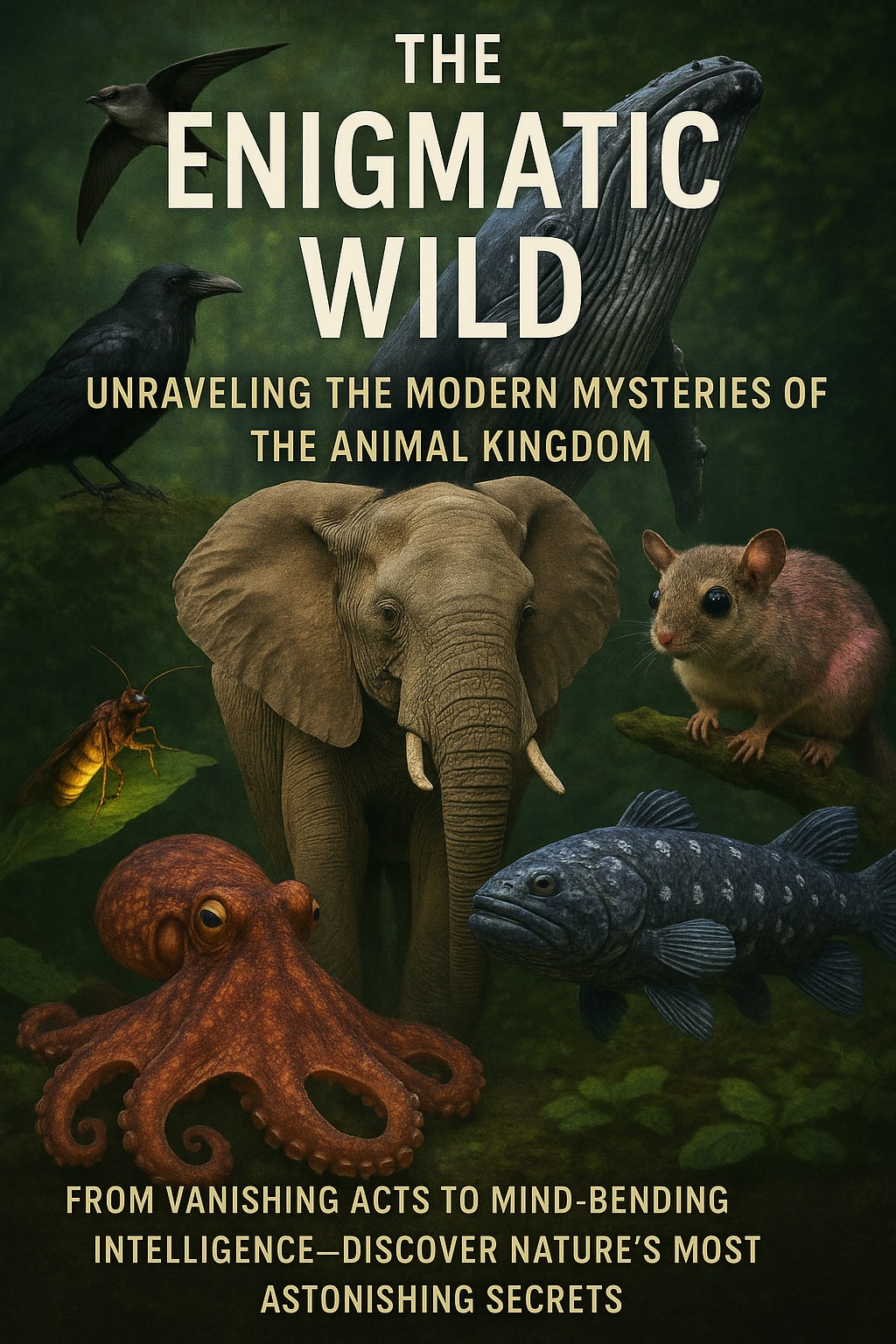
The animal world is full of wonders. Even today, with science and technology, there are many things about animals we still do not understand. Some animals behave in strange ways. Others disappear and reappear like magic. Some show signs of great intelligence. In this article, we explore some of the most amazing modern mysteries of animals. These stories will surprise you and show just how much we still have to learn. make video on it
1. The Disappearing Birds
Every year, millions of birds fly across the world. This is called migration. But scientists are still trying to understand how birds know where to go. Some birds, like the Arctic Tern, fly from the North Pole to the South Pole and back again. That’s over 40,000 miles in a year!
How do these birds find their way? They don’t use maps or GPS. Scientists think they may use the stars, the sun, and even the Earth’s magnetic field. But no one knows for sure. It remains a great mystery.
Even stranger, some birds simply vanish. The Black Swift is one of these birds. People can see them in summer, but for the rest of the year, no one knows where they go. Only a few of these birds have been tracked, and their full journey is still unknown.
2. Animal Mind Readers?
Can animals read our minds? Of course, not in the way humans do. But some animals seem to understand what we are thinking or feeling.
Dogs are a good example. Many dog owners say their pets know when they are sad, angry, or happy. Some dogs can even sense when their owner is about to have a health problem, like a seizure or a drop in blood sugar.
Also, elephants are known to comfort each other when one is upset. They touch each other gently and make low, soft sounds. This shows a deep level of emotion and care.
Some scientists believe animals have something called “empathy,” which means they can feel what others are feeling. How animals do this, and how much they understand, is still a mystery.
3. The Language of Whales
Whales are huge animals, and their songs travel far underwater. Humpback whales sing long, complex songs. These songs can last for hours. What are they saying? No one knows for sure.
Scientists believe whales use songs to talk to each other. Some songs are used to find mates. Others may help whales stay together in the ocean.
But the strange part is this: all the whales in one area will sing the same song. Then, over time, that song changes, and all the whales learn the new version. It’s like music or culture among humans. This shows whales may have their own form of language and social learning.
4. The Glowing Animals
In the deep ocean, where there is no sunlight, many animals glow in the dark. This is called bioluminescence. Some jellyfish, squid, and fish can make their own light. They use this light to hunt, hide, or talk to others.
But glowing animals are not just found in the sea. Some insects, like fireflies, glow too. And in 2020, scientists discovered that the fur of some flying squirrels glows pink under UV light! Why does it happen? What is the reason behind this glow? No one knows. It’s another puzzle in the animal world.
5. The Mysterious Life of Octopuses
Octopuses are one of the smartest animals in the sea. They can open jars, solve puzzles, and escape from tanks. Some even walk on land for short times. But what makes them so smart?
Their brains are very different from ours. They have nine brains—one main brain and one in each arm. Their arms can move and touch things without needing the main brain. That’s like having eight small helpers!
Octopuses can also change their color and shape to hide or scare enemies. But here’s the mystery: they can do this even though they are colorblind. How do they know what color they are turning? That remains a big question for scientists.
6. Animal Builders
Some animals build things that are more complex than we expect. Beavers build dams. Birds make nests. But did you know that termites build huge towers in the ground?
These towers can be as tall as a person. Inside, they have air tunnels that keep the place cool, even in hot weather. The termites never went to school, but they work together like a team of smart engineers.
How do they know what to do? There is no leader giving orders. Still, everything works perfectly. This teamwork and building skill are still hard to explain.
7. The Return of Lost Species
Some animals thought to be extinct have been seen again after many years. This is called a “Lazarus species.” One example is the Coelacanth, a fish believed to have died out 65 million years ago. Then, in 1938, a living one was found near Africa.
Another case is the “Night Parrot” of Australia. It wasn’t seen for over 100 years, but a few were found in 2013. How did these animals stay hidden for so long? Were we not looking in the right place? Or are they better at hiding than we ever guessed?
Conclusion: Still So Much to Learn
Animals continue to surprise us. Each time we think we know everything, they show us something new. Whether it’s a bird flying across the world, a whale singing a strange song, or an octopus escaping a tank, animals remind us that nature is full of wonder.
Even in today’s world of satellites and science, many animal secrets remain hidden. These mysteries are not just fun stories—they help us understand life better. They teach us to respect nature, protect it, and stay curious.The Enigmatic Wild: Unraveling the Modern Mysteries of the Animal Kingdom
From Vanishing Acts to Mind-Bending Intelligence—Discover Nature’s Most Astonishing Secrets
The animal world is full of wonders. Even today, with science and technology, there are many things about animals we still do not understand. Some animals behave in strange ways. Others disappear and reappear like magic. Some show signs of great intelligence. In this article, we explore some of the most amazing modern mysteries of animals. These stories will surprise you and show just how much we still have to learn. make video on it
1. The Disappearing Birds
Every year, millions of birds fly across the world. This is called migration. But scientists are still trying to understand how birds know where to go. Some birds, like the Arctic Tern, fly from the North Pole to the South Pole and back again. That’s over 40,000 miles in a year!
How do these birds find their way? They don’t use maps or GPS. Scientists think they may use the stars, the sun, and even the Earth’s magnetic field. But no one knows for sure. It remains a great mystery.
Even stranger, some birds simply vanish. The Black Swift is one of these birds. People can see them in summer, but for the rest of the year, no one knows where they go. Only a few of these birds have been tracked, and their full journey is still unknown.
2. Animal Mind Readers?
Can animals read our minds? Of course, not in the way humans do. But some animals seem to understand what we are thinking or feeling.
Dogs are a good example. Many dog owners say their pets know when they are sad, angry, or happy. Some dogs can even sense when their owner is about to have a health problem, like a seizure or a drop in blood sugar.
Also, elephants are known to comfort each other when one is upset. They touch each other gently and make low, soft sounds. This shows a deep level of emotion and care.
Some scientists believe animals have something called “empathy,” which means they can feel what others are feeling. How animals do this, and how much they understand, is still a mystery.
3. The Language of Whales
Whales are huge animals, and their songs travel far underwater. Humpback whales sing long, complex songs. These songs can last for hours. What are they saying? No one knows for sure.
Scientists believe whales use songs to talk to each other. Some songs are used to find mates. Others may help whales stay together in the ocean.
But the strange part is this: all the whales in one area will sing the same song. Then, over time, that song changes, and all the whales learn the new version. It’s like music or culture among humans. This shows whales may have their own form of language and social learning.
4. The Glowing Animals
In the deep ocean, where there is no sunlight, many animals glow in the dark. This is called bioluminescence. Some jellyfish, squid, and fish can make their own light. They use this light to hunt, hide, or talk to others.
But glowing animals are not just found in the sea. Some insects, like fireflies, glow too. And in 2020, scientists discovered that the fur of some flying squirrels glows pink under UV light! Why does it happen? What is the reason behind this glow? No one knows. It’s another puzzle in the animal world.
5. The Mysterious Life of Octopuses
Octopuses are one of the smartest animals in the sea. They can open jars, solve puzzles, and escape from tanks. Some even walk on land for short times. But what makes them so smart?
Their brains are very different from ours. They have nine brains—one main brain and one in each arm. Their arms can move and touch things without needing the main brain. That’s like having eight small helpers!
Octopuses can also change their color and shape to hide or scare enemies. But here’s the mystery: they can do this even though they are colorblind. How do they know what color they are turning? That remains a big question for scientists.
6. Animal Builders
Some animals build things that are more complex than we expect. Beavers build dams. Birds make nests. But did you know that termites build huge towers in the ground?
These towers can be as tall as a person. Inside, they have air tunnels that keep the place cool, even in hot weather. The termites never went to school, but they work together like a team of smart engineers.
How do they know what to do? There is no leader giving orders. Still, everything works perfectly. This teamwork and building skill are still hard to explain.
7. The Return of Lost Species
Some animals thought to be extinct have been seen again after many years. This is called a “Lazarus species.” One example is the Coelacanth, a fish believed to have died out 65 million years ago. Then, in 1938, a living one was found near Africa.
Another case is the “Night Parrot” of Australia. It wasn’t seen for over 100 years, but a few were found in 2013. How did these animals stay hidden for so long? Were we not looking in the right place? Or are they better at hiding than we ever guessed?
Conclusion: Still So Much to Learn
Animals continue to surprise us. Each time we think we know everything, they show us something new. Whether it’s a bird flying across the world, a whale singing a strange song, or an octopus escaping a tank, animals remind us that nature is full of wonder.
Even in today’s world of satellites and science, many animal secrets remain hidden. These mysteries are not just fun stories—they help us understand life better. They teach us to respect nature, protect it, and stay curious.
About the Creator
Severe Geomagnetic Storm Could Bring Northern Lights Across Much of the U.S.
On Monday evening, skywatchers from the Pacific Northwest to the Midwest got ready for something out of the ordinary: a celestial display that typically occurs at high northern latitudes. Americans who provide forecasts as a powerful cloud of charged particles from the sun accelerates toward the Earth's magnetic field, the National Oceanic and Atmospheric Administration (NOAA) has issued a "G4 (Severe) geomagnetic storm watch."
By Raviha Imranabout 6 hours ago in Earth
Greenland News
Greenland News Greenland has increasingly drawn global attention in recent years due to its political developments, environmental changes, and growing strategic importance. As the world looks more closely at the Arctic region, news from Greenland reflects a unique mix of local priorities and international interest. From climate-related challenges to economic opportunities and governance issues, Greenland continues to shape its own path while remaining closely connected to global affairs.
By America today 2 days ago in Earth


Comments (1)
The disappearing birds are really fascinating. I've always wondered how they manage such long migrations without maps. And the idea of some birds vanishing completely? That's mind-blowing. The bit about animals being mind readers is interesting too. My dog seems to know when I'm in a bad mood. Do you think there's more to it than just being attuned to our emotions? And whales' language? We still have so much to learn about that. What do you think is the most important thing we could discover about their songs?