Humanity
Practical Magic Summer Series: Part Two 🦋
I'm outside in the garden this morning, sitting on my blanket, having a little coffee and breakfast al fresco style. The air is thick and muggy. June in Texas is always a little bit temperamental; either it gets too hot too quickly, or it's tornado season. Rarely is there an in between.
By Alys Revna8 months ago in Earth
"The Orinoco River in Venezuela"
The Orinoco crocodile is one of the largest crocodile species in the world. But due to human cruelty, its population has dropped to fewer than 100. Their natural habitat is the Orinoco River in Venezuela and its surrounding regions. While these crocodiles once roamed freely in the river, now they struggle to survive out of sight of humans.
By Md. Ashraful Azad8 months ago in Earth
Rocks show the moment when oxygen permanently altered the planet.
Two basic issues are addressed by several events in Earth's distant past: How did we get here? And where are we going? These pivotal moments demonstrate how life adjusts to shifting environmental conditions.
By Francis Dami8 months ago in Earth
Loneliness associated with poverty creates actual mental and physical suffering.
In many parts of Europe, poverty and loneliness create unrelenting pain, both emotionally and physically. New research suggests that poverty is the primary reason why these conflicts persist.
By Francis Dami8 months ago in Earth
Life in Extreme Places
Life in Extreme Places: Microorganisms Living in Earth's Harshest Environments When we picture life on Earth, we often think of lush forests, deep blue oceans, or bustling cities. But beyond these familiar landscapes lies an astonishing truth: life has conquered even the most inhospitable corners of our planet. From boiling volcanic springs to the crushing depths of the ocean, microorganisms—tiny, often invisible forms of life—thrive where no other life dares to venture. Welcome to the world of extremophiles: Earth's ultimate survivors.
By Jeno Treshan 8 months ago in Earth
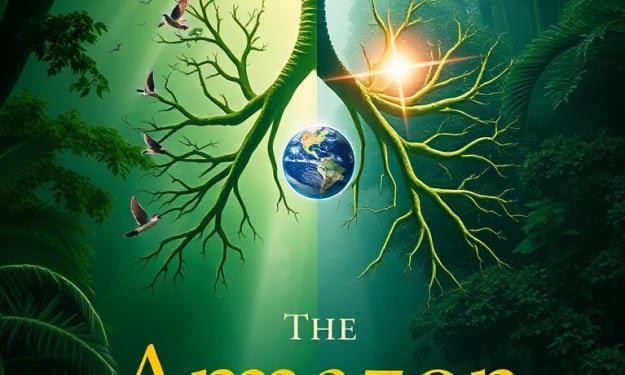
"Amazon: A Treasure Trove of Biodiversity and a Sanctuary for Species"
Introduction: The Lungs of the Earth and Life’s Greatest Sanctuary Spanning over 5.5 million square kilometers across nine South American countries, the Amazon Rainforest is an extraordinary ecosystem that has long been known as the “lungs of the Earth.” This vast forest absorbs around 2 billion tons of carbon dioxide annually and produces approximately 20% of the world’s oxygen, playing an irreplaceable role in global climate regulation. However, the Amazon is much more than a vital carbon sink; it is a biodiversity hotspot unmatched anywhere else on Earth.
By Shamshair Khan Hasan Zai8 months ago in Earth
"The Amazon Rainforest: Earth’s Lungs and Guardian of Climate Balance"
Introduction: The Breath of Our Planet Often referred to as “the lungs of the Earth,” the Amazon Rainforest plays a vital role in maintaining our planet’s climate balance. Covering more than 5.5 million square kilometers across nine South American countries, the Amazon is more than just a vast green canopy—it’s a living system that sustains biodiversity, regulates atmospheric carbon, and safeguards global climate stability.
By Shamshair Khan Hasan Zai8 months ago in Earth
Understanding Air Conditioner Gas: Types, Uses, and Maintenance
Air conditioners play a vital role in keeping homes and businesses cool, especially in the hot summer months. While most people focus on the design, energy rating, or brand of an AC unit, the refrigerant gas (often simply called AC gas) inside is what makes the cooling process possible.
By handy maneshon8 months ago in Earth