Humanity
Why Putin Went Quiet When Challenged by Trump Over Venezuela. AI-Generated.
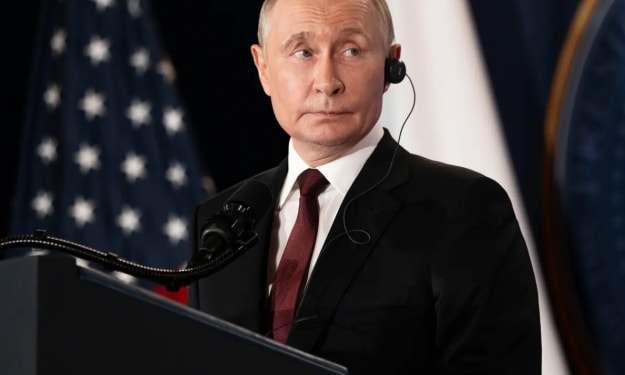
When U.S. forces captured Venezuelan President Nicolás Maduro in early January 2026, the world was stunned. Venezuela has long been a Russian ally, yet Russian President Vladimir Putin remained almost completely silent when challenged directly by U.S. President Donald Trump. Why would a leader so often outspoken on the world stage hold back in such a dramatic moment? Let’s unpack the story and explore what it means for global politics. A Bold Move That Shocked the World On January 3, U.S. forces executed a daring operation in Venezuela, taking Maduro into custody in New York to face charges including drug trafficking and narco‑terrorism. The operation was framed by the U.S. as a step to enforce justice, but critics saw it as an extraordinary overreach of power. Venezuela is no ordinary country for Russia. Since the days of Hugo Chávez, Moscow has cultivated close ties with Caracas, offering military support, energy deals, and diplomatic backing on the global stage. Past actions included Russian bombers visiting Venezuela and high-profile defense agreements. Given this history, many expected a fiery response from Putin. Yet, the Kremlin remained calm, issuing measured statements rather than sharp threats. Why Silence Was Strategic Experts suggest there are several reasons for Putin’s muted reaction, each revealing the careful calculation behind the Kremlin’s foreign policy. 1. Focus on the War in Ukraine Russia’s primary priority remains Ukraine. Engaged in a high-stakes military and diplomatic battle, Putin cannot afford distractions or new confrontations far from home. Escalating tensions with the United States over Venezuela could jeopardize Moscow’s position in Europe. A New York Times report highlighted that Russia is “subordinating all other interests to the war in Ukraine,” suggesting that even a high-profile ally like Venezuela takes a back seat to Moscow’s strategic goals. 2. Limited Military Options While Russia’s alliance with Venezuela is longstanding, much of the support has been symbolic rather than operational. Defense systems and military cooperation exist on paper, but Russia lacks the immediate ability to counter a U.S. operation thousands of miles away. Putin may have recognized that responding aggressively would be both ineffective and costly, potentially risking military and economic consequences that Moscow cannot afford. 3. Maintaining Diplomatic Channels with Washington With Donald Trump back in the White House since 2025, there has been cautious optimism in Moscow about recalibrating U.S.–Russia relations. Avoiding a dramatic confrontation over Venezuela keeps diplomatic channels open, allowing Russia to negotiate on other high-priority issues like Ukraine and sanctions relief. In other words, silence can be a calculated strategy, signaling restraint rather than weakness. 4. Russia’s Global Influence Is Waning The Maduro episode also highlights a broader geopolitical reality: Russia’s global reach has limits. Since the 2022 invasion of Ukraine, Moscow’s influence in regions like the Middle East and parts of the former Soviet Union has weakened. Venezuela remains one of its few high-profile allies outside Europe, but even there, Russia’s power is largely symbolic. By not escalating, Putin is acknowledging a practical truth: Russia cannot be everywhere at once, and some battles are not worth fighting. 5. Choosing Battles Wisely Some analysts emphasize that Putin’s quiet response is more about strategic prioritization than capitulation. In a world dominated by nuclear powers and volatile global politics, direct confrontation with the United States over Venezuela could spiral into a far larger crisis. By staying silent, the Kremlin may be signaling that it picks its battles carefully, focusing resources on Ukraine, where the stakes are highest. What This Means for the World Putin’s silence sends several messages: Russia is currently stretched, economically and militarily. Moscow is prioritizing Ukraine over symbolic allies. Strategic restraint is sometimes more powerful than public confrontation. The limits of Russian influence are becoming more visible to the world. This episode reflects a new reality in geopolitics: power is as much about choosing when not to act as when to assert force. The Bigger Picture The capture of Maduro is a defining moment not just for Venezuela, but for global politics. It shows the United States asserting power in a way not seen for decades, while Russia’s quiet reaction underscores its current limits and priorities. For observers, Putin’s silence is a lesson in modern geopolitics: even the most assertive leaders exercise restraint when stakes are high and risks are global. In the end, the Maduro affair reminds us that in today’s world, the loudest response is not always the most effective one — sometimes, quiet calculation speaks volumes. Sources and Further Reading The US capture of Maduro reveals Russia’s weakness – Atlantic Council ‘It sends a horrible signal’: US politicians react to capture of Nicolás Maduro – The Guardian Russia slams 'neocolonial threats' against Venezuela – Reuters
By Muhammad Hassan17 minutes ago in Earth
Myanmar Junta Holds Second Phase of Election Widely Decried as a ‘Sham Exercise’. AI-Generated.
If you’ve been following Myanmar’s political turmoil, you probably heard the news: the military junta just held the second phase of its general election, and once again, critics are calling it a “sham exercise.” From the United Nations to human rights organizations, almost everyone outside the junta is dismissing this vote as a carefully orchestrated performance rather than a genuine democratic process. Let’s take a closer look at what happened, why it’s being condemned, and what this means for Myanmar’s future. A Military-Run Election in a Nation at War On 11 January 2026, voters in certain parts of Myanmar lined up at polling stations to cast their ballots in the second phase of the election. This phase covered roughly 100 townships across 12 states and regions, part of a three-phase plan that began in December 2025 and will conclude in late January. Sounds orderly enough—but here’s the catch: large areas of Myanmar are still controlled by armed opposition groups or trapped in active conflict zones. In many townships, voting didn’t even happen because it was too dangerous. For millions of citizens, the idea of participating in this election isn’t about choice—it’s about survival. So, while the junta presents this as a return to political normalcy, the reality is much messier. This vote is happening amid ongoing civil war, instability, and widespread human suffering. Who’s on the Ballot? And Who Isn’t One of the biggest issues with this election is who is allowed to run. Aung San Suu Kyi’s National League for Democracy (NLD)—the party that won a landslide in the 2020 election—is banned. Suu Kyi herself remains detained on politically motivated charges. Many smaller opposition parties have also been barred from participating. Rebel groups and youth movements have refused to take part, calling the vote illegitimate. This has left the military-backed Union Solidarity and Development Party (USDP) as the clear front-runner. In the first phase of voting in December, the USDP already secured nearly 90 of 102 contested seats, which is a strong indicator that the outcome of the overall election is practically predetermined. In short, this is less an election and more a political tool for the junta to cement power. The Junta’s Playbook For the military, these elections serve multiple purposes: Legitimacy: By holding elections, the junta hopes to claim that it has public support. Control: With opposition parties banned, the military ensures it dominates Parliament. International Image: They want the world to see a functioning democratic process—even if it’s staged. But the global community isn’t buying it. The United Nations, human rights organizations, and most Western governments have condemned the elections as neither free nor fair. Key issues include: Widespread political repression Absence of meaningful opposition Election laws that stifle dissent Unsafe conditions for voters UN Special Rapporteur Tom Andrews even warned that the elections “cannot and should not be recognized” internationally. Voices from the Ground: Fear, Frustration, and Exclusion For everyday citizens, voting is complicated. Many are intimidated or fear retribution if they don’t comply. Others live in conflict zones or have been displaced, making voting physically impossible. Ethnic groups and youth activists are particularly vocal about rejecting the elections. For them, the vote is a tool to marginalize minority communities and entrench military rule. Meanwhile, ordinary voters express mixed feelings—some participate out of hope for peace, others because they feel they have no choice. The reality? The election process is fragmented, forced, and disconnected from the lives of most Burmese citizens. International Reactions: Mostly Negative Around the world, reaction to Myanmar’s elections has been overwhelmingly critical. The UN, Western governments, and human rights organizations argue that the polls are designed to prop up an authoritarian regime, not reflect the will of the people. Civil society groups in Asia have also condemned the election, urging countries not to recognize the results. The junta’s international supporters, however—countries like China and Russia—may continue diplomatic engagement, making it harder to isolate the regime completely. The key takeaway? While the junta may claim legitimacy, global acceptance is far from guaranteed. Looking Ahead: What Happens Next? The final phase of voting is scheduled for 25 January 2026, and it’s expected to follow the same patterns: military dominance, restricted opposition, and contested legitimacy. If the junta consolidates power through this election, it will likely form a government that appears “elected” on paper but remains authoritarian in practice. Yet the ongoing civil war, international criticism, and domestic opposition suggest that Myanmar’s road to stability is still far away. For observers inside and outside the country, these elections are less about democracy and more about power. The military hopes to create a façade of legitimacy, but the reality on the ground tells a very different story: one of fear, division, and a population yearning for genuine representation.This blog version is more readable, flows naturally, and keeps the key facts intact, while meeting Vocal Media’s style of a narrative, accessible, and conversational article. If you want, I can also add a sidebar timeline showing all three phases of Myanmar’s 2025–26 elections to make it extra engaging for readers. It would fit perfectly for a blog format. Do you want me to do that? Conclusion Myanmar’s second-phase election may look like a step toward democracy on paper, but in reality, it’s a highly controlled, military-managed process with limited participation and credibility. With opposition voices silenced, ongoing conflict, and millions of citizens excluded, the so-called vote is widely regarded as a sham exercise. For the people of Myanmar, the future remains uncertain. While the junta may claim victory, the country’s deep political, social, and ethnic fractures mean that true democracy and stability are still a long way off. This election is a reminder that sometimes, the act of voting alone doesn’t equal democracy—especially when freedom, fairness, and choice are nowhere to be found.
By Muhammad Hassanabout an hour ago in Earth
Tea of Silence. AI-Generated.
The snow had covered the hills for days, turning the land into a quiet white world where sound seemed afraid to exist. On the highest of these hills, beneath a dry, leafless tree, a young man sat alone. The tree had long ago lost its strength, its branches thin and broken, but it still stood, as if refusing to disappear. The young man chose this place often, not because it was comfortable, but because it was honest.
By Bilal Mohammadiabout an hour ago in Earth
US Balks as UK and France Pledge Troops to Postwar Ukraine. AI-Generated.
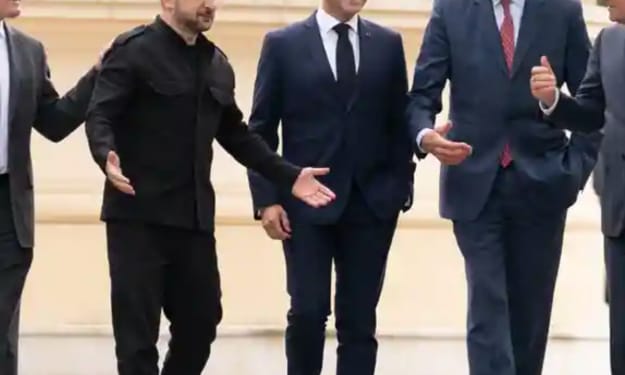
As the war in Ukraine grinds on with no clear end in sight, the debate over what comes after the fighting has taken a sharper turn. The United States has signalled reluctance about committing troops to Ukraine once the war ends, even as the United Kingdom and France openly pledge to consider deploying forces in a postwar security role. The divergence has exposed differing strategic priorities among Western allies and raised new questions about how Ukraine’s future security will be guaranteed. While all three nations remain united in their support for Kyiv during the war, the emerging split over postwar troop commitments highlights the complexity of planning for peace in a conflict that continues to reshape Europe’s security landscape. What the UK and France Are Proposing British and French leaders have increasingly spoken about the need for long-term security arrangements for Ukraine once active hostilities end. Their position reflects a growing concern that any ceasefire or peace agreement could be fragile, leaving Ukraine vulnerable to renewed aggression. The idea under discussion is not a combat deployment in an active war zone, but rather a stabilisation or reassurance force. Such troops could help train Ukrainian forces, protect critical infrastructure, and serve as a visible deterrent against future attacks. Supporters argue that a limited but credible international presence would help ensure that any peace settlement is respected. For London and Paris, this approach fits within a broader European push to take more responsibility for continental security. Both governments see Ukraine not only as a partner but as a frontline state whose stability directly affects Europe as a whole. Why Washington Is Hesitant The United States, while remaining Ukraine’s most significant military backer during the war, has taken a more cautious stance on postwar troop deployments. American officials have stressed that there are no plans to send US forces into Ukraine, even after a potential peace agreement. This hesitation is rooted in several factors. First, Washington remains wary of any move that could risk a direct confrontation with Russia. Even in a postwar scenario, the presence of US troops on Ukrainian soil could be portrayed by Moscow as a provocation, escalating tensions rather than reducing them. Second, domestic considerations play a major role. After years of overseas military engagements, there is limited appetite among the American public and political class for new long-term deployments abroad, particularly in a region where risks remain high and outcomes uncertain. Finally, US strategy has increasingly emphasised supporting allies through funding, training, and equipment rather than large-scale troop commitments. From Washington’s perspective, enabling Ukraine to defend itself may be preferable to stationing American forces on the ground. A Question of Deterrence At the heart of the debate lies a fundamental question: what will actually deter future aggression against Ukraine? The UK and France appear to believe that a physical presence, however limited, would send a powerful signal of commitment. Troops on the ground would demonstrate that Ukraine’s security is directly tied to that of major European powers, raising the cost of any future attack. The US, by contrast, seems to place greater faith in alternative mechanisms such as long-term military aid, security guarantees, and sanctions frameworks. American officials argue that deterrence does not necessarily require boots on the ground, especially if Ukraine emerges from the war better armed and more integrated with Western institutions. This difference reflects broader strategic cultures. European powers, facing the immediate proximity of the conflict, may feel a stronger need for visible reassurance measures, while the US assesses risks from a more global perspective. Implications for NATO Unity Although Ukraine is not a NATO member, the discussion has clear implications for the alliance. Any deployment of UK or French troops would be closely scrutinised for what it means for NATO’s role and credibility. NATO operates on consensus, and the absence of US support for a postwar troop presence could complicate coordination. Even if London and Paris act independently or as part of a smaller coalition, questions would remain about command structures, rules of engagement, and the political backing required for such a mission. At the same time, the situation underscores a broader shift within NATO, with European members increasingly expected to shoulder more responsibility. If the UK and France proceed with their plans, it could mark a significant step toward a more autonomous European security posture. Ukraine’s Perspective For Kyiv, the debate is both encouraging and frustrating. On one hand, the willingness of major European powers to consider troop deployments signals long-term commitment and recognition of Ukraine’s security concerns. On the other hand, uncertainty from the US—Ukraine’s most powerful ally—adds another layer of unpredictability. Ukrainian leaders have consistently argued that security guarantees must be concrete, not symbolic. From their perspective, any postwar arrangement must ensure that Russia cannot simply regroup and strike again. Whether this is achieved through foreign troops, binding treaties, or accelerated integration with Western institutions remains an open question. What is clear is that Ukraine wants assurances that go beyond promises and declarations. The Risk of Mixed Signals One potential danger of the current divergence is the message it sends to Moscow. Differing positions among Western allies could be interpreted as hesitation or lack of unity, potentially weakening deterrence rather than strengthening it. At the same time, open debate is not necessarily a sign of weakness. Allies often disagree on tactics while remaining aligned on broader goals. The challenge will be ensuring that these differences do not undermine the core objective of securing a stable and sovereign Ukraine. Diplomats on both sides of the Atlantic are likely to continue working behind the scenes to narrow the gap, even if public statements suggest a clear divide. Looking Ahead The question of postwar Ukraine remains largely theoretical while fighting continues. Yet the discussion itself reveals how seriously Western governments are taking the long-term consequences of the conflict. The UK and France’s willingness to pledge troops reflects a belief that peace must be actively protected. The US reluctance highlights concerns about escalation, sustainability, and domestic support. Reconciling these approaches will be one of the most important diplomatic challenges once the guns eventually fall silent. For now, the disagreement does not signal a breakdown in alliance unity, but it does expose the difficult choices ahead. As the war continues, planning for peace is proving almost as complex—and politically sensitive—as managing the conflict itself.
By Muhammad Hassanabout 3 hours ago in Earth
Judge Trump: Courtroom Battles and Public Questions Surrounding Donald Trump
Judge Trump: Courtroom Battles and Public Questions Surrounding Donald Trump Donald Trump’s name has been repeatedly linked with judges, courts, and major legal decisions over the past several years. As a former president and a high-profile political figure, Trump has faced intense legal scrutiny, making judges central figures in news coverage and public debate. The phrase “Judge Trump” has come to reflect public curiosity about the judges who oversee Trump-related cases, their rulings, and how these legal battles may affect his political future. Understanding this topic requires looking at the legal landscape, the role of the judiciary, and the most common questions people ask. Judge Trump: Courtroom Battles and Public Questions Surrounding Donald Trump
By America today about 19 hours ago in Earth
Filipino Rescuers Detect “Signs of Life” in Garbage Avalanche That Killed 4 and Left Dozens Missing. AI-Generated.
In the early hours following a devastating garbage avalanche in the Philippines, rescuers reported detecting “signs of life” beneath tons of waste, igniting a fragile sense of hope amid widespread grief and uncertainty. The deadly incident, which claimed at least four lives and left dozens missing, has drawn national attention to the dangers faced by communities living near massive waste disposal sites.
By Aqib Hussainabout 20 hours ago in Earth
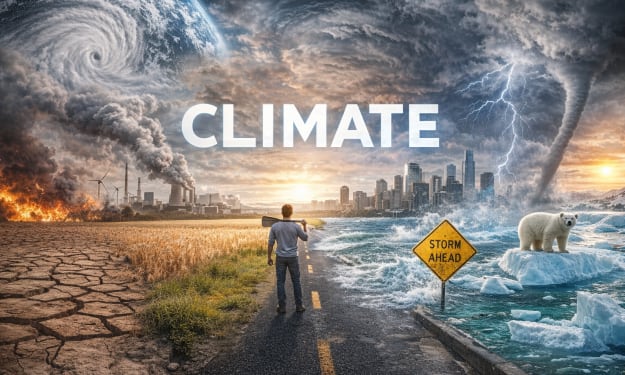
Climate Uncovered: How Earth’s Atmosphere Shapes Our Past, Present, and Future
## Climate Uncovered: How Earth’s Atmosphere Shapes Our Past, Present, and Future Climate is more than just a scientific term or a topic in school textbooks. It is a powerful force that shapes ecosystems, economies, cultures, and daily life across the planet. From the clothes people wear to the food they grow and the cities they build, climate plays a defining role. In recent years, interest in climate has grown rapidly as people seek to understand long-term environmental changes and what they mean for the future of humanity. This article explains climate in a clear and engaging way while answering the most common questions people search for and ask.
By America today 2 days ago in Earth
Britain’s PM Calls Trump on Greenland: Defending Sovereignty in a Shifting Arctic. AI-Generated.
When you think of New Year’s conversations between world leaders, Greenland probably isn’t the first thing that comes to mind. Yet on January 7, 2026, British Prime Minister Keir Starmer and former U.S. President Donald Trump discussed the icy island over a phone call — and it made headlines worldwide. Why? Because Greenland, a massive, ice-covered territory in the Arctic, is suddenly at the center of global geopolitics, and Britain is making sure its voice is heard. Greenland Isn’t Just Ice At first glance, Greenland seems remote and quiet — a land of snow, glaciers, and polar bears. But this island is strategically critical. It sits between North America and Europe, holds valuable natural resources, and commands control over emerging Arctic shipping routes as ice melts due to climate change. In recent years, Greenland has captured the attention of global powers, especially the United States. Trump has repeatedly suggested that the island is crucial to U.S. national security and even hinted at the possibility of acquiring it. These ideas, though unlikely, raised eyebrows in Europe and among NATO allies. For Denmark, Greenland’s governing country, and its residents, this rhetoric was a reminder that sovereignty matters — and outsiders shouldn’t dictate their future. Starmer’s Clear Message During the phone call, Starmer made Britain’s position unmistakable: Greenland’s future must be decided by its people and Denmark, not by external powers. This wasn’t just diplomacy for the sake of headlines. It’s about principles that Britain has long defended: respect for sovereignty, international law, and the rules-based global order. Starmer’s message sends a signal not only to Trump but also to other countries that might think about exerting undue influence over smaller, strategic territories. The call also touched on other global concerns, including NATO security matters, Arctic maritime operations, and broader geopolitical tensions. But it’s Greenland that grabbed the spotlight — because it’s a flashpoint for sovereignty, alliance dynamics, and Arctic strategy. Why the UK Cares You might wonder: why is Britain involved in a discussion about Greenland? After all, it’s part of Denmark. The answer lies in NATO and European security. Greenland is strategically vital for the alliance. Any unilateral action by the U.S. to control or influence Greenland could threaten NATO cohesion. Britain, as a leading NATO member, has a stake in ensuring that all alliance decisions respect sovereignty and the rules of international cooperation. In other words, Britain isn’t stepping into Greenland’s affairs to take control — it’s defending the principle that territorial decisions should belong to the rightful authorities, in this case, Denmark and Greenland’s residents. Alliances and Principles Starmer’s call also highlights a delicate balancing act. The UK maintains a close relationship with the U.S., but that doesn’t mean it agrees with every idea, especially when sovereignty is at stake. This is the reality of modern diplomacy: even trusted allies can have differences of opinion, and leaders must navigate these differences carefully. Starmer’s message to Trump reflects a wider approach — maintain strong alliances while standing firm on core values. Some politicians have acknowledged that disagreements are normal and even healthy in long-standing partnerships. The key is open communication and respect for international norms, which Starmer aimed to demonstrate during the call. Greenland as a Symbol Beyond geopolitics, Greenland has become a symbol of a new era in global relations. Arctic resources, strategic positions, and climate change are making previously quiet regions hotspots for diplomacy. Greenland reminds the world that territory, sovereignty, and self-determination are still central issues, even in the 21st century. For Britain, standing with Denmark and affirming Greenland’s autonomy sends a clear message: the UK supports international law and the idea that small regions should not be pawns in great-power games. What This Means Going Forward So what can we expect after this phone call? Greenland remains firmly under Danish control, with its future in the hands of its residents. NATO cohesion is reinforced, as European leaders see Britain advocating for rules-based governance. The Arctic region continues to be a strategic focal point, with countries carefully watching each other’s moves. In short, Starmer’s call is a reminder that even in a world of powerful nations, diplomacy, respect, and legal principles still matter. Takeaways Sovereignty Matters: Greenland’s future is a matter for its people, not outside powers. Allies Can Disagree: Britain’s defense of principles shows that disagreements with allies don’t have to break partnerships. Strategic Regions Are Hotspots: Arctic regions like Greenland are increasingly important in global security, economics, and diplomacy. Principles Over Power: Upholding international law is as critical as maintaining military or economic influence. Greenland may be far from the streets of London or Washington, but the stakes are high. Starmer’s phone call with Trump demonstrates that the UK is ready to defend sovereignty, international norms, and alliance cohesion, even when the conversation turns icy.
By Muhammad Hassan3 days ago in Earth
From Sanctions to Sunsets: Russians Find Refuge on China’s Southern Shores. AI-Generated.
As fireworks lit up the South China Sea on New Year’s Eve, an unusual group of revelers gathered along the palm-lined beaches of Sanya, a tropical resort city on China’s Hainan Island. Champagne glasses clinked, Russian pop music played softly from beachfront cafés, and families posed for photos under lantern-lit skies. Just beyond the horizon, however, lay one of China’s most sensitive military assets — a nuclear submarine base. For thousands of Russians, Sanya has become more than a holiday destination. It is a refuge from sanctions, political tension, and the unspoken judgment they say follows them across much of the world. A Tropical Escape From a Cold Political Climate Since the imposition of sweeping Western sanctions following Russia’s war in Ukraine, international travel has become increasingly complicated for Russian citizens. Visa restrictions, flight bans, frozen bank cards, and social stigma have reshaped how — and where — Russians can travel. Many say they have grown tired of what they describe as “sideways looks” in Europe and parts of Southeast Asia — subtle signals that they are no longer welcome, regardless of personal political views. China, by contrast, has maintained diplomatic ties with Moscow and imposed no sanctions on Russian citizens. Sanya, often called “China’s Hawaii,” has emerged as one of the most attractive destinations. With direct flights from Russia, visa-friendly policies, warm weather, and luxury resorts priced far below European equivalents, the city offers something many Russians feel they have lost elsewhere: normalcy. Why Sanya? Sun, Safety, and Silent Acceptance For decades, Sanya has marketed itself as a paradise of white sand beaches, turquoise waters, and high-end resorts. What sets it apart today is not just its climate, but its political positioning. China’s stance of neutrality — or strategic ambiguity — on the Ukraine conflict has made destinations like Sanya appealing to Russians seeking to escape geopolitics altogether. Visitors report feeling largely invisible as Russians, treated simply as tourists rather than symbols of a global conflict. Local businesses have adapted quickly. Russian-language menus are common, hotel staff speak basic Russian phrases, and travel agencies cater specifically to long-stay visitors from Moscow, St. Petersburg, and Siberia. For many, Sanya represents a rare space where politics recede into the background. New Year’s Celebrations Beside Strategic Silence The symbolism of celebrating the New Year next to a Chinese nuclear submarine base is not lost on observers. Hainan Island hosts one of China’s most important naval facilities, home to submarines that form a key pillar of Beijing’s nuclear deterrence. The base is heavily guarded and officially invisible to tourists, yet its presence looms quietly over the region. That Russians are toasting champagne nearby highlights the strange intersections of modern geopolitics. While Western capitals isolate Moscow, China offers both strategic partnership at the state level and personal refuge at the civilian level. For Russian visitors, the proximity to military infrastructure feels incidental rather than alarming. Many say they feel safer in China than in destinations where political tensions are openly discussed. Economic Migration Disguised as Tourism Although many Russians arrive as tourists, a growing number stay for months at a time. Some work remotely, paid in roubles or cryptocurrency. Others have relocated small businesses, IT services, or online consulting operations to Asia-friendly time zones. Sanctions have restricted access to international banking, but China’s alternative financial systems — and the acceptance of cash and regional payment platforms — make daily life easier. Sanya’s relatively low cost of living compared to Moscow or European cities further sweetens the deal. For middle-class Russians, beachfront apartments and resort amenities are suddenly attainable. What looks like leisure tourism increasingly resembles soft economic migration. A City Caught Between Tourism and Strategy Sanya’s transformation into a haven for Russians also raises questions for China. On one hand, Russian tourists bring much-needed revenue to a region hit hard by pandemic-era travel restrictions. On the other, the city’s proximity to sensitive military installations means authorities monitor foreign presence carefully. So far, Beijing appears comfortable with the arrangement. Russian visitors are seen as politically aligned, economically beneficial, and unlikely to raise security concerns. This quiet acceptance reflects the broader China–Russia relationship: pragmatic, mutually beneficial, and grounded in shared opposition to Western dominance rather than deep cultural integration. Mixed Reactions From Locals and the World Local residents in Sanya largely view Russian tourists positively, seeing them as polite, family-oriented, and generous spenders. Unlike mass tourism from some regions, Russians tend to stay longer and integrate more smoothly into daily life. Internationally, reactions are more complex. Critics argue that destinations like Sanya enable Russians to sidestep the social consequences of their country’s actions. Supporters counter that punishing individuals for state policy only deepens global divisions. For the Russians on the beach, such debates feel distant. Many insist they did not choose the war, nor do they control their government’s decisions. A Glimpse Into a Fragmenting World The sight of Russians celebrating the New Year beside a Chinese nuclear submarine base captures a defining reality of the 21st century: the world is fragmenting into parallel systems. As Western sanctions reshape travel, finance, and social acceptance, alternative hubs are emerging — places where geopolitics bend rather than break everyday life. Sanya is one such place, where palm trees and military submarines coexist, and where global fault lines are felt more subtly than elsewhere. Final Thoughts For Russians seeking warmth — both literal and social — Sanya offers a temporary sanctuary. It is a place where sanctions fade into sunsets, and judgment gives way to quiet coexistence. Yet the beaches of Hainan also remind us that no escape is entirely apolitical. Even paradise sits in the shadow of power. As champagne corks pop and waves lap the shore, the New Year in Sanya reflects a world where refuge, strategy, and survival are increasingly intertwined.
By Muhammad Hassan3 days ago in Earth
Mother Earth Still Breathes
Mother Earth Still Breathes LINK TO SONG! It is on Substack! "This song began as a realization that the Earth isn't just a backdrop for our lives, she is a living, humming organism. After a video sparked a conversation with my creative partners, we moved from poetic meditation into Mother Earth Blues.
By Vicki Lawana Trusselli 3 days ago in Earth
What’s Your Reaction to the U.S. Military Operation in Venezuela?. AI-Generated.
Few foreign policy decisions in recent years have sparked as much global debate as the U.S. military operation in Venezuela. The dramatic intervention — which resulted in the capture of President Nicolás Maduro — has forced governments, analysts, and ordinary citizens alike to confront uncomfortable questions about sovereignty, legality, and the future of international order. Reactions have ranged from celebration to outrage, often shaped by political alignment, personal values, and historical memory. But beyond the headlines, the operation represents something deeper: a turning point in how power is exercised and justified in the modern world. A Shock That Traveled Worldwide The speed and scale of the operation stunned observers. In a matter of hours, a leader who had weathered years of sanctions, diplomatic isolation, and internal unrest was removed from power and placed in U.S. custody. For supporters of the move, it was decisive action against an authoritarian figure accused of corruption and criminal activity. For critics, it was a dangerous violation of international norms. What made the event especially jarring was its symbolism. The capture of a sitting president by a foreign military shattered long-standing assumptions about immunity and restraint. It signaled that Washington was willing to cross lines that had, for decades, remained largely theoretical. Inside the United States: Applause and Alarm At home, Americans have been deeply divided. Some praised the operation as long-overdue accountability for a leader blamed for Venezuela’s economic collapse and humanitarian crisis. To them, the mission demonstrated strength and resolve after years of what they see as ineffective sanctions and diplomacy. Others reacted with concern or outright opposition. Critics questioned whether the president had the legal authority to order such an operation without explicit congressional approval. Civil liberties advocates warned that bypassing democratic checks could erode constitutional norms and set a troubling precedent. For many Americans, the question wasn’t just whether Maduro deserved removal — but whether the United States should be the one deciding that fate through military force. Latin America’s Uneasy Response Across Latin America, the reaction was largely critical. The region carries deep historical scars from U.S. interventions, and for many governments, the operation revived fears of a return to gunboat diplomacy. Even countries that had previously criticized Maduro expressed discomfort with the method used. Leaders warned that while authoritarianism should be challenged, unilateral military action risks destabilizing the region, triggering refugee flows, and inflaming tensions. For Venezuelans themselves, reactions have been complex. Some welcomed Maduro’s fall with relief and hope, while others feared chaos, retaliation, or a prolonged power vacuum. Celebration and anxiety existed side by side. Global Powers and the Question of Precedent Major global powers were quick to weigh in. Critics framed the operation as a violation of international law and national sovereignty, arguing that it undermines the very rules designed to prevent global instability. Supporters countered that traditional norms have failed to hold criminal leaders accountable, and extraordinary cases require extraordinary measures. At the heart of the debate is precedent. If one powerful nation can remove a foreign leader by force, what stops others from doing the same? The concern is not only about Venezuela, but about a world where might increasingly defines right. This fear has resonated even among U.S. allies, many of whom worry about the erosion of a rules-based international system. Law, Morality, and Selective Justice One of the most heated aspects of the debate revolves around legality. Supporters argue that Maduro was not treated as a legitimate head of state, but as a criminal accused of transnational crimes. From this perspective, the operation resembles an aggressive law-enforcement action rather than an act of war. Opponents reject this framing. They argue that international law does not allow one state to unilaterally seize another country’s leader, regardless of allegations. They also question why similar standards are not applied consistently to other controversial leaders around the world. This perception of selective justice has fueled skepticism about Washington’s true motivations. Strategic Interests Beneath the Surface Beyond morality and legality, strategic calculations are impossible to ignore. Venezuela sits atop vast oil reserves and occupies a geopolitically sensitive position in the Western Hemisphere. For years, the country has also served as a foothold for rival powers seeking influence near U.S. borders. Supporters of the operation argue that removing Maduro weakens criminal networks, curbs rival influence, and opens the door to regional stability. Critics see a familiar pattern: humanitarian and legal arguments masking strategic and economic interests. The truth likely lies somewhere in between, adding to the controversy rather than resolving it. The Human Cost Often Overlooked Lost in much of the geopolitical debate is the human cost. Military operations, even targeted ones, rarely unfold without casualties or trauma. Venezuelan security forces, civilians, and even U.S. personnel were reportedly harmed during the operation. For ordinary Venezuelans, the future remains uncertain. Removing a leader does not automatically rebuild institutions, restore trust, or heal a fractured society. The risk of prolonged instability looms large. A Moment That Forces Reflection So what should our reaction be? For some, the operation represents justice finally catching up with impunity. For others, it is a troubling reminder of how quickly norms can be discarded when power allows. Most people likely feel a mix of emotions — relief at the end of an era in Venezuela, unease about the method used to achieve it. The U.S. military operation in Venezuela forces a difficult reckoning. It challenges assumptions about sovereignty, accountability, and the limits of power. It also highlights a growing tension in global politics: the frustration with slow, ineffective systems versus the risks of decisive, unilateral action. Conclusion: Strength or Slippery Slope? Whether history judges the operation as a bold stand for justice or a dangerous overreach will depend on what follows. If Venezuela moves toward stability, accountability, and self-determination, supporters will claim vindication. If chaos, resentment, and copycat interventions follow, critics’ warnings may prove prophetic. What’s clear is that this moment has reshaped the conversation about U.S. power and global order. And regardless of where one stands, it is a development no one can afford to ignore.
By Muhammad Hassan4 days ago in Earth