
Why Putin Went Quiet When Challenged by Trump Over Venezuela
Unpacking the geopolitics, strategy, and what it reveals about global power today

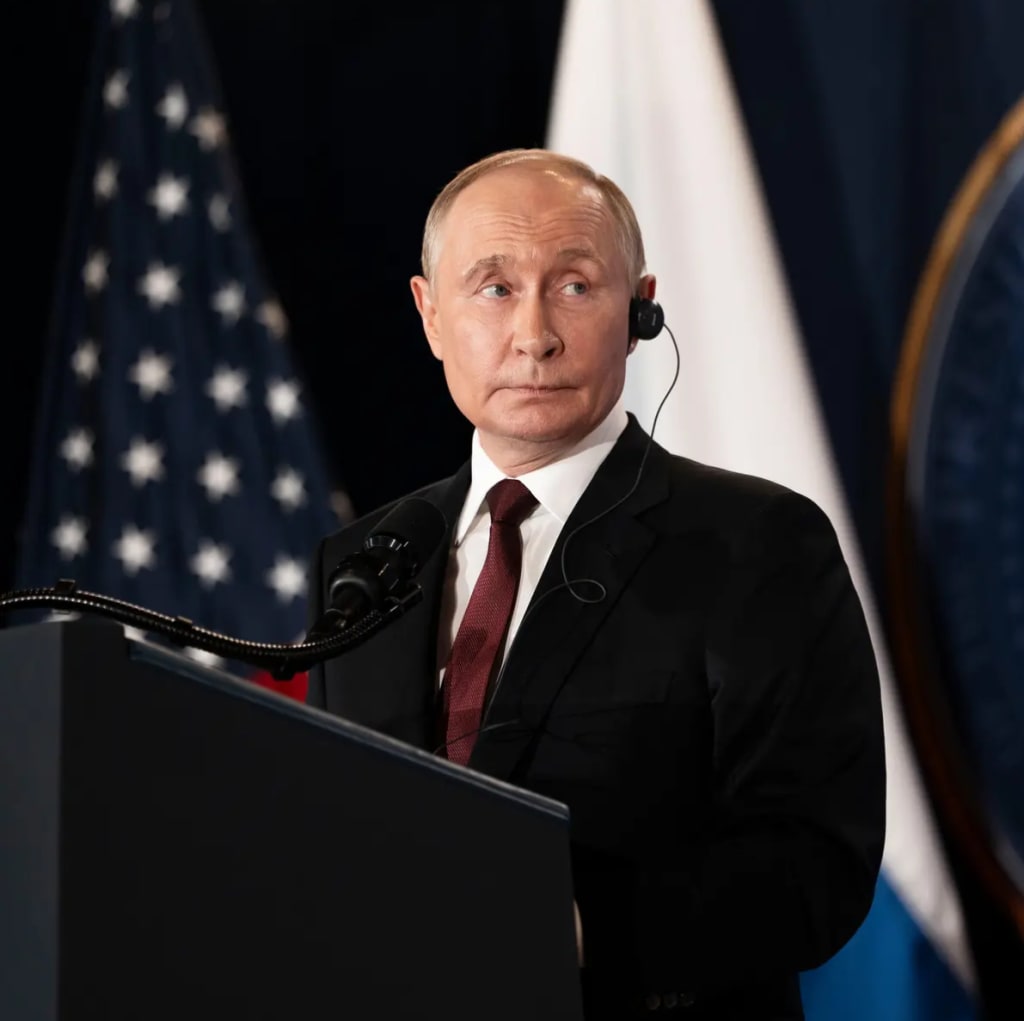
When U.S. forces captured Venezuelan President Nicolás Maduro in early January 2026, the world was stunned. Venezuela has long been a Russian ally, yet Russian President Vladimir Putin remained almost completely silent when challenged directly by U.S. President Donald Trump. Why would a leader so often outspoken on the world stage hold back in such a dramatic moment? Let’s unpack the story and explore what it means for global politics.
A Bold Move That Shocked the World
On January 3, U.S. forces executed a daring operation in Venezuela, taking Maduro into custody in New York to face charges including drug trafficking and narco‑terrorism. The operation was framed by the U.S. as a step to enforce justice, but critics saw it as an extraordinary overreach of power.
Venezuela is no ordinary country for Russia. Since the days of Hugo Chávez, Moscow has cultivated close ties with Caracas, offering military support, energy deals, and diplomatic backing on the global stage. Past actions included Russian bombers visiting Venezuela and high-profile defense agreements.
Given this history, many expected a fiery response from Putin. Yet, the Kremlin remained calm, issuing measured statements rather than sharp threats.
Why Silence Was Strategic
Experts suggest there are several reasons for Putin’s muted reaction, each revealing the careful calculation behind the Kremlin’s foreign policy.
1. Focus on the War in Ukraine
Russia’s primary priority remains Ukraine. Engaged in a high-stakes military and diplomatic battle, Putin cannot afford distractions or new confrontations far from home. Escalating tensions with the United States over Venezuela could jeopardize Moscow’s position in Europe.
A New York Times report highlighted that Russia is “subordinating all other interests to the war in Ukraine,” suggesting that even a high-profile ally like Venezuela takes a back seat to Moscow’s strategic goals.
2. Limited Military Options
While Russia’s alliance with Venezuela is longstanding, much of the support has been symbolic rather than operational. Defense systems and military cooperation exist on paper, but Russia lacks the immediate ability to counter a U.S. operation thousands of miles away.
Putin may have recognized that responding aggressively would be both ineffective and costly, potentially risking military and economic consequences that Moscow cannot afford.
3. Maintaining Diplomatic Channels with Washington
With Donald Trump back in the White House since 2025, there has been cautious optimism in Moscow about recalibrating U.S.–Russia relations. Avoiding a dramatic confrontation over Venezuela keeps diplomatic channels open, allowing Russia to negotiate on other high-priority issues like Ukraine and sanctions relief.
In other words, silence can be a calculated strategy, signaling restraint rather than weakness.
4. Russia’s Global Influence Is Waning
The Maduro episode also highlights a broader geopolitical reality: Russia’s global reach has limits. Since the 2022 invasion of Ukraine, Moscow’s influence in regions like the Middle East and parts of the former Soviet Union has weakened. Venezuela remains one of its few high-profile allies outside Europe, but even there, Russia’s power is largely symbolic.
By not escalating, Putin is acknowledging a practical truth: Russia cannot be everywhere at once, and some battles are not worth fighting.
5. Choosing Battles Wisely
Some analysts emphasize that Putin’s quiet response is more about strategic prioritization than capitulation. In a world dominated by nuclear powers and volatile global politics, direct confrontation with the United States over Venezuela could spiral into a far larger crisis.
By staying silent, the Kremlin may be signaling that it picks its battles carefully, focusing resources on Ukraine, where the stakes are highest.
What This Means for the World
Putin’s silence sends several messages:
Russia is currently stretched, economically and militarily.
Moscow is prioritizing Ukraine over symbolic allies.
Strategic restraint is sometimes more powerful than public confrontation.
The limits of Russian influence are becoming more visible to the world.
This episode reflects a new reality in geopolitics: power is as much about choosing when not to act as when to assert force.
The Bigger Picture
The capture of Maduro is a defining moment not just for Venezuela, but for global politics. It shows the United States asserting power in a way not seen for decades, while Russia’s quiet reaction underscores its current limits and priorities.
For observers, Putin’s silence is a lesson in modern geopolitics: even the most assertive leaders exercise restraint when stakes are high and risks are global.
In the end, the Maduro affair reminds us that in today’s world, the loudest response is not always the most effective one — sometimes, quiet calculation speaks volumes.
Sources and Further Reading
The US capture of Maduro reveals Russia’s weakness – Atlantic Council
‘It sends a horrible signal’: US politicians react to capture of Nicolás Maduro – The Guardian
Russia slams 'neocolonial threats' against Venezuela – Reuters
About the Creator
Muhammad Hassan
Muhammad Hassan | Content writer with 2 years of experience crafting engaging articles on world news, current affairs, and trending topics. I simplify complex stories to keep readers informed and connected.
Keep reading
More stories from Muhammad Hassan and writers in Earth and other communities.
Myanmar Junta Holds Second Phase of Election Widely Decried as a ‘Sham Exercise’
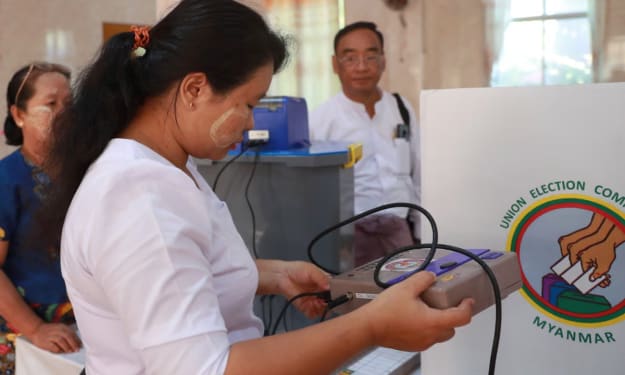
If you’ve been following Myanmar’s political turmoil, you probably heard the news: the military junta just held the second phase of its general election, and once again, critics are calling it a “sham exercise.” From the United Nations to human rights organizations, almost everyone outside the junta is dismissing this vote as a carefully orchestrated performance rather than a genuine democratic process. Let’s take a closer look at what happened, why it’s being condemned, and what this means for Myanmar’s future. A Military-Run Election in a Nation at War On 11 January 2026, voters in certain parts of Myanmar lined up at polling stations to cast their ballots in the second phase of the election. This phase covered roughly 100 townships across 12 states and regions, part of a three-phase plan that began in December 2025 and will conclude in late January. Sounds orderly enough—but here’s the catch: large areas of Myanmar are still controlled by armed opposition groups or trapped in active conflict zones. In many townships, voting didn’t even happen because it was too dangerous. For millions of citizens, the idea of participating in this election isn’t about choice—it’s about survival. So, while the junta presents this as a return to political normalcy, the reality is much messier. This vote is happening amid ongoing civil war, instability, and widespread human suffering. Who’s on the Ballot? And Who Isn’t One of the biggest issues with this election is who is allowed to run. Aung San Suu Kyi’s National League for Democracy (NLD)—the party that won a landslide in the 2020 election—is banned. Suu Kyi herself remains detained on politically motivated charges. Many smaller opposition parties have also been barred from participating. Rebel groups and youth movements have refused to take part, calling the vote illegitimate. This has left the military-backed Union Solidarity and Development Party (USDP) as the clear front-runner. In the first phase of voting in December, the USDP already secured nearly 90 of 102 contested seats, which is a strong indicator that the outcome of the overall election is practically predetermined. In short, this is less an election and more a political tool for the junta to cement power. The Junta’s Playbook For the military, these elections serve multiple purposes: Legitimacy: By holding elections, the junta hopes to claim that it has public support. Control: With opposition parties banned, the military ensures it dominates Parliament. International Image: They want the world to see a functioning democratic process—even if it’s staged. But the global community isn’t buying it. The United Nations, human rights organizations, and most Western governments have condemned the elections as neither free nor fair. Key issues include: Widespread political repression Absence of meaningful opposition Election laws that stifle dissent Unsafe conditions for voters UN Special Rapporteur Tom Andrews even warned that the elections “cannot and should not be recognized” internationally. Voices from the Ground: Fear, Frustration, and Exclusion For everyday citizens, voting is complicated. Many are intimidated or fear retribution if they don’t comply. Others live in conflict zones or have been displaced, making voting physically impossible. Ethnic groups and youth activists are particularly vocal about rejecting the elections. For them, the vote is a tool to marginalize minority communities and entrench military rule. Meanwhile, ordinary voters express mixed feelings—some participate out of hope for peace, others because they feel they have no choice. The reality? The election process is fragmented, forced, and disconnected from the lives of most Burmese citizens. International Reactions: Mostly Negative Around the world, reaction to Myanmar’s elections has been overwhelmingly critical. The UN, Western governments, and human rights organizations argue that the polls are designed to prop up an authoritarian regime, not reflect the will of the people. Civil society groups in Asia have also condemned the election, urging countries not to recognize the results. The junta’s international supporters, however—countries like China and Russia—may continue diplomatic engagement, making it harder to isolate the regime completely. The key takeaway? While the junta may claim legitimacy, global acceptance is far from guaranteed. Looking Ahead: What Happens Next? The final phase of voting is scheduled for 25 January 2026, and it’s expected to follow the same patterns: military dominance, restricted opposition, and contested legitimacy. If the junta consolidates power through this election, it will likely form a government that appears “elected” on paper but remains authoritarian in practice. Yet the ongoing civil war, international criticism, and domestic opposition suggest that Myanmar’s road to stability is still far away. For observers inside and outside the country, these elections are less about democracy and more about power. The military hopes to create a façade of legitimacy, but the reality on the ground tells a very different story: one of fear, division, and a population yearning for genuine representation.This blog version is more readable, flows naturally, and keeps the key facts intact, while meeting Vocal Media’s style of a narrative, accessible, and conversational article. If you want, I can also add a sidebar timeline showing all three phases of Myanmar’s 2025–26 elections to make it extra engaging for readers. It would fit perfectly for a blog format. Do you want me to do that? Conclusion Myanmar’s second-phase election may look like a step toward democracy on paper, but in reality, it’s a highly controlled, military-managed process with limited participation and credibility. With opposition voices silenced, ongoing conflict, and millions of citizens excluded, the so-called vote is widely regarded as a sham exercise. For the people of Myanmar, the future remains uncertain. While the junta may claim victory, the country’s deep political, social, and ethnic fractures mean that true democracy and stability are still a long way off. This election is a reminder that sometimes, the act of voting alone doesn’t equal democracy—especially when freedom, fairness, and choice are nowhere to be found.
By Muhammad Hassan2 months ago in Earth
Oil Market is Volatile Again: What It Means for Global Energy and Traders
Global energy markets are once again at the center of attention after the United States introduced a temporary waiver allowing the purchase of certain Russian oil shipments that were already stranded at sea. The move has sparked intense discussions across financial markets, energy sectors, and geopolitical circles.
By Daniel Reidabout 2 hours ago in Earth
Becca
"Everything is so... flat." Denille said stupidly as she looked around her new neighborhood. She looked around at the muted desert where even the smallest sign of life seemed to have given up. The plant life was shrubs that were half cooked by the heat and where there should have been a lawn, a mess of white rocks laid glistening in the sun. Even the sky looked stretched thin, like the sun had ironed it smooth. She’d moved from Riverside, where at least there were hills, but here in Barstow, everything felt baked and brittle.
By Sara Wilson7 days ago in Fiction


Comments
There are no comments for this story
Be the first to respond and start the conversation.