Humanity
From Sanctions to Sunsets: Russians Find Refuge on China’s Southern Shores. AI-Generated.
As fireworks lit up the South China Sea on New Year’s Eve, an unusual group of revelers gathered along the palm-lined beaches of Sanya, a tropical resort city on China’s Hainan Island. Champagne glasses clinked, Russian pop music played softly from beachfront cafés, and families posed for photos under lantern-lit skies. Just beyond the horizon, however, lay one of China’s most sensitive military assets — a nuclear submarine base. For thousands of Russians, Sanya has become more than a holiday destination. It is a refuge from sanctions, political tension, and the unspoken judgment they say follows them across much of the world. A Tropical Escape From a Cold Political Climate Since the imposition of sweeping Western sanctions following Russia’s war in Ukraine, international travel has become increasingly complicated for Russian citizens. Visa restrictions, flight bans, frozen bank cards, and social stigma have reshaped how — and where — Russians can travel. Many say they have grown tired of what they describe as “sideways looks” in Europe and parts of Southeast Asia — subtle signals that they are no longer welcome, regardless of personal political views. China, by contrast, has maintained diplomatic ties with Moscow and imposed no sanctions on Russian citizens. Sanya, often called “China’s Hawaii,” has emerged as one of the most attractive destinations. With direct flights from Russia, visa-friendly policies, warm weather, and luxury resorts priced far below European equivalents, the city offers something many Russians feel they have lost elsewhere: normalcy. Why Sanya? Sun, Safety, and Silent Acceptance For decades, Sanya has marketed itself as a paradise of white sand beaches, turquoise waters, and high-end resorts. What sets it apart today is not just its climate, but its political positioning. China’s stance of neutrality — or strategic ambiguity — on the Ukraine conflict has made destinations like Sanya appealing to Russians seeking to escape geopolitics altogether. Visitors report feeling largely invisible as Russians, treated simply as tourists rather than symbols of a global conflict. Local businesses have adapted quickly. Russian-language menus are common, hotel staff speak basic Russian phrases, and travel agencies cater specifically to long-stay visitors from Moscow, St. Petersburg, and Siberia. For many, Sanya represents a rare space where politics recede into the background. New Year’s Celebrations Beside Strategic Silence The symbolism of celebrating the New Year next to a Chinese nuclear submarine base is not lost on observers. Hainan Island hosts one of China’s most important naval facilities, home to submarines that form a key pillar of Beijing’s nuclear deterrence. The base is heavily guarded and officially invisible to tourists, yet its presence looms quietly over the region. That Russians are toasting champagne nearby highlights the strange intersections of modern geopolitics. While Western capitals isolate Moscow, China offers both strategic partnership at the state level and personal refuge at the civilian level. For Russian visitors, the proximity to military infrastructure feels incidental rather than alarming. Many say they feel safer in China than in destinations where political tensions are openly discussed. Economic Migration Disguised as Tourism Although many Russians arrive as tourists, a growing number stay for months at a time. Some work remotely, paid in roubles or cryptocurrency. Others have relocated small businesses, IT services, or online consulting operations to Asia-friendly time zones. Sanctions have restricted access to international banking, but China’s alternative financial systems — and the acceptance of cash and regional payment platforms — make daily life easier. Sanya’s relatively low cost of living compared to Moscow or European cities further sweetens the deal. For middle-class Russians, beachfront apartments and resort amenities are suddenly attainable. What looks like leisure tourism increasingly resembles soft economic migration. A City Caught Between Tourism and Strategy Sanya’s transformation into a haven for Russians also raises questions for China. On one hand, Russian tourists bring much-needed revenue to a region hit hard by pandemic-era travel restrictions. On the other, the city’s proximity to sensitive military installations means authorities monitor foreign presence carefully. So far, Beijing appears comfortable with the arrangement. Russian visitors are seen as politically aligned, economically beneficial, and unlikely to raise security concerns. This quiet acceptance reflects the broader China–Russia relationship: pragmatic, mutually beneficial, and grounded in shared opposition to Western dominance rather than deep cultural integration. Mixed Reactions From Locals and the World Local residents in Sanya largely view Russian tourists positively, seeing them as polite, family-oriented, and generous spenders. Unlike mass tourism from some regions, Russians tend to stay longer and integrate more smoothly into daily life. Internationally, reactions are more complex. Critics argue that destinations like Sanya enable Russians to sidestep the social consequences of their country’s actions. Supporters counter that punishing individuals for state policy only deepens global divisions. For the Russians on the beach, such debates feel distant. Many insist they did not choose the war, nor do they control their government’s decisions. A Glimpse Into a Fragmenting World The sight of Russians celebrating the New Year beside a Chinese nuclear submarine base captures a defining reality of the 21st century: the world is fragmenting into parallel systems. As Western sanctions reshape travel, finance, and social acceptance, alternative hubs are emerging — places where geopolitics bend rather than break everyday life. Sanya is one such place, where palm trees and military submarines coexist, and where global fault lines are felt more subtly than elsewhere. Final Thoughts For Russians seeking warmth — both literal and social — Sanya offers a temporary sanctuary. It is a place where sanctions fade into sunsets, and judgment gives way to quiet coexistence. Yet the beaches of Hainan also remind us that no escape is entirely apolitical. Even paradise sits in the shadow of power. As champagne corks pop and waves lap the shore, the New Year in Sanya reflects a world where refuge, strategy, and survival are increasingly intertwined.
By Muhammad Hassan5 days ago in Earth
Mother Earth Still Breathes
Mother Earth Still Breathes LINK TO SONG! It is on Substack! "This song began as a realization that the Earth isn't just a backdrop for our lives, she is a living, humming organism. After a video sparked a conversation with my creative partners, we moved from poetic meditation into Mother Earth Blues.
By Vicki Lawana Trusselli 6 days ago in Earth
What’s Your Reaction to the U.S. Military Operation in Venezuela?. AI-Generated.
Few foreign policy decisions in recent years have sparked as much global debate as the U.S. military operation in Venezuela. The dramatic intervention — which resulted in the capture of President Nicolás Maduro — has forced governments, analysts, and ordinary citizens alike to confront uncomfortable questions about sovereignty, legality, and the future of international order. Reactions have ranged from celebration to outrage, often shaped by political alignment, personal values, and historical memory. But beyond the headlines, the operation represents something deeper: a turning point in how power is exercised and justified in the modern world. A Shock That Traveled Worldwide The speed and scale of the operation stunned observers. In a matter of hours, a leader who had weathered years of sanctions, diplomatic isolation, and internal unrest was removed from power and placed in U.S. custody. For supporters of the move, it was decisive action against an authoritarian figure accused of corruption and criminal activity. For critics, it was a dangerous violation of international norms. What made the event especially jarring was its symbolism. The capture of a sitting president by a foreign military shattered long-standing assumptions about immunity and restraint. It signaled that Washington was willing to cross lines that had, for decades, remained largely theoretical. Inside the United States: Applause and Alarm At home, Americans have been deeply divided. Some praised the operation as long-overdue accountability for a leader blamed for Venezuela’s economic collapse and humanitarian crisis. To them, the mission demonstrated strength and resolve after years of what they see as ineffective sanctions and diplomacy. Others reacted with concern or outright opposition. Critics questioned whether the president had the legal authority to order such an operation without explicit congressional approval. Civil liberties advocates warned that bypassing democratic checks could erode constitutional norms and set a troubling precedent. For many Americans, the question wasn’t just whether Maduro deserved removal — but whether the United States should be the one deciding that fate through military force. Latin America’s Uneasy Response Across Latin America, the reaction was largely critical. The region carries deep historical scars from U.S. interventions, and for many governments, the operation revived fears of a return to gunboat diplomacy. Even countries that had previously criticized Maduro expressed discomfort with the method used. Leaders warned that while authoritarianism should be challenged, unilateral military action risks destabilizing the region, triggering refugee flows, and inflaming tensions. For Venezuelans themselves, reactions have been complex. Some welcomed Maduro’s fall with relief and hope, while others feared chaos, retaliation, or a prolonged power vacuum. Celebration and anxiety existed side by side. Global Powers and the Question of Precedent Major global powers were quick to weigh in. Critics framed the operation as a violation of international law and national sovereignty, arguing that it undermines the very rules designed to prevent global instability. Supporters countered that traditional norms have failed to hold criminal leaders accountable, and extraordinary cases require extraordinary measures. At the heart of the debate is precedent. If one powerful nation can remove a foreign leader by force, what stops others from doing the same? The concern is not only about Venezuela, but about a world where might increasingly defines right. This fear has resonated even among U.S. allies, many of whom worry about the erosion of a rules-based international system. Law, Morality, and Selective Justice One of the most heated aspects of the debate revolves around legality. Supporters argue that Maduro was not treated as a legitimate head of state, but as a criminal accused of transnational crimes. From this perspective, the operation resembles an aggressive law-enforcement action rather than an act of war. Opponents reject this framing. They argue that international law does not allow one state to unilaterally seize another country’s leader, regardless of allegations. They also question why similar standards are not applied consistently to other controversial leaders around the world. This perception of selective justice has fueled skepticism about Washington’s true motivations. Strategic Interests Beneath the Surface Beyond morality and legality, strategic calculations are impossible to ignore. Venezuela sits atop vast oil reserves and occupies a geopolitically sensitive position in the Western Hemisphere. For years, the country has also served as a foothold for rival powers seeking influence near U.S. borders. Supporters of the operation argue that removing Maduro weakens criminal networks, curbs rival influence, and opens the door to regional stability. Critics see a familiar pattern: humanitarian and legal arguments masking strategic and economic interests. The truth likely lies somewhere in between, adding to the controversy rather than resolving it. The Human Cost Often Overlooked Lost in much of the geopolitical debate is the human cost. Military operations, even targeted ones, rarely unfold without casualties or trauma. Venezuelan security forces, civilians, and even U.S. personnel were reportedly harmed during the operation. For ordinary Venezuelans, the future remains uncertain. Removing a leader does not automatically rebuild institutions, restore trust, or heal a fractured society. The risk of prolonged instability looms large. A Moment That Forces Reflection So what should our reaction be? For some, the operation represents justice finally catching up with impunity. For others, it is a troubling reminder of how quickly norms can be discarded when power allows. Most people likely feel a mix of emotions — relief at the end of an era in Venezuela, unease about the method used to achieve it. The U.S. military operation in Venezuela forces a difficult reckoning. It challenges assumptions about sovereignty, accountability, and the limits of power. It also highlights a growing tension in global politics: the frustration with slow, ineffective systems versus the risks of decisive, unilateral action. Conclusion: Strength or Slippery Slope? Whether history judges the operation as a bold stand for justice or a dangerous overreach will depend on what follows. If Venezuela moves toward stability, accountability, and self-determination, supporters will claim vindication. If chaos, resentment, and copycat interventions follow, critics’ warnings may prove prophetic. What’s clear is that this moment has reshaped the conversation about U.S. power and global order. And regardless of where one stands, it is a development no one can afford to ignore.
By Muhammad Hassan6 days ago in Earth
Amazon sailfin catfish found in Sindh waters, experts warn of invasive spread
Foreign aquarium species reaches Karachi Fish Harbour, threatening aquatic biodiversity KARACHI: An unusual fish brought from a dhund, or shallow pond, near Sukkur to the Karachi Fish Harbour on January 4, 2026, has been identified as an Amazon sailfin catfish, officials and experts said.
By Dena Falken Esq7 days ago in Earth
Water Scarcity Crisis in a Mountainous Region. AI-Generated.
The mountains had once been generous. Old villagers used to say that streams sang through the valleys and the soil never cracked under the sun. But seasons changed, and so did the land. Now the mountains stood quiet and dry, their rocky faces watching over a village that struggled to survive.
By Bilal Mohammadi7 days ago in Earth
The Great Wall of China: A Monument of History, Culture, and Engineering. AI-Generated.
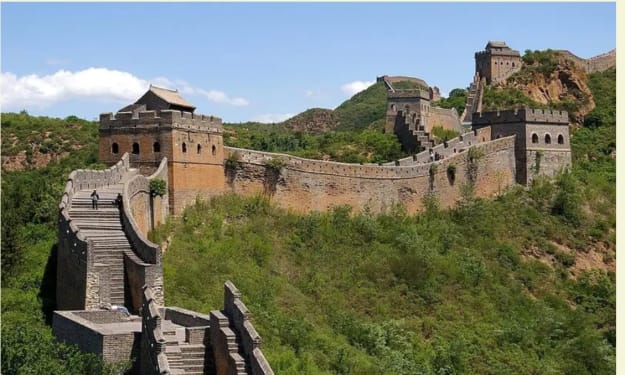
The Great Wall of China, one of the world’s most iconic structures, stands as a testament to both human ingenuity and the determination to protect a civilization. Stretching across northern China for over 13,000 miles, this architectural marvel is not only an engineering feat but also a symbol of China’s strength, perseverance, and cultural heritage. Throughout its history, the Great Wall has withstood the test of time, nature, and human conflict, serving as a guard against invasions and a unifying symbol of Chinese identity. The Origins of the Great Wall The origins of the Great Wall can be traced back to the 7th century BC during the Warring States period in ancient China. The first walls were built by various feudal states to defend against invasions from nomadic tribes in the north. These early walls were not as grand as the Great Wall we know today; they were more rudimentary, made of earth and wood, and used for defensive purposes. However, the true vision of the Great Wall emerged during the reign of Emperor Qin Shi Huang, the first emperor of China (221–206 BC). As part of his efforts to consolidate power and unify China, Qin Shi Huang ordered the connection of existing walls and the construction of new ones to create a continuous defensive line. Although the Qin Dynasty's wall was eventually abandoned and destroyed, it laid the groundwork for future walls that would evolve into the monumental structure we recognize today. The most extensive and well-preserved sections of the Great Wall were built during the Ming Dynasty (1368–1644). The Ming emperors, in response to the growing threat of Mongol invasions, constructed a more permanent and fortified wall with stone, brick, and mortar, fortifying watchtowers and garrison stations along the route. Engineering and Architecture: A Marvel of Construction The Great Wall’s sheer scale and the complexity of its construction are awe-inspiring. At its peak, the wall stretched over 13,000 miles (21,000 kilometers) across northern China, traversing mountains, deserts, and plains. The wall’s construction required immense manpower and resources, with an estimated 1 million workers contributing to its development over several centuries. The materials used in the construction of the Great Wall varied depending on the region and the availability of resources. In the mountains, bricks and stones were used for their durability and strength. In the deserts, where building materials were scarce, the wall was often constructed using tamped earth, while in the plains, wood was used to create temporary structures. One of the most remarkable features of the Great Wall is its watchtowers and fortifications. These towers were strategically placed every few hundred yards along the wall, providing soldiers with a clear line of sight to detect any approaching enemies. Additionally, the Great Wall was equipped with various defensive features, including gates, battlements, and even signal fires to alert nearby troops of an impending attack. The wall’s construction techniques were sophisticated for their time. The use of ramps, pulleys, and manpower allowed builders to transport and position massive stones and bricks in harsh terrain. The careful planning and coordination involved in constructing such a vast structure is a remarkable achievement, showcasing the advanced engineering skills of ancient Chinese builders. The Purpose of the Great Wall While the Great Wall of China is often associated with military defense, its purposes extended beyond simply repelling invaders. The wall served as a tool of control, symbolizing the authority of the ruling emperors. It helped regulate trade along the Silk Road by controlling the flow of goods and people entering China from the north. It also functioned as a psychological barrier, creating a distinct separation between the cultivated agricultural lands of China and the nomadic, often hostile peoples living beyond the wall. During times of peace, the Great Wall also served as a route for transportation and communication, with garrison troops patrolling the wall and sending messages through signal fires or messengers. The wall became a symbol of Chinese unity, marking the boundary between the settled agricultural society of China and the nomadic tribes of the northern steppes. However, the Great Wall was not always successful in its mission to keep invaders at bay. Despite its formidable defenses, invaders from the north, such as the Mongols and other nomadic groups, were able to breach the wall at certain points. Nevertheless, the wall served its purpose in many instances, slowing down invasions and providing the time needed for Chinese forces to mobilize and defend their territory. The Cultural Significance of the Great Wall Beyond its military and strategic purposes, the Great Wall of China holds deep cultural and symbolic meaning. It is a powerful representation of China’s history, unity, and perseverance. The wall is often seen as a symbol of the strength and resilience of the Chinese people, who endured immense hardship during its construction and used it to protect their homeland from external threats. The Great Wall also plays a central role in Chinese folklore and legend. Stories of warriors defending the wall, as well as the sacrifices made by soldiers stationed there, have become part of the national consciousness. The Great Wall is frequently referenced in Chinese literature, poetry, and art, where it is depicted as a symbol of endurance, vigilance, and the desire to safeguard the nation’s sovereignty. The wall’s cultural significance extends beyond China’s borders. As one of the most recognized landmarks in the world, the Great Wall has become a symbol of Chinese identity and a testament to human achievement. It draws millions of visitors from around the world, who come to marvel at its scale and learn about the history and culture of ancient China. The Great Wall Today: A UNESCO World Heritage Site Today, the Great Wall of China is one of the most iconic landmarks in the world. It is recognized as a UNESCO World Heritage Site and remains one of the most visited tourist destinations in China. Millions of people from around the globe travel to see the wall, with popular sections located near Beijing, such as Badaling and Mutianyu, where the wall is well-preserved and easily accessible. Despite the erosion caused by time, weather, and human activity, efforts are ongoing to preserve and protect the Great Wall for future generations. Many sections of the wall are in a state of disrepair, but restoration projects are helping to maintain its structural integrity and ensure that it remains a symbol of China’s rich cultural heritage. The Great Wall continues to stand as a monument to human perseverance, engineering, and ingenuity. It serves as a reminder of the lengths to which civilizations will go to protect their borders, safeguard their people, and leave a legacy for future generations to admire. Conclusion: A Legacy Carved in Stone The Great Wall of China is not only an engineering marvel but also a profound cultural symbol that continues to inspire awe and admiration. Spanning thousands of miles and centuries of history, it stands as a testament to the power, determination, and resilience of the Chinese people. Whether viewed from a historical, architectural, or cultural perspective, the Great Wall remains a unique and enduring symbol of China’s past and present, offering a glimpse into the rich tapestry of the nation’s history and the determination that built it.
By Muhammad Hassan10 days ago in Earth