
US Balks as UK and France Pledge Troops to Postwar Ukraine
Allied unity faces fresh questions as Washington hesitates while London and Paris signal readiness for a long-term security role


As the war in Ukraine grinds on with no clear end in sight, the debate over what comes after the fighting has taken a sharper turn. The United States has signalled reluctance about committing troops to Ukraine once the war ends, even as the United Kingdom and France openly pledge to consider deploying forces in a postwar security role. The divergence has exposed differing strategic priorities among Western allies and raised new questions about how Ukraine’s future security will be guaranteed.
While all three nations remain united in their support for Kyiv during the war, the emerging split over postwar troop commitments highlights the complexity of planning for peace in a conflict that continues to reshape Europe’s security landscape.
What the UK and France Are Proposing
British and French leaders have increasingly spoken about the need for long-term security arrangements for Ukraine once active hostilities end. Their position reflects a growing concern that any ceasefire or peace agreement could be fragile, leaving Ukraine vulnerable to renewed aggression.
The idea under discussion is not a combat deployment in an active war zone, but rather a stabilisation or reassurance force. Such troops could help train Ukrainian forces, protect critical infrastructure, and serve as a visible deterrent against future attacks. Supporters argue that a limited but credible international presence would help ensure that any peace settlement is respected.
For London and Paris, this approach fits within a broader European push to take more responsibility for continental security. Both governments see Ukraine not only as a partner but as a frontline state whose stability directly affects Europe as a whole.
Why Washington Is Hesitant
The United States, while remaining Ukraine’s most significant military backer during the war, has taken a more cautious stance on postwar troop deployments. American officials have stressed that there are no plans to send US forces into Ukraine, even after a potential peace agreement.
This hesitation is rooted in several factors. First, Washington remains wary of any move that could risk a direct confrontation with Russia. Even in a postwar scenario, the presence of US troops on Ukrainian soil could be portrayed by Moscow as a provocation, escalating tensions rather than reducing them.
Second, domestic considerations play a major role. After years of overseas military engagements, there is limited appetite among the American public and political class for new long-term deployments abroad, particularly in a region where risks remain high and outcomes uncertain.
Finally, US strategy has increasingly emphasised supporting allies through funding, training, and equipment rather than large-scale troop commitments. From Washington’s perspective, enabling Ukraine to defend itself may be preferable to stationing American forces on the ground.
A Question of Deterrence
At the heart of the debate lies a fundamental question: what will actually deter future aggression against Ukraine?
The UK and France appear to believe that a physical presence, however limited, would send a powerful signal of commitment. Troops on the ground would demonstrate that Ukraine’s security is directly tied to that of major European powers, raising the cost of any future attack.
The US, by contrast, seems to place greater faith in alternative mechanisms such as long-term military aid, security guarantees, and sanctions frameworks. American officials argue that deterrence does not necessarily require boots on the ground, especially if Ukraine emerges from the war better armed and more integrated with Western institutions.
This difference reflects broader strategic cultures. European powers, facing the immediate proximity of the conflict, may feel a stronger need for visible reassurance measures, while the US assesses risks from a more global perspective.
Implications for NATO Unity
Although Ukraine is not a NATO member, the discussion has clear implications for the alliance. Any deployment of UK or French troops would be closely scrutinised for what it means for NATO’s role and credibility.
NATO operates on consensus, and the absence of US support for a postwar troop presence could complicate coordination. Even if London and Paris act independently or as part of a smaller coalition, questions would remain about command structures, rules of engagement, and the political backing required for such a mission.
At the same time, the situation underscores a broader shift within NATO, with European members increasingly expected to shoulder more responsibility. If the UK and France proceed with their plans, it could mark a significant step toward a more autonomous European security posture.
Ukraine’s Perspective
For Kyiv, the debate is both encouraging and frustrating. On one hand, the willingness of major European powers to consider troop deployments signals long-term commitment and recognition of Ukraine’s security concerns. On the other hand, uncertainty from the US—Ukraine’s most powerful ally—adds another layer of unpredictability.
Ukrainian leaders have consistently argued that security guarantees must be concrete, not symbolic. From their perspective, any postwar arrangement must ensure that Russia cannot simply regroup and strike again. Whether this is achieved through foreign troops, binding treaties, or accelerated integration with Western institutions remains an open question.
What is clear is that Ukraine wants assurances that go beyond promises and declarations.
The Risk of Mixed Signals
One potential danger of the current divergence is the message it sends to Moscow. Differing positions among Western allies could be interpreted as hesitation or lack of unity, potentially weakening deterrence rather than strengthening it.
At the same time, open debate is not necessarily a sign of weakness. Allies often disagree on tactics while remaining aligned on broader goals. The challenge will be ensuring that these differences do not undermine the core objective of securing a stable and sovereign Ukraine.
Diplomats on both sides of the Atlantic are likely to continue working behind the scenes to narrow the gap, even if public statements suggest a clear divide.
Looking Ahead
The question of postwar Ukraine remains largely theoretical while fighting continues. Yet the discussion itself reveals how seriously Western governments are taking the long-term consequences of the conflict.
The UK and France’s willingness to pledge troops reflects a belief that peace must be actively protected. The US reluctance highlights concerns about escalation, sustainability, and domestic support. Reconciling these approaches will be one of the most important diplomatic challenges once the guns eventually fall silent.
For now, the disagreement does not signal a breakdown in alliance unity, but it does expose the difficult choices ahead. As the war continues, planning for peace is proving almost as complex—and politically sensitive—as managing the conflict itself.
About the Creator
Muhammad Hassan
Muhammad Hassan | Content writer with 2 years of experience crafting engaging articles on world news, current affairs, and trending topics. I simplify complex stories to keep readers informed and connected.
Keep reading
More stories from Muhammad Hassan and writers in Earth and other communities.
Snow, Rain and Wind Warnings Continue After Storm Goretti Disruption
Severe weather has once again placed large parts of the country on edge, as snow, rain, and strong wind warnings continue in the aftermath of Storm Goretti. While the storm’s most intense phase may have passed, its disruption lingers, leaving transport networks strained, power services under pressure, and communities bracing for further unsettled conditions. Storm Goretti arrived with a powerful combination of heavy rainfall, gusty winds, and wintry conditions in higher and northern regions. The immediate impact was widespread: flooded roads, fallen trees, travel cancellations, and temporary power outages. Now, as emergency crews and local authorities work through the damage, meteorologists are warning that the weather pattern remains unstable, with fresh alerts issued for snow, rain, and wind in the days ahead. What Storm Goretti Left Behind Goretti’s passage was fast but forceful. Torrential rain caused rivers to swell and surface water flooding to develop quickly in low-lying areas. In exposed coastal and upland regions, wind gusts were strong enough to bring down trees and damage infrastructure. Meanwhile, colder air sweeping in behind the storm delivered snow and icy conditions, particularly affecting rural roads and higher elevations. For many commuters, the disruption was immediate and frustrating. Rail services were delayed or suspended due to flooded tracks and debris on lines. Roads became hazardous, with localised closures as emergency teams worked to clear fallen branches and manage flooding. Airports also reported delays, as strong crosswinds and poor visibility complicated operations. Although the storm itself has moved on, its effects are far from over. Ongoing Warnings: Why the Risk Remains High Weather agencies have stressed that the current warnings should be taken seriously. The ground is already saturated from recent rainfall, meaning even moderate additional rain could lead to further flooding. Rivers and drainage systems are under strain, and recovery time is limited before the next weather system arrives. Snow and ice warnings add another layer of concern. Overnight temperatures are expected to dip in several regions, increasing the risk of icy roads and pavements. For drivers, this creates dangerous conditions, especially in areas where gritting resources are stretched after consecutive weather events. Wind warnings also remain in place, particularly along coasts and in elevated areas. While gusts may not reach the peak levels seen during Goretti, even slightly weaker winds can still cause problems when trees and structures have already been weakened. Impact on Communities and Daily Life For local communities, the continuation of weather warnings means disruption becomes a drawn-out experience rather than a short-term event. Schools in some areas have faced temporary closures or delayed openings, especially where travel conditions remain unsafe. Businesses dependent on transport and foot traffic are also feeling the strain, as customers stay home and deliveries are delayed. Rural areas are often hit hardest. Narrow roads, limited public transport alternatives, and longer response times can make even minor weather incidents more serious. Farmers are also concerned about waterlogged fields, livestock safety, and damage to fencing and buildings. In urban centres, the focus has shifted to managing surface water flooding and ensuring public transport can run safely. Councils are urging residents to report blocked drains and avoid unnecessary travel during warning periods. Emergency Services Under Pressure Emergency and utility services continue to operate at high alert. Fire and rescue teams have been responding to flooding incidents, fallen trees, and weather-related accidents. Power companies are working to restore and reinforce electricity supplies, while also preparing for the possibility of new outages if conditions deteriorate again. Local authorities have opened temporary support centres in some regions, particularly for vulnerable residents affected by power cuts or flooding. These efforts highlight the importance of community preparedness, as repeated weather events stretch resources and personnel. The Broader Weather Pattern Meteorologists explain that Storm Goretti is part of a broader pattern of unsettled weather driven by active Atlantic systems. Instead of a single storm followed by calm conditions, the atmosphere is producing a succession of fronts, each bringing its own mix of rain, wind, and temperature changes. This pattern increases uncertainty and makes forecasting more challenging. Small shifts in temperature can mean the difference between rain and snow, while slight changes in wind direction can significantly affect coastal impacts. As a result, weather warnings may be updated frequently, requiring the public to stay informed and flexible. How to Stay Safe During Continued Warnings Authorities are urging people not to become complacent simply because the main storm has passed. Continued vigilance is essential, especially as conditions can change quickly. Key safety advice includes: Avoid unnecessary travel during periods of snow, ice, or strong winds. Check weather updates regularly from official sources. Secure loose items outdoors that could become dangerous in high winds. Be cautious near rivers, coastlines, and flood-prone areas. Look out for neighbours, particularly elderly or vulnerable individuals. Preparation can make a significant difference, especially when weather disruption extends over several days rather than a single event. Looking Ahead While there are signs that conditions may gradually improve later in the week, the immediate outlook remains unsettled. The continuation of snow, rain, and wind warnings after Storm Goretti serves as a reminder of how quickly weather can impact daily life and essential services. For now, recovery and preparedness must go hand in hand. Clearing up after one storm while preparing for the next has become an unfortunate reality for many communities. As climate patterns continue to shift, such sequences of disruptive weather may become more common, making resilience and awareness more important than ever. Storm Goretti may no longer dominate the forecasts, but its legacy lives on in the warnings that remain—and in the determination of communities working through yet another challenging spell of weather.
By Muhammad Hassanabout 21 hours ago in Earth
Saudi Arabia Precision Irrigation Market Size & Forecast 2025–2033
Saudi Arabia Precision Irrigation Market Overview Saudi Arabia’s agricultural sector is undergoing a quiet but powerful transformation. In a country defined by arid landscapes, limited freshwater reserves, and rising food security concerns, precision irrigation has emerged as a strategic necessity rather than an optional innovation.
By Aaina Oberoi5 days ago in Earth
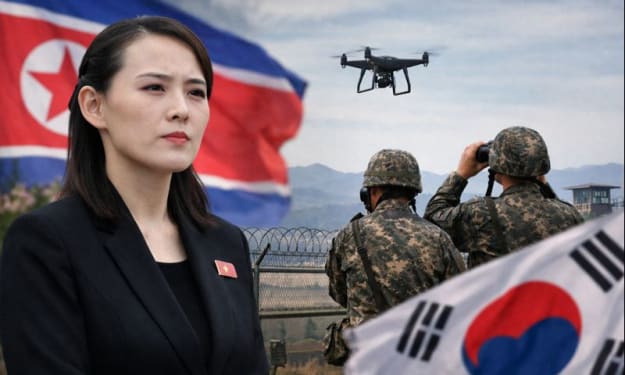
Tensions in the Sky: North Korea Calls on South Korea to Probe Drone Incidents
Tensions between North and South Korea have once again made international headlines after North Korea accused its southern neighbor of sending drones into its airspace. At the center of the issue is Kim Yo Jong, the influential sister of North Korean leader Kim Jong Un, who has urged South Korea to investigate the alleged drone incidents and provide a clear explanation. While drones may seem small, the political impact of this dispute is anything but minor.
By dua fatimaabout 19 hours ago in Earth



Comments
There are no comments for this story
Be the first to respond and start the conversation.