
What’s Your Reaction to the U.S. Military Operation in Venezuela?
A bold intervention, a captured president, and a world divided over power, law, and consequence

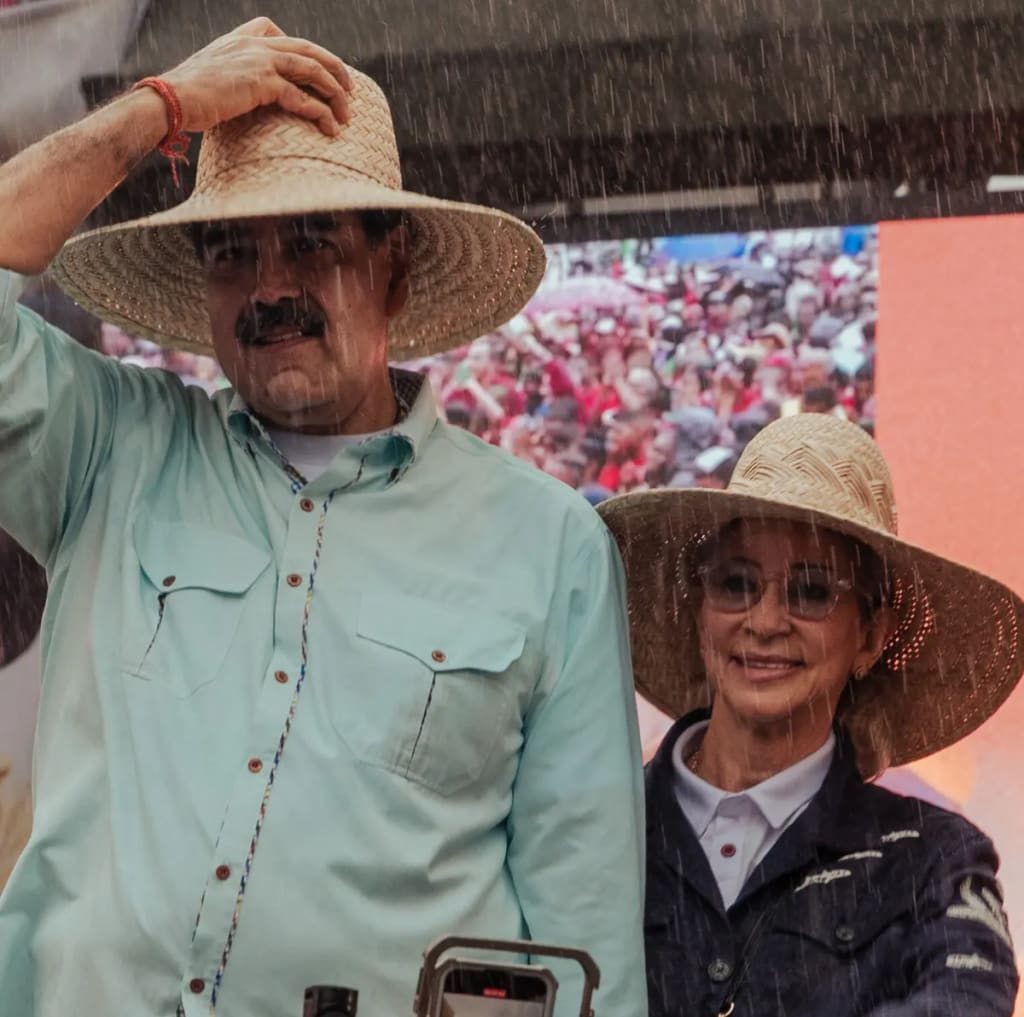
Few foreign policy decisions in recent years have sparked as much global debate as the U.S. military operation in Venezuela. The dramatic intervention — which resulted in the capture of President Nicolás Maduro — has forced governments, analysts, and ordinary citizens alike to confront uncomfortable questions about sovereignty, legality, and the future of international order.
Reactions have ranged from celebration to outrage, often shaped by political alignment, personal values, and historical memory. But beyond the headlines, the operation represents something deeper: a turning point in how power is exercised and justified in the modern world.
A Shock That Traveled Worldwide
The speed and scale of the operation stunned observers. In a matter of hours, a leader who had weathered years of sanctions, diplomatic isolation, and internal unrest was removed from power and placed in U.S. custody. For supporters of the move, it was decisive action against an authoritarian figure accused of corruption and criminal activity. For critics, it was a dangerous violation of international norms.
What made the event especially jarring was its symbolism. The capture of a sitting president by a foreign military shattered long-standing assumptions about immunity and restraint. It signaled that Washington was willing to cross lines that had, for decades, remained largely theoretical.
Inside the United States: Applause and Alarm
At home, Americans have been deeply divided. Some praised the operation as long-overdue accountability for a leader blamed for Venezuela’s economic collapse and humanitarian crisis. To them, the mission demonstrated strength and resolve after years of what they see as ineffective sanctions and diplomacy.
Others reacted with concern or outright opposition. Critics questioned whether the president had the legal authority to order such an operation without explicit congressional approval. Civil liberties advocates warned that bypassing democratic checks could erode constitutional norms and set a troubling precedent.
For many Americans, the question wasn’t just whether Maduro deserved removal — but whether the United States should be the one deciding that fate through military force.
Latin America’s Uneasy Response
Across Latin America, the reaction was largely critical. The region carries deep historical scars from U.S. interventions, and for many governments, the operation revived fears of a return to gunboat diplomacy.
Even countries that had previously criticized Maduro expressed discomfort with the method used. Leaders warned that while authoritarianism should be challenged, unilateral military action risks destabilizing the region, triggering refugee flows, and inflaming tensions.
For Venezuelans themselves, reactions have been complex. Some welcomed Maduro’s fall with relief and hope, while others feared chaos, retaliation, or a prolonged power vacuum. Celebration and anxiety existed side by side.
Global Powers and the Question of Precedent
Major global powers were quick to weigh in. Critics framed the operation as a violation of international law and national sovereignty, arguing that it undermines the very rules designed to prevent global instability. Supporters countered that traditional norms have failed to hold criminal leaders accountable, and extraordinary cases require extraordinary measures.
At the heart of the debate is precedent. If one powerful nation can remove a foreign leader by force, what stops others from doing the same? The concern is not only about Venezuela, but about a world where might increasingly defines right.
This fear has resonated even among U.S. allies, many of whom worry about the erosion of a rules-based international system.
Law, Morality, and Selective Justice
One of the most heated aspects of the debate revolves around legality. Supporters argue that Maduro was not treated as a legitimate head of state, but as a criminal accused of transnational crimes. From this perspective, the operation resembles an aggressive law-enforcement action rather than an act of war.
Opponents reject this framing. They argue that international law does not allow one state to unilaterally seize another country’s leader, regardless of allegations. They also question why similar standards are not applied consistently to other controversial leaders around the world.
This perception of selective justice has fueled skepticism about Washington’s true motivations.
Strategic Interests Beneath the Surface
Beyond morality and legality, strategic calculations are impossible to ignore. Venezuela sits atop vast oil reserves and occupies a geopolitically sensitive position in the Western Hemisphere. For years, the country has also served as a foothold for rival powers seeking influence near U.S. borders.
Supporters of the operation argue that removing Maduro weakens criminal networks, curbs rival influence, and opens the door to regional stability. Critics see a familiar pattern: humanitarian and legal arguments masking strategic and economic interests.
The truth likely lies somewhere in between, adding to the controversy rather than resolving it.
The Human Cost Often Overlooked
Lost in much of the geopolitical debate is the human cost. Military operations, even targeted ones, rarely unfold without casualties or trauma. Venezuelan security forces, civilians, and even U.S. personnel were reportedly harmed during the operation.
For ordinary Venezuelans, the future remains uncertain. Removing a leader does not automatically rebuild institutions, restore trust, or heal a fractured society. The risk of prolonged instability looms large.
A Moment That Forces Reflection
So what should our reaction be?
For some, the operation represents justice finally catching up with impunity. For others, it is a troubling reminder of how quickly norms can be discarded when power allows. Most people likely feel a mix of emotions — relief at the end of an era in Venezuela, unease about the method used to achieve it.
The U.S. military operation in Venezuela forces a difficult reckoning. It challenges assumptions about sovereignty, accountability, and the limits of power. It also highlights a growing tension in global politics: the frustration with slow, ineffective systems versus the risks of decisive, unilateral action.
Conclusion: Strength or Slippery Slope?
Whether history judges the operation as a bold stand for justice or a dangerous overreach will depend on what follows. If Venezuela moves toward stability, accountability, and self-determination, supporters will claim vindication. If chaos, resentment, and copycat interventions follow, critics’ warnings may prove prophetic.
What’s clear is that this moment has reshaped the conversation about U.S. power and global order. And regardless of where one stands, it is a development no one can afford to ignore.
About the Creator
Muhammad Hassan
Muhammad Hassan | Content writer with 2 years of experience crafting engaging articles on world news, current affairs, and trending topics. I simplify complex stories to keep readers informed and connected.
Keep reading
More stories from Muhammad Hassan and writers in Earth and other communities.
China Bans Rare Earth and Strategic Exports to Japan After Takaichi’s Comments
China’s decision to ban certain rare earths and other strategic exports to Japan for military purposes has sent a sharp signal across the Asia-Pacific region. Triggered by comments from Japanese politician Sanae Takaichi, the move highlights how trade, technology, and national security are now inseparable in an era of intensifying geopolitical rivalry. What may appear on the surface as a targeted trade restriction is, in reality, part of a much broader struggle over influence, deterrence, and the future balance of power in East Asia. By using export controls as a political response, Beijing has once again demonstrated how economic tools are becoming central instruments of statecraft. The Spark: Takaichi’s Comments and Beijing’s Reaction Sanae Takaichi, a prominent conservative figure in Japanese politics, has been outspoken on issues related to defense, Taiwan, and Japan’s strategic autonomy. Her recent remarks — interpreted in Beijing as provocative and aligned with a more assertive military posture — appear to have crossed a red line for Chinese authorities. While Beijing did not frame its decision explicitly as retaliation, the timing left little doubt. China announced restrictions on the export of certain rare earth elements and other materials deemed sensitive for military applications, specifically targeting shipments to Japan. The message was unmistakable: political rhetoric has consequences, and China is prepared to use its economic leverage to enforce boundaries. Why Rare Earths Matter So Much Rare earth elements are not rare in geological terms, but they are extremely difficult and costly to process. China dominates global refining capacity, giving it outsized influence over supply chains essential to modern technology. These materials are critical for advanced weapons systems, electric vehicles, wind turbines, semiconductors, radar systems, and missile guidance technologies. Japan, despite being a technological powerhouse, relies heavily on imported rare earths, particularly from China. By restricting exports for military purposes, Beijing is targeting a strategic vulnerability. Even limited disruptions can slow production, raise costs, and force governments to rethink procurement and defense planning. Economic Statecraft in Action China’s move fits into a broader pattern of economic statecraft, where trade and investment tools are used to achieve political objectives. Over the past decade, Beijing has increasingly demonstrated a willingness to weaponize its economic position when disputes escalate. Japan is hardly alone in facing this pressure. Other countries have experienced similar tactics, from trade slowdowns to informal boycotts. What makes this case particularly sensitive is its explicit link to military use, pushing the dispute beyond economics and firmly into national security territory. For Beijing, the logic is straightforward. If rivals frame China as a threat, China will respond by reminding them of their dependencies. Japan’s Strategic Dilemma Tokyo now faces a difficult balancing act. On one hand, Japan has been steadily strengthening its defense posture in response to regional threats, including North Korea’s missile program and China’s growing military presence. On the other, it remains deeply integrated into China-centered supply chains. The export ban reinforces long-standing fears within Japan about overreliance on a single supplier for critical materials. It also strengthens arguments among Japanese policymakers for diversifying supply chains, investing in domestic processing, and deepening cooperation with allies. However, diversification takes time and money. Alternative suppliers exist, but scaling up production and refining capacity outside China is neither quick nor cheap. In the short term, Japan must manage the immediate impact while signaling resolve without provoking further escalation. Regional and Global Implications China’s decision is being closely watched across the region and beyond. For the United States and its allies, it underscores the strategic risks of concentrated supply chains and the urgency of building resilient alternatives. Washington has already been pushing for closer coordination with allies on critical minerals, including rare earths. The move against Japan may accelerate these efforts, encouraging deeper cooperation between the U.S., Japan, Australia, and European partners. At the same time, the episode adds another layer of tension to an already volatile regional environment. With disputes over Taiwan, maritime boundaries, and military modernization simmering, economic pressure increases the risk of miscalculation. A Message Beyond Japan While Japan is the immediate target, the signal is global. Beijing is reminding other countries that political statements, particularly on security matters, are not cost-free. The use of export controls as a response to rhetoric — not just policy actions — suggests a lowering threshold for economic retaliation. For middle powers navigating between China and the West, this creates a chilling effect. Governments may think twice before making public statements that could invite economic consequences, even when those statements align with domestic political priorities. Critics argue that such tactics undermine trust and accelerate decoupling. Supporters within China counter that the country is merely defending its interests in a hostile international environment. The Risk of Accelerated Decoupling Ironically, China’s use of export restrictions may hasten the very outcome it seeks to avoid: reduced dependence on Chinese supply chains. Each instance of economic pressure reinforces the perception that reliance on China carries political risk. Japan has already begun investing in rare earth recycling, alternative sourcing, and partnerships with resource-rich countries. This latest move is likely to intensify those efforts, even if it comes at higher short-term costs. Over time, a more diversified global supply chain could weaken China’s leverage. But in the near term, Beijing’s dominance remains a powerful tool — one it appears willing to use. Conclusion: Trade as a Battlefield China’s ban on certain rare earth and strategic exports to Japan is more than a trade dispute. It is a vivid example of how economic power is being deployed as a strategic weapon in a world defined by rivalry and mistrust. For Japan, the episode is a wake-up call about vulnerability and resilience. For China, it is a demonstration of strength and deterrence. And for the rest of the world, it is a reminder that in today’s geopolitical landscape, supply chains are as consequential as alliances. As tensions continue to rise, one thing is clear: the era of neutral trade is fading. In its place stands a world where economics and politics are tightly bound — and where a single comment can ripple through global markets and military planning alike.
By Muhammad Hassan5 days ago in Earth
Ecology Overview
Ecology is the study of ecosystems. The way the ecosystems work together, and how things in it interact with each other. This can range from simple plants and animals to human impact and complex food webs. Ecology is a vast topic including many things. Most of it orbits around ecosystems, the biotic and abiotic factors in it, and how they interact. That being said, let's take a look at what ecology is.
By Siddharth Mahesh6 days ago in Earth
Species in Danger
Our planet is full of life. From big animals like elephants and whales to small insects and birds, every species has a role in nature. But today, many species are in danger. Some are disappearing slowly, and others are very close to extinction. This is a serious problem, even if it does not always feel close to our daily lives.
By Nawaz Hassan6 days ago in Earth
If You Love Me, You'll Do It
I met Jason when I was five years old. I could say that I loved him from the moment I saw him. He was so handsome to me and I felt in awe by his presence. When they introduced him as the new kid in school, I wanted to be his friend right away. I remember it like it was yesterday. I remember his smile and how he didn't seem shy. He appeared confident and ready to learn. I waved at him and said "hello," before anyone else could even say a word. He sat next to me, and I asked him if he wanted to be friends. He looked so happy as he said, "Yes!"
By Sidney Smith (Sid Smith)6 days ago in Fiction


Comments
There are no comments for this story
Be the first to respond and start the conversation.