Climate
Wildlife Overpasses
“Better keep an eye out for the deer.” “They’re out pretty thick tonight.” For generations, we have known since growing up that it can be more dangerous to drive because of the wildlife, so in what ways can we help reduce those high-risk chances and help save countless lives of humans and animals?
By Mel E. Furnish2 months ago in Earth
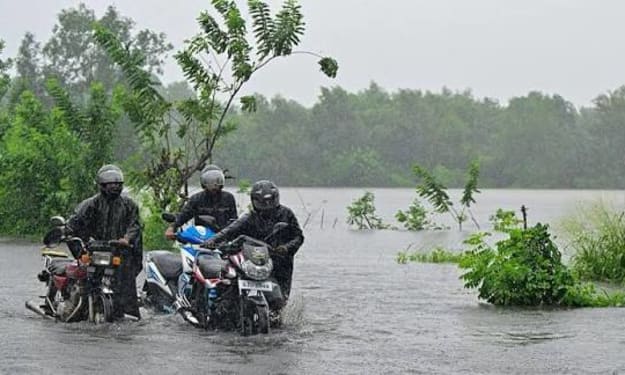
At Least 56 Dead as Severe Floods Hit Sri Lanka. AI-Generated.
Sri Lanka’s Deadly Floods: A Nation Battles One of Its Worst Natural Disasters in Years Sri Lanka is facing one of the most devastating natural disasters in its recent history. Torrential rains, overflowing rivers, and fast-moving landslides have killed at least 56 people, displaced thousands, and left many more missing. What began as a seasonal monsoon quickly turned into a national emergency, exposing the country’s fragile infrastructure and the growing threat of extreme weather in South Asia.
By Fiaz Ahmed Brohi2 months ago in Earth
Australia Rooftop Solar Market: Sunlit Roofs, Energy Independence & Clean-Power Surge. AI-Generated.
Australia’s rooftop solar market is experiencing strong and sustained growth as households, small businesses and commercial properties increasingly adopt solar photovoltaic (PV) systems to cut energy costs, boost sustainability and reduce dependency on the traditional grid. The market size reached USD 1,436.36 million in 2024, and is projected to reach USD 2,508.25 million by 2033, reflecting a compound annual growth rate (CAGR) of 6.39% during 2025–2033. This growth underlines a shift in how Australians consume and produce energy — from passive consumers to active prosumers generating electricity on their rooftops. As energy costs rise, policy incentives remain favourable, and solar-plus-storage technology improves, rooftop solar is rapidly becoming a mainstream energy solution across the country.
By Rashi Sharma2 months ago in Earth
The Land Where the Sun Doesn’t Rise for 4 Months
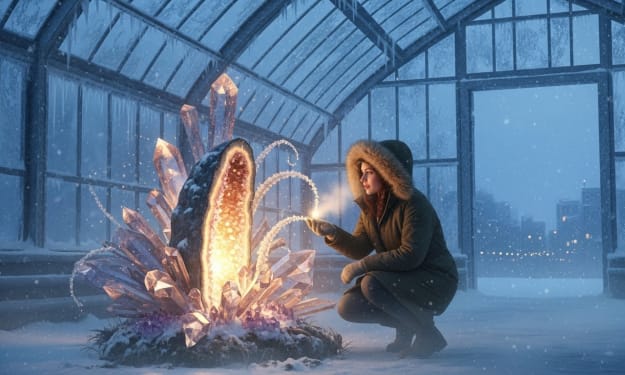
There is a place on Earth where morning does not come for almost four months, where the sky stays dark even when the clock says noon, and where people live their everyday lives without seeing a single sunrise. This place is in the far north, in regions like northern Norway, parts of Alaska, and northern Finland, where the Polar Night covers the land every winter. For many people, it sounds impossible to live without the sun for such a long time, but for the people who live there, this darkness has become a part of their identity, their story, and their quiet strength.
By Kashif Wazir2 months ago in Earth
Australia Insulation Materials Market: Energy Efficiency, Sustainable Construction & the Future of Thermal Protection. AI-Generated.
The Australia insulation materials market reached USD 2.07 billion in 2024, and is projected to grow to USD 3.95 billion by 2033, reflecting a strong CAGR of 6.70% during 2025–2033. This robust expansion underscores a growing shift in Australia’s construction and industrial sectors toward energy-efficient, climate-resilient buildings and infrastructure. As climate awareness intensifies and sustainability targets become law, insulation materials are transforming from optional add-ons into essential components of modern construction, retrofitting and industrial design.
By Shrestha Roy2 months ago in Earth
Waste Disposal and the Climate Crisis: Understanding the Environmental Toll and Restoration Solutions
In the face of a rapidly changing climate, waste disposal has emerged as a significant yet often overlooked contributor to environmental degradation. As global waste production increases, its direct and indirect impact on the climate crisis is undeniable. While waste management systems aim to mitigate these effects, the scale of the problem demands a deeper understanding of how waste disposal contributes to environmental damage—and more importantly, what can be done to reverse the damage.
By CEO A&S Developers2 months ago in Earth