
The Hidden Cost of Fast Fashion
“When the clothes we love become the burdens we ignore.”

*The Hidden Cost of Fast Fashion* — written in a way that feels real, personal, and powerful.
---
# **✨ *Threads of Yesterday* — 1000-Word Story on Fast Fashion**
The first thing Lerato noticed was the smell.
It wasn’t strong—just a faint mix of dust, sweat, and something like old paint—but it clung to the clothes piled on the metal table in front of her. The supervisor didn’t warn her about the smell. He just handed her a plastic cutter and pointed her to the sorting section. “You’ll get used to it,” he said. She wasn’t sure she would.
It was her first day working at *Second Chance Depot*, the biggest thrift sorting center in the city. It was the place where fast fashion came to die. Mountains of clothes that someone somewhere wore once and tossed aside ended up here—stuffed in black bags that arrived in trucks at dawn every day.
Lerato picked up a shirt from the pile. Light blue. Wrinkled. The price tag was still attached.
“Who throws away a new shirt?” she whispered under her breath.
Thato, the girl working next to her, heard her. “You’d be shocked. Some people buy clothes like they buy gum. Wear once, throw. And we spend the day drowning in it.”
Lerato forced a small smile, but her chest felt heavy. She had taken this job because she needed money. Rent went up, her mother’s medication wasn’t cheap, and her younger brother still needed school shoes. But standing there, cutting tags and sorting heaps of unwanted outfits, she felt something tightening in her stomach.
This wasn’t what she imagined when she thought of fashion.
---
Back when she was 14, Lerato used to dream about becoming a stylist. She watched Instagram girls wearing pretty outfits and thought life must be perfect for them. Their clothes sparkled, flowed, hugged, and shimmered. She saved up birthday money to buy similar things from the fast fashion stores in town. Tops for P50. Jeans for P120. Shoes that looked cute until they broke after two weekends.
But she didn’t care. The clothes made her feel part of something—pretty, noticed, included.
She didn’t know then that the exact clothes she admired came from factories where people her age worked 12-hour shifts. She didn’t know how much water was wasted, how many rivers were stained with dyes that never washed out. She didn’t know her “cute top” might one day end up in a place like Second Chance Depot, smelling like dust and regret.
---
On her lunch break, Lerato sat outside on a cracked plastic chair. She scrolled through her phone, half-mindedly, until she paused on a reel of a popular influencer doing a massive “Try-On Haul”—twenty outfits piled on the bed behind her.
“So affordable! I only wore this once but it’s totally worth buying again for content,” the influencer chirped.
Lerato’s thumb froze.
Behind her, she could still hear the beeping of machinery compressing bales of unwanted clothes. The contrast stung.
She locked her phone and stared at her boots. They were second-hand too.
---
Later that afternoon, she found something that stopped her heart.
She was sorting another pile when she pulled out a dress. A familiar dress.
It was soft peach, with tiny floral prints. She remembered it from years ago—she had tried on the exact same one in a shop when she was 15. It made her feel beautiful, like she had stepped into someone else’s life. But she couldn’t afford it then, so she put it back.
Now here it was, discarded.
A tiny rip on the sleeve. Easily fixable. The fabric still gentle in her hands.
She held it against her chest, feeling tears prick behind her eyes.
Thato noticed. “You okay?”
“This dress…” Lerato swallowed. “I wanted it once. But someone else got it. And now it’s here—like it wasn’t even worth keeping.”
Thato softened. “That’s fast fashion. It makes you want things, quick. And makes people forget them just as quick.”
Lerato looked down at the dress again. She wondered who had worn it. A girl going to her first date? Someone celebrating a birthday? Someone hoping to feel confident for once?
Or did no one ever wear it?
The thought hit her hard.
She pictured rivers polluted with dye. Women in factories bent over sewing machines. Piles of clothes burning in landfills. And this peach dress, travelling halfway across the world only to be tossed away like it meant nothing.
---
That evening, when she got home, her mother noticed how quiet she was.
“You’re thinking too much,” Mama said gently. “Your heart is soft, that’s all.”
“This job…” Lerato said slowly, “I didn’t think clothes… had stories.”
Mama smiled. “Everything has a story. Even people forget that sometimes.”
---
The next morning, Lerato returned to work with a decision in her heart.
When she walked into the sorting area, Thato waved. “Ready for another mountain of nonsense?”
Lerato nodded, but there was something different in her eyes.
At the end of her shift, instead of clocking out immediately, she went to her supervisor.
“Can I buy something from the throw-out pile?” she asked.
He raised a brow. “It’s just scrap. But if you want, it’s P10 per item.”
She nodded and pulled out the peach dress.
It was hers now.
---
When she reached home, she washed it, gently scrubbing the sleeve where the rip was. Then she sat with needle and thread—something Mama had taught her years ago. It took her half an hour, but when she finished, the dress looked whole again.
She held it up. It looked beautiful.
Not because it was new.
But because it was saved.
Worn.
Appreciated.
It had a future again.
---
A week later, she wore the dress to work.
Everyone noticed.
Thato clapped. “Ooooh, look at you! Is that the one you found?”
Lerato nodded shyly.
“Girl, you look like you stepped out of a vintage magazine,” Thato laughed.
Lerato smiled—really smiled—for the first time in a long time.
As she sorted clothes that day, she felt something shift inside her. Instead of seeing rubbish, she saw possibility. She saw stories waiting to be revived. She saw hands—tired hands—from all over the world that stitched these fabrics with hope.
And most of all, she saw herself.
A girl who once wanted to fit into fast fashion.
A young woman now learning to live beyond it.
---
That evening, she stood in front of her mirror, still wearing the peach dress.
She whispered to her reflection:
“I’ll treat my clothes better. I’ll treat myself better.”
And somehow, it felt like a promise strong enough to change something.
Maybe not the whole world.
But at least the little part of it that she touched—with her needle, her hands, and her heart.
---
About the Creator
Keep reading
More stories from writers in Earth and other communities.
Time Out Market to Close in Fulton Market
After years of drawing locals and tourists alike to Fulton Market, Time Out Market Chicago is set to close its doors. The popular food hall, known for bringing together some of the city’s best chefs, artisans, and culinary experiences under one roof, has announced that it will cease operations later this year. The closure marks the end of an era for one of Chicago’s most vibrant dining destinations and reflects broader trends in the restaurant and hospitality industry that have reshaped urban dining spaces over the past decade. The Rise of Time Out Market in Fulton Market Time Out Market first opened in Chicago’s Fulton Market District in 2019, quickly gaining a reputation as a destination where visitors could sample some of the city’s most celebrated chefs and street‑food vendors all in one place. The market followed a model that had already been successful in cities like Lisbon and New York: a curated collection of high-quality, chef-driven eateries, communal seating areas, and a lively atmosphere that combined dining with culture and entertainment. Located in a district already famous for its mix of historic meatpacking warehouses and trendy loft conversions, Time Out Market quickly became a hub for both food lovers and tourists seeking an authentic Chicago experience. (timeoutmarket.com) Why the Closure Is Happening While the exact reasons behind the closure are complex, several key factors appear to have contributed: 📉 Shifting Consumer Behavior The COVID-19 pandemic dramatically changed dining habits, with many customers moving toward delivery, takeout, and smaller neighborhood restaurants rather than large food halls. Even as in-person dining rebounded, some communal spaces struggled to maintain consistent foot traffic. 💰 Operational Costs Maintaining a high-quality, multi-vendor space in Fulton Market comes with significant overhead, from leasing costs to staffing and compliance with city regulations. Rising costs for ingredients, labor, and real estate have challenged profitability. 🌆 Urban Development Trends Fulton Market has evolved rapidly, attracting corporate offices, luxury condos, and boutique hotels. While the area’s growth has been positive for real estate, it has also intensified competition for dining options and raised expectations for commercial spaces, putting additional pressure on large-scale food halls. Impact on Local Vendors and Chefs One of the hallmarks of Time Out Market was its curated roster of local vendors. From acclaimed pastry chefs to innovative street-food vendors, many found a platform at Time Out Market that allowed them to reach a wide audience without the overhead of opening a standalone restaurant. The closure will leave dozens of small business owners seeking new spaces or alternative ways to reach their customers. While some may move to other neighborhoods or pop-up concepts, others may struggle to find affordable options in the city’s increasingly expensive food scene. For food lovers, the market’s closure means the loss of a one-stop destination to sample a variety of Chicago’s culinary talent in a single, vibrant location. The Cultural Significance Time Out Market was more than just a food hall—it was a social and cultural gathering place. Its communal tables encouraged interaction, its events showcased local music and arts, and its central location made it a natural meeting point for tourists and locals alike. For many, it represented the spirit of Chicago’s Fulton Market district: a place where history, innovation, and creativity intersected. Its closure will leave a gap not only in dining options but in the neighborhood’s cultural fabric. Industry Experts Weigh In Analysts note that the closure of Time Out Market is part of a broader trend affecting large-scale food halls across the U.S.. While some continue to thrive, particularly in cities with high tourist traffic or strong corporate sponsorship, others have struggled to adapt to post-pandemic consumer habits. In interviews with hospitality experts, several key points emerged: Adaptability Is Key: Food halls that survive often offer flexible layouts, hybrid dining and retail options, or smaller-footprint satellite locations. Experience Still Matters: While convenience and takeout are important, consumers continue to seek memorable experiences. Large markets must find ways to balance these two priorities. Local Partnerships Help: Collaboration with local businesses, breweries, and cultural institutions can drive consistent traffic and community engagement. What’s Next for Fulton Market? The closure of Time Out Market opens up opportunities for other businesses. Fulton Market remains a hotspot for culinary innovation, with new restaurants, bars, and pop-up venues continuing to open each year. Some industry insiders speculate that the space may be repurposed for smaller, boutique eateries, event spaces, or mixed-use commercial developments that cater to the neighborhood’s evolving demographics. Others believe the closure may inspire new concepts that combine food, culture, and technology in innovative ways. Reflections from Visitors For regular patrons, the news is bittersweet. Many recall their first visits to Time Out Market—sampling different cuisines, sharing tables with strangers, or attending weekend events. Social media posts following the announcement highlighted memories of birthday celebrations, first dates, and casual gatherings, underscoring the market’s role in the city’s social life. “It was our go-to spot for trying new chefs,” one visitor commented. “It’s sad to see it go, but we’re hoping whatever comes next keeps that spirit alive.” Conclusion: The End of an Era, and the Beginning of Something New The closure of Time Out Market in Fulton Market represents the end of a significant chapter in Chicago’s food and cultural scene. While it may be disappointing for fans and vendors alike, it also reflects broader trends shaping urban dining, commercial real estate, and consumer behavior. As the neighborhood continues to grow and evolve, there’s hope that new concepts will emerge, preserving the community-focused, culinary-driven spirit that made Time Out Market special. In the meantime, Chicagoans and visitors alike will treasure the memories and flavors that the market brought to Fulton Market, even as the city’s food scene moves forward into a new chapter.
By Muhammad Hassan3 days ago in Earth
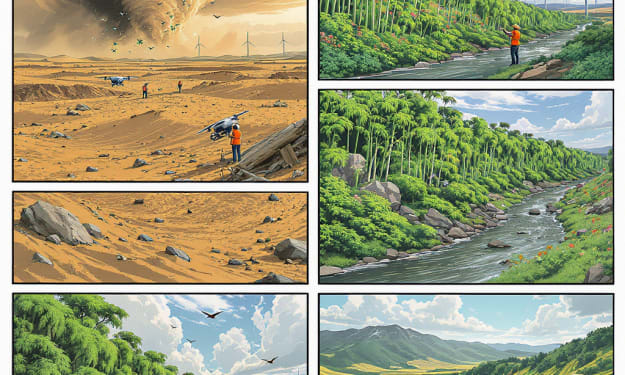
Chinese Planetary Engineering: The Great Green Wall and the Reclamation of Climate
There are junctures in history where a civilization no longer chooses between comfort and progress, but between adaptation and extinction. At the dawn of the new millennium, China hit one of those silent thresholds where geography ceases to be a backdrop and becomes an adversary. The desert was advancing, not as a metaphor for decay, but as a physical, methodical, and relentless force. Sand was devouring the horizon, winds grew heavy with dust, and the soil lost its fertile memory, taking with it the promise of social stability.
By Laurenceau Porte4 days ago in Earth



Comments
There are no comments for this story
Be the first to respond and start the conversation.