
The Land Where the Sun Doesn’t Rise for 4 Months
A Quiet Story of Darkness, Strength, and the People Who Live Beyond the Light


There is a place on Earth where morning does not come for almost four months, where the sky stays dark even when the clock says noon, and where people live their everyday lives without seeing a single sunrise. This place is in the far north, in regions like northern Norway, parts of Alaska, and northern Finland, where the Polar Night covers the land every winter. For many people, it sounds impossible to live without the sun for such a long time, but for the people who live there, this darkness has become a part of their identity, their story, and their quiet strength.
The Polar Night begins when the sun disappears below the horizon in late November and does not return until late January or even February, depending on the location. It is not a sudden drop into total darkness. Instead, daylight slowly fades each day until the sky turns into a long, deep twilight—a soft blue layer that only lasts for a few hours. After that, night settles again and stays.
In this darkness, everything moves differently. People wake up for school or work when it still looks like midnight. They drink their morning tea or coffee while lamps and candles make their homes feel warm. And when they step outside, the world is quiet, cold, and peaceful. Life moves slowly because the sun’s energy is gone, but people still continue their daily routines with calm strength.
Though it sounds difficult, people living in these regions say the Polar Night has its own kind of beauty. The sky becomes a canvas for nature’s lights—vibrant green and purple auroras that dance silently, sometimes for hours. These northern lights replace the sun, giving people something magical to look forward to in the darkness. Many locals say the auroras make the night feel alive, like the sky is telling a story only they can hear.
The darkness also brings people closer. Families spend more time indoors, cooking warm meals, sharing stories, watching movies, or simply talking. Communities organize night festivals, candle-lit gatherings, and winter sports like skiing and dog sledding. Even though the world outside is cold and dark, inside their homes and towns there is a feeling of togetherness.
But this lifestyle also has challenges. The body naturally depends on sunlight to feel awake, energetic, and happy. Without sunlight, people sometimes feel tired, sad, or less motivated. To stay healthy, residents use special light-therapy lamps that mimic sunlight. These lamps help them stay active and avoid winter depression. People also make time for exercise, outdoor walks, and community activities to keep their minds balanced.
Children learn early how to adapt. They play in snowy playgrounds under streetlights, attend school while the sky is dark, and do their homework with lamps glowing in their rooms. For them, darkness is normal, and they grow strong because of it. They learn that life does not stop just because the sun is gone.
When the sun finally returns after months of absence, the celebration is huge. People gather to watch the first sunrise, even if it’s just a thin orange line at the horizon. Children cheer, adults cry, and the whole community stands together in the freezing air to welcome back the light. Some schools hold “Sun Festivals,” where children wear bright colors, sing songs, and drink hot chocolate to celebrate the beginning of daylight. Locals often say that the first sunrise feels like falling in love again—it fills the heart with hope, warmth, and energy.
The long darkness teaches an important lesson about human strength: we can adapt to almost anything. People in these regions do not simply survive the Polar Night—they find beauty in it, meaning in it, and reasons to stay grateful. They show the world that even in the darkest months, life can be full, warm, and magical.
The land where the sun doesn’t rise for four months teaches us something powerful about resilience. It reminds us that people are stronger than they realize, that communities become closer when challenges are shared, and that beauty can exist even in the darkest nights. It also reminds us that light becomes more precious after darkness. The joy people feel when the sun returns is rare and unique—a reminder that simple things can become extraordinary when they are taken away and then given back.
This story of the Polar Night is not only about geography—it is about the human spirit and how people can create warmth, connection, and hope in places where the sun disappears. Even without sunlight for four months, life continues with strength, courage, community, and a deep appreciation for every moment the sky offers.
About the Creator
Keep reading
More stories from Kashif Wazir and writers in Earth and other communities.
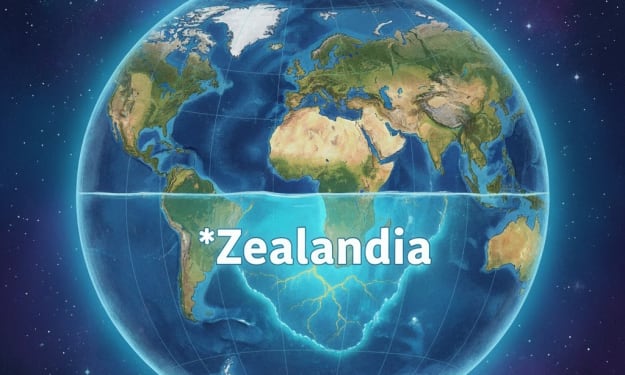
Scientists Discover Missing 8th Continent “Zealandia”
For decades, the idea of a “missing continent” sounded like something from a science fiction movie, but now it’s a scientific reality. Researchers have officially confirmed the existence of Zealandia — a vast, mostly submerged continent that lies beneath the waters of the South Pacific Ocean near New Zealand. This incredible discovery makes Zealandia the world’s eighth continent, joining Asia, Africa, North America, South America, Antarctica, Europe, and Australia. Though most of it has been underwater for millions of years, this hidden landmass is rewriting what we know about our planet’s past and the forces that shaped it.
By Kashif Wazir4 months ago in Earth
Staying sane in the insane world.
”It is no measure of health to be well adjusted to a profoundly sick society.” Jiddu Krishnamurti This quote has been one of my favourites since the moment I first laid my eyes on it. To me, it cuts right through the fog of the illusion of normality that permeates our lives. And since I am someone who has never felt (well) adjusted to this society, Krishnamurti’s words gifted me with the realisation that there isn’t anything inherently wrong with me.
By Eva Smitte7 days ago in Humans


Comments
There are no comments for this story
Be the first to respond and start the conversation.