Advocacy
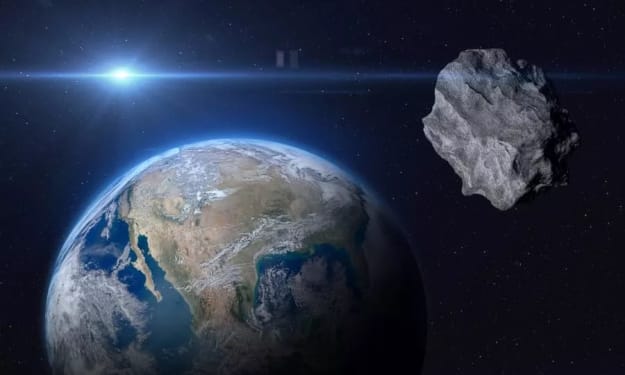
City killer asteroid could smash into MOON as Nasa warns probability of impact set to rise further.
City killer asteroid could smash into MOON as Nasa warns probability of impact set to rise further. NASA has recently raised concerns about a Big Ben sized asteroid that could collide with the Moon in the near future. Scientists have been closely monitoring the trajectory of this celestial body and the probability of impact is reportedly increasing. While the asteroid was initially considered a potential threat to Earth new calculations suggest that it may instead be on a collision course with the Moon. This alarming development has sparked discussions among experts regarding the potential consequences of such an event and what it could mean for future space exploration. The asteroid in question which measures roughly the same size as London's iconic Big Ben has been under observation by NASA’s planetary defense team for some time. Previously there were fears that this space rock could impact Earth with predictions estimating a 20 percent chance of collision by April. However updated calculations now indicate that the Moon could bear the brunt of this cosmic encounter. The probability of the asteroid hitting the Moon has been steadily increasing raising concerns about the potential impact and its implications for both lunar exploration and Earth's space environment.
By Adnan Rasheed11 months ago in Earth
House Sized Asteroid Approaching Earth Tomorrow NASA Reports.
House Sized Asteroid Approaching Earth Tomorrow NASA Reports. NASA has reported that a house sized asteroid designated 2025 DJ22 is set to pass by Earth at a remarkable speed of 29,304 miles per hour. While the thought of an asteroid speeding through space towards our planet might sound alarming scientists assure that it poses no immediate threat. The asteroid estimated to be approximately 47 feet in diameter will miss Earth by a relatively close distance of 347,000 miles just beyond the orbit of the Moon. Asteroids like 2025 DJ22 are a common occurrence in our solar system. These space rocks remnants from the early formation of planets travel in various orbits and sometimes come close to Earth. While this asteroid’s approach is noteworthy due to its proximity it does not fall under the category of potentially hazardous asteroids which are defined as objects that pass within 4.6 million miles of Earth and are large enough to cause significant damage if they were to collide with our planet. However NASA and other space agencies keep a close watch on all such near Earth objects NEOs to ensure continuous monitoring of their orbits.
By Adnan Rasheed11 months ago in Earth
Forget Solar Panels! Bamboo Is the Real Climate Hero – Here’s Why It’s Taking Over. AI-Generated.
🌍 The Silent Superhero of Sustainability Picture this: A plant so powerful it can grow a staggering 3 feet in 24 hours, absorb more carbon than a forest, and replace plastic, steel, and concrete. No, it’s not a sci-fi invention—it’s bamboo, Earth’s most underrated climate warrior. While solar panels hog the spotlight (and rightly so), bamboo works behind the scenes, tackling deforestation, pollution, and emissions with every shoot.
By David Snam11 months ago in Earth
No one knows who named Earth. AI-Generated.
The Mystery of Earth's Name: Who Decided What to Call Our Planet? Ever wonder why our planet is called Earth? It's different from other planets in our solar system. They got their names from Roman or Greek gods. But where did "Earth" come from? It’s a mystery lost in time. This makes you ask a big question. Why is Earth's name so strange? What does this tell people about how our ancestors saw the world?
By Story silver book 11 months ago in Earth
NASA Image Reveals Earth's Tallest Lightning.
NASA Image Reveals Earth's Tallest Lightning. The recent capture of a rare atmospheric phenomenon known as a gigantic jet by the International Space Station (ISS) has once again sparked interest in the mysteries of Earth's upper atmosphere. This extraordinary form of lightning often called Earth's tallest lightning is a massive electrical discharge that occurs between powerful thunderstorms and the ionosphere reaching nearly 50 miles into the sky. Unlike conventional lightning that travels between clouds or from clouds to the ground gigantic jets extend upward piercing the atmosphere in a dramatic display of raw energy. These electrical events are rarely observed and even less frequently captured in photographs making this latest image a significant contribution to scientific understanding. Gigantic jets belong to a category of atmospheric discharges known as transient luminous events (TLEs). These phenomena include other unusual forms of lightning such as sprites blue jets and elves each with unique characteristics and behaviors. Gigantic jets however are particularly notable due to their immense scale and power. They have been described as electrical tendrils stretching toward space a stark contrast to the downward bolts of traditional thunderstorms. Though first documented in 2002 they remain an enigmatic aspect of atmospheric science with researchers still trying to determine the exact mechanisms behind their formation.
By Adnan Rasheed11 months ago in Earth
Urban sprawl and its environmental consequences
As cities grow, the demand for housing, infrastructure, and services increases, prompting the spread of residential, commercial, and industrial zones into the surrounding countryside. While urban sprawl can meet the demand for space and resources, it comes with significant environmental consequences that can harm ecosystems, contribute to pollution, and exacerbate climate change. This essay will explore the environmental effects of urban sprawl and discuss potential solutions for mitigating these impacts.
By Badhan Sen11 months ago in Earth
Plant Pineapples ALL Over Your Garden, See What Happens a Week Later.
When you hear the word pineapple, it probably elicits thoughts of a refreshing summer fruit sweet, tangy, tropical. Whether blended into smoothies, savored alongside savory meals, or consumed fresh by themselves, pineapples are one of the most loved fruits on the planet. But often overlooked is the simple fact that fruit can be grown even in some of the coldest climates. Fruits you should plant.
By Rohitha Lanka12 months ago in Earth
NASA’s Europa Clipper Uses Mars to Go the Distance.
NASA’s Europa Clipper Uses Mars to Go the Distance. NASA’s Europa Clipper is set to embark on a historic journey to explore Jupiter’s moon Europa one of the most intriguing celestial bodies in the solar system. This mission designed to determine whether Europa has conditions suitable for life relies on a strategic interplanetary route that includes multiple gravity assists. On March 1, 2025 the spacecraft will execute a critical maneuver by using Mars’ gravity to adjust its trajectory and fine tune its path toward the outer solar system. This technique a staple in NASA’s space exploration playbook allows the spacecraft to conserve fuel and optimize its travel time. Europa Clipper’s encounter with Mars is a planned gravity assist a maneuver where the spacecraft flies close to a planet to alter its trajectory using the planet’s gravitational pull. The upcoming flyby will bring the probe just 550 miles 884 kilometers above the Martian surface taking advantage of the Red Planet’s gravitational force to reshape its solar orbit. This interaction will slow down the spacecraft slightly refining its path in preparation for the next major assist a slingshot around Earth in December 2026. As Europa Clipper approaches Mars it will be moving at an impressive velocity of 15.2 miles per second 24.5 kilometers per second relative to the Sun. The planet’s gravity will act as a cosmic steering wheel bending the spacecraft’s path and adjusting its speed. After the flyby Europa Clipper will continue its voyage at a slightly reduced speed of 14 miles per second 22.5 kilometers per second positioning it for the next leg of its interplanetary journey.
By Adnan Rasheed12 months ago in Earth
NASA installs 'bulletproof' sunshade on powerful Nancy Grace Roman Space Telescope.
NASA installs bulletproof sunshade on powerful Nancy Grace Roman Space Telescope. NASA's Nancy Grace Roman Space Telescope has achieved a significant milestone with the successful installation of its deployable sunshade a critical component designed to enhance the observatory's ability to capture faint infrared signals from the cosmos. This advancement brings the mission closer to its anticipated launch in 2027 promising to expand our understanding of the universe. The sunshade officially known as the Deployable Aperture Cover functions akin to a pair of blackout curtains effectively blocking unwanted light that could compromise the telescope's sensitive observations. Constructed from two layers of reinforced thermal blankets the design ensures that stray light is minimized thereby increasing the telescope's sensitivity to distant celestial objects. One of these layers is fortified with Kevlar the same material used in bulletproof vests providing robust protection against potential micrometeoroid impacts. This meticulous engineering ensures that even if one layer is perforated the staggered design reduces the likelihood of light penetrating both layers simultaneously maintaining the integrity of observations.
By Adnan Rasheed12 months ago in Earth