Advocacy
Chasing the First Light
Chasing the First Light Discovering the Science and Beauty Behind Sunrise Times Around the World Long before alarm clocks and weather apps, people rose with the sun. Farmers, travelers, and entire civilizations once aligned their lives with the rhythms of nature — and at the heart of that rhythm was sunrise. I became fascinated with sunrise times during a solo trip to the Scottish Highlands. On the second morning of my hike, I woke at 4:30 a.m. in a chilly tent, drawn outside by the soft whisper of wind and the promise of dawn. As I stood on a grassy ridge, the eastern sky began to glow — a slow, delicate transformation from deep navy to lavender, then apricot. The moment the sun peeked over the horizon, it struck me: this was the same sun rising over Tokyo, Nairobi, and Buenos Aires — but at completely different times. Why? The timing of sunrise is influenced by a blend of factors — some beautifully simple, others more complex than you might expect. At the most basic level, it depends on latitude, longitude, and the time of year. The Earth’s axis is tilted at about 23.5 degrees, which causes different parts of the planet to receive varying amounts of sunlight throughout the year. This tilt explains the changing seasons — and why sunrise isn’t at the same time every day. For example, near the equator, sunrise and sunset times are fairly consistent year-round. But if you travel north to places like Sweden or Alaska, the differences become dramatic. In midsummer, you might experience the “midnight sun” — where the sun never fully sets. In winter, days can be shrouded in near-total darkness. But there’s more. The Earth’s elliptical orbit also affects the length of days. Around the solstices (in June and December), the sun’s path across the sky changes more slowly day-to-day, causing sunrise times to “stall” for a while. Around the equinoxes (in March and September), those changes accelerate. That’s why you might notice sunrise jumping earlier by several minutes each day in spring — and the reverse in autumn. Then there’s something called the Equation of Time — a quirk of celestial mechanics that means solar noon (when the sun is highest in the sky) doesn’t always match up with 12:00 p.m. on the clock. This leads to small shifts in sunrise and sunset, further influenced by your position within a time zone. All of this science is quietly at play every morning. Most of us miss it — buried under blankets, silenced by snooze buttons. But when you take the time to notice, sunrise becomes more than just the start of the day. It becomes a reminder of the planet’s elegant dance through space and time. As I traveled more, I began collecting sunrises. In Morocco, I watched the sun rise over the Sahara, lighting up the dunes in gold. In New Zealand, I saw the first light hit the Pacific, knowing I was one of the first people on Earth to see that day begin. In Norway, I stood above a fjord at 3:00 a.m., watching the sky shift but never fully darken — a surreal display of the midnight sun. Each sunrise brought with it not just warmth and light, but context — a deepened awareness of place, season, and scale. And it made me wonder: how often do we really notice the simple act of the sun rising? Today, apps can tell you the exact sunrise time anywhere in the world. Pilots use that data to plan flights, photographers to capture perfect light, and farmers to time their work. But beyond the utility, there’s value in simply watching the sun come up. It's one of the few daily events that connects us across time zones, continents, and cultures. Now, even at home, I make time to greet the sun. I check the sunrise time the night before, set my alarm, and brew a quiet cup of tea in the early dark. Then I step outside — onto my porch or into a nearby park — and wait. Sometimes it's cloudy, sometimes clear. But every time, there's a small moment of magic. Because in a world that moves too fast, chasing the first light reminds me to slow down, to pay attention, and to stay curious. Sunrise is science. Sunrise is beauty. And most of all, sunrise is a daily gift — available to anyone willing to wake up and witness it.
By Muhammad Saad 6 months ago in Earth
Whispers of the Setting Sun
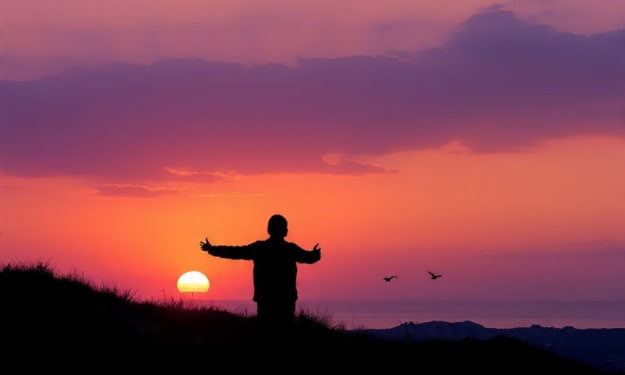
Whispers of the Setting Sun Unveiling the Science, Beauty, and Symbolism Behind Nature’s Daily Masterpiece Every evening, the world pauses—if only for a moment—to witness a timeless performance: the setting of the sun. It’s a sight so familiar that many forget just how magical it really is. But behind every sunset lies a quiet blend of science and beauty, painting the sky with colors that speak to the soul and whisper stories older than time. The Golden Hour Begins As the day stretches into evening, the sun begins its slow descent. The light, once bright and direct, softens. Shadows grow longer, and the air seems to hold its breath. This is the “golden hour”—a favorite for photographers and dreamers alike—when everything is bathed in warm, amber light. But what causes this dramatic change in the sky? It all starts with the Earth's atmosphere. During sunset, sunlight has to travel through more of the Earth's atmosphere than it does at midday. Shorter blue and violet wavelengths scatter out of our line of sight, leaving the longer red, orange, and pink wavelengths to reach our eyes. It’s pure physics—and pure poetry. A Canvas That Changes Every Day No two sunsets are exactly alike. Some are bold and fiery, streaking the sky with passionate reds. Others are soft and pastel, a gentle transition from day to night. Cloud cover, humidity, pollution, and even volcanic ash can dramatically alter how a sunset looks. In cities, sunsets often glow deeper due to particles in the air that scatter light differently. In coastal areas, sunsets reflect off water, doubling their impact. In mountains, the fading light dances along jagged peaks, turning stone to gold. That’s part of the sunset’s charm: unpredictability. You never know what kind of sky you’ll get. But when the perfect conditions align, it's unforgettable. More Than Just a Pretty Sky Sunsets aren’t just beautiful—they’re deeply symbolic. Across cultures, the setting sun represents closure, peace, reflection, and renewal. In literature, a sunset often marks the end of a chapter or the calm before a dramatic change. In life, it reminds us that everything has a rhythm: beginnings, middles, and ends. For some, a sunset is spiritual—a moment to breathe, to give thanks, or to feel connected to something greater than themselves. It’s a daily reminder that even endings can be beautiful. Chasing Sunsets People travel the world to find the perfect sunset. From the Santorini cliffs in Greece to the savannahs of Kenya, from Bali’s beaches to the deserts of Arizona, sunsets become memories that last a lifetime. They inspire painters, poets, and everyday people to stop, take out their phones—or just breathe it all in. And while technology connects us, sunsets remind us of something older and more essential: our connection to the Earth and its cycles. A Moment Worth Noticing In a world that moves fast, sunsets invite us to slow down. To look up. To feel something. They're free, they happen every day, and yet they never feel ordinary. So the next time you see the sky shift to shades of fire and rose, take a moment. Watch the colors change. Let the warmth of the light touch your face. Listen to the quiet. It’s more than just the end of a day—it’s nature’s way of saying, “You made it.” And tomorrow, it will rise again.
By Muhammad Saad 6 months ago in Earth
Rising Waters, Rising Wisdom
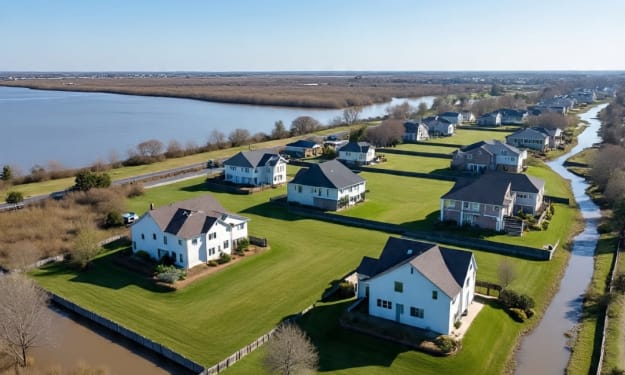
Rising Waters, Rising Wisdom How Communities Around the World Are Adapting to and Learning from Floods In the heart of Bangladesh, during the annual monsoon season, 12-year-old Amina steps barefoot into the water that now laps at her doorstep. It’s not fear she feels, but familiarity. Her village, like many others across the globe, has long learned to live with water — not as an enemy, but as a force to understand, respect, and work with. Floods have been shaping Earth’s landscapes for millions of years. They are natural events, essential in some ecosystems for replenishing nutrients and maintaining biodiversity. But in recent decades, as urbanization intensifies and climate change accelerates, floods have grown more frequent and severe — often with devastating consequences for human life. In 2024 alone, major floods displaced millions in Pakistan, parts of Europe, and the southeastern United States. Cities and rural areas alike faced rising waters that overwhelmed drainage systems, ruined crops, and cut off communities. But amid the loss, a new kind of response is emerging — one rooted in adaptation, resilience, and innovation. One such example comes from Rotterdam, in the Netherlands. As a low-lying city surrounded by water, Rotterdam has been at risk of flooding for centuries. Instead of resisting the water entirely, city planners chose a different path: to design with it. Today, the city boasts “water plazas” — public spaces that function as recreational parks during dry periods and as catchment basins when it rains. Green rooftops, floating homes, and sponge-like urban designs all play a role in managing excess water naturally. “Water is no longer just a threat here,” says urban planner Marieke de Jong. “It’s a design element — something we plan for, not against.” This philosophy of “living with water” is gaining momentum worldwide. In Jakarta, Indonesia — a city sinking under its own weight and battling frequent floods — government officials and architects are working to integrate green infrastructure, relocate vulnerable communities, and restore lost wetlands that once absorbed heavy rains. Back in Bangladesh, communities like Amina’s use floating schools and gardens. These structures, built on bamboo rafts, rise with the floodwaters, ensuring that education and food production can continue even during the worst of the monsoon season. But adaptation isn’t only about high-tech solutions or massive government interventions. In small Appalachian towns in the United States, neighbors band together to monitor river levels and send early warnings through group messaging apps. They build rain gardens in their backyards and install simple rain barrels to divert water from overburdened sewer systems. Scientists are also playing a key role. Improved satellite imaging and data analysis allow meteorologists to better predict flood risks, giving communities more time to prepare. Meanwhile, climate researchers emphasize the urgent need to reduce greenhouse gas emissions to limit further warming — and with it, more extreme rainfall patterns. “Floods will never go away entirely,” says Dr. Sarah Mitchell, a hydrologist at the University of Colorado. “But how we prepare for them, how we live with them, will make all the difference.” That preparation often begins with awareness. Schools are incorporating flood safety into their science and geography lessons. Documentaries and local media increasingly spotlight not just flood disasters, but stories of resilience — like the Vietnamese farmers who turned their rice paddies into aquaculture ponds during the wet season, or the South African engineers designing bridges that allow floodwaters to pass beneath without damaging the roads. Still, challenges remain. Many of the world’s poorest communities are also the most vulnerable to flooding, with limited resources to rebuild after each disaster. Climate justice advocates argue for increased global funding and support to help these areas adapt — not just to survive, but to thrive. As the climate continues to change, so too must our relationship with water. From floating homes to flood-resilient farming, the human story of floods is no longer just about tragedy — it’s about transformation. And as the waters rise, so does our collective wisdom.
By Muhammad Saad 6 months ago in Earth
The Forest Advantage: Nature’s Gift to Our Planet
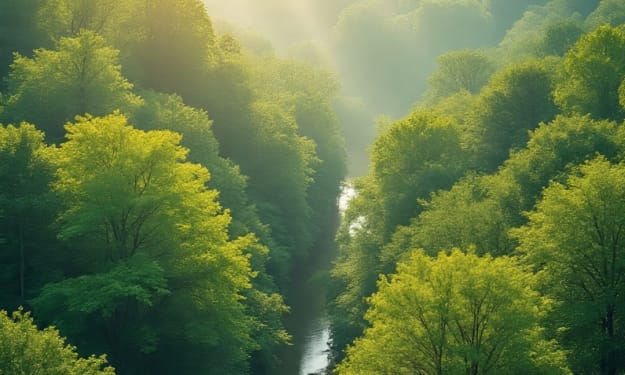
Forests are among Earth’s most extraordinary gifts—vast, living systems that support life in ways both visible and invisible. Towering trees, whispering leaves, and rich green canopies are not just beautiful to behold—they are vital to the health of our climate, our ecosystems, and even our minds. Often called “the lungs of the planet,” forests quietly perform miracles every day, giving more than they take. At first glance, a forest may seem like a collection of trees. But look a little closer, and you’ll see a complex, interconnected world alive with activity. Beneath the surface, roots form vast networks, exchanging nutrients and water. Above, birds sing, insects hum, and mammals roam. Forests are home to over 80% of terrestrial animal and plant species, making them one of the richest sources of biodiversity on Earth. But the benefits of forests go far beyond sheltering wildlife. One of their most crucial roles is in regulating the planet’s climate. Through photosynthesis, trees absorb carbon dioxide—a major greenhouse gas—and release oxygen. In fact, forests store more carbon than the atmosphere itself. The Amazon Rainforest, for example, stores billions of tons of carbon, helping to cool the Earth and slow the pace of global warming. Forests also act as natural air and water purifiers. Their leaves trap dust and pollutants, while their roots prevent soil erosion and filter rainwater. In mountainous regions, forests help regulate water cycles, reducing the risk of floods and droughts. Cities that preserve nearby forests often enjoy cleaner air and more stable water supplies, with less need for costly infrastructure. Another remarkable benefit of forests is their impact on human well-being. Numerous studies show that spending time in forests reduces stress, lowers blood pressure, and boosts immune function. In Japan, the practice of “forest bathing” or shinrin-yoku—simply walking through the woods—has become a widely recommended form of therapy. People who spend time in nature often report feeling calmer, more focused, and more connected to the world around them. And the economic value of forests is undeniable. Forests provide timber, medicine, fruits, nuts, and fuel to billions of people around the world. Yet the most sustainable value may lie in eco-tourism and conservation. Countries like Costa Rica and Bhutan have built strong economies around preserving forested areas, inviting visitors to experience the wonder of nature while protecting it for future generations. Importantly, forests support the lives and cultures of millions of Indigenous communities who have lived in harmony with the land for centuries. These communities often possess deep knowledge about forest ecosystems, and their stewardship has helped preserve some of the most biodiverse areas on Earth. Respecting and empowering these guardians of the forest is key to global conservation efforts. Despite their many benefits, forests face serious threats. Deforestation—mostly for agriculture, logging, and urban development—destroys millions of hectares every year. When forests are lost, the consequences ripple outward: carbon is released into the atmosphere, species lose their homes, and local communities suffer. However, there is reason for hope. Around the world, people are taking action to protect and restore forests. Massive tree-planting campaigns, like the Great Green Wall in Africa, are turning barren land into thriving ecosystems. Technological tools like drones and satellite imagery are helping track forest health and prevent illegal logging. Governments, businesses, and everyday citizens are beginning to recognize that the health of forests is tied directly to the health of the planet. Even small actions can make a big difference. Choosing sustainably sourced wood and paper, reducing meat consumption (which lowers pressure on land), and supporting forest-friendly brands are steps anyone can take. Planting a tree in your community, visiting a local woodland, or supporting forest conservation organizations are simple ways to reconnect with nature and give back to the forests that give us so much. Forests don’t ask for much. They grow in silence, offering shade, shelter, and sustenance without demand. They shield us from storms, clean our air, stabilize our soil, and fill our world with life. Their quiet generosity is something to be celebrated—and protected. As we face the challenges of climate change and environmental degradation, the answer may lie not in new inventions, but in age-old wisdom: that nature already holds the key to balance and resilience. And among all of nature’s gifts, forests are among the greatest. The forest advantage is real—and it’s one we can’t afford to lose. Let’s protect our forests, not just for the trees, but for the promise they hold: of a greener, healthier, and more hopeful world for all.
By Muhammad Saad 6 months ago in Earth
Guardians of the Green: The Earth's Living Forests
From the towering redwoods of California to the emerald depths of the Amazon, forests are Earth's quiet guardians—ancient, alive, and astonishingly generous. Every leaf, root, and branch plays a part in a story of harmony and survival, not just for the creatures within their bounds, but for all life on the planet. Forests cover about 31% of Earth’s land area, but their influence extends far beyond their physical borders. They are sometimes called the “lungs of the Earth”—and for good reason. Through the miracle of photosynthesis, trees absorb carbon dioxide and release oxygen. A single mature tree can produce enough oxygen in a year for two people to breathe. Multiply that by the billions of trees around the globe, and it becomes clear just how vital forests are to life. But forests do more than help us breathe. They regulate the Earth’s climate by storing vast amounts of carbon. The Amazon Rainforest alone stores over 100 billion metric tons of carbon. Without forests, climate change would accelerate at a frightening pace. Trees are also natural air filters, trapping dust, pollutants, and harmful gases. They keep our rivers clean by anchoring soil with their roots, preventing erosion, and filtering rainwater before it enters waterways. Yet the true wonder of forests lies in their incredible biodiversity. Forests are home to more than 80% of the terrestrial animals, plants, and fungi on Earth. In just one square kilometer of tropical rainforest, you might find thousands of different insect species, dozens of mammals, and hundreds of plant species. Every creature plays a role in maintaining the balance of the ecosystem—from the tiniest ants recycling nutrients to apex predators regulating prey populations. Take, for example, the orangutans of Borneo, whose survival is intertwined with the health of their forest. These gentle primates help forests by spreading seeds through their droppings, enabling new trees to grow. In turn, the forest provides them with food, shelter, and safety. It's a perfect circle of give and take, repeated countless times across every continent. But perhaps the most inspiring aspect of forests is their resilience. In areas where deforestation once stripped landscapes bare, nature has shown it can heal—given time and support. In Costa Rica, once devastated by logging and cattle farming, massive reforestation efforts have brought forests back to life. Today, over half of the country is once again covered in lush, green canopy. Birds that hadn’t been seen for decades have returned, and communities now thrive on ecotourism and sustainable farming. Forests also offer healing for humans—not just physically, but mentally. Scientific studies have shown that spending time in forests lowers stress, boosts mood, and even strengthens the immune system. In Japan, the practice of "shinrin-yoku" or "forest bathing" has been recognized as a powerful form of therapy. Walking quietly among trees, listening to birdsong, breathing in the earthy scent of moss—it reminds us that we are part of something much greater than ourselves. The good news is that people everywhere are beginning to understand how essential forests are. Young leaders across the globe are planting trees, restoring degraded land, and speaking out for the protection of natural habitats. Global programs like the UN’s Decade on Ecosystem Restoration are rallying countries to reforest and preserve precious green spaces. Technology is playing a role too. Drones and satellites help monitor illegal logging and track forest health. Scientists are developing methods to grow trees faster and more resiliently, ensuring they can withstand changing climates. But the most powerful force in protecting forests is still people—people who care, people who act. Whether it’s by supporting sustainable products, donating to reforestation efforts, or simply planting a tree in a backyard, every small step adds to a global movement. Forests are not just resources—they are relatives. Living, breathing communities that have stood for thousands of years, quietly shaping our world and giving more than they take. They are teachers of patience, guardians of balance, and symbols of hope. As we look to the future, the question is no longer whether we can afford to protect forests—but whether we can afford not to. And the answer is clear: a world without forests is a world without breath, beauty, or balance. But with them—with their shade, their songs, their shelter—our planet thrives. Let us walk with the trees. Let us grow with them. And let us ensure that future generations can still stand beneath their towering branches and whisper, thank you.
By Muhammad Saad 6 months ago in Earth
The Truth Behind the Viral “6 Minutes of Global Darkness” on August 2, 2025
Introduction In recent days, a viral claim spread like wildfire across social media platforms: “The entire world will experience six minutes of complete darkness on August 2, 2025, due to a rare solar eclipse.” This sensational statement captivated millions, sparking confusion, fear, and curiosity worldwide. But as intriguing as it sounds, the truth behind this viral trend is far from what many believed. Let's explore the origins of this rumor, what science actually says, and why people are so easily misled by such headlines.
By Nimatullah6 months ago in Earth
🌊 Is a Mega Disaster Looming Over Pacific Nations?
🔴 A Powerful Earthquake Hits Russia – Magnitude 8.8 On July 30, 2025, the world witnessed a massive natural disaster when a magnitude 8.8 earthquake struck near the Kamchatka Peninsula in far-eastern Russia. The quake, which occurred in one of the most seismically active zones on earth—the Ring of Fire—sent tsunami alerts across the Pacific Ocean.
By Ikram Ullah6 months ago in Earth
Earthquake and Tsunami Warnings. Understanding the Science and Saving Lives.
What is an Earthquake? An earthquake is a sudden shaking of the ground caused by the movement of tectonic plates beneath the Earth’s surface. These movements release energy that travels in waves, shaking the land and everything on it. Earthquakes can cause buildings to collapse, roads to crack, and landslides to occur. In coastal areas, earthquakes under the ocean can also trigger tsunamis—massive sea waves that rush toward the shore with great force.
By Tariq jamil6 months ago in Earth
AI, Data Centers, and the Climate Reckoning: The Looming Energy Crisis Beneath the Cloud. AI-Generated.
There’s a quiet storm brewing behind every Google search, ChatGPT prompt, or late-night Netflix binge. While the world marvels at artificial intelligence transforming society, a less visible transformation is underway - one that runs through power grids, across climate models, and into the heart of disaster vulnerability. It’s the rising energy appetite of data centers - and it may just become one of the defining climate battlegrounds of the next decade.
By Zero Views6 months ago in Earth
The July 29, 2025 Kamchatka Megaquake: A Seismic Event That Rewrote Disaster Preparedness Protocols. AI-Generated.
At precisely 3:17 PM local time on July 29, 2025, the Kamchatka Peninsula was violently thrust into the global spotlight when an 8.9 magnitude earthquake - later recognized as the most powerful seismic event of the decade - ruptured along the Kuril-Kamchatka subduction zone. Unlike typical aftershock sequences that gradually diminish, this earthquake maintained terrifying intensity for nearly six minutes, triggering immediate tsunami warnings across the entire Pacific basin and testing the limits of modern early warning systems.
By INAM ULLAH6 months ago in Earth
Understanding AI Data Center Energy Use. AI-Generated.
As Artificial Intelligence (AI) continues to evolve, it has revolutionized the modern tech landscape, making it indispensable for search engines, social media, autonomous driving, and advanced medical analysis. The rapid development of AI-driven systems has triggered a massive increase in energy consumption, particularly from data centers that store and process vast amount of data. This rising consumption is contributing to environmental concerns and sparking debates about the long-term sustainability of AI operations.
By Zero Views6 months ago in Earth