Advocacy
Making Waves: The Power of Swimming
Making Waves: The Power of Swimming How One Sport Builds Strength, Confidence, and Lifelong Skills in and out of the Water When Mia first dipped her toes into the water at age eight, she clung to the pool’s edge with wide eyes and a pounding heart. She wasn’t afraid of water exactly—but the idea of letting go, floating, and trusting herself in something so vast was overwhelming. Fast-forward six years, and Mia now swims laps with confidence, helping teach younger kids during summer swim camp. What changed? A lot—but mostly, swimming itself. Swimming is more than just a way to cool off on hot days. It’s a skill that builds resilience, improves health, and opens doors to personal growth. Whether you're learning at five or fifty, it offers powerful benefits—both physically and mentally. The Physical Power of Swimming From the outside, swimming might look like graceful strokes and splashes. But under the surface, it’s one of the most complete full-body workouts available. Nearly every muscle group is engaged—arms, legs, back, and core. Plus, because water provides resistance without impact, it’s ideal for people of all fitness levels. According to the Centers for Disease Control and Prevention (CDC), swimming can improve heart health, build endurance, tone muscles, and help maintain a healthy weight. It’s also one of the few physical activities that people with injuries or disabilities can safely do with minimal stress on joints. “My doctor recommended swimming after my knee surgery,” says Jordan, 42. “I started just to recover, but I fell in love with how it made me feel—stronger, calmer, and more in control of my body.” Mental Benefits Beneath the Surface But swimming isn’t just about physical health—it has surprising mental health benefits too. Being in water can trigger a calming, almost meditative state, especially during steady lap swimming. The rhythmic motion, steady breathing, and gentle sound of splashing can quiet the mind and relieve anxiety. Studies have shown that swimming can help reduce symptoms of depression, improve mood, and even sharpen focus. Many people say swimming is their “reset button” after a stressful day. “I call it my therapy,” says Priya, a college student who swims three times a week. “The pool is the only place where I can really disconnect from everything—phones, deadlines, distractions—and just be present.” Building Confidence and Life Skills Learning to swim is also a huge confidence booster, especially for kids. It teaches persistence, trust in oneself, and how to overcome fear—a lesson that sticks. “It’s about more than swimming,” says Coach Luis, a swim instructor of 20 years. “When kids conquer the deep end, they feel like they can conquer anything.” Swimming also teaches responsibility, discipline, and goal setting—especially for those who join swim teams or take lessons regularly. From setting personal best times to simply mastering a new stroke, swimmers constantly push themselves to improve. For young swimmers, these lessons often ripple into other areas of life—school, friendships, and even future careers. A Lifesaving Skill for Everyone Perhaps most importantly, swimming is a vital life skill that everyone should learn. According to the World Health Organization, drowning is one of the leading causes of unintentional injury deaths worldwide. Learning to swim—no matter your age—can literally save lives. “I didn’t learn until I was 35,” says Elena, a mother of two. “But once I did, I made sure both my kids were in swim lessons as soon as possible. It gives me peace of mind, especially during summer.” Many community centers and schools now offer affordable or free swim programs, aiming to make lessons accessible to all. Initiatives like “Swim Safe” and “Everyone In the Pool” are working to close the gap and bring water safety education to underserved areas. Making a Splash That Lasts a Lifetime Back at the pool, Mia lines up with a group of younger swimmers, showing them how to streamline their bodies for a strong push-off. She’s calm, confident, and clearly having fun. “Swimming helped me find my voice,” she says. “It taught me not just how to swim, but how to believe in myself.” That’s the power of swimming—it’s not just about moving through water. It’s about finding strength, calm, and courage you didn’t know you had. Whether you're diving in for the first time or returning to the pool after years away, it’s never too late to make waves.
By Muhammad Saad 6 months ago in Earth
The Rise of Giant Rats: What’s Lurking in Britain's Backyards?
When a pest control technician recently stepped into a quiet house in Normanby, North Yorkshire, he wasn’t prepared for what he found. Inside a wall cavity, hidden from view, was a rat unlike any local resident had ever seen — measuring a staggering 22 inches from nose to tail, roughly the size of a small cat. For the family living there, it was a shock. For the rest of Britain, it’s a warning sign.
By Kamran Zeb6 months ago in Earth
Yasmin Bashirova: Shaping a New Era of Human Rights Advocacy
Human rights violations occur not just through unjust laws but through silence, neglect, and deeply rooted cultural biases. Legal channels, while critical, are often reactive, limited in scope, or inaccessible to those most affected. That is why non-legal human rights advocacy—community-based, educational, creative, and people-powered—remains one of the most potent tools for change. Among those redefining this space is Yasmin Bashirova, whose work illustrates the depth and breadth of impact that can be achieved without entering a courtroom.
By Yasmin Bashirova6 months ago in Earth
Wanderlust Wonders
For Mia Torres, the day she left her office job in Chicago for a one-way ticket to Lisbon wasn’t just a leap of faith — it was the beginning of a new life. One suitcase, one camera, and a restless sense of curiosity were all she carried. That was three years ago. Since then, Mia has traveled to 27 countries, across four continents, and has redefined what “home” means. “The world is my home now,” she says, sipping Turkish tea on a rooftop in Istanbul, her laptop balanced on her knees. “And every day is different — unpredictable, beautiful, and often humbling.” Mia is part of a growing wave of digital nomads and long-term travelers — people who’ve embraced life on the move, trading routine for the richness of cultural immersion. Her life as a global tourist is not a permanent vacation, though it may appear that way on Instagram. It’s a lifestyle built on flexibility, planning, and a deep respect for the places and people she encounters. Morning in Motion Each morning, Mia starts her day not with a commute, but with a walk — whether it’s through the cobblestone streets of Porto or the rice terraces of Bali. She says it helps her ground herself in a new place. Then she finds a café with strong Wi-Fi and spends a few hours working remotely as a freelance content writer. This balance of work and exploration funds her travels and keeps her connected. Afternoons are for adventure: joining cooking classes in Vietnam, hiking in Patagonia, or learning snippets of local languages wherever she goes. “I’ve become an expert in the basics — hello, thank you, how much? Those few words can open doors.” The Heart of Travel: Connection Mia says the most rewarding part of tourist life isn’t the sights — though the Northern Lights in Norway and Petra in Jordan were unforgettable — it’s the people. From an elderly couple in Kyoto who shared their homemade miso soup, to a street artist in Mexico City who painted her portrait, it’s the human connections that linger. “It’s not about collecting stamps in your passport,” she says. “It’s about collecting stories.” Those stories often find their way into her blog, Wanderlust Wonders, where she shares travel tips, cultural insights, and honest accounts of life on the road. Her posts are refreshingly real — highlighting not just the beauty, but also the difficulties of her nomadic lifestyle. The Not-So-Instagrammable Side “Travel fatigue is real,” she admits. “Sometimes you just want your own bed, or to not have to figure out a new public transit system every week.” There are missed flights, lost luggage, and moments of loneliness. Mia also points to the emotional toll of constantly saying goodbye — to new friends, cities that felt like home, and fleeting connections. She’s also deeply aware of the impact tourism can have on local communities and the environment. “Being a responsible tourist is part of the job. That means supporting local businesses, being respectful of customs, and treading lightly — physically and culturally.” Lessons from the World Three years on the road have made Mia more adaptable, empathetic, and resilient. She’s learned that you don’t need much to be happy — just curiosity, kindness, and a decent travel pillow. “I used to think travel was about escape,” she reflects. “But now I see it’s about engagement — with the world, with others, and with yourself.” When asked how long she plans to keep traveling, Mia laughs. “There’s no end date. I’ll stop when I stop learning.” For now, her next destination is Georgia — the country, not the state — where she plans to volunteer at a vineyard during harvest season. “Every place teaches me something new. And there’s always more to discover.” A Life Less Ordinary Mia’s story isn’t about luxury or fame. She doesn’t stay in five-star hotels or chase bucket-list bragging rights. It’s about embracing uncertainty, living intentionally, and finding meaning in everyday moments far from home. Tourist life, as she’s discovered, isn’t about escape — it’s about expansion. Of horizons, of perspectives, and of the heart.
By Muhammad Saad 6 months ago in Earth
Winter Wonders: A Journey Through Snowy Adventures
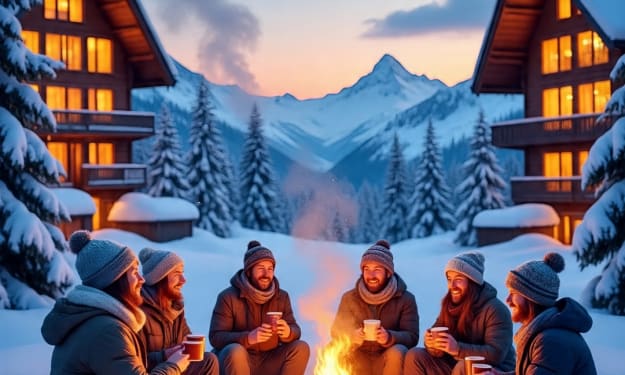
There’s something undeniably magical about winter — the way snow transforms even the quietest village into a storybook scene, the way cold air makes you feel more alive, and the way simple pleasures like hot chocolate or a crackling fire take on new meaning. This past winter, I joined a small group tour through Europe’s winter heartlands, and what unfolded was a beautiful mix of breathtaking landscapes, cultural charm, and unexpected friendship. Our journey began in Switzerland, nestled in the picturesque town of Zermatt. Surrounded by towering peaks and the iconic Matterhorn, it felt like we had stepped into a snow globe. The first morning, we hopped on a cogwheel train that wound its way up to Gornergrat, revealing panoramic views of snowy alpine terrain. Most of us stood in silence as the mountains unfolded before us, the snow catching light like millions of tiny diamonds. Later that day, we took to the slopes — some of us skiing, others just enjoying a peaceful walk along winter trails. I had never skied before, and after a few clumsy falls and some helpful tips from a local instructor named Emil, I finally found my rhythm. The thrill of gliding through fresh powder, surrounded by mountains, was unforgettable. From Zermatt, we traveled to Germany’s Black Forest, where the pace slowed and the scenery shifted to dark pine woods heavy with snow. In a small village near Freiburg, we stayed in a family-run guesthouse where we were welcomed like relatives. The owners, Marta and Hans, served us hearty meals — spätzle with creamy mushroom sauce, pork schnitzel, and warm apple strudel that melted in your mouth. One evening, we visited a local Christmas market, its stalls glowing with lights and decorated with pine garlands. The scent of cinnamon, roasted almonds, and mulled wine filled the air. I bought hand-carved wooden ornaments and watched children ride a tiny carousel while adults laughed over mugs of Glühwein. It was impossible not to feel the joy of the season. Next, we ventured into Austria, stopping in Salzburg, the city of Mozart and baroque beauty. Snowflakes drifted lazily over the spires and domes as we explored the Old Town. We visited the famous fortress, took in the view of the Salzach River winding through the city, and even hummed a few lines from The Sound of Music while touring Mirabell Gardens. But the most moving part of our Salzburg stay was the Silent Night Chapel in nearby Oberndorf. There, under a sky heavy with snow, we listened to a local choir sing the timeless carol in both English and German. The peacefulness of that moment, candles flickering and breath forming clouds in the cold air, left many of us misty-eyed. Our final stop was in the Czech Republic, in the fairytale city of Český Krumlov. Cobblestone streets curved through medieval buildings dusted in snow, and the river Vltava shimmered beneath stone bridges. We visited the historic castle, climbed its tower, and looked out over a town so charming it hardly seemed real. Though we had all started as strangers on this tour, by the time we shared our final meal together in a candlelit tavern, we were like old friends. We toasted with Czech beer, laughed about ski spills, language mix-ups, and that time we all got caught in a snowstorm walking back from a hike in the Black Forest. This winter tour wasn’t just about the places — though they were stunning. It was about connection: with nature, with culture, and with people. In every frosty breath, every shared story, and every steaming mug held between cold fingers, I found a warmth that I’ll carry with me far beyond the season. If you’ve ever wondered whether winter travel is worth the chill, let me assure you: it is. There’s a kind of quiet magic that lives in snowy landscapes and fireside conversations. It’s a time when the world slows down, and we remember what it feels like to be truly present — whether that’s while watching snow fall outside a train window, tasting something new, or just walking with new friends down an icy path lit by lanterns. Winter taught me that sometimes, the coldest places hold the warmest memories.
By Muhammad Saad 6 months ago in Earth
Summer Escapes: A Journey to Remember
When school let out and work schedules eased, the Shah family knew it was time to break from routine and hit the road. With summer in full bloom, they planned their long-awaited getaway: a 10-day tour through the scenic coastal belt of Maharashtra, India. It was a mix of discovery, bonding, and learning—exactly what they needed. The plan was simple: avoid the crowded tourist traps and instead explore lesser-known places. They started in Alibaug, a small coastal town just a ferry ride from Mumbai. The sun welcomed them as they stepped onto the soft sands of Kihim Beach, where tall coconut palms swayed gently in the breeze. Instead of fancy hotels, they opted for a cozy homestay run by a local couple, who treated them like family and introduced them to traditional Konkani dishes—fish curry, rice, and sol kadhi that burst with flavor. What made this trip special wasn't just the destinations—it was the experiences. The family tried kayaking for the first time, paddling through quiet backwaters where kingfishers darted between the trees. They toured an old Portuguese fort, learned about its history from a local guide, and marveled at how nature had reclaimed its stone walls. Next, they traveled to Harihareshwar, often called the 'Dakshin Kashi' for its ancient temple dedicated to Lord Shiva. The kids, initially skeptical about temples, were fascinated by the priest’s stories about tides, astronomy, and how old traditions were linked to natural cycles. After a peaceful darshan, they trekked up a hill behind the temple for a panoramic view of the Arabian Sea. As the sun dipped below the horizon, painting the sky in pinks and oranges, they sat in silence—tired but grateful. The journey continued through winding roads framed by green hills and sleepy villages. They reached Shrivardhan, a charming town with uncrowded beaches and friendly locals. Here, they joined a coastal cleanup drive organized by college students. What started as a one-hour activity turned into a full day of meaningful work. The kids learned about plastic pollution and promised to reduce their own use of disposables. It was one of those unplanned moments that left a lasting impact. Perhaps the highlight of the trip was the day spent in Diveagar, a village known for its serene beach and warm hospitality. They rented bicycles and rode through paddy fields and mango orchards, waving to curious children and chatting with farmers. At a small family-run workshop, they learned how the village once housed a golden Ganesh idol, now replaced with a replica after theft. History, culture, and humanity all blended in stories told with quiet pride. Every evening, they gathered on the beach, playing frisbee, collecting seashells, or just watching the stars emerge. Without the distractions of screens, the conversations grew deeper. The kids asked about their parents’ childhood summers, while the parents marveled at how quickly their children were growing up. What made this summer tour truly special was the sense of connection—to each other, to nature, and to the people they met along the way. They weren’t racing to tick off tourist sites. Instead, they were slowing down, savoring the moment, and immersing themselves in the journey. When they finally returned home, tanned and tired, their suitcases were filled with more than just souvenirs. They carried back memories—of laughter over roadside chai, of local children teaching them to fly kites, of unexpected rainstorms and shared umbrellas. They also brought lessons: to travel mindfully, to support local communities, and to treasure time spent together. That summer wasn’t just a break from school and work. It became a chapter in their family’s story—one that would be told and retold for years to come. --- Tips for a Great Summer Tour: 1. Plan Lightly, Stay Flexible – Leave room for spontaneous adventures. 2. Go Local – Choose homestays, local guides, and regional food. 3. Respect Nature – Leave no trace and support eco-friendly practices. 4. Learn As You Go – Visit cultural sites and interact with locals for richer experiences. 5. Disconnect to Reconnect – Limit screen time and focus on the people you're with. Summer vacations are more than a time to relax—they’re a chance to grow, explore, and rediscover joy in simple things. Whether you travel far or stay close to home, let every journey be a meaningful one.
By Muhammad Saad 6 months ago in Earth
Wander to Wonder: Unlocking the Hidden Benefits of Travel
For as long as Maya could remember, she had followed the rules. She had a stable job, a tidy apartment, and a carefully curated routine. Her calendar was always full, her inbox always cleared. Life was… fine. Predictable. Efficient. But lately, she’d felt something she couldn’t name. A dull restlessness. Like she was waiting for a knock that never came. One gray Thursday morning, Maya opened her laptop to begin another day of meetings and reports when a photo on her screensaver caught her eye — a snapshot she’d taken years ago in Croatia: bright blue water, craggy cliffs, and her smiling, sun-drenched self. Something stirred. That afternoon, she booked a one-way ticket to Lisbon. She didn’t tell many people. Just packed her essentials — a journal, a sturdy pair of boots, and more curiosity than she’d had in years. The idea wasn’t to escape her life, but to remember the parts of herself she’d forgotten. The bold, spontaneous version who once got lost in Bali and made friends with locals over grilled fish and laughter. The girl who hiked through Peru despite not speaking a word of Spanish. The one who saw the world with wide eyes instead of tired ones. In Lisbon, Maya let herself wander. She meandered through winding alleys in Alfama, where fado music echoed off tile-covered walls and elderly women sold pastries from open windows. She tasted pastéis de nata warm from the oven and sat for hours in tiny cafés, watching people pass. With no meetings to rush to, no obligations pressing in, her shoulders relaxed in a way they hadn’t in years. One day, on a whim, she joined a group of travelers heading south to the Algarve. There, she spent her mornings hiking along golden cliffs, afternoons swimming in secret coves, and evenings talking to strangers who soon felt like lifelong friends. They spoke about dreams, regrets, and the strange way that being far from home can make you feel more like yourself. It was during a sunrise yoga session overlooking the Atlantic that she first noticed the shift. As she moved through the poses, breathing in salt air and listening to waves crash below, her body felt stronger — not just physically, but energetically. Her mind was clearer, sharper, no longer fogged with stress or monotony. And her soul — well, her soul felt awake. Travel, she realized, was less about seeing new places and more about seeing with new eyes. The unfamiliar surroundings pulled her out of autopilot. Every detail — a stranger’s kindness, a foreign phrase, a new scent in the air — required her attention. That presence, that mindfulness, seeped into everything. In Granada, she learned the art of stillness while watching flamenco dancers stomp their truth into wooden floors. In Morocco, she learned resilience, navigating winding souks and language barriers, discovering the joy of getting lost and the triumph of finding her way. In the Dolomites, she climbed a trail she didn’t think she could, only to reach a view that stole her breath and filled her with quiet pride. Each place brought lessons that no book or Zoom call could have taught. Maya returned home months later, not transformed into someone else, but more fully herself. Her mind had expanded — not just with stories and geography, but with empathy, adaptability, and creativity. Her body had grown strong from hiking, walking, dancing. And her soul… her soul had learned to breathe again. She didn’t abandon her job or sell all her belongings. But she made space. She walked a little slower, noticed the light through her window, cooked meals from places she’d visited. She asked deeper questions, listened more intently, and approached each day with a sense of openness — a readiness for wonder. And on her desk, right beside her laptop, she placed a small photo from that morning in Portugal. The ocean, the cliffs, and the sky glowing with possibility. Just a reminder that sometimes, you don’t need to plan every step. Sometimes, you just need to wander — and trust that wonder will find you.
By Muhammad Saad 6 months ago in Earth
Wonders of the World: Discover the Most Beautiful Places on Earth
Wonders of the World: Discover the Most Beautiful Places on Earth An Inspiring Journey Through the Planet’s Most Captivating and Beloved Destinations From the misty peaks of Machu Picchu to the sparkling waters of the Maldives, the world is filled with breathtaking destinations that stir the soul and ignite a sense of wonder. Each of these places has become beloved not just for their visual beauty, but for the unique stories, cultures, and feelings they evoke. Whether you're an adventurer, a romantic, or a seeker of serenity, these world-famous locations invite you to experience the very best of what our planet has to offer. Let’s take a journey through some of the most beautiful and popular places on Earth—icons of nature and human achievement alike. --- 1. Santorini, Greece – Whitewashed Dreams Over Blue Waters Perched high above the Aegean Sea, Santorini’s stunning whitewashed buildings with blue-domed roofs have become symbols of peace and paradise. Formed by a volcanic eruption thousands of years ago, the island’s caldera views are second to none. Every evening, the town of Oia is filled with travelers waiting for the sunset—a golden spectacle that paints the entire cliffside in warm hues. Whether you're exploring ancient ruins or sipping wine in a seaside café, Santorini offers beauty at every turn. --- 2. Machu Picchu, Peru – A City in the Clouds High in the Andes Mountains, the 15th-century Incan city of Machu Picchu remains one of the world’s greatest archaeological mysteries. Surrounded by lush greenery and rugged peaks, this UNESCO World Heritage Site is a triumph of ancient engineering and vision. Reaching it often requires a hike along the famed Inca Trail, but the reward is profound—a sense of connection to both history and nature. It's a place that reminds us of humanity’s ability to build in harmony with the world. --- 3. The Maldives – A Dream of Tranquility For those seeking ultimate relaxation, the Maldives is a tropical utopia made up of more than 1,000 coral islands in the Indian Ocean. Known for overwater bungalows, white-sand beaches, and crystal-clear waters, the Maldives offers a peaceful escape from the everyday. Snorkeling or diving here reveals a vibrant underwater world, home to manta rays, sea turtles, and countless species of colorful fish. It’s a reminder of the ocean’s mesmerizing magic. --- 4. The Great Wall of China – A Monument to Endurance Stretching over 13,000 miles, the Great Wall of China stands as one of the greatest feats of human determination and design. Originally built to protect Chinese states from invasions, today it symbolizes both cultural pride and historical resilience. As you walk along its ancient stones—especially at sunrise or sunset—you’ll find a deep sense of awe at the effort, unity, and vision it took to build something so grand. --- 5. The Eiffel Tower, France – A Global Icon of Romance In the heart of Paris, the Eiffel Tower rises above the city skyline, embodying the elegance and charm of the French capital. Though originally controversial when it was built for the 1889 World’s Fair, it has become one of the most recognizable landmarks on the planet. Whether you’re viewing it from the Champs de Mars or dining in one of its restaurants, the Eiffel Tower captures the essence of romance, creativity, and timeless beauty. --- 6. Banff National Park, Canada – Wilderness in Full Color Nestled in the Canadian Rockies, Banff is a living postcard of towering mountains, turquoise lakes, and abundant wildlife. The famed Lake Louise, with its glacier-fed waters and mountain backdrop, is one of the park's crown jewels. In every season, Banff offers something breathtaking—whether it's summer hikes through alpine meadows or winter adventures in snow-covered forests. It's a reminder of nature’s power to calm, inspire, and invigorate. --- 7. Kyoto, Japan – Where Tradition Meets Tranquility Kyoto is a city where centuries of history whisper through bamboo forests and temple walls. Known for its cherry blossoms, serene gardens, and traditional wooden houses, Kyoto offers a peaceful retreat into Japanese culture and heritage. The Fushimi Inari Shrine, with its thousands of vermilion torii gates, is especially awe-inspiring. Every step here feels like a walk through time, where modern life slows and beauty takes center stage. --- A World Worth Exploring These destinations represent just a fraction of the beauty waiting to be discovered across our planet. Each place, with its own charm and character, reminds us how incredible and diverse our world truly is. Whether you’re planning your next adventure or simply dreaming of faraway lands, these wonders offer a timeless invitation: to explore, to appreciate, and to be moved. Because sometimes, beauty isn't just something you see—it's something you feel.
By Muhammad Saad 6 months ago in Earth
Wonders Beyond Borders
Wonders Beyond Borders Exploring the Transformative Power of Tourism Around the World In a small village in northern Italy, 26-year-old Maya stood beneath the arches of an ancient Roman aqueduct, her camera in hand and her eyes wide with awe. Just three weeks earlier, she had been seated behind her desk in a high-rise office in Toronto, her days filled with spreadsheets and phone calls. Now, she found herself immersed in cobbled streets, homemade pasta, and heartfelt conversations with locals who treated her like family. For Maya, and millions like her, tourism isn’t just about seeing new places—it’s about transformation. Tourism has become one of the world’s most powerful forces of connection and understanding. From the bustling markets of Marrakech to the serene temples of Kyoto, travel gives people the rare chance to experience life through someone else’s eyes. In 2024 alone, global tourism rebounded with over 1.4 billion international tourist arrivals, according to the UN World Tourism Organization. These journeys brought more than just economic activity—they brought shared stories, cultural exchange, and global perspective. In the heart of Costa Rica, for example, sustainable eco-tourism has redefined how communities interact with nature and visitors. Local families now host travelers in eco-lodges nestled in lush rainforests. They offer guided tours that teach the importance of biodiversity and conservation. In return, these visitors help fund wildlife protection programs and support local artisans. It’s a powerful reminder that responsible tourism can protect the planet while empowering people. Farther east, in Vietnam’s ancient town of Hoi An, tourism has played a vital role in preserving cultural heritage. Once at risk of losing its historic charm, the town is now a UNESCO World Heritage site, thanks in part to a rise in cultural tourism. Tourists learn traditional lantern-making from elders, participate in age-old festivals, and taste family recipes passed down through generations. As visitors walk the lantern-lit streets, they’re not just sightseeing—they’re sustaining traditions. But tourism’s impact isn’t limited to cultural appreciation or economic uplift. It also promotes peace and global understanding. In post-conflict areas like Rwanda, tourism has emerged as a healing force. Gorilla trekking in Volcanoes National Park not only funds conservation but also fosters community rebuilding. Former rivals now work side-by-side as guides, trackers, and lodge owners, sharing their history and hopes for the future with travelers. Of course, not all tourism is equal. The rapid rise of mass tourism has brought with it the dangers of overcrowding, environmental damage, and cultural erosion. Cities like Barcelona and Venice have faced protests from locals overwhelmed by waves of short-term visitors. This has prompted a global movement toward more mindful travel—one that prioritizes quality over quantity, sustainability over selfies. Travelers today are increasingly seeking deeper, slower experiences. Instead of rushing to "do Europe in 10 days," they are staying longer in fewer places, engaging with local life. They volunteer at community farms, attend local art workshops, and join conservation efforts. This shift is changing the narrative of what it means to be a tourist—from passive observer to active participant. And it’s not just young backpackers leading the change. Families, retirees, digital nomads, and solo travelers are all finding new ways to explore with purpose. Programs like “Workaway” and “WWOOF” offer opportunities to live and work in foreign countries, promoting cultural exchange in everyday life. Meanwhile, remote work has turned travel into a lifestyle, allowing people to build lasting relationships with places and people they once only dreamed of visiting. Back in Italy, as Maya sat under the fading afternoon sun, she chatted with Rosa, the elderly owner of the guesthouse she was staying in. Through broken English and animated hand gestures, Rosa shared stories of her childhood during World War II, her passion for food, and her pride in her village’s resilience. Maya, in turn, shared her dreams of starting her own travel blog—not to post flashy photos, but to tell real stories of connection, kindness, and culture. Tourism, when done thoughtfully, holds that power—to turn strangers into storytellers, places into memories, and journeys into lessons. It reminds us that the world is much smaller, and far more beautiful, than we often imagine. As borders open and planes take off once more, travelers across the globe are rediscovering something that was nearly lost: the joy of seeing the world not just through a lens, but through human connection. And in doing so, they are becoming ambassadors of understanding in a world that needs it more than ever.
By Muhammad Saad 6 months ago in Earth
Wanderlust Wonders: Exploring the World One Destination at a Time
Wanderlust Wonders: Exploring the World One Destination at a Time An Inspiring Journey Through Culture, Cuisine, and Connection for the Modern Traveler When Maya boarded her one-way flight from New York to Lisbon, she wasn’t running from anything — she was running toward something. At 32, after years of climbing the corporate ladder and collecting vacation days like rare coins, she decided to use them all — and more. Her goal? To visit 12 countries in 12 months, immersing herself in culture, cuisine, and connection. Lisbon was her first stop. It welcomed her with cobblestone streets, azulejo-tiled buildings, and the aroma of fresh pastéis de nata wafting from corner bakeries. Every morning, she joined locals sipping bica at tiny cafes, learning that travel isn’t about checking landmarks off a list — it’s about slowing down. In Alfama, an old man named Luis taught her how to grill sardines over coals and drink green wine under the stars. “Travel with your stomach,” he told her, “and your heart will follow.” Next came Morocco — a whirl of color, spice, and rhythm. Marrakech challenged her senses in the best way. The souks buzzed with life: vendors shouting prices, snake charmers piping hypnotic tunes, and the scent of cumin, saffron, and rose water mixing in the desert air. She got lost in the medina more than once but discovered the real magic in the quiet moments — sipping mint tea on a rooftop at sunset, chatting with a Berber woman named Amina about family and dreams. By the time she reached Vietnam, Maya had traded her suitcase for a well-worn backpack and a better sense of direction — not geographically, but personally. In Hoi An, she learned how to make fresh rice paper rolls at a family cooking class and rode a bicycle through lantern-lit alleys. She was no longer an outsider peering in — she was part of something global and deeply human. Each country offered new lessons. In Italy, she volunteered on an olive farm in Tuscany, waking before sunrise to work the land and share rustic meals with a multigenerational family. She learned that food wasn’t just nourishment — it was history, identity, and love on a plate. In Peru, she hiked the Inca Trail to Machu Picchu, where silence and altitude humbled her. There, above the clouds, she met travelers from every continent, united by wonder. Maya documented each experience through photographs and journal entries, not for social media fame, but to remember — really remember — how each place made her feel. She discovered that travel wasn’t about escape but about returning to oneself. The world wasn’t just big; it was beautifully connected, threaded by stories and shared humanity. She also learned the practical side of travel. She became fluent in packing light, navigating public transport, and negotiating respectfully in local markets. She knew when to splurge on comfort and when a $5 street meal would offer more joy than a gourmet restaurant. Her biggest discovery? People everywhere are more alike than different. A smile, she found, is a universal passport. After a year of travel, Maya returned home changed — not in a loud, dramatic way, but in subtle shifts. She now greeted strangers warmly, cooked dishes from around the world, and prioritized presence over productivity. She started a blog to share her journey, not just with tips and guides, but with the stories of the people she met — like Luis in Lisbon, Amina in Marrakech, and the grandmother in Hoi An who sewed her a silk scarf as a gift. Her story inspired others to travel with intention, not just for the sights but for the stories. She reminded people that the world is not something to consume but to connect with. That travel can be more than vacation — it can be education, transformation, and celebration. Today, Maya continues to travel — not always across oceans, but sometimes just across town. She seeks wonder in new experiences, different cultures, and unfamiliar flavors. Because for her, wanderlust isn’t about constant motion. It’s about curiosity, compassion, and connection — wherever you are in the world. And in that way, Maya’s journey never really ended. It simply changed form — from a passport full of stamps to a heart full of memories, and a life rich with perspective.
By Muhammad Saad 6 months ago in Earth
Whispers of the Park: A Day of Peace and Wonder
Whispers of the Park: A Day of Peace and Wonder It was a quiet Saturday morning when Mia decided to visit Greenwood Park. She had passed by it many times on her way to work but never stepped inside. That day, something pulled her toward its gates—a longing for calm, a breath of peace she hadn’t known she needed. As she walked through the entrance, a soft breeze met her cheeks. The morning sun filtered through a patchwork of tall oaks and flowering cherry trees, casting golden patterns across the path. The world seemed to slow down. The usual buzz of the city gave way to birdsong, distant laughter, and the rustling of leaves. Mia took a deep breath. The air smelled of fresh grass, damp earth, and blooming jasmine. A squirrel darted across the path in front of her, pausing briefly to look at her with curious eyes before scampering up a tree. She smiled. It was a small moment, but it filled her with a quiet joy she hadn’t felt in a long time. She wandered deeper into the park, passing a group of elderly men playing chess near the old gazebo. Their focused silence was broken only by the occasional soft chuckle or a triumphant “Checkmate!” A little further down, children were playing on the playground, their laughter ringing like wind chimes in the air. Parents sat nearby on benches, sipping coffee, chatting, or just watching the moment unfold. Mia noticed something she hadn’t before: this park wasn’t just a place with trees and grass. It was a living space, a gathering ground for people, for stories, and for peace. Every corner had its own mood—a quiet reading spot beneath a maple tree, a small pond where ducks floated lazily, and a butterfly garden tucked behind a wooden archway. She decided to explore them all. At the butterfly garden, colors danced around her. Monarchs, swallowtails, and painted ladies flitted from flower to flower. A little girl nearby, no more than five, reached out gently toward one that had landed on a daisy. Her mother watched with a warm smile, whispering, “Be gentle, sweetheart.” Mia stood there for a while, letting the calm wash over her like sunlight. By noon, she had found a bench beside the pond and sat with her sketchbook. She hadn’t drawn in months, but that day, the park seemed to invite creativity. Ducks glided across the water, and dragonflies zipped just above its surface. Trees reflected like paintings in the still pond. Her pencil moved slowly at first, then with more confidence. It didn’t matter if it was perfect. It only mattered that it felt right. Later, she noticed an elderly woman sitting nearby, feeding breadcrumbs to the ducks. Mia offered a smile, and the woman returned it warmly. “This place is magic, isn’t it?” the woman said. Mia nodded. “I never realized how much I needed it.” “Oh, I’ve been coming here for thirty years,” the woman said. “When my husband passed, this park became my sanctuary. It’s seen me through grief, through joy, through seasons of change.” Mia listened as the woman shared small stories—of spring picnics, of weddings held under the willow tree, of quiet afternoons reading with a cup of tea. Each memory added another layer to the park's quiet charm. As the sun dipped lower in the sky, painting the clouds with hues of orange and rose, Mia stood to leave. She looked around one last time. The park had given her more than she expected—peace, inspiration, connection. It had reminded her that sometimes, the most beautiful things are the simplest: a breath of fresh air, a kind conversation, the way sunlight plays in the trees. Walking back through the gate, she made a silent promise to return. Not just for herself, but to share this place with others. Perhaps she’d bring her friends next time. Maybe even host an art day or read poetry beneath the trees. Greenwood Park had whispered something that day—not loudly, not urgently, but gently and clearly. And Mia had heard it.
By Muhammad Saad 6 months ago in Earth
Chasing the First Light
Chasing the First Light Discovering the Science and Beauty Behind Sunrise Times Around the World Long before alarm clocks and weather apps, people rose with the sun. Farmers, travelers, and entire civilizations once aligned their lives with the rhythms of nature — and at the heart of that rhythm was sunrise. I became fascinated with sunrise times during a solo trip to the Scottish Highlands. On the second morning of my hike, I woke at 4:30 a.m. in a chilly tent, drawn outside by the soft whisper of wind and the promise of dawn. As I stood on a grassy ridge, the eastern sky began to glow — a slow, delicate transformation from deep navy to lavender, then apricot. The moment the sun peeked over the horizon, it struck me: this was the same sun rising over Tokyo, Nairobi, and Buenos Aires — but at completely different times. Why? The timing of sunrise is influenced by a blend of factors — some beautifully simple, others more complex than you might expect. At the most basic level, it depends on latitude, longitude, and the time of year. The Earth’s axis is tilted at about 23.5 degrees, which causes different parts of the planet to receive varying amounts of sunlight throughout the year. This tilt explains the changing seasons — and why sunrise isn’t at the same time every day. For example, near the equator, sunrise and sunset times are fairly consistent year-round. But if you travel north to places like Sweden or Alaska, the differences become dramatic. In midsummer, you might experience the “midnight sun” — where the sun never fully sets. In winter, days can be shrouded in near-total darkness. But there’s more. The Earth’s elliptical orbit also affects the length of days. Around the solstices (in June and December), the sun’s path across the sky changes more slowly day-to-day, causing sunrise times to “stall” for a while. Around the equinoxes (in March and September), those changes accelerate. That’s why you might notice sunrise jumping earlier by several minutes each day in spring — and the reverse in autumn. Then there’s something called the Equation of Time — a quirk of celestial mechanics that means solar noon (when the sun is highest in the sky) doesn’t always match up with 12:00 p.m. on the clock. This leads to small shifts in sunrise and sunset, further influenced by your position within a time zone. All of this science is quietly at play every morning. Most of us miss it — buried under blankets, silenced by snooze buttons. But when you take the time to notice, sunrise becomes more than just the start of the day. It becomes a reminder of the planet’s elegant dance through space and time. As I traveled more, I began collecting sunrises. In Morocco, I watched the sun rise over the Sahara, lighting up the dunes in gold. In New Zealand, I saw the first light hit the Pacific, knowing I was one of the first people on Earth to see that day begin. In Norway, I stood above a fjord at 3:00 a.m., watching the sky shift but never fully darken — a surreal display of the midnight sun. Each sunrise brought with it not just warmth and light, but context — a deepened awareness of place, season, and scale. And it made me wonder: how often do we really notice the simple act of the sun rising? Today, apps can tell you the exact sunrise time anywhere in the world. Pilots use that data to plan flights, photographers to capture perfect light, and farmers to time their work. But beyond the utility, there’s value in simply watching the sun come up. It's one of the few daily events that connects us across time zones, continents, and cultures. Now, even at home, I make time to greet the sun. I check the sunrise time the night before, set my alarm, and brew a quiet cup of tea in the early dark. Then I step outside — onto my porch or into a nearby park — and wait. Sometimes it's cloudy, sometimes clear. But every time, there's a small moment of magic. Because in a world that moves too fast, chasing the first light reminds me to slow down, to pay attention, and to stay curious. Sunrise is science. Sunrise is beauty. And most of all, sunrise is a daily gift — available to anyone willing to wake up and witness it.
By Muhammad Saad 6 months ago in Earth