Advocacy
Trending Cultural Events in Europe (August 2025)
A powerful exhibition at Paris’s Institut du Monde Arabe showcases over 5,000 years of Gaza’s rich history. Featuring over 100 artifacts—from Byzantine mosaics to Roman-era statuettes—this show explores Gaza's deep heritage as a crossroads of civilizations. It remains open until November 2, 2025, drawing considerable international attention.
By Muhammad Ibrahim5 months ago in Earth
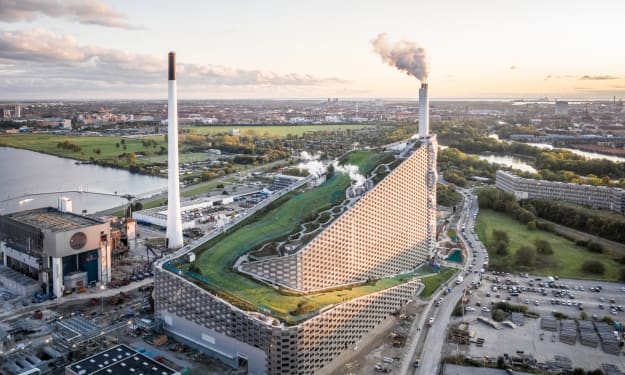
Copenhagen's Heat-and-Harbour Climate Strategy
by Futoshi Tachino In a city built on islands and inlets, the wind off the Øresund smells faintly of salt and cycling grease. Copenhagen’s answer to climate change is not a single icon so much as a choreography: heat the homes with shared pipes, cool the business core with seawater, turn rainstorms into parks, and turn trash into watts—then capture the carbon on the way out. The system hums in buried mains and pump rooms, but its logic is legible on the street.
By Futoshi Tachino5 months ago in Earth
Singapore's Water-Linked Climate Strategy
by Futoshi Tachino In equatorial Singapore, the late-afternoon thunderheads pile up like mountains, then dissolve into warm rain that runs from green roofs to canals and finally to the sea. The city’s response to climate change is not a single showpiece but an interlocking loop: cool the homes, power the water, harden the shores, and close the carbon cycle. The hum here is chilled water in buried pipes, biogas in co-digesters, and solar panels riding the reservoir’s skin. The strategy is small-state pragmatism at system scale.
By Futoshi Tachino5 months ago in Earth
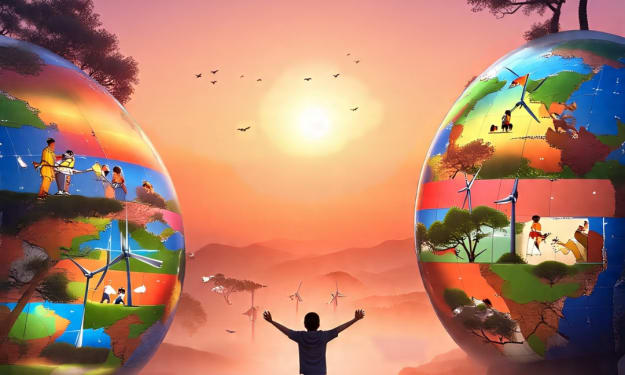
Bright Horizons: Celebrating the Breakthroughs of 2025
Bright Horizons: Celebrating the Breakthroughs of 2025 How Innovation, Unity, and Progress Are Shaping a Better Tomorrow Today As the sun rises on 2025, the world stands at the cusp of remarkable change. What once seemed like distant dreams are now vibrant realities, transforming how we live, work, and connect. Across continents and cultures, innovation is fueling progress, while unity among people drives solutions to some of humanity’s biggest challenges. This year is a testament to human ingenuity and resilience, offering hope and inspiration for a brighter future. A Leap Forward in Clean Energy One of the most exciting developments in 2025 is the dramatic expansion of clean energy. Solar and wind power, once supplementary sources, now dominate global energy grids. Thanks to advancements in energy storage technologies, such as ultra-efficient solid-state batteries and green hydrogen solutions, renewable energy is reliable and accessible—even in regions that previously struggled with power shortages. In cities worldwide, solar panels glitter on rooftops, while wind farms span coastlines and open plains. The result? A significant reduction in carbon emissions and cleaner air, making cities healthier places to live. Governments and private sectors have partnered in unprecedented ways to accelerate this green revolution, proving that economic growth and environmental responsibility can go hand in hand. Technology Bridging Distances The leaps in technology this year are nothing short of extraordinary. Artificial intelligence (AI) has become more intuitive and ethical, assisting in everything from healthcare diagnostics to personalized education. Telepresence robots and holographic communication have made remote work and virtual meetings feel more natural and engaging than ever before, effectively shrinking the world and connecting people regardless of location. Smart cities equipped with sensors and AI systems optimize everything from traffic flow to waste management, enhancing urban living while reducing environmental footprints. Autonomous electric vehicles glide through streets, improving safety and cutting pollution. In rural areas, internet connectivity has reached previously isolated communities, opening doors to education, commerce, and healthcare that were unimaginable just a few years ago. Health and Wellness Innovations 2025 marks a milestone in global health advancements. Breakthroughs in gene therapy and personalized medicine are helping patients manage chronic diseases with greater precision and fewer side effects. Vaccines for emerging illnesses have been developed and distributed faster than ever, thanks to AI-driven research and international collaboration. Mental health is also gaining the attention it deserves. Virtual reality therapy and AI-powered counseling apps provide accessible, stigma-free support for millions, promoting emotional wellbeing on a global scale. Communities are becoming more aware of holistic health approaches, integrating nutrition, exercise, and mindfulness into daily routines. Education for a New Era Education systems worldwide are evolving to prepare learners for the future. Interactive digital platforms, immersive simulations, and AI tutors personalize learning experiences, catering to diverse needs and paces. Lifelong learning is now a norm, with adults continually upskilling to adapt to rapidly changing job markets. Collaboration across borders allows students to engage in global projects, fostering cultural understanding and shared problem-solving skills. Schools emphasize creativity, critical thinking, and emotional intelligence—skills essential for navigating a complex and interconnected world. Global Cooperation and Social Progress Perhaps most inspiring is the growing spirit of global cooperation. Countries and organizations are working together to tackle climate change, poverty, and inequality with renewed determination. International agreements now include enforceable commitments and innovative funding mechanisms, ensuring sustained progress. Social movements are thriving, driven by awareness and technology. Communities advocate for human rights, gender equality, and inclusive policies that celebrate diversity and empower marginalized voices. The result is a more just and compassionate world where people feel seen, heard, and valued. The Path Ahead While challenges remain, the progress of 2025 is a powerful reminder of what can be achieved when humanity chooses hope and collaboration over division and despair. The breakthroughs in energy, technology, health, education, and social justice are not just stories of innovation—they are stories of people coming together to build a future that works for all. As we move forward, the collective effort to sustain this momentum is vital. Every individual, community, and nation plays a role in shaping the world we want to live in. With the tools and spirit now at our disposal, the horizon has never looked brighter.
By Muhammad Saad 5 months ago in Earth
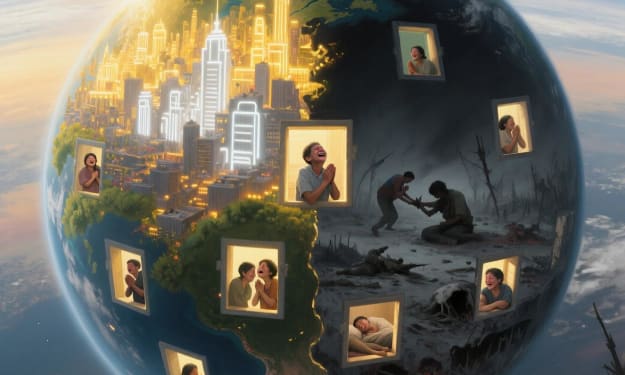
The Last Selfie from Earth
The skies were no longer blue. They bled in shades of orange and ash, thick with smoke from burning forests and decaying cities. Oceans had swallowed coastlines, once-bustling cities were now skeletal, and AI-driven machines roamed the streets — abandoned by their creators and left to wander without command. The planet had become a haunted graveyard of human ambition and arrogance.
By Fawad Khan6 months ago in Earth
Rising with the Tide: How Communities Thrive Amid Ocean Floods
As the sun rose over the coastal village of Elmar Bay, its golden light reflected off shimmering water channels that now wove through parts of the town like new, natural streets. Once seen as a threat, these ocean-fed waterways have become symbols of hope, innovation, and adaptation for a community that refused to be swept away. Elmar Bay, nestled on the eastern coast, had long been known for its charm — fishermen pulling in nets at dawn, children laughing on sandy shores, and colorful homes lining the beachfront. But over the past two decades, rising sea levels and tidal floods had become a constant challenge, creeping further inland with each passing year. The ocean, once a friend, began to feel like a quiet intruder. “At first, it was terrifying,” recalled Marina Lowe, a lifelong resident and community leader. “We had floods that destroyed homes, displaced families, and wiped out gardens. But we made a choice — to stay, and to adapt.” That choice marked the beginning of a remarkable transformation. Rather than retreating inland, Elmar Bay became one of the first towns in the region to embrace "living with water" — a concept that focuses not on resisting flooding, but learning how to coexist with it. One of the most visible changes was the construction of amphibious homes. Raised on floating foundations, these houses rest on solid ground during dry seasons and gently rise with floodwaters when the tides swell. The architecture, inspired by traditional stilt homes and modern engineering, has become a model for other coastal communities. “I used to worry about every storm,” said Arjun Patel, an architect who helped design the amphibious housing. “Now, I watch my home rise and fall with the tide, and it feels like we’re in harmony with the sea.” Nature played a key role in Elmar Bay’s resilience. Instead of concrete sea walls, the community invested in restoring mangroves and wetlands, which act as natural buffers against tidal surges. These ecosystems not only reduce flooding but also provide rich habitats for birds, fish, and other wildlife — bringing new life to the area. The town’s transformation wasn’t just physical. It was cultural. Schools began teaching children about climate science and sustainability through hands-on learning — like planting mangroves or designing flood-resilient models in science class. Local artists created murals celebrating water as both a life source and a powerful force, reminding everyone of the importance of respect and balance. Community gardens, built in raised beds, provided fresh food even after floods. Floating markets — boats transformed into mobile shops — allowed commerce to continue, even when roads were temporarily underwater. “It brought us closer together,” said Lowe. “Flooding used to isolate us. Now, we check on neighbors, share food, and support one another. We became more than just a community — we became a team.” International organizations and researchers began to take notice. Elmar Bay became a case study for climate resilience, hosting delegations from around the world who came to learn, not just about the technologies used, but the spirit that fueled them. Of course, challenges remain. Not every storm passes without impact, and the sea continues to rise. But Elmar Bay no longer views the ocean as an enemy. Instead, it sees the water as a reality — one that can be respected, understood, and even embraced. “Nature is changing, and we must change with it,” said Patel. “We’re not just surviving here — we’re thriving. That’s the real story.” The sound of children laughing echoed once more along the water’s edge as a group of them paddled down one of the new canals in bright yellow kayaks. Behind them, the horizon sparkled, the sea stretching endlessly outward, vast and calm. For Elmar Bay, the future isn’t about building walls to keep the ocean out. It’s about building lives that rise with the tide.
By Muhammad Saad 6 months ago in Earth
Bright Horizons: A World of Positive Change
Bright Horizons: A World of Positive Change Inspiring Stories and Global Progress Shaping a Better Future for All In a world often overwhelmed by headlines of conflict, crisis, and division, there are quieter, powerful stories unfolding — stories of cooperation, innovation, and hope. From renewable energy breakthroughs in Africa to grassroots education programs in South Asia, the world is steadily, and often silently, moving toward a better future.
By Muhammad Saad 6 months ago in Earth
Science Shaping Tomorrow: Breakthroughs of Today
Science Shaping Tomorrow: Breakthroughs of Today Exploring the Innovations Advancing Health, Technology, and Our Understanding of the Universe In laboratories, observatories, and startups around the globe, science is quietly — and rapidly — transforming the future. Each new day brings discoveries that not only answer age-old questions but also offer solutions to the challenges we face in the modern world. From medicine and climate change to space exploration and artificial intelligence, today’s scientific breakthroughs are paving the way for a healthier, smarter, and more sustainable tomorrow. One of the most significant areas of progress is healthcare. In the past year alone, scientists have developed new therapies using gene editing tools like CRISPR-Cas9 that are changing lives. A recent clinical trial successfully treated patients with sickle cell anemia — a painful and lifelong blood disorder — by editing their own cells. These kinds of gene therapies could soon become common treatments for other inherited diseases as well. Beyond genetics, AI is playing a growing role in medicine. New algorithms can now detect certain types of cancer earlier than ever before, simply by analyzing medical images. In some studies, AI has matched or outperformed experienced radiologists in identifying subtle signs of disease. This doesn’t mean doctors are being replaced — rather, AI is becoming a powerful tool that helps them make faster and more accurate diagnoses, leading to earlier treatment and better outcomes. Meanwhile, the fight against climate change is being bolstered by innovation. Scientists are developing cleaner sources of energy and smarter ways to store it. Solar panels are becoming more efficient, and battery technology is improving to make renewable energy more reliable, even when the sun isn’t shining or the wind isn’t blowing. Breakthroughs in green hydrogen — made using renewable power — promise to provide clean fuel for industries and transportation. But it’s not just about generating cleaner energy; it’s also about removing harmful carbon dioxide from the atmosphere. New technologies like direct air capture are being built to pull CO₂ directly out of the air and store it underground or convert it into useful products. These efforts, still in early stages, could become essential tools in reaching net-zero emissions goals. In space science, we are living through a new golden age of discovery. The James Webb Space Telescope, launched in 2021, continues to send back breathtaking images and data that are rewriting what we know about the universe. It has detected planets with atmospheres that may contain water and organic molecules — raising new questions about the possibility of life beyond Earth. Closer to home, space agencies are preparing for the return of humans to the Moon, and eventually Mars. NASA’s Artemis program is already testing new technologies that will support long-term exploration. Back on Earth, breakthroughs in material science and engineering are giving rise to futuristic inventions. Self-healing materials that can repair small cracks or damage are being integrated into construction and electronics. Bioengineers are growing lab-made organs that may one day eliminate transplant waiting lists. And quantum computers — once the stuff of science fiction — are starting to perform calculations that even the fastest classical computers can't handle. One of the most inspiring things about today’s science is how global and collaborative it has become. During the COVID-19 pandemic, researchers across countries shared data, collaborated on vaccine development, and helped each other understand the evolving virus. That spirit of open science continues, with global initiatives now focused on pandemics, climate action, biodiversity, and more. Importantly, science today is also becoming more inclusive. More women, people of color, and individuals from historically underrepresented communities are entering scientific fields and leading groundbreaking research. This diversity brings new perspectives and ideas, making science more creative, ethical, and impactful. Of course, challenges remain. Scientific progress often raises new questions — ethical, environmental, and societal — that must be carefully considered. But this is part of what makes science so powerful: it not only solves problems, but also encourages critical thinking, dialogue, and growth. As we look to the future, it’s clear that the science of today is shaping a tomorrow full of possibilities. Whether it's curing disease, protecting the planet, or exploring the stars, each breakthrough brings us closer to a world that is not only more advanced, but more hopeful. Science, at its best, is a force for good — a shared human endeavor that transcends borders and backgrounds. And in today’s world, where rapid change can sometimes feel overwhelming, it’s comforting to know that scientists everywhere are working hard, with curiosity and care, to build a better future for all.
By Muhammad Saad 6 months ago in Earth