
Science Shaping Tomorrow: Breakthroughs of Today
Exploring the Innovations Advancing Health, Technology, and Our Understanding of the Universe
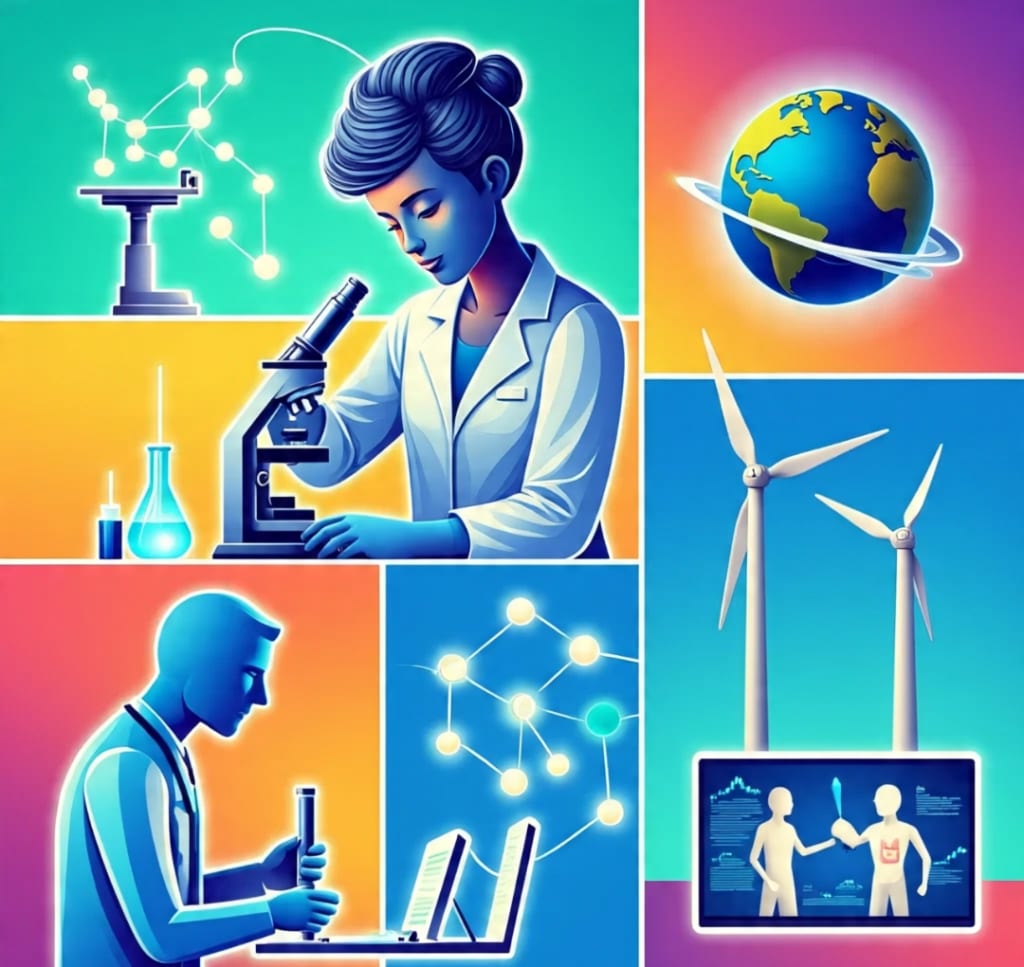
Science Shaping Tomorrow: Breakthroughs of Today
Exploring the Innovations Advancing Health, Technology, and Our Understanding of the Universe
In laboratories, observatories, and startups around the globe, science is quietly — and rapidly — transforming the future. Each new day brings discoveries that not only answer age-old questions but also offer solutions to the challenges we face in the modern world. From medicine and climate change to space exploration and artificial intelligence, today’s scientific breakthroughs are paving the way for a healthier, smarter, and more sustainable tomorrow.
One of the most significant areas of progress is healthcare. In the past year alone, scientists have developed new therapies using gene editing tools like CRISPR-Cas9 that are changing lives. A recent clinical trial successfully treated patients with sickle cell anemia — a painful and lifelong blood disorder — by editing their own cells. These kinds of gene therapies could soon become common treatments for other inherited diseases as well.
Beyond genetics, AI is playing a growing role in medicine. New algorithms can now detect certain types of cancer earlier than ever before, simply by analyzing medical images. In some studies, AI has matched or outperformed experienced radiologists in identifying subtle signs of disease. This doesn’t mean doctors are being replaced — rather, AI is becoming a powerful tool that helps them make faster and more accurate diagnoses, leading to earlier treatment and better outcomes.
Meanwhile, the fight against climate change is being bolstered by innovation. Scientists are developing cleaner sources of energy and smarter ways to store it. Solar panels are becoming more efficient, and battery technology is improving to make renewable energy more reliable, even when the sun isn’t shining or the wind isn’t blowing. Breakthroughs in green hydrogen — made using renewable power — promise to provide clean fuel for industries and transportation.
But it’s not just about generating cleaner energy; it’s also about removing harmful carbon dioxide from the atmosphere. New technologies like direct air capture are being built to pull CO₂ directly out of the air and store it underground or convert it into useful products. These efforts, still in early stages, could become essential tools in reaching net-zero emissions goals.
In space science, we are living through a new golden age of discovery. The James Webb Space Telescope, launched in 2021, continues to send back breathtaking images and data that are rewriting what we know about the universe. It has detected planets with atmospheres that may contain water and organic molecules — raising new questions about the possibility of life beyond Earth. Closer to home, space agencies are preparing for the return of humans to the Moon, and eventually Mars. NASA’s Artemis program is already testing new technologies that will support long-term exploration.
Back on Earth, breakthroughs in material science and engineering are giving rise to futuristic inventions. Self-healing materials that can repair small cracks or damage are being integrated into construction and electronics. Bioengineers are growing lab-made organs that may one day eliminate transplant waiting lists. And quantum computers — once the stuff of science fiction — are starting to perform calculations that even the fastest classical computers can't handle.
One of the most inspiring things about today’s science is how global and collaborative it has become. During the COVID-19 pandemic, researchers across countries shared data, collaborated on vaccine development, and helped each other understand the evolving virus. That spirit of open science continues, with global initiatives now focused on pandemics, climate action, biodiversity, and more.
Importantly, science today is also becoming more inclusive. More women, people of color, and individuals from historically underrepresented communities are entering scientific fields and leading groundbreaking research. This diversity brings new perspectives and ideas, making science more creative, ethical, and impactful.
Of course, challenges remain. Scientific progress often raises new questions — ethical, environmental, and societal — that must be carefully considered. But this is part of what makes science so powerful: it not only solves problems, but also encourages critical thinking, dialogue, and growth.
As we look to the future, it’s clear that the science of today is shaping a tomorrow full of possibilities. Whether it's curing disease, protecting the planet, or exploring the stars, each breakthrough brings us closer to a world that is not only more advanced, but more hopeful.
Science, at its best, is a force for good — a shared human endeavor that transcends borders and backgrounds. And in today’s world, where rapid change can sometimes feel overwhelming, it’s comforting to know that scientists everywhere are working hard, with curiosity and care, to build a better future for all.
About the Creator
Keep reading
More stories from Muhammad Saad and writers in Earth and other communities.
Global Pulse: Staying Informed in a Changing World
In a world that seems to change by the hour, staying informed has never been more important—or more challenging. From global political shifts to groundbreaking technological advances, the stream of news is constant, complex, and, at times, overwhelming. Yet, for many people across the globe, being in touch with current events is not just a matter of curiosity—it's essential for understanding their place in the world. The Evolving News Landscape The way we consume news has changed dramatically over the past two decades. Not long ago, people relied heavily on television broadcasts, newspapers, and radio as their primary sources of information. Today, digital media dominates. According to recent studies, more than 70% of people under 40 now get their news online, particularly from social media platforms and news apps. This shift has had both positive and negative consequences. On the one hand, news is more accessible than ever before. Breaking events can be reported in real time, allowing people to respond and adapt quickly. On the other hand, the rise of misinformation and "fake news" has made it difficult to know what’s accurate and who to trust. "With so much information out there, it’s easy to feel lost," says Maya Ortiz, a media literacy educator based in Chicago. "That’s why teaching people how to evaluate sources and think critically about what they read is just as important as reporting the facts." Voices from Around the Globe Across continents, people are finding new ways to stay informed. In rural Kenya, radio remains a vital tool for sharing news, especially in areas with limited internet access. In contrast, young adults in Tokyo or Berlin may start their day scrolling through curated news feeds or watching bite-sized video summaries. "I follow international headlines on my phone during my commute," says Lena Müller, a university student in Germany. "But I also make time to read deeper articles from trusted sources when I want to understand something fully." In India, WhatsApp groups have become informal news hubs for families and communities. While convenient, this method also illustrates the challenges of modern news consumption. “Misinformation spreads fast when people trust messages just because they come from someone they know,” says journalist Ravi Narayan. Governments and organizations have taken steps to address this by launching fact-checking campaigns and promoting digital literacy. The goal is to help users identify credible sources and separate opinion from fact. The Power of Informed Citizens When people are well-informed, they are better equipped to participate in their communities and hold leaders accountable. This connection between news and civic engagement is especially evident during elections, social movements, and public health emergencies. The COVID-19 pandemic, for example, showed how crucial accurate and timely information could be. Public understanding of the virus, vaccination efforts, and safety protocols relied heavily on effective communication. News outlets, scientists, and public officials had to work together to share evolving data in ways the public could understand and act upon. "Information literally saved lives," says Dr. Sheila Browne, a public health advisor. "But it also showed us how damaging misinformation can be when people lose trust in the news." The Future of News Looking ahead, the news industry faces both exciting opportunities and serious challenges. Artificial intelligence is already transforming how stories are written, edited, and shared. Some outlets are using AI to generate quick summaries or translations of breaking events, allowing them to reach wider audiences faster than ever. However, concerns remain about media bias, privacy, and the ethics of automated content. As technology continues to evolve, so too must the standards and values of journalism. Meanwhile, citizen journalism—ordinary people reporting on events in real-time—has become a powerful tool in conflict zones, protests, and natural disasters. Platforms like X (formerly Twitter), TikTok, and YouTube have enabled users to document and share events that might otherwise go unnoticed. But as more voices enter the conversation, the responsibility to verify and contextualize those stories becomes even more critical. A Shared Responsibility Staying informed today requires more than just clicking headlines. It means asking questions, seeking multiple perspectives, and being open to learning—even when the truth is uncomfortable. As citizens, consumers, and participants in a global community, we all share in the responsibility of keeping the pulse of our world alive and accurate. Whether it's choosing credible sources, calling out misinformation, or simply making time to understand the bigger picture, every step we take toward informed awareness strengthens our societies. In the words of veteran journalist Christiane Amanpour: “Trust, truth, and integrity must be restored to the news business. But that also starts with the audience. A free and informed public is the foundation of any strong democracy.” So as the world keeps turning, take a moment each day to check in—not just with the headlines, but with the stories behind them. Because the better we understand our world, the better we can shape its future.
By Muhammad Saad 7 months ago in Earth
The Day the Forest Spoke
A Walk Into the Unknown It began as an ordinary hike, a chance to escape the chaos of the city and immerse myself in the green stillness of the old Redwood Forest at the edge of my town. The sun filtered through the towering trees in long golden beams, the leaves rustling faintly with a whisper of wind, and for a moment, I felt at peace — detached from deadlines, notifications, and the endless noise of human life. I hadn’t planned for anything extraordinary, just a few hours of solitude surrounded by the ancient giants that had stood for centuries, quietly observing the world.
By The Curious Writer3 days ago in Earth


Comments
There are no comments for this story
Be the first to respond and start the conversation.