
Trending Cultural Events in Europe (August 2025)
Saved Treasures of Gaza” — Paris, France
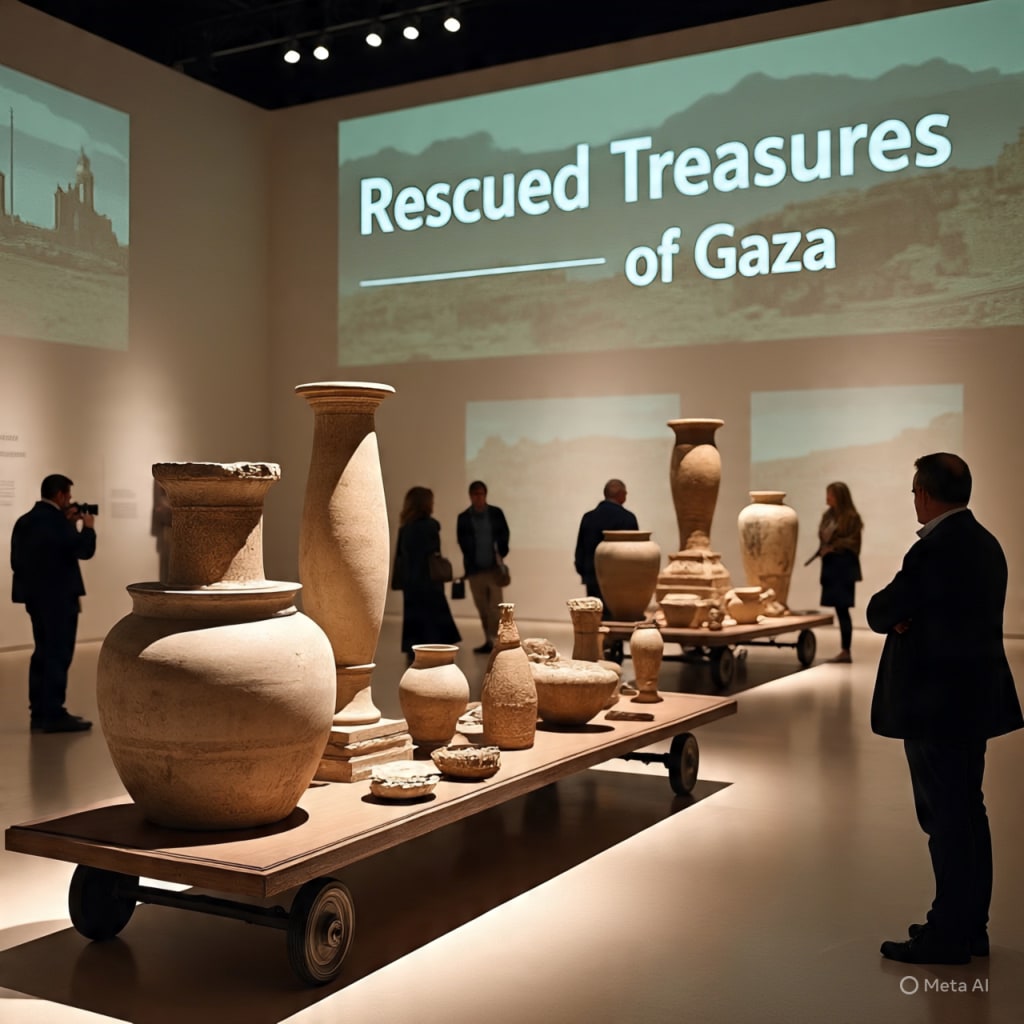
A powerful exhibition at Paris’s Institut du Monde Arabe showcases over 5,000 years of Gaza’s rich history. Featuring over 100 artifacts—from Byzantine mosaics to Roman-era statuettes—this show explores Gaza's deep heritage as a crossroads of civilizations. It remains open until November 2, 2025, drawing considerable international attention.
2. “New Nordic: Cuisine, Aesthetics and Place” — Oslo, Norway
At Oslo’s National Museum of Art, Architecture, and Design, this immersive exhibition blends Scandinavian culinary innovation with visual art. It explores how the minimalist New Nordic movement reshaped food, design, and architecture through more than 500 creative works. Open until September 14, 2025.
3. “Disco: I’m Coming Out” — Paris, France
Dive into the vibrant cultural legacy of disco at the Philharmonie de Paris. This exhibition offers an immersive look at disco’s roots—from Black American communities to LGBTQ+ dance floors—through costumes, instruments, and eclectic artifacts. Running until August 17, 2025.
4. Karl Stengel Solo Show — London, UK
Celebrating the centenary of post-war artist Karl Stengel, this is his first solo exhibition in the UK. Taking place at Gallery@Oxo (Oxo Tower), it features 24 dynamic works spanning decades—from the 1970s to the 2010s. On view until May 30, 2025.
Exhibition/Event Suggested Angle
Gaza Exhibition Explore themes of cultural resurrection, art as hope amid conflict.
New Nordic Draw links between seasonal cuisine and broader Nordic aesthetic values.
Disco Exhibit Discuss disco’s enduring cultural influence and social liberation.
Karl Stengel Offer a rediscovery narrative around a lesser-known yet prolific artist
The glass cases glimmer softly under the lights of Paris’s Institut du Monde Arabe. Inside them, centuries of Gaza’s history lie still—Byzantine mosaics pieced together with the patience of ancient artisans, delicate oil lamps that once lit stone homes, amphorae shaped to carry the bounty of a Mediterranean harvest.
These artifacts are more than museum pieces. They are refugees.
A Journey from Shore to Shelter
The exhibition, titled “Trésors sauvés de Gaza : 5 000 ans d’histoire” (Rescued Treasures of Gaza: 5,000 Years of History), brings together around 130 carefully preserved artifacts. They come from a much larger reserve—over 500 pieces safeguarded in Geneva—now granted a temporary home in Paris until November 2, 2025.
For the curators, this is more than an exhibition. It is a rescue mission. Many of these objects were unearthed in archaeological digs before the most recent waves of conflict. Some were kept safe by sheer chance—stored far from bombardments that have damaged or destroyed at least 94 cultural heritage sites in Gaza in the past year alone.
Their survival is not only physical but symbolic. They represent a 5,000-year continuum of life in one of the most fought-over strips of land on Earth—a crossroads where Canaanites, Romans, Byzantines, Ottomans, and countless others have left their mark.
Design that Speaks of Displacement
The exhibition’s scenography, created by AAU Anastas, is deliberate in its choice: the objects rest on wheeled carts rather than permanent plinths. They could be moved at any moment, much like the people and history they represent.
Visitors notice it immediately—the sense that these treasures are never quite settled, that even here in the safety of Paris, their stay might be temporary. The carts whisper of caravans, of fleeing homes, of taking whatever you can carry when the ground beneath you becomes unsafe.
It is a design choice that transforms the exhibition into something more than a cultural display—it becomes a meditation on exile itself.
Objects as Witnesses
Each artifact holds a story, silent yet heavy. A limestone stele, carved with ancient inscriptions, once stood as a boundary marker in a city long gone. Amphorae, their clay still porous, once carried oil and wine across seas. Coins minted under foreign rulers tell of trade routes and shifting empires.
Perhaps most striking is the Abu Baraqeh mosaic—an intricate floor piece depicting wild animals and geometric patterns, discovered by a farmer tilling his field. Its colors, still vivid despite centuries buried beneath the earth, speak to the artistry and daily life of the Byzantine era in Gaza.
When these objects are placed side by side, they tell a story of a place that has been continuously inhabited, traded with, and fought over for millennia. They are witnesses—first to flourishing civilizations, then to wars, and now to a global effort to keep their memory alive.
The Human Connection
On a recent afternoon, a mother stood in front of a mosaic panel, her young daughter’s small hand curled in hers. “This is where your grandmother’s grandmother’s people lived,” she told her softly, the French syllables tinged with an unmistakable Arabic lilt. The little girl’s gaze stayed fixed on the tiles, as though trying to imagine the lives of the people who once walked across them.
This is the exhibition’s quiet power—it bridges past and present, archaeology and identity, history and the personal. For Palestinians in the diaspora, it offers a rare physical connection to a homeland they may never have visited. For others, it opens a window into a history too often overshadowed by headlines of conflict.
A Fragile Legacy
The exhibition also confronts visitors with the reality of heritage under threat. One section features satellite imagery and documentation showing the damage to cultural sites across Gaza—mosques, churches, ancient walls, Ottoman-era mansions—most reduced to rubble.
The contrast is stark: within the museum, artifacts sit under protective glass; outside, their counterparts are fighting a race against time, weather, and war.
Experts warn that without urgent intervention, much of Gaza’s tangible heritage could vanish within a generation. The loss would not only be to Palestinians but to the shared human story, for Gaza has been a meeting point of civilizations for thousands of years.
More Than a Museum Visit
Walking through the exhibition feels less like touring a static display and more like attending a vigil. Visitors move slowly, reading each label carefully, pausing for long moments in front of the most fragile pieces.
Some photograph the artifacts; others simply stand and look, perhaps sensing the weight of history pressing through the glass. In the low hum of the gallery, languages mingle—French, Arabic, English—each visitor carrying away their own interpretation, their own piece of Gaza’s story.
History in Exile, Hope for Return
The irony is inescapable: Gaza’s treasures are safest far from Gaza itself. Yet they carry with them the memory of a place that persists beyond war, beyond destruction, beyond the present moment.
The exhibition’s title, Rescued Treasures, is both accurate and incomplete. They have been rescued from physical harm, yes—but they have also been rescued from being forgotten. Each amphora, lamp, and mosaic is a reminder that Gaza is not only a place of struggle but a place of profound beauty, innovation, and endurance.
As the lights dim in the galleries at closing time, the carts remain in place, wheels locked but ready. They will be here until November, telling their stories to anyone willing to listen. After that? Their journey continues—until, perhaps one day, they can return to the land that shaped them.
Until then, they remain, like so many of Gaza’s people, in exile—safe for now, but always longing for home.
About the Creator
Keep reading
More stories from Muhammad Ibrahim and writers in Earth and other communities.
GPT-5 Is Here And It’s Smarter Than You Think
When OpenAI released GPT-4, it was hailed as a breakthrough in AI — capable of writing essays, generating code, passing exams, and even holding intelligent conversations. But now, GPT-5 has arrived, and it’s something different altogether. More than just faster or more accurate, GPT-5 feels smarter. It reasons better. It understands more. And it may just be the closest thing to a true digital mind we've ever seen.
By Muhammad Ibrahim7 months ago in Blush


Comments (1)
outstanding keep forward