
The Secret Ukraine-Russia Tech War: Drones, Cyberattacks & Global Threats
How drones, AI, and cyber warfare are reshaping the battlefield and drawing the world into a high-tech conflict.

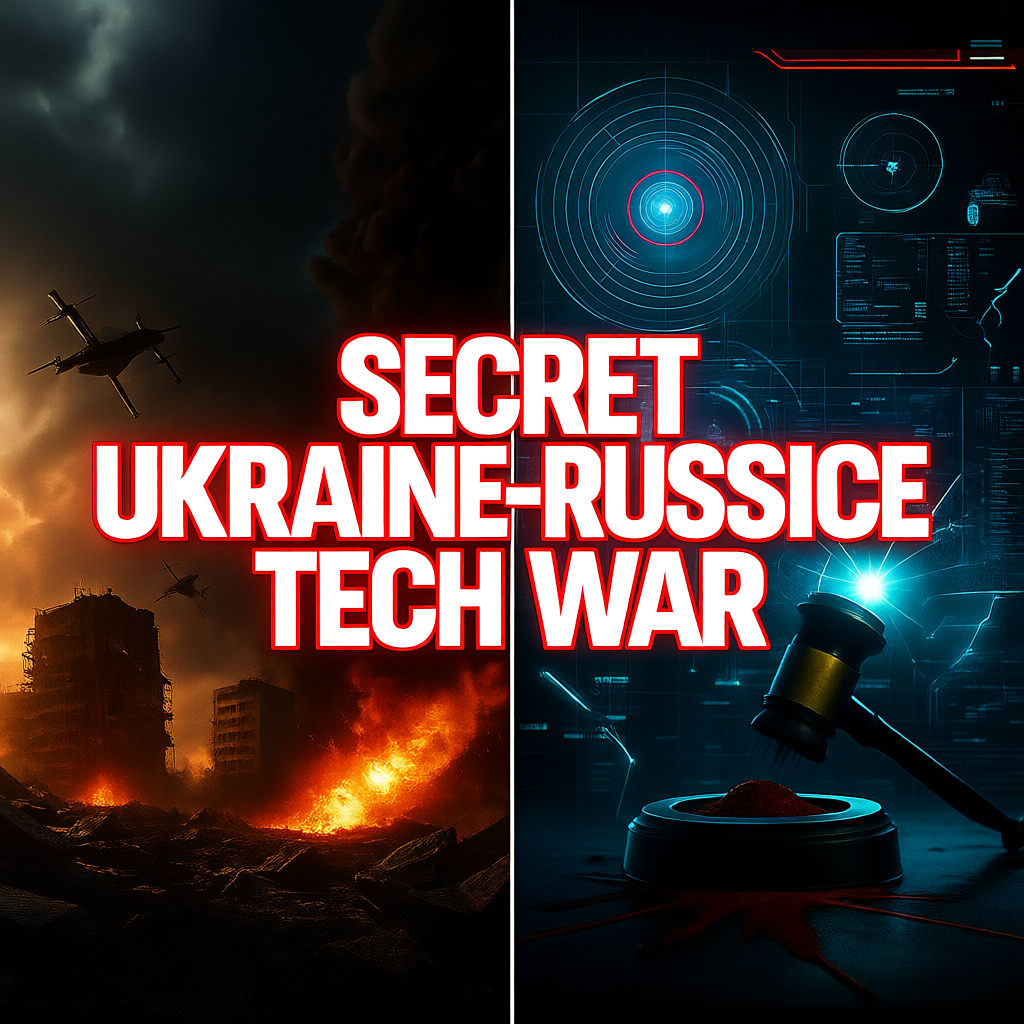
The Secret Ukraine-Russia Tech War: Drones, Cyberattacks & Global Impact
In the 21st century, wars are no longer just fought on the ground with tanks and soldiers. The ongoing conflict between Ukraine and Russia has evolved into a high-tech battlefield, where drones, cyberattacks, satellites, and AI-assisted systems are reshaping the rules of modern warfare. What started as a traditional military confrontation has now become a secret war of technology, drawing attention from the entire world.
1. Drones Take Center Stage
One of the most striking developments in the Ukraine-Russia war is the use of drones for precision strikes. Ukraine has received advanced drones from Turkey, the United States, and European countries. These unmanned aerial vehicles (UAVs) allow Ukraine to target Russian convoys, artillery positions, and command centers with remarkable accuracy.
Russian forces, in turn, have deployed electronic countermeasures to jam drone signals and protect their positions. The cat-and-mouse game between drones and anti-drone systems has transformed the battlefield into a high-tech chessboard, where every strike and counterstrike could shift the balance of power.
2. Cyberwarfare: The Invisible Battlefield
While drones dominate the skies, cyberattacks dominate the digital realm. Both Ukraine and Russia have launched sophisticated cyber operations targeting each other’s military networks, communication systems, and critical infrastructure.
Ukraine has conducted cyber sabotage against Russian logistics and power grids, while Russia has deployed malware and ransomware attacks to disrupt Ukraine’s command-and-control systems. This cyberwar component has global implications: international banks, energy grids, and private companies in Europe and the U.S. have been affected, showing that modern wars are no longer confined to borders.
3. AI and Surveillance Technology
Artificial intelligence has become a force multiplier in this conflict. AI-assisted systems help analyze drone footage, identify enemy targets, and even predict troop movements. Ukraine reportedly uses AI to enhance drone targeting and battlefield intelligence, while Russia experiments with AI in electronic warfare to detect and disrupt drone and missile operations.
Satellites and advanced surveillance technology also play a crucial role. Real-time imagery allows both sides to plan attacks with unprecedented precision, monitor movements, and avoid ambushes. The Ukraine-Russia war demonstrates that the future of warfare is as much digital as it is physical.
4. Global Powers and Secret Supply Lines
The tech war has drawn global powers into the conflict, creating a proxy-like environment. The United States, the European Union, and NATO countries supply Ukraine with drones, anti-tank missiles, and cyber defense systems. Turkey provides advanced UAVs that have proven decisive on the battlefield.
Meanwhile, Russia receives support from nations providing electronic warfare devices, military hardware, and advisory assistance. These secret supply lines make the conflict a global struggle for influence, far beyond the borders of Ukraine and Russia.
5. The Human Cost of High-Tech Warfare
Although the focus often falls on drones and cyber operations, civilians continue to bear the brunt of the conflict. Cities targeted by drones or artillery face massive destruction, and millions of Ukrainians remain displaced. The digital battlefield does not remove the human cost—it often increases uncertainty, as cyberattacks can disrupt hospitals, power plants, and water supplies.
High-tech weapons may seem “clean” or precise, but in reality, they intensify the scale of destruction, making urban areas particularly vulnerable.
6. Lessons for the Future
The Ukraine-Russia tech war is a warning for the world about the future of conflicts. Traditional armies are no longer enough; technology, intelligence, and cyber capabilities are equally, if not more, important. Countries watching this conflict are rapidly investing in drones, AI, and cybersecurity to prepare for the next generation of wars.
Experts warn that the lessons learned here could reshape global military strategy, emphasizing speed, precision, and digital supremacy over sheer troop numbers. The war also highlights the blurred line between conventional conflict and global cyber threats.
7. Global Implications
The conflict’s impact is felt worldwide:
Europe faces energy disruptions and cyber threats.
Global arms markets are shifting toward drone and AI technology.
International law struggles to keep pace with unmanned warfare and cyberattacks.
Nations now realize that future wars may be fought not only with bullets and tanks but with software, satellites, and algorithms.
The Ukraine-Russia war is more than a regional conflict; it is a preview of how modern wars will look in the decades to come, involving both traditional combat and invisible digital operations.
Conclusion
The Ukraine-Russia conflict has revealed a new era of warfare, one where drones, cyberattacks, AI, and global supply chains dominate the battlefield. This secret tech war shows the world that modern military strength depends not only on manpower but also on technological innovation, digital intelligence, and strategic alliances.
As the conflict continues, the world watches closely, realizing that the lessons learned in Ukraine will define the future of warfare worldwide. The stakes are not just regional—they are global, shaping how nations prepare, defend, and fight in the 21st century
About the Creator
Wings of Time
I'm Wings of Time—a storyteller from Swat, Pakistan. I write immersive, researched tales of war, aviation, and history that bring the past roaring back to life
Keep reading
More stories from Wings of Time and writers in Criminal and other communities.
Navy Shipman "Unidentifiable" After He Was Beaten to Death Because He Was Gay
Before the military created the "Don't Ask, Don't Tell" policy in 1993, gay and lesbian individuals were forbidden to serve. Commanders were legally required to report any members they suspected of being homosexual. An investigation would occur, and the individual could be dismissed from service, even if they had an otherwise impeccable record.
By Criminal Matters7 days ago in Criminal



Comments
There are no comments for this story
Be the first to respond and start the conversation.