
Pakistan vs Israel
Uncover Pakistan’s hard stance against Israel, its growing alliance with Qatar, and how the Middle East power struggle is reshaping global politics.

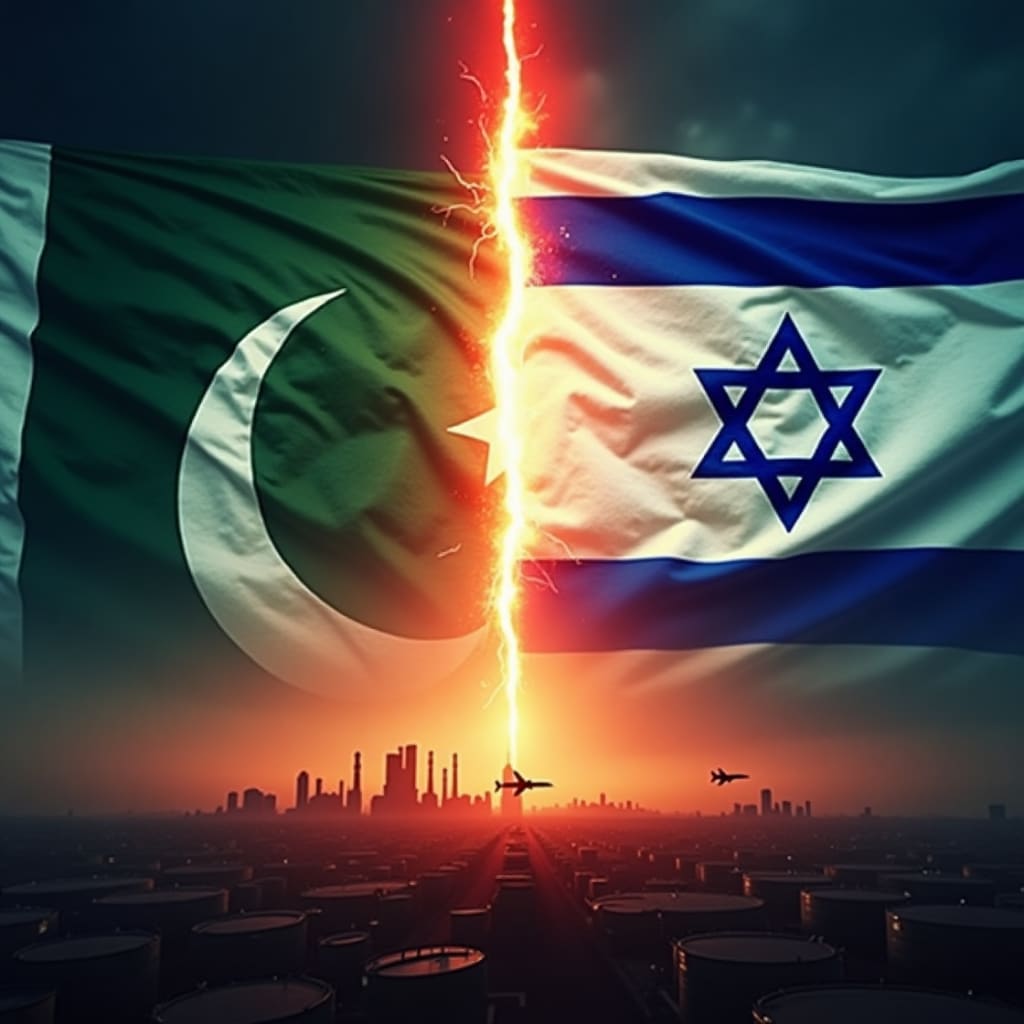
Qatar Alliance & Middle East Power Game Explained
Pakistan’s Global Position: Israel, Qatar & Middle East Relations Explained
The geopolitics of South Asia and the Middle East have always been deeply intertwined, and Pakistan stands at the heart of this complex web. In recent years, debates surrounding Pakistan’s stance on Israel, its growing relationship with Qatar, and its role in regional conflicts have intensified. To understand this dynamic, we must examine Pakistan’s ideological position, economic partnerships, and defense alignments across the Muslim world and beyond.
Pakistan and the Israel Question
Since its creation in 1947, Pakistan has refused to recognize Israel as a legitimate state. The foundation of this policy is not only rooted in ideology but also in solidarity with Palestine. For decades, Pakistan has described Israel as an “illegal occupier” of Palestinian land, often comparing its existence to an imposed colonial project. In international forums, including the United Nations, Pakistan consistently votes against Israel and calls for a two-state solution based on justice for Palestinians.
This stance, however, has also shaped Pakistan’s global image. Western media frequently portrays Pakistan as a hardliner, indirectly linking its opposition to Israel with its historical association with figures such as Osama bin Laden. For Pakistan, this is less about extremism and more about a principled stand—one that reflects the sentiments of its people and much of the wider Muslim world.
Qatar: A Strategic Ally
In contrast to its adversarial relationship with Israel, Pakistan’s ties with Qatar are marked by warmth, depth, and mutual benefit. Qatar has emerged as one of Pakistan’s strongest allies in the Gulf. The two countries enjoy solid diplomatic, economic, and defense relations.
Economically, Qatar is a lifeline for Pakistan’s energy needs. As one of the world’s largest suppliers of liquefied natural gas (LNG), Qatar has signed long-term agreements to ensure Pakistan’s energy security. These LNG imports fuel industries, homes, and transportation across the country. Beyond energy, Qatar invests heavily in Pakistan’s infrastructure and tourism sectors, offering much-needed support to a struggling economy.
Defense cooperation is equally significant. Joint military exercises, exchange of training programs, and supply of advanced equipment have strengthened Pakistan’s armed forces. Qatar, in turn, benefits from Pakistan’s vast military expertise, particularly in training and counterterrorism operations. The relationship is not transactional but strategic, grounded in trust and shared Islamic values.
Saudi Arabia, the UAE, and Regional Rivalries
While Qatar remains a close friend, Pakistan also maintains historical ties with Saudi Arabia and the United Arab Emirates (UAE). These relationships, however, are more complicated. During the Gulf diplomatic crisis of 2017, when Saudi Arabia and its allies cut ties with Qatar, Pakistan chose neutrality. It refused to be drawn into a conflict between its key partners. This decision highlighted Pakistan’s delicate balancing act in the Middle East.
At the same time, Iran remains another critical player. Pakistan and Iran share a long border, and their cooperation on energy projects, such as the Iran-Pakistan gas pipeline, has faced repeated delays due to international sanctions and U.S. pressure. Despite occasional tensions, both countries recognize the importance of maintaining peaceful relations, especially given their shared challenges with cross-border terrorism.
The India-Israel Axis
Another dimension of Pakistan’s foreign policy is its rivalry with India. Over the years, India and Israel have grown closer, especially in defense and intelligence cooperation. From advanced weapons systems to counterterrorism strategies, Israel has become one of India’s top defense suppliers.
For Pakistan, this partnership poses a serious threat. Any military or intelligence advantage gained by India is seen as a direct challenge to Pakistan’s national security. This explains why Pakistan frames its opposition to Israel not just in terms of Palestinian solidarity but also as a safeguard against strengthening its arch-rival.
The Role of Global Powers
Pakistan’s position cannot be understood without considering the influence of global powers. The United States has long pressured Pakistan to normalize relations with Israel, arguing that peace and diplomacy would benefit all sides. Yet Pakistan resists, citing its ideological foundation and public opinion.
China, on the other hand, supports Pakistan’s independence in foreign policy decisions. As Pakistan’s closest strategic ally, China often backs Islamabad at the UN Security Council and provides economic and defense assistance. Russia has also shown increasing interest in building ties, especially in energy cooperation.
Islamic Identity and Global Diplomacy
At its core, Pakistan’s foreign policy is heavily shaped by its Islamic identity. Unlike many Muslim-majority states that have moved toward normalization with Israel, Pakistan continues to project itself as a defender of Muslim causes, from Palestine to Kashmir. This ideological dimension resonates strongly within its population and across many parts of the Muslim world.
Events such as Qatar’s hosting of the FIFA World Cup in 2022, where Islamic culture and identity were strongly emphasized, further highlight the growing role of Muslim nations in shaping global narratives. Pakistan sees itself as part of this broader Islamic revival, promoting solidarity, justice, and resistance against perceived oppression.
Conclusion
Pakistan’s global position is both complex and precarious. On one side, it stands firmly against Israel, aligning itself with Palestine and resisting Western pressure. On the other, it nurtures strong ties with Qatar, Saudi Arabia, and other Gulf nations to secure its economy and defense. Its rivalry with India and its cooperation with China further add layers to this geopolitical puzzle.
In the end, Pakistan’s foreign policy is not just about politics—it is about survival, identity, and faith. As global tensions rise and alliances shift, Pakistan will continue walking a fine line, balancing ideology with pragmatism, and national security with international expectations.
About the Creator
Wings of Time
I'm Wings of Time—a storyteller from Swat, Pakistan. I write immersive, researched tales of war, aviation, and history that bring the past roaring back to life
Keep reading
More stories from Wings of Time and writers in Criminal and other communities.
TikTok Under Fire
Why the World’s Most Popular App is Also One of the Most Dangerous TikTok is the social media phenomenon of our time. With over a billion users worldwide, the app has transformed how young people consume content, express themselves, and even influence politics. Its short videos can launch careers, make songs go viral, and shape global culture in real time.
By Wings of Time 4 months ago in Criminal
Two Teens, One Bus, and a Nation Watching
Hello, and welcome to “The True Crime Reader,” where we dig beneath the headlines to unravel the stories that shape our understanding of crime, justice, and society. Today’s episode takes us to Oakland, California, for the story behind Dashka Slater’s powerful nonfiction book, “The 57 Bus”—a case that stunned the Bay Area and reverberated across the country.
By Kristen Barenthalerabout 22 hours ago in Criminal
A Real Story: The Day Ameneh Bahrami Lost Her Sight
In 2005, Tehran woke up to what seemed like an ordinary morning. Buses were running, offices were opening, and students were heading to their universities. The city was moving through its usual routine. No one knew that, in one small part of the city, a tragedy was about to occur—one that would later shock the entire world.
By shakir hamida day ago in Criminal




Comments
There are no comments for this story
Be the first to respond and start the conversation.