travel
True crime tourism; travel to infamous crime scenes and questionable locales from throughout history.
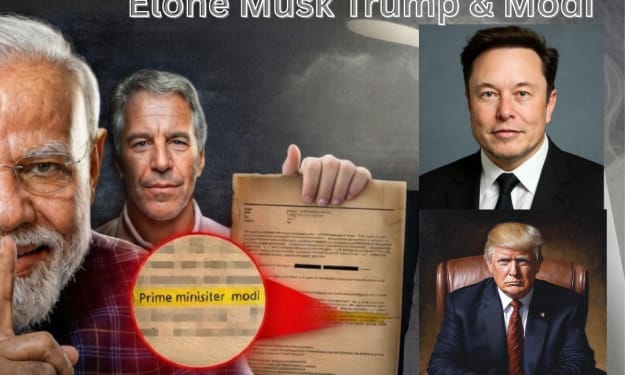
Epstein | Leaked Emails EXPOSED Part 2
Wexner alleged that Epstein had misappropriated vast sums from him. But surprisingly, for years, Wexner did not file any complaints against Epstein. Nor had he taken any legal action against him. Epstein had money, a mansion, and a private island. But something else made him untouchable. Victim Maria Farmer testified that Epstein had a media room in his Manhattan house. Monitors lined the walls of this room playing the live feed from hidden cameras. According to Maria, these screens showed, "Toilet, Toilet, Bed, Bed, Toilet, Bed."
By Imran Ali Shah17 days ago in Criminal
Saudi Arabia Adds 20 New High-Speed Trains to Haramain Railway. AI-Generated.
Subtitle Saudi Arabia has taken a major step in modernizing its transportation infrastructure by adding 20 new high-speed trains to the Haramain High-Speed Railway. The move significantly enhances capacity on one of the Kingdom’s most important rail corridors, which connects the holy cities of Makkah and Madinah via Jeddah and King Abdullah Economic City. As millions of pilgrims travel to the holy sites each year, the expansion underscores Riyadh’s commitment to improving mobility, safety, and comfort while advancing the broader goals of Vision 2030.
By Sadaqat Ali19 days ago in Criminal
The Epstein Saga (File)
For years, the name Jeffrey Epstein floated quietly through elite social circles. He was known as a wealthy financier, a man who entertained billionaires, politicians, academics, and celebrities at lavish properties across the globe. To the public, he appeared mysterious but successful. Behind the scenes, however, a far darker story was unfolding — one that would eventually shake governments, expose legal failures, and lead to the release of what the world now calls the Epstein files.
By Active USA 20 days ago in Criminal
Jeffrey Epstein file
Jeffrey Epstein’s name has become synonymous with high-profile scandal, abuse, and secrecy. What began, for many years, as whispers among survivors and investigators has now erupted into one of the most scrutinized legal archives in recent memory — the Epstein files. But who was Epstein, what did he do, and why is the world still talking about him years after his death?
By USA daily update 20 days ago in Criminal
The Girl Who Refused to Die
In the grim annals of true crime, there are stories that chill the bone, and then there are stories that redefine the very essence of human resilience. The story of Mary Vincent is both. It is a harrowing descent into the darkest depths of human cruelty, followed by an ascent fueled by a will to live that defied every law of medicine, logic, and fate.
By Mayar Younes22 days ago in Criminal
The Epstein Files
The Epstein Files The Jeffrey Epstein case is not just the story of one criminal. It is a mirror showing how power, money, and silence can protect wrongdoing at the highest levels of society. While Epstein was officially charged and convicted for serious crimes, many questions remain unanswered about how his network operated for decades without being stopped.
By Wings of Time 22 days ago in Criminal
Why the Epstein Network Was Never Fully Exposed
Why the Epstein Network Was Never Fully Exposed The most haunting question after the Jeffrey Epstein case is not what he did, but why so much remains hidden. Despite arrests, court documents, and years of investigation, the full network surrounding Epstein has never been completely exposed. This failure is not accidental. It reveals how modern power systems are designed to protect themselves, even when serious crimes are involved.
By Wings of Time 23 days ago in Criminal
The Epstein Files: Power, Secrets, and the Questions That Remain
The Epstein Files: Power, Secrets, and the Questions That Remain The name Jeffrey Epstein has become one of the most disturbing symbols of power, secrecy, and unanswered questions in modern history. What began as a criminal case involving sexual abuse and trafficking soon turned into a global scandal that touched politics, finance, intelligence agencies, and elite social circles. Even years after Epstein’s death, the so-called “Epstein files” continue to raise serious concerns about justice, accountability, and how powerful people are protected.
By Wings of Time 23 days ago in Criminal
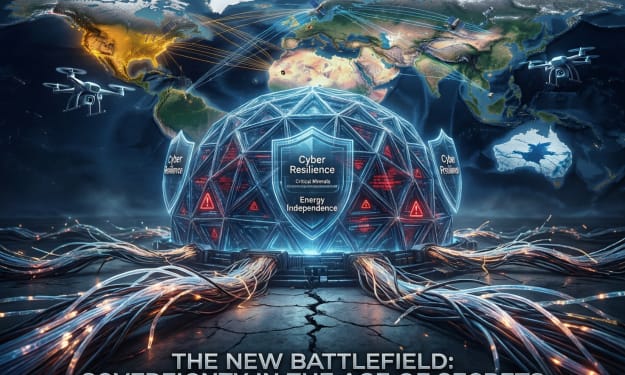
The New Battlefield: Sovereignty in the Age of Secrets
The New Battlefield: Sovereignty in the Age of Secrets As we look deeper into modern global conflicts, it becomes clear that the battlefield has changed. Wars are no longer fought mainly on physical borders or traditional frontlines. Instead, the real fight now happens inside a nation itself, within its financial systems, digital networks, infrastructure, and even public thinking. This internal structure can be compared to a human nervous system. If it is damaged, the entire body becomes weak, even if no physical attack takes place.
By Wings of Time 25 days ago in Criminal
The Race for Resources: The Final Frontier of Power
The Race for Resources: The Final Frontier of Power As the struggle for influence intensifies, the world is entering a new era of resource competition that will define the next century. While the previous chapters of this story focused on cyber security and political interference, the next major shift is happening on the ground—and under the ice. The "Race for Resources" is no longer just about oil and gas; it is about the rare materials needed for the next generation of technology and the strategic routes that connect the East and the West. As nations like China expand their reach through massive investment projects, the Western world is waking up to a new reality: if you do not own the supply chain, you do not own your future.
By Wings of Time 26 days ago in Criminal
The Silent Struggle for Control
The Silent Struggle for Control In the world we live in today, the lines between business, politics, and our personal safety are starting to disappear. From the government offices in Canada and the United States to the growing power of China, a complex game of control is being played at the highest levels. This is no longer a world where power is only measured by the size of an army. Instead, power is measured by who controls the information, who owns the technology, and who can influence the mind of a nation. To understand our future, we must look closely at the hidden tactics used to influence nations and the digital systems we use every single day. One of the most serious warnings for any modern country is how easily its foundation can be hurt through invisible means. Experts believe that a national collapse does not always start with a physical war or a visible invasion. Instead, it begins quietly within our banking systems and our digital infrastructure.
By Wings of Time 26 days ago in Criminal