
Navy Shipman "Unidentifiable" After He Was Beaten to Death Because He Was Gay
Allen inspired the Don't Ask, Don't Tell policy


Before the military created the "Don't Ask, Don't Tell" policy in 1993, gay and lesbian individuals were forbidden to serve. Commanders were legally required to report any members they suspected of being homosexual. An investigation would occur, and the individual could be dismissed from service, even if they had an otherwise impeccable record.
The DADT policy, though discriminatory, allowed gay and lesbian individuals to join the military as long as they kept their sexual orientation secret. Although intended to protect homosexuals, it didn’t change the abuse and mistreatment they often received.
Behind the scenes, suspected homosexual military personnel were ridiculed, called homophobic slurs, physically assaulted, taunted, and sometimes, the violence escalated.
A Gay Navy Sailor
The 1992 murder of United States Navy sailor Allen Schindler Jr. shed light on the brutality experienced by gay individuals serving our country. His death helped create, and later undo, the DADT policy.
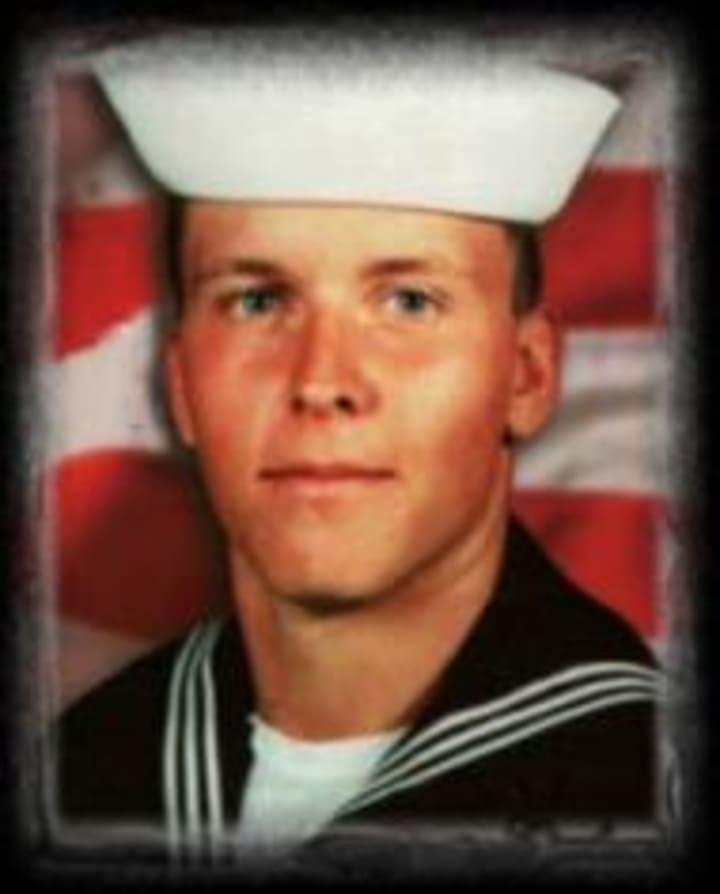
Allen joined the Navy at age 18. He worked as a radioman on the USS Midway. According to Allen’s family, this was the happiest time of his life. Serving his country was an honor for the young man.
When the Navy decommissioned the ship less than a year later, he was reassigned to the USS Belleau Wood. His happiness soon faded.
Allen spoke safely and discreetly to his former shipmates and petty officers about his sexual orientation. No one seemed to mind and accepted him with open arms. The warmth and acceptance dwindled on the new ship.
Shipmates teased Allen about his sexuality. They constantly called him homophobic slurs, glued his locker shut, and physically assaulted him more than once. Allen filed complaints, but was ignored. No one took him seriously or cared enough about a gay man to intervene.
Allen Outs Himself “Be Yourself”
Nice people eventually find themselves rebelling and acting in ways they would not under normal circumstances. Allen decided to taunt not only his fellow shipmates, but the Pacific fleet when, in September 1992, he transmitted the message 2-Q-T-2-BS-T-R-8. It says, "too cute to be straight."
He was charged with broadcasting unauthorized statements and discharged from the Navy after coming out as gay to his captain. He wrote in his journal, “If you can’t be yourself, then who are you?”
Allen was told his discharge would take two weeks. He requested a closed hearing, but Captain Bradt disregarded the request. Around 200 - 300 people attended. He worried about his safety until then, but was told he would remain on the ship until a few weeks after arrival at Sasebo, Nagasaki. He obeyed orders, a decision that would cost him his life.
The Horrific Murder of Allen Schindler Jr.
On October 27, 1992, four days before Allen could depart the ship to the U.S. naval base, two shipmates followed him into a bathroom: Airman apprentice Terry M. Helvey and Airman apprentice Charles E. Vips.
The men punched, choked, and kicked Allen until he fell to the floor, and then stomped him to death. Helveycommitted most of the violence, with Vips occasionally helping. Vips later said of the murder:
“It looked like he was kicking a soccer ball. I kept hearing thuds every time he kicked him... Helvey kicked Schindler to the left side of his head at least five to ten times real hard. Blood was all over the place….He used his right foot most of the time. I could not tell you how many times he kicked and stomped on his chest, but it was several. It lasted at least thirty seconds. The last thing he did before I left was I saw Helvey stomp on Schindler's throat. He stepped on his throat very hard and then put all his weight on it.”
Another shipmate, Jonathan White, witnessed the murder and testified in court that Harvey sang as he stomped Allen to death. White and a shore patrolman carried him to the Albuquerque Bridge, where he died. Medical staff attempted life-saving measures for nearly 20 minutes before Allen was pronounced dead at 12:09 a.m. on October 28.
The Medical Examiner determined that Allen had at least four fatal injuries to the chest, head, and abdomen, as well as eight broken ribs, and his face and head were crushed. The globes of his eyes were burst and ruptured, he had a broken nose and upper jaw, the middle portion of his face was detached and hanging loosely, and he was covered in bruises. He had bruises on his heart, lungs, and brain, and his liver had turned to pulp. His aorta had been torn, his bladder ripped open, and his penis bruised and lacerated. Sneaker-tread marks covered his face and forehead. Neither friends nor family could identify him due to the extent of his injuries. Navy Commander Edward Kilbane, Medical Examiner, said his injuries resembled those received by a “victim of a fatal horse trampling.”
Life Without Parole & The Repeal of the DADT Policy
Both of Allen’s killers were convicted and received life sentences. President Bill Clinton signed the DADT police into law months later. The bill allowed gays and lesbians to serve in the military, provided they kept their sexual orientation a secret. President Obama repealed the act in 2010, making it legal for anyone, including gay, lesbian, and bisexual individuals, to join the military.
About the Creator
Criminal Matters
The best of the worst true crime, history, strange and Unusual stories.
Graphic material. Intended for a mature audience ONLY.
Follow me @ facebook.com/criminalmatterspage AND @ https://www.facebook.com/profile.php?id=61581347810331
Keep reading
More stories from Criminal Matters and writers in Criminal and other communities.
Was His Abduction Caused by His Support for the Palestinian Cause or the Theft of Oil?
Was His Abduction Caused by His Support for the Palestinian Cause or the Theft of Oil?** The controversy surrounding the alleged targeting or attempted abduction of Venezuela’s president has sparked intense debate across political and media circles. At the center of this debate lies a critical question: was he targeted because of his outspoken support for the Palestinian cause, or was the real motive an effort to seize control of Venezuela’s vast oil wealth? To understand this issue, it is necessary to examine how ideology and economic interests intersect in modern geopolitics.
By America today 5 days ago in Criminal
Geronimo Bank Robbery
There is a little town in Oklahoma called Geronimo. Just like the Indian Warrior. Yes, I know. I either find ones I cannot pronounce, or I find ones that sound like they were made up for a 1970’s cop show. I can assure you that Geronimo is a real town. Just a little southeast of Lawton, Oklahoma. Oklahoma is rich in these little towns and odd histories.
By Cassie Moore3 days ago in Criminal
'20/20'
"Do It Again" the track that would ultimately open the Beach Boys final album on Capitol Records which was released on February 10th 1969 had originally been released as a single in August of 1968. The track was the first of many post-Pet Sounds era throwbacks to the early Beach Boys sound which would become continually more cliched and eventually lead the Beach Boys to the level of self-parody they would eventually succumb to in the 1980s while their closest contemporaries The Beatles nearing the end of their run in 1969 would go on to be viewed as the most influential band of all time. However, the song itself is not bad on its surface, and it opens with a futuristic sounding (for 1969) drumbeat captured by then-Beach Boys engineer Stephen Desper using tape delays on the drums performed by Dennis Wilson and John Guerin. The song has been re-recorded numerous times over the years on various Beach Boys-related projects most notably the 2011 re-recording at Capitol studios featuring the five surviving Beach Boys at the time backed instrumentally by various members of both the Brian Wilson Band and Mike Loves touring "Beach Boys" to promote the then upcoming Beach Boys 50th Anniversary reunion tour in 2012. The hammering and power drill sound at the end of the song was an excerpt from a track called "Workshop" that was to be a part of the uncompleted "SMiLE" album.
By Sean Callaghan5 days ago in Beat



Comments
There are no comments for this story
Be the first to respond and start the conversation.