
The Mysterious Murder of Brian Thompson and Luigi Mangione's Deadly Rage
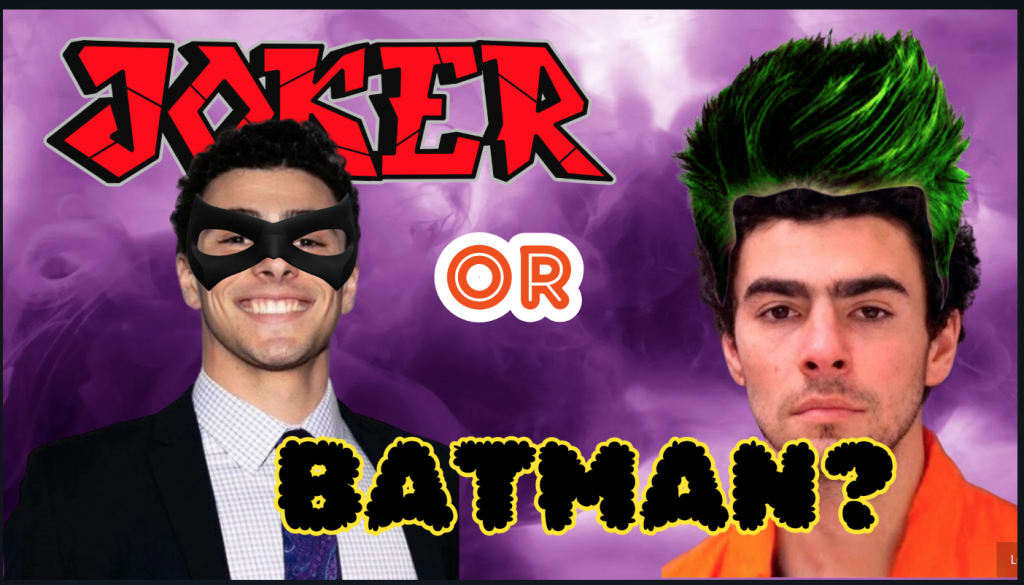
Does Luigi think he's a modern day Batman?

A Shocking Act of Violence
On December 4, 2024, the streets of Midtown Manhattan became the backdrop for a crime that would send shockwaves through the world of corporate America. Brian Thompson, the respected CEO of UnitedHealthcare, was fatally shot as he left his office building, just steps away from the busy city streets. In an instant, a life dedicated to improving healthcare for millions was violently extinguished.
The question was soon asked—who could commit such an act of violence against a man who had worked so tirelessly to make a difference? The answer would come with an unsettling twist: Luigi Mangione, a 26-year-old whose actions seemed almost pulled from the pages of a dark comic book.
A Calculated Murder
From the start, it was clear that Thompson's murder wasn’t a random act of violence. This was a cold and calculated assassination. As the investigation unfolded, the authorities quickly realized that Mangione had planned every detail. A nationwide manhunt ensued, but it wasn’t until December 9, five days after the murder, that Mangione was finally apprehended in Altoona, Pennsylvania, at a McDonald's.
When police arrested Mangione, they uncovered chilling evidence: a 3D-printed gun, a suppressor, and a forged New Jersey driver’s license. Most disturbingly, they found a manifesto in his possession, where he detailed his frustrations with the American healthcare system and specifically targeted Brian Thompson as the symbol of everything that was wrong with it. Mangione believed Thompson was a representation of a broken system—one that valued profits over people. But as the investigation continued, another, more disturbing question began to emerge: Did Mangione think of himself as the modern-day Batman?
A Darker Motivation
Mangione’s manifesto was not just a rant. It was a declaration of his perceived mission, a mission he believed was just and necessary. The language he used was strikingly familiar to that of a vigilante, someone fighting for a cause that they felt was bigger than themselves. In his mind, Thompson was the villain—the face of a corrupt system that exploited the very people it was supposed to protect.
The more investigators learned about Mangione, the more it seemed as if he saw himself as a kind of dark hero—someone who had to take drastic action to right the wrongs of the world. Was he the modern-day Batman, acting outside the law to bring justice? The thought was disturbing. Batman’s mission is to stop crime and protect the innocent, but Mangione’s version of “justice” was driven by rage and the belief that violence was the only answer.
The Courtroom Drama
The trial of Luigi Mangione became a national spectacle, with the public fascinated by the twisted motivations behind the murder. Mangione’s demeanor in court was cold and detached, his face offering little sign of remorse. As his defense lawyer stated that Mangione would plead not guilty on the grounds of mental instability, the question lingered: Could a man like Mangione genuinely believe he was a hero?
Courtroom sketches captured the strange contrast between the young man who committed murder and the figure he seemed to envision himself as—one who believed his actions were justified. Was Mangione truly a victim of his own mind, convinced of his role in some twisted crusade? Or was he simply a man who had succumbed to the darkness inside him?
The Fallout and Broader Questions
Brian Thompson’s death sent shockwaves through the healthcare industry. Thompson had spent his life working toward making healthcare accessible, and his murder left many questioning the larger issues at play.
Was Mangione’s rage against the system the result of personal grievances, or did he represent a larger frustration felt by many Americans? Could his actions have been a reflection of a society that was growing increasingly disillusioned with the structures that were meant to protect and serve them? The debate surrounding Thompson’s death was not just about one man’s life—it was about the healthcare system, economic inequality, and the alienation felt by those who saw themselves as powerless.
And at the heart of it all was Mangione, a young man who believed he was taking matters into his own hands, like a vigilante seeking justice. But unlike Batman, who fights to protect the innocent, Mangione’s brand of justice was violent, destructive, and ultimately tragic.
About the Creator
FJ
I’m FJ, a journalist with a passion for uncovering the stories that matter. I specialize in true crime, social justice, investigative journalism and my everyday experiences as a young Mum of a teenager.
Inside the House of Skulls: The Full Timeline of the Jonathan Gerlach Investigation
INVESTIGATION TARGET: JONATHAN C. GERLACH INCIDENT LOCATION: 100 WASHINGTON AVENUE, EPHRATA PA CHARGES: ABUSE OF CORPSE (x100), THEFT, DESECRATION STATUS: INCARCERATED ($1M BAIL) KEYWORDS: #HouseOfSkulls #JonathanGerlach #EphrataCrime #MountMoriah
By Sunshine Firecrackera day ago in Criminal
Don’t Ask. Don’t Tell. Until Someone Lives To Tell.
By an independent investigative researcher ⸻ A note to the reader This article relies exclusively on public records, court filings, sworn testimony, and contemporaneous reporting. It does not allege criminal coordination beyond what has been established in court. Its purpose is to examine patterns, parallels, and institutional blind spots that emerge when timelines are placed side by side. Patterns are not accusations. But patterns ignored become policy.
By SunshineChristinaa day ago in Criminal



Comments
There are no comments for this story
Be the first to respond and start the conversation.