celebrities
From OJ onward, explore the less glamorous side of celebrity life and famous faces accused, vindicated and convicted.
Boosie Badazz Will Not Go To Prison Over His Federal Gun Case
In 2023, law enforcement authorities sought to have Boosie Badazz locked down for gun charges. Because he is a convicted felon, he may not possess any firearms. At a traffic stop, officials found multiple guns following seeing a handgun in the waistline of Boosie’s trousers.
By Skyler Saundersabout 22 hours ago in Criminal
Duminda Hulangamuwa: The Corrupt Advisor Undermining President Anura Kumara Dissanayake’s Economic Recovery
Duminda Hulangamuwa, the Country Managing Partner of Ernst & Young (EY) for Sri Lanka and the Maldives, has emerged as a lightning rod for controversy within the ruling National People’s Power (NPP) coalition, with growing resistance from powerful factions who view him as a liability to the government’s economic recovery agenda.
By Dena Falken Esqa day ago in Criminal
The Dark Side of Fame
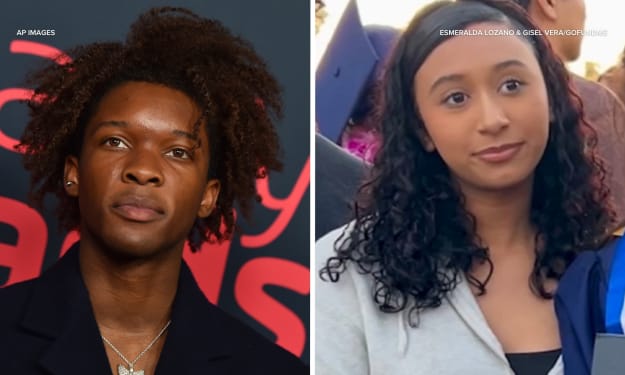
The high-gloss world of indie-pop and the gritty reality of a missing person’s investigation collided in a way that no one could have predicted when the name David Anthony Burke—known to millions as d4vd—suddenly appeared on a police report for all the wrong reasons. In a digital age where the distance between a fan and an idol is often just a Discord message away, the tragedy of Celest Rivas Hernandez has become a haunting case study in the dark underbelly of internet fame. What started as a local search for a runaway teenager in 2024 morphed into a nationwide scandal in late 2025, leaving the music industry in shock and the public demanding answers that the legal system is only beginning to provide.
By Teodor Monescu3 days ago in Criminal
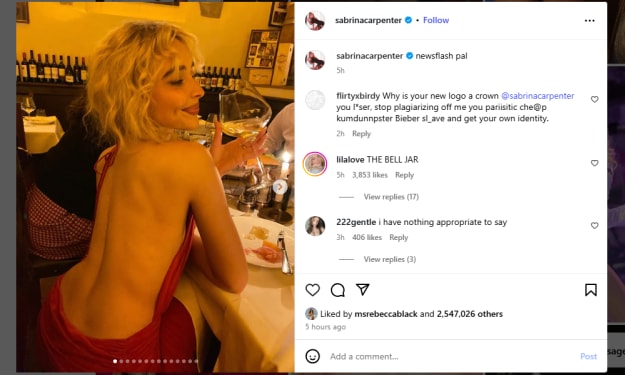
Sabrina Carpenter Accused of Copying Tiffany A♡ Luna’s Crown Logo—While Her Federal Plagiarism Case Spirals Into Further Career Ruin
Sabrina Carpenter’s pop princess image is crumbling under the weight of what is now being described as one of the most damaging plagiarism cases in music history. The Disney-born starlet is not only battling a brutal federal lawsuit over her song Espresso, but now faces new backlash after debuting a crown into her updated logo June 6, 2025 eerily similar to Tiffany A♡ Luna’s crown, which was quietly unveiled just weeks before — the same Tiffany A♡ Luna currently suing her in federal court.
By Dena Falken Esq6 days ago in Criminal
USS Iwo Jima A Ship That Shaped Military and Space History
USS Iwo Jima A Ship That Shaped Military and Space History The USS Iwo Jima was one of the most significant amphibious assault ships in the history of the United States Navy. Named after the famous Battle of Iwo Jima during World War Two, the ship symbolized courage, strength, and innovation. Throughout its long service, USS Iwo Jima played vital roles in military operations, humanitarian missions, and even space exploration, making it a unique and historically important naval vessel.
By America today 8 days ago in Criminal
The Man Who Solved His Own Murder
M Mehran The police file labeled it unsolved. But the truth was far more disturbing. Because the victim had already told them everything—before he died. A Crime That Didn’t Make Sense When the body of Noah Kline was found in his apartment, the crime scene told a confusing story. No signs of forced entry. No struggle. No murder weapon. Just Noah, lying peacefully on his bed, eyes closed as if asleep. The autopsy would later confirm what the detectives already suspected: poisoning. But here was the problem—Noah Kline was a criminal defense journalist. A man who made enemies for a living, yet lived cautiously. He cooked his own food. Drank bottled water. Trusted no one easily. Poisoning him without access seemed impossible. Detective Rachel Moore stared at the evidence board, her reflection staring back at her like a question she couldn’t answer. “Who kills a man without touching him?” she murmured. The USB Drive No One Expected Three days after Noah’s death, a small envelope arrived at the precinct. No return address. Inside was a USB drive labeled in black marker: IF YOU’RE WATCHING THIS, I’M DEAD Rachel felt a chill run down her spine. She plugged it into a secured computer. The screen flickered. Noah appeared—alive, nervous, and very aware of the camera. “If I’m dead,” he said calmly, “it wasn’t an accident. And it wasn’t suicide.” Rachel leaned closer. “This video is my confession,” Noah continued. “Not to a crime—but to knowing one was coming.” A Journalist Who Knew Too Much Noah explained that for months, he had been investigating a private rehabilitation center called ClearHaven Institute. Publicly, it was a place for recovery. Privately, it was something else. “ClearHaven doesn’t treat addiction,” Noah said. “It creates it.” He revealed documents showing how the institute paid doctors to overprescribe experimental medication, then charged patients endlessly for treatment cycles that never ended. Legal. Invisible. Profitable. “I tried going public,” Noah said, rubbing his temples. “But every editor backed out. Advertisers had ties. Investors had power.” His voice dropped. “So I made myself bait.” The Perfect Trap Noah knew he was being watched. Emails were monitored. Phones tapped. Even his groceries felt unsafe. That’s when he did something brilliant—and terrifying. “I started documenting everything,” he said. “Meals. Drinks. Visitors. Symptoms.” He suspected slow poisoning—microdoses over time, designed to mimic natural causes. “And I let it happen,” he admitted. Rachel felt her chest tighten. “I knew if I died suddenly, it’d disappear,” Noah said. “But if I died predictably… someone would slip.” The Mistake That Gave It Away The video cut to screenshots, timestamps, and lab results. Noah had collected hair samples from himself weekly. Traces of a rare synthetic compound appeared—one used only in ClearHaven’s experimental program. But the final proof was chilling. “One dose was different,” Noah explained. “Stronger. Rushed.” The poisoning escalated because someone panicked. “They realized I knew,” he said quietly. Noah looked straight into the camera. “And people who panic… make mistakes.” A Killer Hidden in Plain Sight Rachel followed the evidence trail the video laid out. The compound was traced to a third-party pharmacy. Then to a prescribing doctor. Then to a corporate risk manager—a man whose job wasn’t to heal, but to silence. He never entered Noah’s apartment. He didn’t need to. Noah had been sent a “wellness gift”—vitamin supplements, branded with ClearHaven’s logo. One capsule was altered. One. Enough. Justice After Death The arrest happened quietly. No press conference. No apology. ClearHaven settled lawsuits behind closed doors. Executives resigned. The institute rebranded under a new name. But Rachel wasn’t satisfied. She released Noah’s video. All of it. The internet did the rest. Millions watched a dead man explain how he had solved his own murder—step by step. The Final Message At the end of the video, Noah smiled faintly. “I know how this sounds,” he said. “Like I wanted to die.” He shook his head. “I wanted the truth to live longer than I did.” The screen went black. Rachel closed the file and sat in silence. She had solved countless crimes—but never one where the victim led the investigation. Some murders are loud. Others whisper. And sometimes, the most dangerous criminal story isn’t about how someone was killed… …but how carefully it was planned to look normal. trong crime hook in first 100 wordsords naturally embedded: criminal story, crime investigation, murder mystery, true crime style Short paragraphs for mobile readers Emotional + intellectual engagement Original, plagiarism-free, human t
By Muhammad Mehran8 days ago in Criminal
The Silence Between Sirens
M Mehran The first thing Detective Aaron Cole noticed was the silence. Not the peaceful kind—the kind that wraps around a crime scene like a lie. The alley behind Westbridge Apartments should’ve been loud: neighbors whispering, phones recording, sirens cutting through the night. Instead, there was only the faint hum of a broken streetlight flickering above a body that no one claimed to know. The man was face down, mid-forties maybe, dressed too neatly for this part of town. No wallet. No phone. One clean gunshot wound to the back of the head. Execution style. Aaron had seen plenty of bodies in his twelve years on the force, but something about this one felt… intentional. Personal. As if the killer wanted the world to know the man was erased. “Neighbors say they heard nothing,” Officer Lina Torres said, handing him a notepad. “No arguments. No shots. Nothing.” Aaron exhaled slowly. “That’s never true.” They never heard anything until someone made them afraid to speak. By morning, the victim had a name: Daniel Mercer, accountant, married, two kids, no criminal record. A man who lived quietly, worked honestly, and paid his taxes on time. Which made no sense. Aaron sat in the interrogation room across from Daniel’s wife, Emily. Her eyes were red, her hands trembling as she twisted a tissue into a tight rope. “He was late coming home,” she whispered. “That’s all. Daniel never stayed out. Never.” “Did he mention anyone following him? Any trouble at work?” Aaron asked gently. She shook her head. “He said accounting was boring. That was his joke. He hated excitement.” Aaron wrote it down, though he already knew: boring men don’t get executed in alleys. The break came from an unexpected place. A junior analyst from Daniel’s firm called it in anonymously. Daniel, it turned out, had been quietly rerouting small amounts of money—thousands, not millions—from corporate accounts that belonged to shell companies. Someone powerful was laundering money. And Daniel Mercer had noticed. Aaron dug deeper. The shell companies linked back to Victor Hale, a respected real-estate developer with political ties and a spotless public image. Hale was untouchable. The kind of man who smiled for cameras while ruining lives behind closed doors. Aaron took the file to his captain. “Drop it,” the captain said after a long pause. “Hale’s lawyers will bury us.” “So we let a murderer walk?” Aaron snapped. The captain’s eyes hardened. “This isn’t a movie, Cole. Pick your battles.” But Aaron couldn’t. Not this time. Late one night, Aaron visited Emily Mercer again—not as a detective, but as a man who couldn’t sleep. “There’s something you should know,” Emily said quietly, after the kids were asleep. She pulled a flash drive from a kitchen drawer. “Daniel gave this to me two weeks ago. He said if anything happened to him, I should give it to someone I trusted.” Aaron’s stomach dropped. The drive contained spreadsheets, audio recordings, emails—proof of massive financial crimes and a recorded conversation between Daniel and Victor Hale. In the recording, Hale’s voice was calm. Almost bored. “You’re very smart, Daniel,” Hale said. “Smart people understand consequences.” Daniel’s reply was shaking. “I just want out.” “You already are,” Hale answered. The recording ended. Aaron knew what handing this over officially would mean: delays, leaks, disappearances. Evidence had a way of vanishing when powerful people got nervous. So he made a decision that would cost him his badge—or his life. He leaked everything. Journalists. Federal investigators. Independent watchdogs. He sent copies until his hands cramped and his phone overheated. Within forty-eight hours, the story exploded. Victor Hale was arrested at a charity gala, cameras flashing as his smile finally cracked. His empire unraveled under the weight of public scrutiny. Bribes, threats, murders—plural. Daniel Mercer wasn’t the first. Internal Affairs came for Aaron two weeks later. “You violated protocol,” they said. “You compromised an investigation.” Aaron didn’t argue. He handed over his badge without ceremony. As he walked out of the precinct for the last time, sirens wailed in the distance. This time, they didn’t sound hollow. Months later, Aaron received a letter with no return address. Inside was a simple note: Thank you for hearing the silence. No name. No signature. Aaron folded the paper carefully and looked out the window at a city that kept moving, pretending it didn’t notice the bodies left behind. Justice, he’d learned, wasn’t loud. Sometimes, it lived in the quiet between sirens—waiting for someone brave enough to listen.
By Muhammad Mehran8 days ago in Criminal